Solar Tax Credit 2026: What Happened to the Federal Credit
That feeling of uncertainty about big financial decisions, especially when it comes to something as significant as home solar, can be incredibly frustrating. Many homeowners are wondering, "What exactly happened to the federal solar tax credit in 2026? Is it still even available, or did I miss my chance?" You're not alone in feeling a bit lost in the details, but I'm here to clear up the confusion and explain precisely how the federal solar tax credit works for you today.
Unraveling the Confusion: Is the Federal Solar Tax Credit Still Around in 2026?
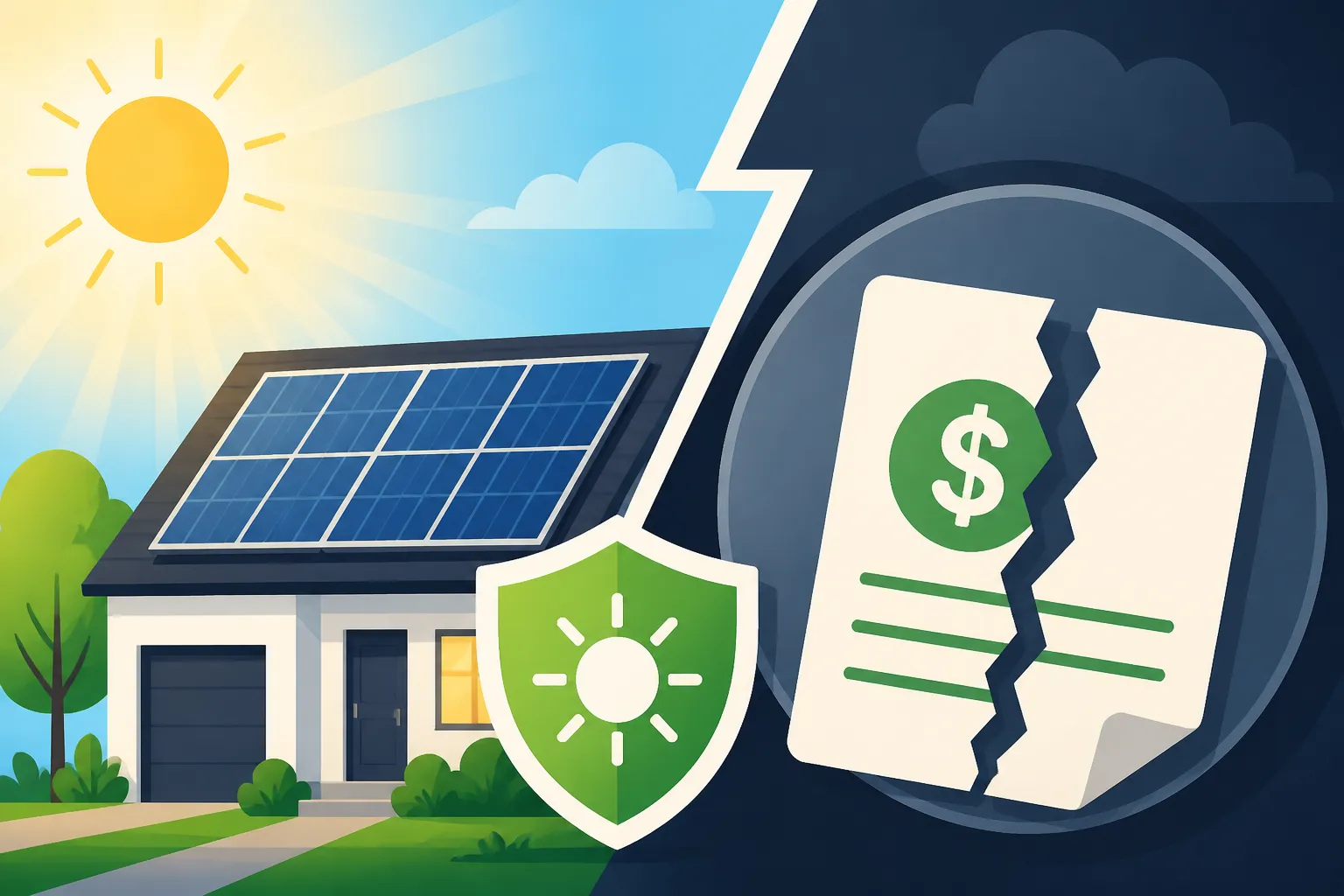
There’s a lot of chatter out there, and it’s easy to get the impression that the federal solar tax credit, officially known as the Investment Tax Credit (ITC), might have disappeared or significantly shrunk. Let me assure you, that's not the case at all. The federal solar tax credit is not only still very much alive but has been reinvigorated to provide substantial savings for homeowners investing in renewable energy. The good news is, it's actually in a really strong place right now.
The ITC's Evolution and Current Status
For years, the federal solar tax credit has been a cornerstone of solar adoption across the United States, encouraging countless families to make the switch to clean energy. It started as a 30% credit, then had a step-down schedule planned that caused a lot of anxiety and confusion among homeowners and installers alike. However, significant legislative changes, particularly with the passage of the Inflation Reduction Act (IRA) in August 2022, completely reshaped its trajectory.
The IRA effectively extended the 30% credit and locked it in for a considerable period, reversing the planned decreases that many people were bracing for. This means that for systems installed through 2032, homeowners can claim a generous 30% of the cost of their new solar energy system as a tax credit. This extension provides a much-needed sense of stability and long-term planning for anyone considering solar. It’s a huge win for homeowners, ensuring that a significant financial incentive remains firmly in place for years to come.
The 30% Sweet Spot: What It Means for Homeowners
So, what does that 30% really translate to in your pocket? Simply put, it means that if you install a qualifying solar energy system, you can reduce the amount of federal income tax you owe by 30% of the system's total cost. This isn't a deduction from your taxable income; it's a direct dollar-for-dollar reduction of your tax liability. Imagine your total solar system costs $30,000. With the 30% federal tax credit, you could receive a $9,000 credit against your federal income taxes.
This credit is "non-refundable," which means it can reduce your tax liability to $0, but you won't get any excess credit back as a refund if your credit is more than your tax bill. However, and this is a crucial detail, any unused portion of the credit can be rolled over to future tax years. This carryforward provision is incredibly valuable, especially for systems with higher costs, ensuring that you ultimately receive the full benefit of the credit, even if it takes a couple of tax cycles. Understanding this aspect can alleviate worries about whether your current tax situation limits your ability to claim the full amount.
Who Qualifies for the Federal Solar Tax Credit in 2026?
It’s exciting to know the credit is available, but the next natural question is, "Do I qualify?" The good news is that the eligibility requirements for the federal solar tax credit are fairly straightforward, focusing primarily on ownership, the type of system installed, and the property where it's located. It's designed to be accessible to a broad range of homeowners.
Ownership and Installation Requirements
To be eligible for the federal solar tax credit, you generally need to be the owner of the new solar energy system. This is a critical distinction and often a point of confusion for many. If you purchase your solar panels outright or finance them with a solar loan, you are considered the owner and can claim the credit. This includes systems installed on your primary residence or a second home. The system must be new and placed in service during the tax year you're claiming the credit. So, if you're looking at a system that was previously used or leased by someone else, it typically won't qualify.
What kind of systems qualify? Primarily, the credit applies to solar photovoltaic (PV) systems that generate electricity for your home. But it’s not just the panels! Crucially, the credit also extends to other renewable energy technologies installed in conjunction with your solar system. This includes things like solar water heaters (that heat at least half of the water used in the dwelling), small wind turbines, geothermal heat pumps, and, importantly for many modern solar setups, qualified solar battery storage technology. To be eligible, the battery storage must have a capacity of at least 3 kilowatt-hours (kWh) and be installed in connection with your solar PV system. This addition of battery storage to the list of eligible expenses is a significant boost for homeowners seeking greater energy independence and backup power, and you can learn more about this in our guide on Solar Battery Incentives in 2026.
Understanding Your Tax Liability
As mentioned, the federal solar tax credit is a non-refundable credit. This means it can reduce your federal income tax liability dollar-for-dollar, down to zero. However, if the credit amount is larger than your total tax liability for that year, you won't receive the difference as a cash refund. This is a common point of misunderstanding, and it's where the "non-refundable" part comes in.
Let’s walk through a quick example: Say your solar system cost $25,000, making your 30% tax credit $7,500. If your federal income tax liability for the year is $5,000, the credit will reduce your tax bill to $0, and you will have $2,500 of unused credit. But don’t fret! That $2,500 doesn't just vanish. The beauty of the ITC is that you can carry forward any unused portion of the credit to the next tax year. This carryforward can continue for as many years as it takes for you to fully utilize the credit, provided the credit is still in effect. This flexibility ensures that homeowners, regardless of their current tax bracket, can eventually realize the full financial benefit of their solar investment, making it a powerful long-term incentive for homeowners.
What Costs Are Covered by the Solar Tax Credit?
When you’re thinking about going solar, it’s not just the shiny panels that make up the total investment. There are a lot of moving parts, and thankfully, the federal solar tax credit is quite comprehensive in what it covers. This breadth of eligible expenses is a major reason why the ITC is such a valuable incentive, helping to offset a significant portion of your overall solar project cost.
Eligible Expenses Beyond Panels
The 30% federal tax credit applies to the "reasonable and necessary" expenses related to installing your residential solar energy system. This isn't limited to just the solar panels themselves. Think of everything that goes into making your system functional and connected to your home's electrical grid. This includes the solar panels, of course, but also vital components like inverters (whether they're string inverters, microinverters, or power optimizers), mounting equipment that secures the panels to your roof, and wiring.
Beyond the hardware, the costs associated with getting the system up and running are also covered. This includes installation labor costs, which can be a significant portion of the total price. Permitting fees, inspection costs, and even developer fees are typically eligible. And, as we touched on earlier, a big one for modern solar setups: qualified battery storage technology with a capacity of at least 3 kWh is now fully included, even if it's added to an existing solar system in a later tax year. This means if you decide to add a Tesla Powerwall or an Enphase IQ Battery a year or two after your initial solar installation, you can still claim the 30% credit on the battery portion, provided it meets the requirements. This makes transitioning to a more resilient home energy system even more attractive.
What's Not Included: Common Misconceptions
While the ITC is wonderfully inclusive, there are a few important things it generally doesn't cover, and knowing these can save you from potential disappointment or incorrect calculations. The biggest misconception revolves around ownership. If you enter into a solar lease or a power purchase agreement (PPA) with a solar company, you do not own the system. Instead, the solar developer or leasing company owns the panels, and they are the ones who claim the federal tax credit. You, as the homeowner, benefit from lower electricity rates, but not directly from the ITC. This is a crucial distinction when considering Solar Lease vs PPA vs Buy: Which Is Best?.
Other expenses generally excluded are things like a new roof installation, unless that roofing material is itself a solar energy collection device (like certain solar shingles). While it's often a smart idea to get a new roof before solar, the cost of a standard roof replacement isn't covered by the ITC. Additionally, general maintenance costs or expenses for off-site community solar projects typically don't qualify, unless you are buying a portion of a community solar project and thus directly own the panels. Understanding these exclusions helps you accurately estimate your out-of-pocket costs and the true value of the tax credit.
Navigating the Claim Process: Step-by-Step for the ITC
Once your shiny new solar panels are humming along, generating clean electricity for your home, the next step is to actually claim that federal tax credit. It might seem a bit daunting if you're not used to navigating specific IRS forms, but with a clear understanding of the process and the right documentation, it's quite manageable. Think of it as the final step in securing your well-deserved savings.
Documentation You'll Need
Gathering the correct paperwork is paramount. The IRS isn't going to just take your word for it, right? The good news is that most of the documentation you need will come directly from your solar installer. You'll definitely want to keep a meticulous record of all your solar installation expenses. This includes:
- Invoices and Receipts: These should clearly show the total cost of your solar energy system, including the panels, inverter, mounting hardware, labor, permitting fees, and any qualifying battery storage. Make sure these documents are itemized so you can easily identify all eligible expenses.
- Proof of Installation Date: You'll need to confirm when your system was "placed in service." This generally means the date the system was installed and ready to generate electricity, even if it's awaiting final utility connection (Permission to Operate, or PTO). Your contract or a completion certificate from your installer should provide this.
- Your Contract with the Solar Installer: This document outlines the terms, costs, and scope of work for your solar project, serving as primary evidence of your investment.
- IRS Form 5695, Residential Energy Credits: This is the official form you'll use to calculate and claim your credit. You can download it directly from the IRS website. Familiarizing yourself with this form before you file can help you understand what information you'll need to input.
Keeping all these documents organized in a dedicated folder (digital or physical) will make tax season much less stressful.
Filing Your Taxes with Solar: A Practical Guide
When it's time to file your federal income taxes, you'll specifically use IRS Form 5695, Residential Energy Credits. This form is designed to calculate credits for various residential energy improvements, including solar. Here’s a simplified breakdown of how it works:
- Determine Eligible Costs: On Form 5695, you'll first enter the total eligible costs of your solar energy system (and any other qualifying energy improvements).
- Calculate the Credit: The form will guide you to multiply these eligible costs by the appropriate credit percentage (which is 30% for systems placed in service through 2032).
- Apply to Your Tax Liability: The calculated credit amount from Form 5695 is then transferred to Schedule 3 (Form 1040), Line 5, "Nonrefundable credits from Form 5695, Residential Energy Credits." This is where it directly reduces your overall tax liability.
- Manage Carryforward: If your credit amount exceeds your tax liability for the year, the form will help you calculate the amount that can be carried forward to the next tax year. This carryforward amount doesn't need to be claimed on a separate form; it's simply the unused portion that you'll apply to your taxes in subsequent years.
It’s always a good idea to consult with a tax professional or use reputable tax software that can walk you through the process, especially if this is your first time claiming a credit of this nature. They can ensure accuracy and help you maximize your savings. Remember, this credit is for the tax year your system is placed in service, not necessarily when you purchased it or signed the contract. For a deeper dive into the overall timeline, check out our guide on Solar Installation Timeline: What to Expect.
Maximizing Your Savings: Combining Federal with State and Local Incentives
While the federal solar tax credit is a fantastic foundational incentive, it's just one piece of a potentially much larger puzzle of savings. Many states and even local municipalities offer their own programs to encourage solar adoption. The real magic happens when you learn how to stack these incentives effectively, dramatically increasing your overall return on investment.
Stacking Incentives: A Smart Strategy
One of the best aspects of the federal solar tax credit is that it generally plays very nicely with other incentives. Unlike some programs that might reduce or eliminate your eligibility for others, the ITC usually allows you to combine it with state and local programs, rebates, and even property tax exemptions. This is often referred to as "stacking" incentives.
For example, a homeowner in Massachusetts might benefit from the 30% federal tax credit, a state-specific solar incentive program like the SMART Program (Solar Massachusetts Renewable Target), and potentially local property tax exemptions for the added value of their solar system. Similarly, in New York, you could combine the federal credit with the state's generous NY-Sun program and a separate state tax credit. This layering of incentives can significantly reduce your net cost of going solar, sometimes bringing the payback period down considerably. For a comprehensive overview of state-specific incentives, take a look at our State Solar Incentives: Complete 2026 Guide.
Key State Programs to Look For
The landscape of state and local solar incentives is incredibly diverse, so what's available to you will largely depend on where you live. However, there are a few common types of programs to keep an eye out for:
- State Tax Credits: Similar to the federal ITC, many states offer their own tax credits, providing an additional percentage or a fixed dollar amount off your state income tax liability.
- Performance-Based Incentives (PBIs) / Solar Renewable Energy Credits (SRECs): These programs pay you for the electricity your solar panels produce. States like New Jersey, Massachusetts, and Illinois have robust SREC markets where you can actually sell credits generated by your system. To understand more about this, read our guide on SRECs Explained: Selling Solar Renewable Energy Credits.
- Utility Rebates: Many local utilities offer one-time cash rebates for installing solar panels. These can be a fantastic way to reduce your upfront costs.
- Net Metering: While not a direct upfront incentive, net metering policies are crucial for maximizing savings. They allow you to send excess electricity generated by your panels back to the grid in exchange for credits on your utility bill. You can learn more about how this works in our article, Net Metering Explained: How It Works by State.
To find out exactly what’s available in your specific area, a quick search on your state's energy office website or DSIRE (Database of State Incentives for Renewables & Efficiency) is a great starting point. An experienced local solar installer should also be well-versed in all the available programs and help you navigate them.
Common Pitfalls and How to Avoid Them
Venturing into solar is a big decision, and while the rewards are significant, there are always a few potential bumps in the road. Being aware of these common pitfalls upfront can help you make more informed decisions and ensure a smoother, more financially beneficial solar journey. It's all about due diligence and knowing what questions to ask.
Leased Systems and the ITC
This is perhaps the single biggest misconception that trips up homeowners when it comes to the federal solar tax credit. Many people assume that if they get "free solar" or a $0-down lease, they'll still be eligible for the 30% federal tax credit. This simply isn't true for you, the homeowner. When you lease solar panels or enter into a Power Purchase Agreement (PPA), you are essentially renting the equipment or buying the electricity it produces from a third party.
Because you don't own the solar energy system, you are not eligible to claim the federal Investment Tax Credit. The solar company that owns the system is the one who claims the credit. While leases and PPAs can offer lower upfront costs and predictable monthly payments, they come with the trade-off of forfeiting the federal tax credit directly to the system owner. If your primary motivation for going solar is to leverage the generous 30% federal tax credit, then outright purchasing your system, either with cash or a solar loan, is the path you need to take. This is a key factor when you're asking yourself, "Is Solar Worth It in 2026?"
The Importance of Reputable Installers
Choosing your solar installer is arguably one of the most critical decisions you'll make in your solar journey. A less-than-reputable installer can lead to a host of problems, from improperly installed systems that underperform to incorrect documentation that jeopardizes your eligibility for incentives. High-pressure sales tactics are a big red flag, as are installers who make promises that seem too good to be true.
A good installer will be transparent about all costs, clearly explain the federal tax credit and any state/local incentives you qualify for, and provide accurate documentation for your tax filings. They should also be well-versed in local permitting and interconnection processes, ensuring your system is installed correctly and safely. Before you sign any contracts, make sure to get multiple quotes, check references, read online reviews, and confirm that the installer is licensed and insured in your state. Asking about their experience with systems of a similar size or complexity to yours can also provide valuable insight. For more guidance on this crucial step, read our article on How to Choose a Solar Installer.
The Future of the Solar Tax Credit: Beyond 2026
It’s reassuring to know the federal solar tax credit is robust right now, but what about looking a bit further down the road? Long-term planning is always smart, especially when it comes to significant home investments. The good news is that the recent legislation provides a fairly clear path for the ITC for the foreseeable future.
Current Sunset Dates and Potential Changes
As it stands, the Inflation Reduction Act set a clear schedule for the federal solar tax credit. It's locked in at 30% of the system cost for systems placed in service from 2022 through 2032. This decade-long stability is a huge benefit, offering predictability that wasn't always present in previous iterations of the credit.
However, after 2032, the credit is scheduled to begin stepping down. For systems placed in service in 2033, the credit will be 26%. In 2034, it will drop to 22%. After 2034, the residential credit is currently slated to expire. It's important to note that while these are the current legislative plans, things can always change with future acts of Congress. The energy landscape and political priorities are dynamic, so it's not impossible for extensions or modifications to occur further down the line, but relying on current law is the safest bet for your planning.
| Year System Placed in Service | Federal Solar Tax Credit Percentage |
|---|---|
| 2022 – 2032 | 30% |
| 2033 | 26% |
| 2034 | 22% |
| 2035 and beyond | Expired (under current law) |
Staying Informed: Resources for Homeowners
Given the long-term nature of solar investments and the potential for legislative updates, staying informed is key. While your trusted solar installer can provide up-to-date information on current incentives, it's always wise to have a few go-to resources yourself.
The official IRS website (irs.gov) is the definitive source for information on tax credits, including Form 5695 and its instructions. For broader information on renewable energy incentives across all states, the DSIRE (Database of State Incentives for Renewables & Efficiency) website is an invaluable tool. It’s managed by the North Carolina Clean Energy Technology Center and offers the most comprehensive information on state, local, and utility incentives. Reputable solar industry associations and energy news outlets also provide excellent insights and updates. By checking these sources periodically, you can ensure you’re always working with the most current and accurate information available. Knowing about the Federal Solar Incentives That Still Exist in 2026 can help you plan your budget. If you're wondering about the overall How Much Do Solar Panels Cost? 2026 Guide, understanding the impact of these incentives is crucial to determining your net cost. Similarly, for a breakdown of prices, our Solar Panel Cost Per Watt Explained article helps put things in perspective.
Disclaimer
The information provided in this article is for general informational purposes only and does not constitute tax, financial, or legal advice. Tax laws and incentive programs can change frequently, and individual circumstances vary. It is strongly recommended that you consult with a qualified tax professional or financial advisor to discuss your specific situation and ensure eligibility for any tax credits or incentives. We are not responsible for any actions taken based on the information presented herein.