Does New York Have Net Metering in 2026?
If you have been staring at your Con Edison or National Grid bill lately, you have probably felt that familiar sting of rising delivery charges and "supply costs" that seem to defy logic. You are likely considering home solar to claw back some of that hard-earned money, but the rules regarding how New York credits you for your power have changed significantly. This guide solves the confusion around New York’s current net metering status in 2026, explaining exactly how your utility credits you and what fees you can expect to pay.
New York’s Net Metering Policy Landscape
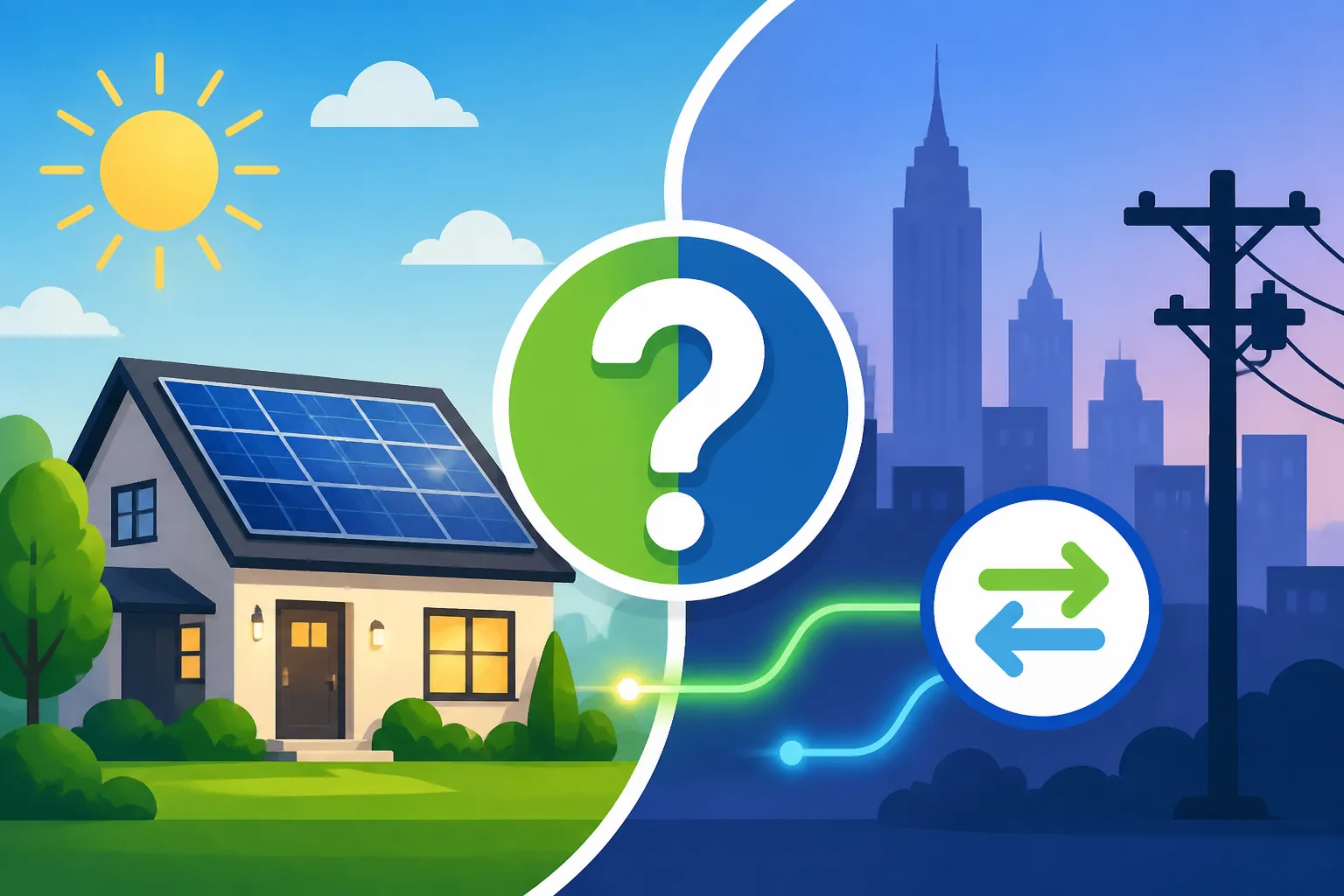
For years, New York was the gold standard for solar enthusiasts. If your panels produced an extra kilowatt-hour of electricity, the utility gave you a full credit for that kilowatt-hour to use later. It was a simple, one-to-one swap. However, as more people transitioned to renewable energy, the state began to shift its strategy. Today, if you are asking if New York still has net metering, the answer is a nuanced "yes, but it is different." The state has transitioned from traditional Net Energy Metering (NEM) to what is known as the Value of Distributed Energy Resources (VDER) for most large-scale projects, while residential customers are now under a hybrid system often called Net Billing.
This shift has caused a fair amount of frustration for homeowners who feel like the goalposts were moved just as they were getting ready to kick the ball. The current system is designed to more accurately reflect the "value" that solar power provides to the grid, but for the average person living in Westchester, Long Island, or Buffalo, it mostly means that your savings calculations require a bit more math than they used to. Understanding New York Net Metering Rules in 2026 is the first step in realizing that while the one-to-one swap is mostly a relic of the past for new installations, the financial benefits of going solar in the Empire State are still incredibly robust when you factor in the high cost of grid power.
The Legacy of NEM 1.0 vs. Current Standards
If you installed your solar system years ago, you might still be grandfathered into the original net metering rules. These "Legacy" customers are the envy of the neighborhood because they aren't subject to the newer charges that have been introduced. However, for anyone starting their solar journey in 2026, you will be entering the market under the "Phase One" Net Billing rules. This means you still get credited for the energy you send back to the grid, but the utility now deducts a small fee known as the Customer Benefit Charge (CBC).
The logic from the utility companies—which many homeowners find debatable—is that solar users still rely on the grid's infrastructure at night or on cloudy days, and therefore should contribute to the upkeep of that grid. It is a specific pain point because it feels like a "solar tax" on top of your investment. To get a clear picture of how this impacts your long-term wealth, you should look into the Solar Panel Payback Period in New York to see how these monthly charges affect the time it takes for your system to pay for itself.
The Role of the NY-Sun Initiative
New York doesn't just leave you to fend for yourself against the utilities. The NY-Sun initiative, managed by NYSERDA, works alongside net metering to make the transition affordable. While net metering handles your ongoing monthly credits, NY-Sun provides the upfront "megawatt block" incentives that lower the initial sticker price. Even though the net metering credits are slightly less generous than they were a decade ago, the combined power of New York NY-Sun & State Solar Tax Credit (25%) makes the state one of the most lucrative places in the country for solar.
The Customer Benefit Charge (CBC): New York’s Solar Fee
The most frequent complaint I hear from New York solar owners today revolves around the Customer Benefit Charge. This charge was implemented by the New York Public Service Commission to recover costs related to energy efficiency, low-income programs, and renewable energy incentives that were previously baked into the per-kWh delivery rate. Since solar customers buy fewer kWh from the grid, the utilities argued they weren't paying their "fair share" of these programs.
The CBC is calculated based on the size of your solar system (per kW) and varies depending on your utility provider. For example, a homeowner with Con Edison might pay a different rate than someone with Rochester Gas & Electric (RG&E). This fee is usually a few dollars per month, but it is something you must account for in your ROI. You aren't just looking at New York Solar Incentives in 2026; you are looking at the net gain after these administrative fees are stripped away.
How Utility Providers Calculate the CBC
Each utility has its own specific rate for the CBC, which is updated annually. It is not a flat fee for everyone; it scales with the size of your system. If you have a massive array designed to power an electric vehicle and a heat pump, your CBC will be higher than a neighbor with a small 5kW system. This is why it’s vital to work with an installer who doesn't just guess your savings but actually uses the current PSC tariff schedules to show you the real-world impact.
| Utility Provider | Typical Monthly CBC (Approx. per kW) | Net Metering Type |
|---|---|---|
| Con Edison | $0.95 – $1.20 | Net Billing (Phase One) |
| National Grid | $0.85 – $1.10 | Net Billing (Phase One) |
| PSEG Long Island | $0.40 – $0.60 | Net Billing (Phase One) |
| NYSEG / RG&E | $0.90 – $1.15 | Net Billing (Phase One) |
| Orange & Rockland | $1.00 – $1.30 | Net Billing (Phase One) |
Impact on High-Usage Homeowners
For those living in larger homes, perhaps wondering How Many Solar Panels for a 3,000 Sq Ft House is right for them, the CBC can add up to $15 or $20 a month. While that might seem small compared to a $300 electric bill, over 25 years, it is thousands of dollars. Empathizing with this frustration is easy; no one likes seeing a new line item on their bill for "benefiting" the community when they’ve already spent $30,000 to help the environment. However, when you compare this to the 10-15% annual increase in electricity rates we've seen in some parts of the state, solar still comes out as the clear financial winner.
Comparing Traditional Net Metering to the Value Stack (VDER)
If you are a residential homeowner, you will likely stay under the Net Billing umbrella. But if you are looking into community solar or own a small business, you might encounter the Value Stack, also known as VDER. This is a much more complex way of pricing electricity. Instead of just looking at the energy, the Value Stack looks at where the energy is produced, when it is produced, and how much it helps the grid during peak times.
For most people reading this, VDER is a bit of a headache you can avoid. You just want to know if your meter runs backward. Under the 2026 Net Billing rules, your meter still effectively runs backward, but the "value" of those backward-spinning credits is adjusted by the CBC. It is still far superior to the "avoided cost" rates seen in states like Nevada or parts of the South, where utilities only pay you a fraction of the retail rate for your power. To make sure you are getting the best deal, always ask What Is a Good Price Per Watt for Solar in 2026 before signing a contract, as the price you pay for the system dictates how much that CBC "sting" actually matters.
Why Batteries Are Becoming the New Net Metering
Because New York has added the CBC and shifted away from "pure" 1-to-1 net metering, many homeowners are turning toward battery storage. By storing your own power and using it at night rather than sending it to the grid and "buying" it back (minus the CBC), you can effectively bypass some of these utility shenanigans. This is known as "self-consumption."
In 2026, the state has bolstered Solar Battery Incentives in 2026 to help offset the cost of these units. If you are worried about the utility changing the rules again in five years, a battery is your best insurance policy. It gives you a level of independence that net metering alone cannot provide. Furthermore, you should check if Are Solar Batteries Still Eligible for Incentives in 2026 in your specific county, as local rebates can sometimes stack with state incentives to make the battery nearly half-price.
Navigating the "Interconnection" Wait
One of the biggest hurdles in New York's current solar environment isn't the credits themselves, but the time it takes to get the utility to approve your system. This is the "Permission to Operate" (PTO) phase. New York utilities have been overwhelmed with applications, and the red tape can be exhausting. You might have panels on your roof in October but not get the "green light" to turn them on until January. During that time, you aren't getting any net metering credits. This is why understanding Solar Property Tax Exemptions by State and other "hidden" benefits is important—you need to maximize every other financial lever while you wait for the utility to move their pens.
How to Secure the Best Solar ROI in the Empire State
New York remains one of the top five states for solar ROI despite the shift in net metering. Why? Because the cost of doing nothing is so high. When you look at your utility bill, you aren't just paying for power; you are paying for the aging grid, the executive bonuses, and the legislative mandates. Solar allows you to opt out of the majority of that.
To get the best return in 2026, you need to combine the available net billing credits with the state's aggressive tax incentives. New York offers a 25% state tax credit (capped at $5,000) that sits right on top of any remaining federal benefits. When you ask yourself Does Solar Raise My Property Taxes?, the answer in New York is generally no, thanks to state-mandated exemptions that prevent your solar investment from hiking your assessment. This is a huge win for homeowners in high-tax areas like Westchester or Nassau County.
The Importance of System Sizing
Under the current net billing rules, "over-sizing" your system isn't as profitable as it used to be. In the old days, you could build a massive system and bank credits indefinitely. Now, since you are paying a CBC based on the size of the system, you want to size it precisely to your needs. If you build a system that is 120% of your needs, you are paying a "tax" (CBC) on that extra 20% that you might not even fully utilize.
Professional installers use sophisticated modeling to ensure your system is the "Goldilocks" size—not too big, not too small. This precision ensures your Solar Panel Payback Period in New York remains as short as possible, typically landing between 6 and 9 years depending on your roof and utility.
Looking Toward the Future of NY Energy
The trend in New York is clearly moving toward a "Value of Service" model. The state wants to move away from the grid acting as a free battery for homeowners. While this feels like a loss for the consumer, it is being balanced by massive investments in the grid and battery technology. If you are waiting for net metering to "come back" to the old 1-to-1 style, you will likely be waiting forever. The current 2026 rules are likely the most stable we will see for a while, making now a better time than ever to lock in your "Phase One" status before even more changes occur.
Disclaimer
The information provided in this guide is for educational purposes only and does not constitute financial, tax, or legal advice. Solar policies, including net metering rates and the Customer Benefit Charge (CBC), are subject to change by the New York Public Service Commission and individual utility providers. Always consult with a qualified solar professional and a tax advisor to understand how current regulations apply to your specific situation and location.