New York Net Metering Rules in 2026
New York homeowners are currently facing some of the highest electricity rates in the country, with utility bills from Con Edison and PSEG Long Island reaching record highs. This guide solves the confusion surrounding the current New York Net Metering Rules in 2026, helping you understand exactly how your utility credits your solar production so you can maximize your long-term savings.
Understanding New York Net Metering in 2026: The Shift from NEM to VDER
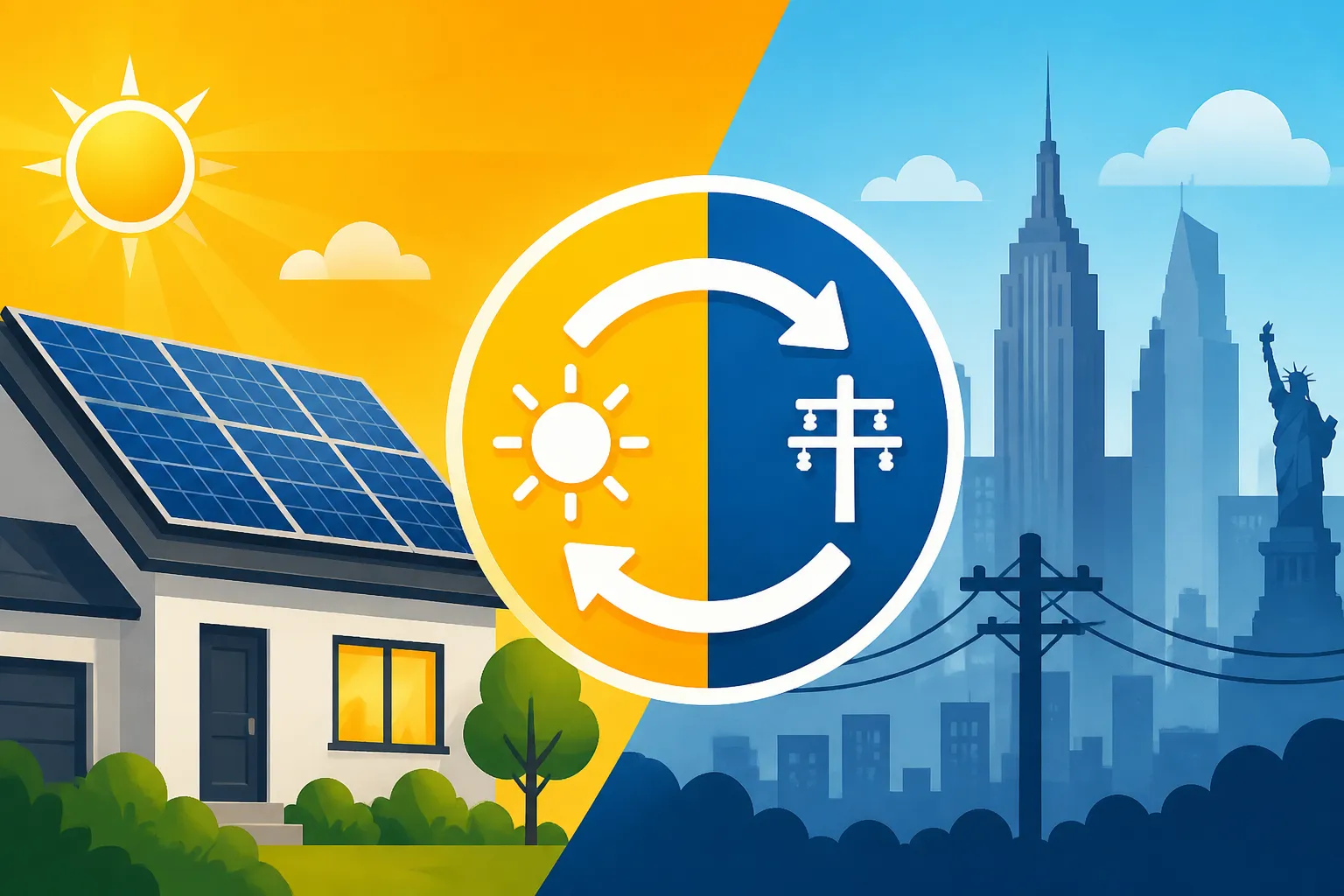
The landscape of solar in the Empire State has evolved significantly over the last few years. If you were looking into solar a decade ago, the rules were simple: for every kilowatt-hour (kWh) your panels sent to the grid, you got one kWh credited back to your bill. This was known as traditional Net Energy Metering (NEM). While that simplicity was great for early adopters, the state has moved toward a more complex, albeit more precise, system to manage the growing number of residential solar arrays.
In 2026, New York primarily operates under two frameworks: Phase One NEM for residential customers and the Value of Distributed Energy Resources, commonly referred to as VDER or the Value Stack. Most single-family homeowners still qualify for a version of net metering, but it now comes with a small caveat called the Customer Benefit Contribution (CBC). This fee was introduced to ensure that solar customers still contribute to state-funded programs like low-income energy assistance and energy efficiency initiatives, which were previously funded through volumetric charges on everyone’s utility bills.
When you start looking at Solar Panel Cost in New York, you have to factor in how these rules affect your payback period. Using a service like Modernize can help you connect with installers who are well-versed in the specific interconnection requirements of your local utility, whether that is National Grid or PSEG. Understanding these rules is the difference between a system that pays for itself in seven years versus one that takes twelve.
Phase One Net Metering for Residential Users
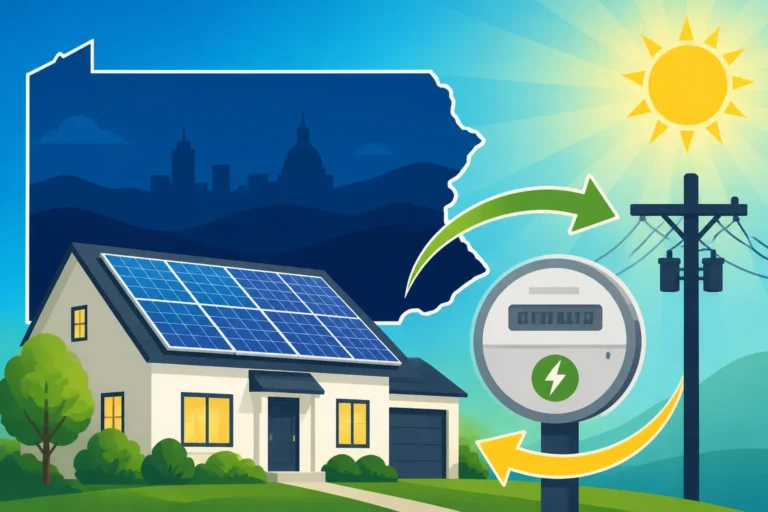
Residential solar systems under 25 kW in New York generally still fall under Phase One Net Metering. This is excellent news for the average homeowner because it remains one of the most favorable compensation structures in the United States. When your panels produce more electricity than your home consumes—which happens frequently during those bright, sunny afternoons in the Hudson Valley—the excess flows back to the grid. Your utility meter literally spins backward (metaphorically, as most are digital now), and you earn a 1:1 credit on your bill.
These credits are banked and can be used during the winter months or at night when your system isn't producing. However, it is important to note that these credits typically roll over month-to-month, but there is an annual "true-up" period. If you have excess credits at the end of your 12-month cycle, the utility might pay you out at a much lower "avoided-cost" rate rather than the full retail rate. This is why properly sizing your system is so critical; you don't want to overpay for a massive system that produces more than you can actually use.
The Value of Distributed Energy Resources VDER Explained
While most residents stick to Phase One NEM, larger systems or community solar projects utilize the VDER Value Stack. This is a much more granular way of calculating what a kilowatt-hour of solar energy is actually worth to the grid at any given moment. Instead of a simple 1:1 swap, VDER considers several factors: the wholesale price of energy, the capacity value (how much it helps the grid during peak demand), the environmental value (carbon reduction), and the demand reduction value.
For most homeowners, VDER is too complex and often less lucrative than standard net metering. However, as the state moves closer to its Climate Leadership and Community Protection Act (CLCPA) goals, we may see more residential transitions toward VDER-style pricing. Navigating these options can be daunting, which is why many people turn to Modernize to find experts who can run the numbers for their specific zip code. If you are interested in how this compares to other regions, you might look at New York Net Metering Rules in 2026 to see the latest updates on state-specific policy shifts.
The Financial Mechanics: How Much Is Your Exported Energy Worth
To truly understand the ROI of your investment, you have to look past the sticker price and into the monthly bill mechanics. In 2026, your utility bill in New York isn't just a single number; it's a collection of supply charges, delivery charges, and taxes. Under current New York Net Metering Rules in 2026, your solar credits typically offset both the supply and delivery portions of your volumetric (per kWh) charges. This is a huge benefit, as delivery charges in New York City and Westchester can often be as high as the energy supply itself.
However, you cannot net-meter your way out of the basic monthly service charge. Every utility, from Rochester Gas & Electric to ConEd, charges a flat fee just to keep your home connected to the wires. Even if your solar panels produce 120% of your energy needs, you will still see a bill for roughly $15 to $20 a month. This is a common point of frustration for homeowners who expect a "$0 bill," but it's a reality of staying grid-tied for reliability.
Bill Credits vs Cash Payments
One of the most frequent questions people ask is, "Will the utility company send me a check?" In New York, the answer is usually no—at least not in the way you might hope. Your excess solar production is turned into "billing credits." Think of these like a gift card for your utility company. If you produce $100 worth of extra energy in July, that $100 sits on your account to cover your heat pump or AC usage in the following months.
If you still have a massive credit balance at the end of your anniversary year, the utility will "true up" the account. For residential customers, this usually results in a small payment at the avoided-cost rate, which is significantly lower than the retail rate you pay. This is one reason why Solar Plus Battery Cost has become such a hot topic. Instead of selling your power back to the utility for pennies during the true-up, a battery allows you to keep that energy and use it yourself, effectively "selling" it to your future self at the full retail price.
Customer Benefit Contributions CBC Fees
The CBC fee is a relatively new addition to the New York solar landscape. Introduced by the Public Service Commission, this fee is calculated based on the size of your solar system (per kW). For example, if the CBC fee for your utility is $1.00 per kW per month and you have a 10 kW system, you'll see a $10 charge on your bill every month regardless of how much energy you use.
While no one likes an extra fee, it’s important to keep perspective. This fee was the compromise made to keep 1:1 net metering alive. In many other states, utilities have successfully lobbied to end net metering entirely, replacing it with much lower "net billing" rates. New York’s CBC fee is a way to maintain the high value of your solar credits while satisfying the utility's requirement for grid maintenance. You can find more details on how this interacts with your total savings in our New York Solar Incentives in 2026 guide.
| Feature | Phase One NEM (Residential) | VDER Value Stack (Commercial/Large) | Battery Storage Supplement |
|---|---|---|---|
| Compensation Rate | Full Retail Value (1:1) | Variable (Market + Grid Value) | Highest (Offsetting peak rates) |
| Fees | Monthly CBC Fee (per kW) | None (Integrated into Value Stack) | None |
| Credit Rollover | Monthly until Annual True-Up | Indefinite (Value-based) | N/A (Stored locally) |
| Best For | Standard Single-Family Homes | Farms, Businesses, Community Solar | Homes with high Time-of-Use rates |
Navigating the 2026 Solar Landscape in New York
Going solar in New York involves more than just picking out panels. You have to navigate a multi-layered system of incentives that work alongside net metering to make the project financially viable. Even without the federal credits of years past, the state-level support remains robust. The New York NY-Sun & State Solar Tax Credit (25%) is still a cornerstone of the process, providing a direct reduction in the cost of your system that complements the monthly savings you see from net metering.
When you work with a platform like Modernize, you can find contractors who understand how to bundle these incentives. For instance, the NYSERDA NY-Sun incentive is a "megawatt block" program, meaning the rebate amount decreases as more people in your region go solar. An experienced installer will know exactly which block your utility is currently in and how to lock in that rate before it drops.
Interaction with NY Sun and State Tax Credits
The synergy between New York Net Metering Rules in 2026 and the state's tax credits is what makes New York one of the top solar markets. The 25% New York State Solar Energy System Equipment Credit is capped at $5,000, but it can be carried forward if your tax liability isn't high enough to use it all in one year. Because net metering keeps your monthly bills low, that extra tax refund can be used to pay down the principal on a solar loan, significantly shortening your payback period.
Additionally, NYSERDA provides the NY-Sun rebate directly to your contractor, which lowers the upfront cost you have to finance. This is why many homeowners find that Solar Panel Cost for a 2,000 Sq Ft House is actually much more affordable than they initially thought. When you combine the upfront rebate, the state tax credit, and the ongoing 1:1 net metering credits, the "effective cost" of the system drops dramatically.
Choosing the Right System Size and Storage
In the current regulatory environment, "bigger" is not always "better." Because of the CBC fee and the low true-up rates, the goal is to size your system to cover roughly 100% to 110% of your annual electricity usage. If you plan on buying an Electric Vehicle (EV) or switching from a gas furnace to a cold-climate heat pump, you should tell your installer now so they can build that future capacity into your system design.
Battery storage is also becoming a standard part of the conversation in New York. While net metering acts like a "virtual battery," real physical batteries like the Tesla Powerwall provide backup power during the frequent storms we see in the Northeast. Furthermore, some New York utilities are starting to offer "Connected Solutions" programs where they will actually pay you to allow them to draw a little bit of power from your battery during peak grid stress events. This adds another layer of income on top of your net metering credits. Using Modernize to compare quotes for solar-plus-storage ensures you are getting a system that is future-proofed against further changes in utility rules.
Frequently Asked Questions About New York Net Metering Rules
One of the biggest concerns for homeowners is what happens to their net metering status if the rules change again. Generally, New York has a history of "grandfathering" existing customers. If you sign an interconnection agreement under current rules, you are typically protected for 20 years, even if the state moves all new customers to a less favorable system later. This "lock-in" effect is a major incentive to move forward sooner rather than later.
Another common question involves Selling a House With Solar Panels. In New York, net metering credits stay with the utility account, not the person. This means if you have banked $500 in credits and sell your house in May, the new owner inherits those credits, which can be a great selling point. It’s a tangible asset that reduces their cost of living from day one. You might also want to check out the Solar Permit Process in New York to understand the timeline from signing a contract to actually seeing those credits on your bill.
Finally, people often wonder if they can participate in Community Solar: How It Works & Who Qualifies if their roof isn't suitable for panels. Community solar in New York actually uses a version of VDER or "Net Crediting." You subscribe to a farm, and you receive a credit on your bill—usually at a guaranteed discount of 10% to 15%. It’s a great alternative if your home is shaded by the beautiful old-growth trees common in upstate New York or if you live in a multi-family building in Queens.
Whether you are looking at a full rooftop installation or just trying to lower your monthly ConEd bill, understanding New York Net Metering Rules in 2026 is your first step toward energy independence. By leveraging the 1:1 credits available today and combining them with state incentives, you can protect yourself from the inevitable utility rate hikes of the future.
Disclaimer
The information provided in this guide is for educational purposes only and does not constitute legal, tax, or financial advice. Solar incentives, net metering rules, and utility policies in New York are subject to change by the Public Service Commission and individual utility companies. Always consult with a qualified solar professional and a tax advisor to confirm your eligibility for specific programs and credits based on your unique circumstances.