Solar Incentives After the Federal Credit Expired
Many homeowners are understandably confused and concerned about the future of going solar, especially with all the talk about the federal solar tax credit expiring. It's a common misconception that the biggest incentive is gone, leaving people wondering if solar is still a smart financial move. This comprehensive guide will clear up that confusion, diving deep into the wealth of solar incentives that are still very much alive and well, helping you understand how to leverage them for significant savings.
Understanding the Federal Solar Tax Credit's Evolution
The chatter about the federal solar tax credit expiring often leads to widespread confusion, making many folks think the well has run dry for solar savings. However, this narrative often misses the crucial updates and extensions that have kept this vital incentive very much in play. It's not about an expiration; it's about understanding its long-term commitment and how it continues to support homeowners looking to embrace solar energy.
The ITC's Past and Current Status
For years, the federal solar Investment Tax Credit (ITC) has been the cornerstone of financial incentives for homeowners going solar. Initially, it offered a substantial 30% credit for systems installed on residential and commercial properties. This percentage was a huge motivator, effectively reducing the overall cost of a solar installation by nearly a third, making the initial investment far more palatable for many families across the country.
The ITC wasn't always a static entity; it's seen its share of ups and downs, including scheduled step-downs that led to the "expiration" fears. For instance, the credit was set to gradually decrease, dropping from 26% to 22% and eventually to 0% for residential systems. This planned reduction fueled the idea that homeowners needed to rush to get solar before the opportunity vanished. However, through legislative action, notably the Inflation Reduction Act of 2022, the ITC was not only extended but also boosted back to its original 30% rate for systems installed from 2022 through 2032. This means that if you're installing solar in 2026, you're still eligible for that generous 30% tax credit. You can learn more about this by reading our guide on Federal Solar Incentives That Still Exist in 2026. This significant extension ensures that solar remains an incredibly attractive financial proposition for the foreseeable future, providing stability and confidence for homeowners planning their clean energy transition.
Why the "Expired" Narrative Can Be Misleading
The idea that the federal solar tax credit has "expired" is a pervasive myth that often deters potential solar homeowners. This misconception usually stems from earlier legislative schedules that indeed projected a gradual phase-out of the credit. Before the more recent extensions, the ITC was, at various points, slated to decrease over several years, leading to genuine concerns about its eventual disappearance. When you heard news reports or saw articles from a few years back talking about the "impending expiration," they were likely referring to these older legislative timelines.
However, the political and economic landscape shifted, and lawmakers recognized the immense value of continuing to support renewable energy. The climate goals, energy independence initiatives, and job creation potential associated with solar power spurred bipartisan support for extending and strengthening these incentives. As a result, the perceived "expiration" was repeatedly pushed back and ultimately revitalized with the Inflation Reduction Act. This act didn't just kick the can down the road; it reset the credit to a robust 30% and locked it in for a full decade, offering long-term certainty that was previously missing. So, when you hear whispers of the credit being "gone," rest assured that it's a misunderstanding based on outdated information, and the current reality is much more favorable for solar adoption. For a deeper dive into this, check out Is the Solar Tax Credit Gone in 2026?.
Diving Deep into State and Local Solar Incentives
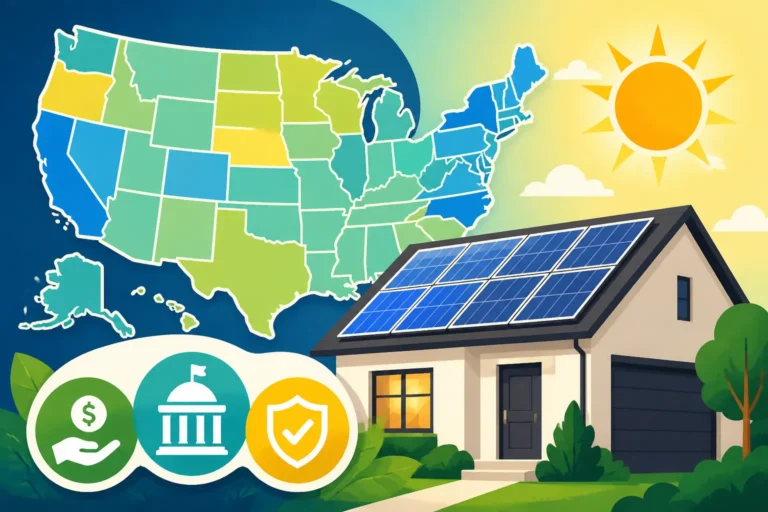
While the federal solar tax credit is a massive help, it's really just the tip of the iceberg when it comes to saving money on your solar journey. Many states, counties, and even cities have their own fantastic programs designed to sweeten the deal for homeowners who go solar. These local incentives are often tailored to regional energy goals and can significantly reduce your upfront costs and improve your long-term savings. It’s definitely worth digging into what's available right in your backyard.
State Tax Credits and Rebates
Beyond the federal level, many states offer their own tax credits, which function similarly to the federal ITC but are applied to your state income taxes. For example, states like New York offer a state solar tax credit that can further reduce your out-of-pocket expenses. This can be a huge bonus, allowing you to double-dip on tax savings, making solar even more affordable. Imagine getting 30% off from the federal government and then another chunk from your state – it adds up fast!
On top of tax credits, many states and local municipalities provide direct cash rebates for solar installations. These aren't tax deductions; they're money back in your pocket after your system is installed and operational. These rebates often vary based on system size or capacity (measured in kilowatts, kW) and can sometimes be capped at a certain amount or percentage of the system cost. For instance, some utility companies in states like Massachusetts have offered substantial rebates through programs like the SMART Program, which provides an incentive for every kilowatt-hour (kWh) of solar electricity produced. It's crucial to research the specifics for your area, as these programs are constantly evolving and new ones emerge frequently. A great starting point would be to explore a State Solar Incentives: Complete 2026 Guide for a detailed breakdown.
Property and Sales Tax Exemptions
One concern many homeowners have when investing in solar is whether adding value to their home will lead to higher property taxes. Thankfully, many states have anticipated this and offer solar property tax exemptions. This means that while your home's value might increase due to a shiny new solar array, that added value isn't factored into your property tax assessment. It’s a fantastic way to enjoy the benefits of increased home value and lower energy bills without facing an unexpected tax hike.
Similarly, sales tax exemptions for solar equipment and installation services are common in many regions. When you’re talking about a significant investment like a solar energy system, even a few percentage points of sales tax can amount to hundreds or even thousands of dollars. Eliminating this cost right off the bat can make the overall project more affordable and immediately improve your return on investment. These exemptions essentially mean you’re not paying extra simply to go green. To find out if your state offers these valuable benefits, you might want to look into Solar Property Tax Exemptions by State and Solar Sales Tax Exemptions by State.
Performance-Based Incentives (PBIs) and SRECs
Performance-Based Incentives (PBIs) are another exciting avenue for solar savings. Unlike upfront rebates or tax credits, PBIs provide payments over a period of time based on the actual electricity your solar system produces. Think of it like getting paid for every kilowatt-hour (kWh) your panels generate. This structure encourages efficient system design and proper maintenance, as the more energy your system generates, the more you earn. These incentives can offer a steady stream of income for years, complementing your electricity bill savings.
A specific type of PBI, and one that garners a lot of attention, are Solar Renewable Energy Certificates (SRECs). In states with SREC markets, your solar panels generate not only electricity but also SRECs, which are credits representing the environmental benefits of your solar generation. You can then sell these SRECs on a market, similar to a stock exchange, to utility companies that need to meet renewable energy mandates. The value of an SREC fluctuates based on supply and demand, but they can provide a substantial additional revenue stream for solar homeowners. States like New Jersey and Maryland have particularly robust SREC markets, allowing homeowners to earn significant income. Understanding how to navigate these markets, perhaps through resources like SRECs Explained: Selling Solar Renewable Energy Credits, can unlock even more financial benefits from your solar system.
Navigating Net Metering and Solar Buyback Programs
For many homeowners, the concept of sending excess solar energy back to the grid and getting credit for it is a major draw to going solar. This is primarily handled through net metering or various solar buyback programs. However, the rules around these programs are constantly shifting, and what might be available in one state or even one utility territory can be vastly different in another. Understanding these nuances is crucial for accurately projecting your long-term savings.
The Shifting Landscape of Net Metering
Net metering has traditionally been the gold standard for solar homeowners. Under a true net metering policy, your utility company essentially acts as a bank for your excess solar electricity. When your panels produce more power than your home uses, that surplus energy is sent back to the grid, and your meter effectively runs backward. You receive a credit on your bill, usually at the full retail rate of electricity, for every kilowatt-hour (kWh) you export. Then, when your panels aren't producing enough power (like at night or on cloudy days), you draw electricity from the grid and use those accumulated credits to offset your consumption. It's a simple, straightforward system that allows for maximum savings.
However, the landscape is evolving, and not all net metering policies are created equal. Some states are transitioning away from traditional full retail net metering to net billing or other compensation structures. California's NEM 3.0, for example, significantly changed how solar exports are compensated, moving towards an "avoided-cost rate" model where the credit you receive for sending power back to the grid is considerably lower than the retail price you pay for electricity. This shift means that while you still get credit, the financial benefits are reduced, often making solar battery storage more attractive to self-consume your generated power. Understanding these changes, especially through resources like What Is NEM 3.0 (California Net Billing)?, is vital for prospective solar owners. You should always research Net Metering Explained: How It Works by State to know what to expect in your specific area, as policies can vary drastically.
Understanding Different Buyback Structures
Beyond the traditional net metering, many utilities and states offer various solar buyback programs, which can differ significantly in how they compensate you for your excess solar generation. These aren't always as generous as full retail net metering but still provide a way to gain value from your surplus electricity. One common alternative is a Feed-in Tariff (FIT), though this is less common for residential systems in the U.S. A FIT guarantees a fixed price for every unit of solar electricity produced, regardless of whether it's consumed on-site or exported to the grid. This offers predictable income, but the rate can be set by the utility or state.
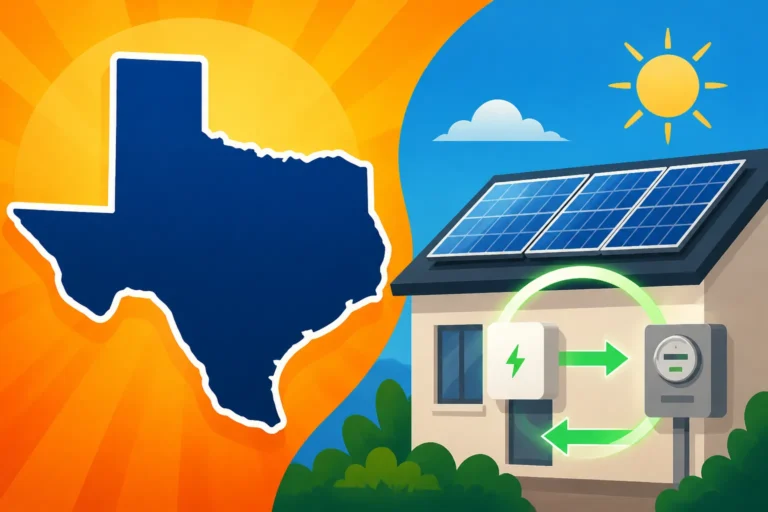
More frequently, especially in states without robust net metering, you'll encounter variations where you sell your excess power back to the utility at a wholesale rate, or a specific "avoided-cost" rate, which is typically lower than the retail price you pay for electricity. This means the utility buys your excess power at a lower rate than what they charge you for power you draw from them. For instance, in Texas, where full retail net metering isn't mandated statewide, many utilities offer individual solar buyback programs, which can vary widely. Some might offer a flat rate per kWh exported, while others tie it to a market rate that fluctuates throughout the day. This complexity makes it even more important to compare programs carefully and factor them into your financial projections. It also highlights why having a battery might become more appealing in areas with less favorable buyback rates, allowing you to store and use your own power instead of selling it cheap.
Exploring Utility-Specific Solar Programs
It's easy to focus solely on federal and state incentives, but overlooking what your local utility company offers would be a big mistake. Many utilities across the country have their own unique programs designed to encourage solar adoption, which can provide additional financial benefits and make your solar journey even more rewarding. These programs often reflect the utility's specific energy goals and the regulatory environment they operate within.
Direct Utility Rebates and Grants
Many utility companies offer direct rebates for homeowners who install solar panels. These aren't just for tax season; these are often cash incentives paid directly to you, or applied as a credit on your bill, once your solar system is installed and connected to the grid. The amounts can vary significantly, sometimes based on the size of your system (e.g., a certain dollar amount per kilowatt installed) or a fixed amount per project. For example, some municipal utilities or electric cooperatives, particularly smaller ones, might have very attractive but limited-time rebate programs to meet local renewable energy targets.
These utility rebates are often designed to complement broader state and federal incentives, allowing homeowners to stack multiple savings opportunities. Some utilities might also offer specific grants, particularly for low-income households or those looking to add solar battery storage. It's really worth checking your utility provider's website or contacting their energy efficiency department. You might be surprised at what's available. Remember, these programs can change, so staying up-to-date is key. A valuable resource for this is our article on Utility Solar Rebates: How to Find Yours.
Community Solar Initiatives
For those who can't install solar panels on their own roofs – perhaps because they live in an apartment, have a heavily shaded roof, or simply don't own their home – community solar programs offer a fantastic alternative. Community solar allows multiple individuals or businesses to subscribe to a larger, off-site solar farm. Participants receive credits on their electricity bills for the power generated by their share of the community solar project, effectively enjoying the benefits of solar without needing to install panels on their property.
These programs are becoming increasingly popular, supported by various utility companies and state policies. Many utilities either develop their own community solar farms or partner with third-party developers to facilitate these projects. The incentives here come in the form of guaranteed savings on your electricity bill, typically a percentage reduction in your monthly charges. This makes solar accessible to a much broader demographic, including renters and those with unsuitable roofs. It’s a collective effort that spreads the benefits of clean energy. If you're wondering if you qualify, our guide on Community Solar: How It Works & Who Qualifies can provide more details.
Beyond the Grid: Battery Storage Incentives
While generating your own electricity with solar panels is fantastic, integrating battery storage takes your energy independence to a whole new level. Batteries allow you to store excess solar power generated during the day for use at night or during grid outages. This not only maximizes your self-consumption but also provides crucial backup power. Recognizing the value of grid resilience and increased renewable energy utilization, both federal and state governments have begun offering significant incentives for adding battery storage.
State-Level Battery Storage Credits
Just like with solar panels, many states are stepping up to offer specific incentives for homeowners who install solar battery storage systems. These can come in various forms, such as state tax credits, direct rebates, or even performance-based incentives for batteries that participate in grid services. For example, California, a leader in renewable energy, offers robust programs like the Self-Generation Incentive Program (SGIP) which provides incentives for various distributed energy resources, including battery storage, to enhance grid reliability and promote clean energy. These programs are often designed to encourage battery adoption, especially in areas prone to power outages or with evolving net metering policies.
The incentives for battery storage can be a game-changer, especially when combined with your solar panel incentives. They help offset the upfront cost of what can be a significant investment, making it more financially feasible to achieve greater energy independence. It's worth noting that eligibility requirements for these state-level battery incentives can vary widely, often depending on your utility, specific equipment, and whether you're adding storage to an existing solar system or installing it alongside a new one. Researching these localized programs, potentially through a resource like Solar Battery Incentives in 2026, is essential to understand your potential savings.
Federal Provisions for Energy Storage
It’s important to remember that the extended 30% federal solar Investment Tax Credit (ITC) isn't just for solar panels anymore! Thanks to recent legislative changes, standalone energy storage systems are also eligible for the same 30% federal tax credit. This is a huge development, as it means even if you installed your solar panels a few years ago and are now considering adding a battery, you can still claim a substantial federal tax credit on the battery installation. This makes upgrading your solar setup with storage significantly more affordable and appealing.
This federal incentive applies whether you install the battery at the same time as your solar panels or as a separate project later on. The primary requirement is that the battery has a capacity of at least 3 kilowatt-hours (kWh) and is charged by a renewable energy source like your solar panels. This federal support underscores the growing recognition of energy storage as a critical component of a resilient and sustainable energy future. It also provides a powerful financial motivation for homeowners to enhance their solar systems, providing peace of mind during grid outages and maximizing the use of their self-generated clean energy. So, yes, Are Solar Batteries Still Eligible for Incentives in 2026? – a resounding yes!
How to Find and Maximize Your Solar Savings
Navigating the world of solar incentives can feel like a treasure hunt, but with the right approach, you can uncover a wealth of savings that make going solar an even smarter financial decision. It's not just about finding an incentive; it's about identifying all the incentives you qualify for and stacking them strategically to maximize your overall return on investment.
Researching Local Programs
The first and most critical step is to become a savvy researcher. Start by looking into programs offered by your state, county, and even your specific city or town. Websites for your state's energy office, public utilities commission, or environmental agencies are excellent starting points. Many states have comprehensive portals dedicated to renewable energy incentives. Don't forget to check the websites of your local electric utility company, as they often offer their own unique rebates, grants, or net metering programs that can significantly impact your bottom line. These local details are crucial because incentives can vary dramatically even within the same state.
You'll want to pay close attention to eligibility requirements, application deadlines, and whether funds are available on a first-come, first-served basis. Some popular programs can run out of funding quickly, so acting promptly once you've identified a good fit is important. For instance, knowing if your utility offers a Does My Utility Offer a Solar Rebate? can make a huge difference in your upfront costs. Additionally, look for programs specifically designed for various demographics, such as Low-Income Solar Programs & Assistance, which can provide even greater support for eligible households. The more detailed your research, the better equipped you'll be to leverage every available dollar.
Working with Reputable Installers
While DIY solar is an option for some, working with a reputable solar installer is often the best way to ensure you're maximizing your incentives and navigating the complex application processes. Experienced installers are well-versed in the intricate landscape of federal, state, and local incentives. They often have dedicated teams that stay up-to-date on all available programs, including changes to existing ones and the introduction of new ones. A good installer will not only design a system optimized for your home's energy needs but also help you identify every incentive you qualify for and assist with the necessary paperwork.
During the quoting process, don't hesitate to ask prospective installers detailed questions about how they factor incentives into their proposals. A transparent installer will clearly itemize the federal tax credit, any state rebates, property tax exemptions, and how net metering or SREC sales will impact your long-term savings. They should be able to provide you with a comprehensive financial breakdown that includes all these elements. This expert guidance can save you time, prevent costly mistakes, and ultimately ensure you get the most financial benefit from your solar investment. It’s also wise to get multiple quotes to compare not just the system cost, but also how each installer plans to help you leverage available incentives.
Overview of Key Solar Incentives
To help you get a clear picture of the types of incentives still available, here's a quick overview of the most common categories and what they generally entail.
Disclaimer
This article is for general informational purposes only and does not constitute professional advice. Laws, prices and regulations vary by location and change over time. Consult a qualified professional for guidance on your specific situation.