What Is the Best Solar Panel for Cold Climates?
It's easy to look at a chilly, gray winter morning and wonder if solar panels could possibly work in a cold climate. Many homeowners in places like Minnesota, Montana, or even upstate New York often dismiss solar power, thinking the lack of constant blazing sunshine or the inevitable blanket of snow would render their investment useless. But here's a secret: solar panels don't actually hate the cold. In fact, they often perform better in cooler temperatures. The real challenge lies in finding panels that can withstand the physical rigors of winter and designing a system that maximizes energy capture despite shorter days and snow cover. This guide will walk you through what truly makes a solar panel ideal for colder regions, helping you make an informed decision for your home.
Understanding Solar Panel Performance in Cold Weather
When you're thinking about solar in a region that sees its fair share of frost and snow, it's natural to have questions. You might picture panels struggling to produce power, or even worse, breaking under the weight of heavy snow. But let's clear up some common misconceptions and dig into the physics of how solar panels actually react to winter's embrace.
The Counterintuitive Benefit of Cold Temperatures
It might sound strange, but solar panels generally operate more efficiently in cooler conditions. Think about any electronic device you own – your smartphone, your laptop. When they get too hot, their performance can dip. Solar panels are no different. They convert sunlight into electricity, and this process is more effective when the panels themselves are cool. Every degree Celsius above 25°C (about 77°F) can lead to a slight decrease in efficiency, typically around 0.3% to 0.5% per degree, depending on the panel.
So, while the sun's intensity might be lower in winter due to the angle of the sun, the panels themselves are running at optimal temperatures. This means that on a crisp, sunny winter day in, say, Vermont, your panels could actually be producing power at a higher efficiency rate than they would on a scorching hot summer afternoon in Arizona, even if the total amount of sunlight is less. It's a nuanced point, but an important one for understanding why cold isn't inherently bad for solar.
The Real Challenge: Snow and Shading
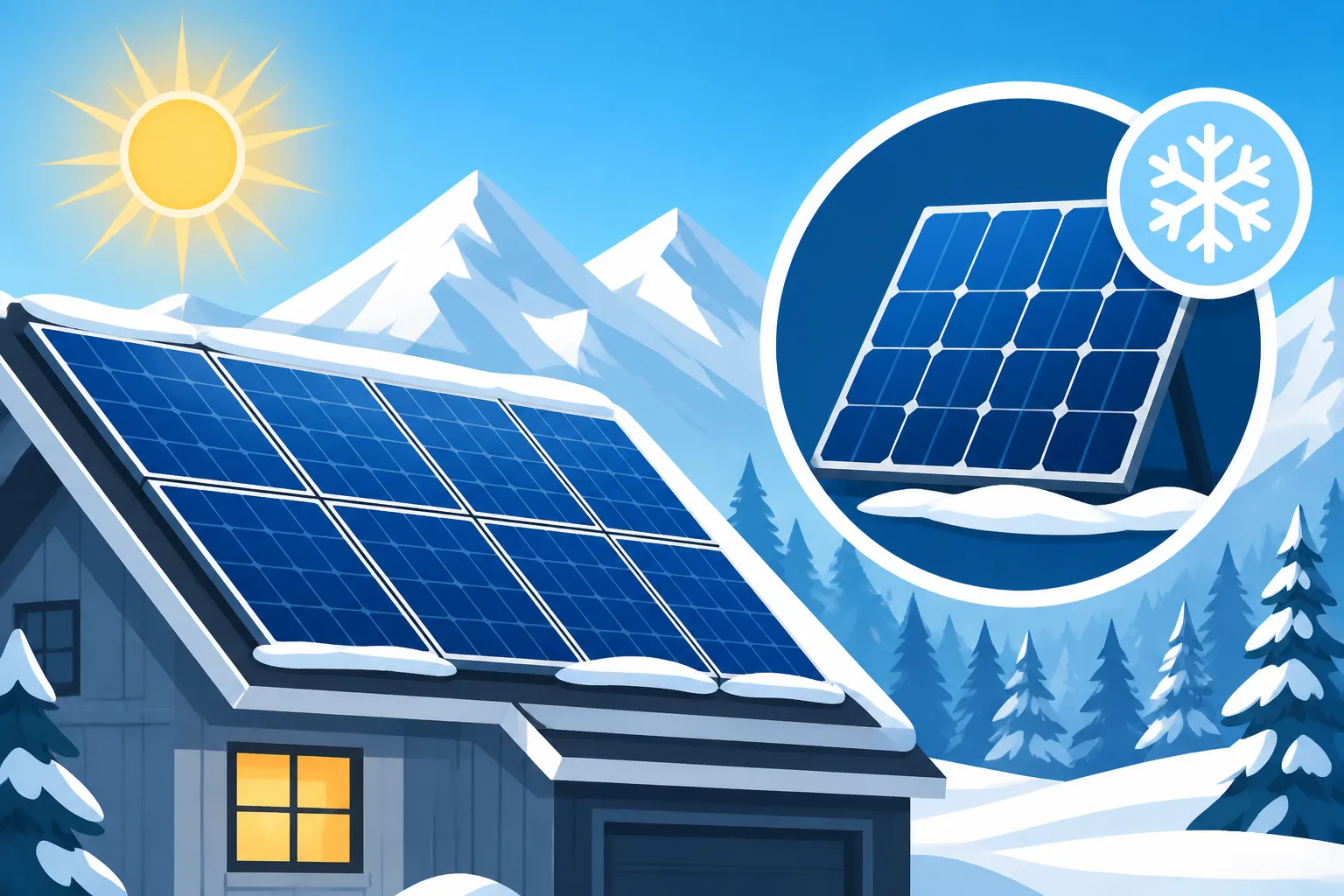
While cold temperatures are a friend to panel efficiency, snow is undeniably the biggest adversary for solar production in winter. A thick blanket of snow covering your panels means no sunlight can reach the cells, and therefore, no electricity can be generated. This isn't a flaw in the panel's design but a simple physical obstruction. How much snow you get, how long it stays, and how quickly it melts off are crucial factors.
Beyond direct snow cover, shorter daylight hours and a lower sun angle mean that shading from trees or nearby structures becomes a much bigger issue in winter than in summer. A small shadow that's barely noticeable in July can stretch across a significant portion of your array in December, impacting overall production. This makes careful system design and panel placement even more critical for homes in cold climates. Understanding how to navigate these challenges is key to making solar a successful investment.
Key Metrics for Cold Climate Performance
When evaluating solar panels for a cold climate, you'll want to look at a few specific technical specifications. These aren't always front and center in marketing materials, but they tell a critical story about how a panel will perform when the mercury drops.
First up is the Temperature Coefficient of Power (Pmax). This number, usually expressed as a negative percentage per degree Celsius (%/°C), tells you how much a panel's power output decreases for every degree its temperature rises above 25°C. For cold climates, you actually want this number to be closer to zero (e.g., -0.30% instead of -0.45%), as it indicates the panel is less affected by temperature fluctuations.
Next, consider the panel's low-light performance. While cold weather boosts efficiency on sunny days, winter also brings more cloudy, overcast days. Some panels are simply better at capturing diffuse or indirect sunlight. Manufacturers often don't publish a specific "low-light performance" metric, but it's often correlated with advanced cell technologies like N-type TOPCon or Heterojunction (HJT) cells, which typically outperform traditional PERC cells in these conditions.
Finally, don't overlook durability and snow load ratings. This is less about electrical performance and more about physical resilience. Panels need to be able to withstand the weight of heavy snow accumulation without bending or cracking. Look for panels with high ratings for static and dynamic loads, often measured in Pascals (Pa). This ensures your investment literally won't buckle under pressure.
Essential Features for Cold-Climate Solar Panels
Choosing the right solar panels for a region that experiences harsh winters goes beyond just looking at the sticker price. You need panels that are engineered to endure and perform when temperatures plummet and snow piles up. It’s about ensuring your system remains robust and productive, year after year, through all four seasons.
Durability and Snow Load Rating
Let's be frank: winter can be brutal. Heavy snowfall, ice formation, and even high winds are par for the course in many northern states. This is where the physical strength of your solar panels becomes incredibly important. You need panels that aren't just efficient, but tough.
The snow load rating tells you how much weight a solar panel can safely bear. This is typically measured in Pascals (Pa) or pounds per square foot (PSF). For reference, a typical solar panel usually has a snow load rating of around 5,400 Pa (about 113 PSF), but in areas with particularly heavy snowfall, like parts of the Rocky Mountains or the Sierra Nevada, you might want to consider panels with even higher ratings, perhaps up to 6,000 Pa or more. These panels are built with stronger frames and more robust glass, designed to resist bending or cracking under significant accumulation. This is crucial because replacing a damaged panel isn't just about the panel itself; it involves labor, potential roof access challenges, and system downtime.
Beyond snow load, consider wind resistance. Winter often brings strong gusts, and panels need to be securely mounted and structurally sound to avoid damage or detachment. Reputable manufacturers design their panels to meet stringent industry standards for both wind and snow loads, ensuring they can stand up to Mother Nature's worst. Make sure your installer uses high-quality racking systems that complement the panels' durability.
Low Temperature Coefficient of Power (Pmax)
Remember how we talked about solar panels performing better in the cold? That's where the Temperature Coefficient of Power (Pmax) comes into play. This isn't just a fancy technical term; it's a direct indicator of how well your panels will maintain their power output when the air is crisp and cool, but the sun is shining brightly.
A lower (closer to zero) temperature coefficient means less efficiency loss as the panel heats up, and conversely, it means the panel capitalizes more effectively on cooler operating temperatures. For instance, a panel with a Pmax of -0.30% per degree Celsius will lose less power than a panel with -0.40% per degree Celsius when the panel temperature rises. In cold climates, where ambient temperatures are frequently below the standard test condition of 25°C, this means the panel can operate at peak or even slightly above rated efficiency.
Look for panels with a Pmax rating between -0.29% and -0.35% per degree Celsius. Premium panels from brands like Maxeon (formerly SunPower) or REC are known for having excellent temperature coefficients, allowing them to truly shine on those clear, frigid days. This factor can make a noticeable difference in your overall winter energy harvest, especially when you factor in decades of performance.
Advanced Cell Technologies for Low Light
While colder temperatures can be a boon, the shorter, often cloudier days of winter in northern latitudes present a different kind of challenge: reduced sunlight. This is where advanced solar cell technologies truly make a difference, particularly their ability to capture low-light conditions effectively.
Traditional solar panels, often using PERC (Passivated Emitter and Rear Cell) technology, perform adequately in direct sunlight. However, newer technologies like N-type TOPCon (Tunnel Oxide Passivated Contact) or Heterojunction (HJT) cells are designed to capture a broader spectrum of light and perform more efficiently under diffuse or indirect illumination, which is common on overcast winter days. These cells have superior spectral response, meaning they can convert more of the available light into electricity, even when the sun isn't directly overhead or is obscured by clouds.
For instance, a homeowner in Seattle, known for its cloudy winters, would benefit greatly from panels utilizing these advanced cell structures. They might not get as much direct sunlight as someone in Phoenix, but the enhanced low-light performance ensures consistent production during those long, gray stretches. When choosing panels, investigate if the manufacturer highlights superior low-light performance as a feature, which often points to these advanced cell types. This feature can be critical for maintaining respectable energy production during the dreariest winter months.
Top Solar Panel Brands for Cold Climates
Navigating the world of solar panel manufacturers can feel overwhelming, with countless brands promising top-tier performance. But for those of us living in cold climates, the choice needs to be a bit more specific. We’re not just looking for raw power output; we're looking for panels that marry efficiency with unwavering resilience.
High-Performance and Robust Options
When the snow flies and the temperatures drop, you want panels that are known for both their power production and their ability to take a beating. Certain brands have consistently proven their mettle in these demanding conditions.
Maxeon (formerly SunPower) panels are often at the top of the list for cold climates. They are renowned for their high efficiency and extremely low temperature coefficients, meaning they maintain excellent performance even on those super-chilly, clear winter days. Beyond performance, Maxeon panels are built with a solid copper foundation, making them incredibly resistant to cracking and corrosion, which is a huge advantage when dealing with freeze-thaw cycles and heavy snow loads. Their warranties are also among the industry's best, reflecting their confidence in durability.
Another strong contender is REC Solar. Their Alpha Pure and Alpha Pure-R series panels utilize HJT technology, which provides excellent low-light performance – a boon for overcast winter days – and a very competitive temperature coefficient. REC panels are also known for their robust frame design, capable of handling significant snow loads, making them a popular choice in regions like the Northeast and Midwest. Their Norwegian heritage certainly suggests an understanding of harsh weather.
Finally, Qcells, especially their Q.PEAK DUO series, offer a great balance of performance and value. While perhaps not always matching the absolute peak efficiency of Maxeon, Qcells panels leverage half-cut cell technology to improve performance in shaded conditions, which can occur with snow accumulation or low winter sun angles. Their durability and build quality are solid, making them a reliable choice for cold weather without necessarily breaking the bank. Choosing between these often comes down to budget and specific performance needs, but all are excellent candidates.
| Feature / Brand | Maxeon (SunPower) | REC Solar | Qcells |
|---|---|---|---|
| Cell Technology | Back contact | HJT | Half-cut monocrystalline |
| Typical Efficiency | 22-23% | 21-22% | 20-21% |
| Temp. Coefficient (Pmax) | -0.29% to -0.30% | -0.26% | -0.34% to -0.36% |
| Snow Load Rating (Pa) | 5400 | 7000 (Alpha Pure) | 5400 |
| Durability Highlight | Copper foundation, no grid lines | Twin panel design, reinforced frame | Robust frame, advanced cell connection |
| Low-Light Performance | Excellent | Excellent (HJT) | Very Good (half-cut cells) |
| Warranty (Product/Power) | 40 years / 40 years | 25 years / 25 years | 25 years / 25 years |
Manufacturers with Strong Warranties and Testing
Beyond the immediate performance metrics, the long-term viability of your solar investment in a cold climate hinges heavily on the manufacturer's warranty and their commitment to rigorous testing. A strong warranty isn't just a piece of paper; it's a testament to the company's confidence in its product's ability to withstand the elements over decades.
When looking at warranties, pay close attention to two main types: the product warranty and the performance warranty. The product warranty covers defects in manufacturing, materials, and workmanship – essentially, if the panel physically fails. For cold climates, you want a generous product warranty, ideally 20-25 years or more, as this covers issues that might arise from thermal cycling, ice damage, or stress from heavy snow. Some premium brands like Maxeon offer industry-leading 40-year product warranties, giving homeowners immense peace of mind.
The performance warranty guarantees that your panels will still produce a certain percentage of their rated power after a specified number of years, usually 25 or 30 years. Even the best panels degrade slightly over time, but a good warranty ensures this degradation is minimal. For example, a common performance warranty might guarantee 85% of original output after 25 years. This is important in cold climates where optimal efficiency on clear days contributes significantly to annual production. You can learn more by checking out our guide on Solar Panel Warranties Explained.
Furthermore, look for manufacturers who emphasize extensive real-world and laboratory testing that goes beyond standard IEC certifications. This might include testing for extreme temperature cycling, humidity-freeze cycles, and dynamic mechanical load tests (simulating wind and snow). Companies that invest heavily in these robust testing protocols are generally producing panels better suited for the unforgiving conditions of a cold, snowy region.
Considerations for Specific Regional Conditions
While general recommendations for cold-climate solar panels are helpful, the "best" panel can also depend on the very specific conditions of your local area. The winter in Anchorage, Alaska, is quite different from the winter in Denver, Colorado, or even Syracuse, New York.
For instance, if you live in a region known for heavy, persistent snowfall like the Sierra Nevada mountains in California or parts of Michigan's Upper Peninsula, maximizing snow load rating should be a top priority. In these areas, panels with reinforced frames and higher static load ratings (e.g., REC Solar's Alpha Pure series) become even more attractive. You might also consider a system design with steeper tilt angles to encourage snow to slide off naturally, although this needs to be balanced with maximizing summer production.
In areas that experience frequent overcast skies and shorter daylight hours, such as much of the Pacific Northwest or parts of New England, panels with superior low-light performance and excellent temperature coefficients will be paramount. Brands leveraging N-type or HJT cell technology will likely deliver better results than those relying on less advanced designs. The ability to capture diffuse sunlight makes a significant difference over months of cloudy weather.
Finally, think about extreme temperature swings. Regions with harsh diurnal temperature variations (hot days, very cold nights) or frequent freeze-thaw cycles put immense stress on panel materials. Here, a high-quality product warranty and panels with robust construction, minimal thermal expansion issues, and excellent resistance to micro-cracking (like those from Maxeon) are essential for long-term reliability. Your local solar installer, familiar with the nuances of your regional climate, will be an invaluable resource in making these distinctions. They can help you determine How Many Solar Panels Do I Need for My Home? based on your specific conditions.
Optimizing Your Solar System for Winter Performance
Choosing the right solar panels is a fantastic start, but it's just one piece of the puzzle for a successful system in a cold climate. The overall design, installation quality, and ongoing maintenance play an equally critical role in ensuring your system performs optimally throughout the winter months, maximizing your energy production and savings.
Proper System Design and Tilt Angles
When designing a solar array for a cold climate, the installation angle, or tilt, of your panels is a more crucial consideration than in warmer, sunnier locales. While a general rule of thumb for tilt is often your latitude, in cold and snowy regions, installers might adjust this to optimize for winter sun and snow shedding.
A steeper tilt angle has two primary benefits in winter. First, it allows the panels to capture more of the sun's lower-angle rays during the shortest days of the year, which naturally sits lower in the sky. Second, and perhaps even more importantly, a steeper tilt encourages snow to slide off the panels more readily. Gravity does most of the work, reducing the duration your panels are completely covered and unproductive. If you live in a region like Colorado that sees significant snowfall, this can make a huge difference in your winter energy harvest. A tilt of 45-60 degrees is not uncommon for homes looking to optimize winter performance, especially if roof space allows for it.
Of course, this must be balanced with maximizing annual production. A very steep winter-optimized tilt might slightly reduce summer output. A skilled solar installer will analyze your specific electricity usage patterns, local weather data, and roof characteristics to find the optimal tilt and azimuth (direction) for your system. They'll also consider potential shading from surrounding trees or structures, especially given the sun's lower trajectory in winter. This initial design phase is absolutely critical for the long-term success of your solar investment. Our guide on How to Choose a Solar Installer can help you find a qualified professional.
The Role of Inverters and Batteries
The components beyond the panels themselves—specifically inverters and batteries—are also vital for robust cold-climate solar performance. They ensure the power generated is efficiently converted, stored, and used, especially when the grid is unreliable or the sun isn't shining.
Inverters are the brains of your system, converting the DC electricity from your panels into AC electricity your home can use. In cold climates, microinverters (like those from Enphase) or power optimizers (like SolarEdge) can be particularly advantageous. These devices optimize power at the individual panel level. This means if one panel is shaded by snow or a low-angle shadow, the performance of the entire string isn't dragged down. If one panel is covered in snow, the others can still produce optimally. This is a significant advantage over traditional string inverters, where partial shading can severely reduce the output of an entire section of panels. Understanding the pros and cons is covered in our article on Solar Inverters: String vs Microinverter vs Optimizer.
Solar batteries are becoming increasingly popular, and for good reason, especially in regions prone to winter power outages. While solar panels usually don't work during a blackout without a battery (due to grid-tie safety regulations), a battery storage system like a Tesla Powerwall or Enphase IQ Battery can provide essential backup power. This ensures your critical loads stay on, even if a winter storm knocks out the grid. Furthermore, batteries allow you to store excess energy generated on sunny winter days for use during cloudy periods or at night, effectively extending your "solar day." Many modern batteries are designed to perform well in cold ambient temperatures, though installers will typically place them in garages or basements to maintain optimal operating conditions. You can read more about Best Solar Batteries of 2026 and decide if one is right for your home.
Maintenance and Monitoring in Cold Weather
Even the best-designed solar system needs a little love and attention, especially in cold climates. Proper maintenance and diligent monitoring ensure your system continues to perform at its peak through the darkest days of winter.
One of the most common questions homeowners have is, "Do solar panels work in snow?" Yes, they do, once the snow clears! This brings us to the key maintenance point: snow removal. While a steep tilt angle helps, heavy, wet snow can still accumulate. For most residential systems, it's generally recommended to let the snow melt naturally, as attempting to remove it yourself can be risky (due to heights and slippery surfaces) and could potentially damage the panels if done improperly. However, for those keen on maximizing production, long-handled squeegees or brushes designed for solar panels can be used safely from the ground or a secure ladder. Never use harsh chemicals or abrasive tools. You can dive deeper into this topic in our article, Do Solar Panels Need Cleaning?.
Monitoring your system's performance is also crucial. Most modern solar systems come with an app or online portal that allows you to track your energy production in real-time. This lets you quickly identify if a panel is underperforming, perhaps due to persistent snow cover, shading, or an unexpected issue. Being proactive allows you to address problems quickly, minimizing lost production. For instance, if you notice a significant dip in output after a heavy snowfall that doesn't clear in a day or two, it might indicate an obstruction or a need for a professional check.
Regular inspections, ideally by your installer, are also a good idea. They can check for any loose wiring, ensure mounts are secure after high winds, and confirm that there are no signs of wear and tear that winter weather might exacerbate. Proactive maintenance is always better than reactive repairs, especially when dealing with cold-weather challenges.
Disclaimer
The information provided in this guide is intended for general informational purposes only and does not constitute professional advice. Solar system suitability, performance, and costs can vary significantly based on your specific location, energy usage, roof characteristics, and available incentives. We strongly recommend consulting with multiple qualified local solar professionals to receive personalized assessments and quotes before making any decisions regarding a solar installation. While we strive to provide accurate and up-to-date information, local regulations, incentives, and product availability are subject to change.