Community Solar: How It Works & Who Qualifies
It's incredibly frustrating when you want to embrace solar energy, but your home just isn't suitable, or the upfront costs feel overwhelming. Maybe you rent, your roof is perpetually shaded, or you simply don't have the cash for a full rooftop installation. This comprehensive guide is designed to cut through the confusion and show you how community solar offers a fantastic, accessible pathway to clean energy for virtually anyone, no rooftop required.
What Exactly is Community Solar and Why Does It Even Exist?
For years, the dream of going solar felt exclusive, reserved for homeowners with perfect south-facing roofs, deep pockets, or access to hefty tax credits and incentives. But let's be real: not everyone fits that mold. Community solar emerged precisely to bridge that gap, making solar power a reality for a much wider audience. It's a game-changer for folks who felt left out of the solar revolution.
Addressing Common Solar Frustrations
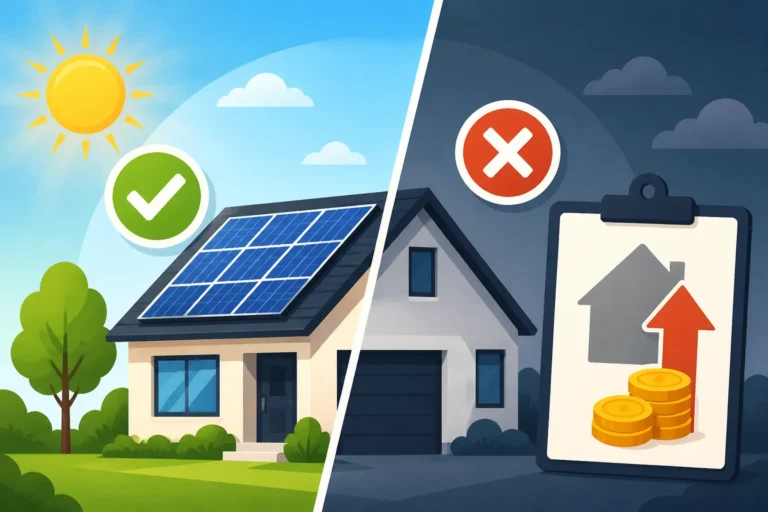
Think about it: how many times have you heard someone say, "I'd love to go solar, but…"? The "buts" are endless. Maybe your home is nestled under a canopy of gorgeous, shade-giving trees, or your roof is old and needs replacing before you even think about panels. Perhaps you live in an apartment building, or your landlord isn't interested in making such a significant investment. These are all valid concerns, and for a long time, they were genuine roadblocks to solar adoption. Community solar recognizes these barriers and offers a practical workaround that doesn't require any modifications to your own home.
Beyond the physical limitations, the financial commitment for a traditional rooftop solar system can be daunting. Even with fantastic programs like the federal Solar Tax Credit 2026: What Happened to the Federal Credit or various State Solar Incentives: Complete 2026 Guide, the initial outlay can still be substantial, often tens of thousands of dollars. Not everyone has that kind of capital sitting around, nor does everyone want to take on a long-term loan. Community solar often comes with little to no upfront cost, making it financially accessible in a way rooftop solar often isn't.
The Basic Concept of Community Solar
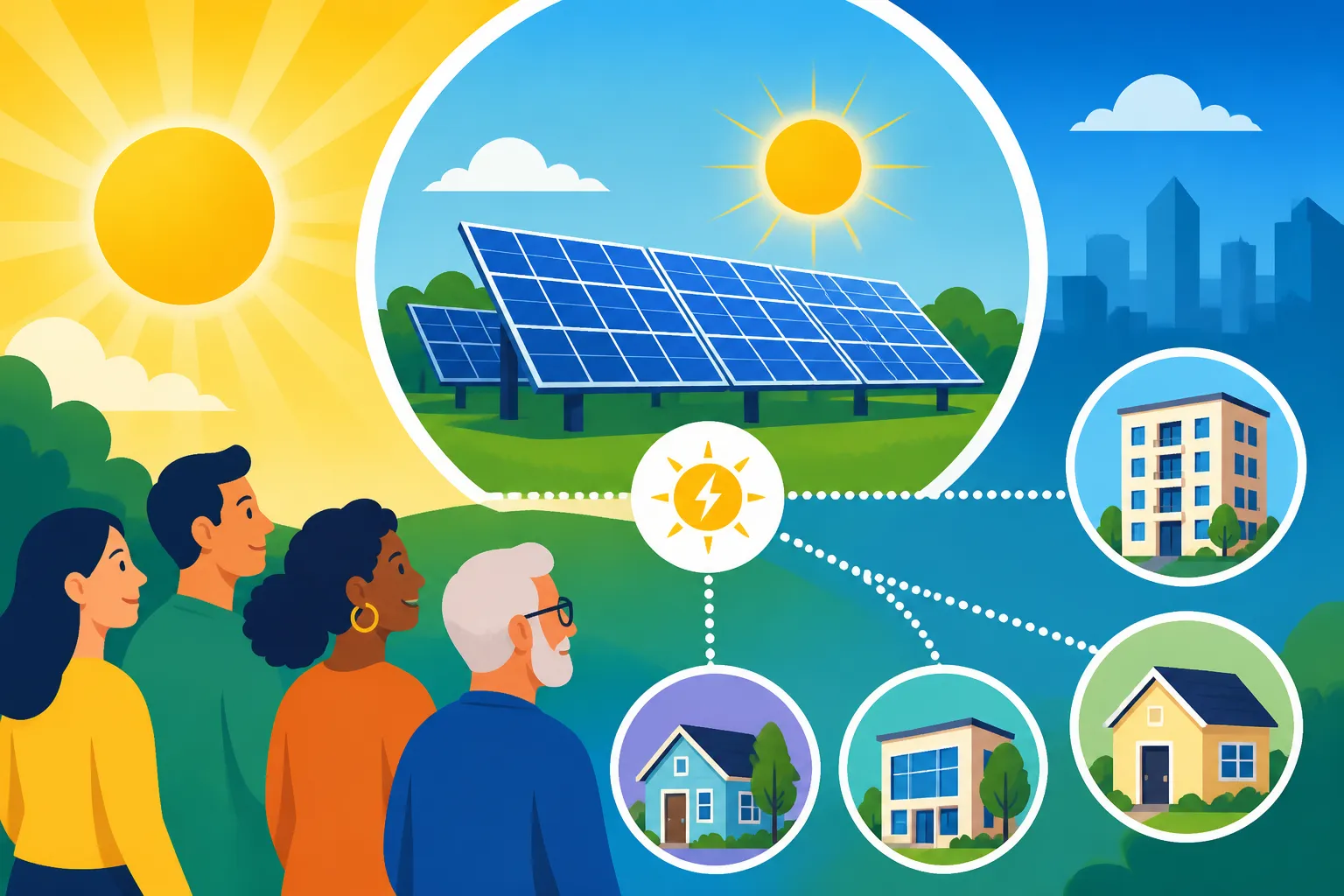
At its heart, community solar is about shared ownership or subscription to a larger, off-site solar farm. Instead of installing solar panels on your individual home, you buy or subscribe to a portion of the energy produced by a larger solar array located elsewhere – usually on a piece of land that's well-suited for maximum sun exposure, like an old field or a commercial rooftop. This large-scale project generates electricity, which then feeds into the local power grid.
As a subscriber, you essentially get "credit" on your electricity bill for the power generated by your share of the community solar farm. It's a way to support renewable energy and save money on your utility bills without having to install anything on your property or deal with the complexities of maintenance. It's a powerful model because it harnesses the efficiency of large-scale solar production while distributing the benefits directly to individual households and businesses in the community.
How Community Solar Programs Actually Work
Understanding the mechanics of community solar can feel a bit like learning a new language, especially with all the talk of "credits" and "subscriptions." But honestly, it's quite straightforward once you break it down. It’s less about complex wiring and more about smart billing, allowing you to reap the benefits of solar power without the typical homeowner headaches.
Subscribing to a Community Solar Project
Getting involved in a community solar project typically starts with finding an available "farm" or array in your area. These projects are usually developed and managed by third-party companies, often called community solar developers or providers. Once you find a project that's open for subscriptions, you sign up for a share of its electricity production. Think of it like subscribing to a streaming service, but instead of entertainment, you're subscribing to clean energy.
The size of your subscription share is usually determined by your average monthly electricity usage. The goal is to match your share to your consumption, so the solar credits you receive can offset a significant portion, or even all, of your traditional electricity bill. The beauty of this model is its flexibility; you're not locked into a specific panel count or system size that might not perfectly align with your home's needs.
How You Receive Your Solar Credits
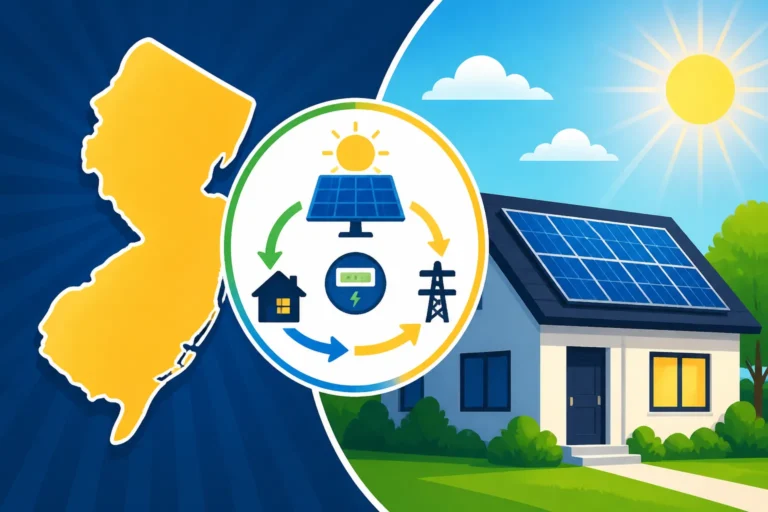
This is where the financial magic happens. When the community solar farm generates electricity, that power is sent directly to the local utility grid. Because you've subscribed to a portion of that generation, your utility company then applies a credit to your monthly electricity bill. This credit reflects the value of the electricity produced by your share of the solar farm. It's similar in concept to Net Metering Explained: How It Works by State, where you get compensated for excess solar energy, but in community solar, the generation happens off-site.
For example, if your share of the community solar project generates $50 worth of electricity in a month, and your regular utility bill would have been $120, your bill would then be reduced by $50. You still pay your utility company for the remaining $70, and you pay the community solar provider for your subscription, usually at a discounted rate compared to the credit you received. So, if that $50 credit cost you $40 through your subscription, you've saved $10 overall that month. It's a win-win!
The Role of the Utility Company
Utility companies play a crucial role in the community solar ecosystem. They are the backbone that allows these projects to function, essentially acting as the billing and distribution partner. When a community solar project feeds electricity into the grid, the utility company tracks that generation. They then manage the allocation of bill credits to the individual subscribers. Without the utility's infrastructure and billing systems, the entire community solar model wouldn't be able to distribute its benefits effectively.
It's also important to understand that while community solar provides bill credits, it doesn't mean you're going "off-grid." Your home remains connected to the traditional utility grid, and you continue to draw electricity from it as needed. The solar power generated by your community array offsets the cost of the electricity you consume, rather than directly supplying your home. This is a key distinction from a rooftop system, and it ensures reliable power even when the sun isn't shining or your community array isn't producing at peak capacity.
Who Can Actually Qualify for Community Solar?
One of the most appealing aspects of community solar is its inclusivity. Unlike traditional rooftop solar, which has strict requirements about roof condition, sun exposure, and homeownership, community solar is designed to be accessible to a much broader demographic. If you've ever felt like solar wasn't an option for you, this might just be your golden ticket.
Residential Eligibility Requirements
Generally speaking, if you receive an electricity bill from a utility that participates in community solar programs, you likely qualify. This means homeowners, renters, and even businesses can often participate. The main requirements typically revolve around:
- Location: You usually need to reside within the same utility service territory as the community solar project, or sometimes within a specific county or region. This ensures that the energy credits can be appropriately applied to your utility bill.
- Utility Account: You must have an active electricity account with a participating utility company. This is how the credits will be applied to your bill.
- Creditworthiness: Some programs might require a basic credit check, similar to signing up for any utility service, to ensure you can pay for your subscription. However, many programs are designed to minimize this barrier.
It's always best to check with local community solar providers or your state's energy office for specific eligibility rules, as they can vary widely.
Income-Qualified and Low-Income Programs
Recognizing that everyone deserves access to clean energy and potential savings, many states and program developers have established special provisions for low-income households. These programs are often designed to offer even greater discounts on electricity bills, or they might have different qualification criteria to ensure they reach those who need the most support. This is a critical component of energy equity, making solar truly universal.
For example, states like New York and Maryland have robust low-income solar initiatives that specifically target households at or below a certain percentage of the Area Median Income (AMI). These programs aim to provide significant bill savings, often between 10-20%, making a tangible difference in monthly expenses for vulnerable families. If you’re exploring options, definitely look into Low-Income Solar Programs & Assistance in your state.
Renters and Apartment Dwellers: Finally an Option!
Perhaps one of the most significant breakthroughs of community solar is its ability to serve renters and those living in multi-unit dwellings. For so long, these groups were completely shut out of the direct benefits of solar energy. After all, you can't exactly install panels on a rental property without the landlord's permission, and even then, who owns the system when you move? Community solar elegantly bypasses all these issues.
As a renter, you simply subscribe to a share of an off-site solar farm. There's no physical installation required on your apartment building, no need to get your landlord's approval for structural changes, and your participation is typically portable within the same utility territory if you move. This offers incredible flexibility and finally allows millions of renters to participate in the clean energy economy, reduce their carbon footprint, and save money on their monthly bills – a truly exciting development in the world of solar, as highlighted in topics like Solar Incentives for Renters & Condos.
The Benefits and Drawbacks of Going Community Solar
Like any energy solution, community solar comes with its own set of advantages and considerations. While it opens the door to solar for many who were previously excluded, it's important to understand both the upsides and the potential downsides to decide if it's the right fit for your home and lifestyle.
Advantages You'll Love (and Your Wallet Will Too)
The benefits of community solar are pretty compelling, especially if rooftop solar isn't a viable option for you. First and foremost, you get to support renewable energy and reduce your carbon footprint without any upfront investment in equipment or installation. This means no worrying about permits, roof integrity, or finding a reliable installer. It truly democratizes access to solar power.
Another major perk is the guaranteed savings on your electricity bill. Most community solar programs offer a discount on the solar credits you receive. For instance, if your share generates $100 in credits, you might pay the community solar provider $80-90 for that generation, pocketing a $10-20 saving. These savings can really add up over time, helping to make your monthly budget a little lighter. Plus, unlike rooftop solar, where you're responsible for maintenance and cleaning, the community solar developer handles all of that. You simply enjoy the credits and the environmental benefits. You can also move your subscription more easily than selling a home with a solar array, offering greater flexibility for those with uncertain long-term housing plans.
Potential Downsides and Things to Consider
While community solar is fantastic, it's not entirely without its nuances. One common consideration is that the savings, while consistent, might be slightly less than what you could achieve with a personally owned rooftop system, particularly if you're eligible for maximum Federal Solar Incentives That Still Exist in 2026 or can take full advantage of Solar Property Tax Exemptions by State. With a direct rooftop purchase, you own the asset outright after a certain period, and your energy becomes virtually free after the Solar Panel Payback Period Explained. Community solar is more of a continuous subscription model.
Another point to keep in mind is that the availability of community solar programs can vary significantly by state and even by utility company. While states like New York, Massachusetts, and Maryland have robust programs, others are still in early stages or haven't fully embraced the model. This means that finding a project with available capacity in your specific area might require a bit of searching. Finally, it's crucial to thoroughly review any subscription agreement to understand the terms, conditions, cancellation policies, and how the bill credits are calculated to ensure it aligns with your expectations.
Finding Community Solar Programs in Your Area
Okay, so you're intrigued! You understand how it works and you think you might qualify. Now, the big question is: how do you actually find a community solar program that's available to you? It can feel a bit like a treasure hunt, but there are definitely maps out there to guide you.
State-Specific Initiatives and Policies
The landscape of community solar is heavily influenced by state-level policies and regulations. Some states have specific mandates or incentives to encourage the development of community solar, while others are still catching up. States with proactive policies often have more robust and widespread programs. For example, states like New York, Maryland, Illinois, and Massachusetts have well-established community solar markets thanks to supportive legislation. Checking your state's energy office website or public utility commission is a great first step to understand the local regulatory environment.
You might find that some states focus on specific types of programs, such as those prioritizing low-income access, or those integrated with existing SRECs Explained: Selling Solar Renewable Energy Credits markets. Understanding your state's unique approach will help you narrow down your search and understand what kind of benefits and opportunities are most prevalent in your region.
Resources for Locating Projects Near You
Once you've got a grasp on your state's general approach, there are several practical ways to find specific community solar projects accepting subscribers. Many community solar developers operate websites where you can check availability by zip code or utility service area. Think of companies like Arcadia, Njord Clean Energy, or Common Energy – they often serve multiple states and act as a marketplace connecting consumers to community solar farms.
Another excellent resource is your local utility company. They are often involved in facilitating community solar programs and can provide information on participating projects in their service territory. Industry associations, like the Coalition for Community Solar Access (CCSA), also offer valuable resources and state-specific guides to help you navigate the options. Don't be shy about doing a quick online search for "community solar [Your State Name]" or "community solar [Your City/County]" to see what pops up.
Questions to Ask Before You Sign Up
Before you commit to a community solar subscription, it's smart to do your due diligence and ask a few key questions. This will ensure you fully understand what you're getting into and that the program meets your expectations. Here are some essential questions to pose:
- What is the guaranteed savings percentage? This will tell you exactly how much less you'll pay compared to your standard utility rate.
- Is there an upfront cost or cancellation fee? Many programs boast $0 down, but it's important to confirm any potential fees if you need to exit the contract early.
- What is the contract length and what happens when it ends? Community solar contracts typically range from 5 to 20 years.
- How are bill credits applied and what does the billing process look like? Understanding whether you receive one consolidated bill or two separate bills (one from the utility, one from the solar provider) is crucial.
- What happens if I move? Clarify the portability of your subscription within the same utility territory or if there are options to transfer or cancel if you move out of the service area.
- What is the specific solar farm's production history or estimated output? This gives you a sense of the reliability and capacity of the project you're joining.
Taking the time to ask these questions will ensure you're making an informed decision and can enjoy the benefits of community solar with complete peace of mind.
Community Solar vs. Rooftop Solar: A Quick Look
To help you visualize the key differences and understand which option might be best for your situation, here's a handy comparison table.
| Feature | Community Solar | Rooftop Solar |
|---|---|---|
| Location of Panels | Off-site solar farm | On your home's roof or property |
| Ownership | Subscribe to a share of a larger array | You own (or lease) the system directly |
| Upfront Cost | Often $0, subscription fees monthly | Can be substantial (tens of thousands), or $0 down with lease/PPA |
| Installation | None on your property | Requires professional installation on your roof |
| Maintenance | Handled by the solar farm developer | Your responsibility (or covered by installer warranty) |
| Eligibility | Renters, homeowners, shaded roofs, etc. | Requires suitable roof, good sun exposure, homeownership |
| Bill Savings | Guaranteed discount on utility bill credits | Direct reduction in utility bill (potential for $0 bill) |
| Portability | Generally easier to transfer within utility territory if you move | Can impact home sale, system transfer may be complex |
| Grid Connection | Always connected to utility grid | Always connected to utility grid (unless off-grid system) |
| Home Modification | None | Significant (panels, wiring, inverter installation) |
Ultimately, both options are fantastic ways to embrace clean energy. Your choice simply depends on your specific circumstances and what makes the most sense for your living situation. If you're pondering the overall value, you might find it useful to explore topics like Is Solar Worth It in 2026? and How Much Can You Save With Solar Panels? to help contextualize your decision.
Disclaimer
Please note that the information provided in this article is for general informational purposes only and does not constitute financial, legal, or professional advice. Policies, incentives, and program availability for solar energy, including community solar, can vary significantly by location and are subject to change. Always consult with qualified professionals and review specific program terms before making any decisions related to your energy consumption or investments.