What Is Rapid Shutdown for Solar?
One of the biggest anxieties homeowners face when considering solar panels is, understandably, safety. You've heard about power lines, grid outages, and maybe even fire risks, and it's natural to wonder how emergency responders would handle a situation involving a live solar system. This guide will demystify rapid shutdown technology, a crucial safety feature designed to protect both your home and the brave individuals who respond to emergencies.
Understanding the Basics of Rapid Shutdown for Solar
When you think about solar panels, you probably envision clean energy and lower utility bills. But beneath those gleaming panels on your roof, there’s electricity flowing – specifically, high-voltage direct current (DC) electricity from the panels to an inverter. While this is perfectly safe under normal operating conditions, it presents a unique challenge during emergencies, especially for firefighters.
What Prompted the Need for Rapid Shutdown?
Imagine a house fire. Firefighters arrive on the scene, ready to tackle the blaze. Their top priority is often to cut off power to the building to prevent electrocution and further hazards. With traditional electrical systems, this is usually straightforward – they shut off the main breaker. However, a rooftop solar array continues to generate electricity as long as sunlight hits the panels, regardless of whether the home's main power is off. This means live, high-voltage DC lines run from the roof into the house, posing a severe electrocution risk to anyone working on or near the structure.
This very real danger prompted a critical safety innovation. Firefighter associations and electrical safety organizations recognized that there needed to be a way to quickly de-energize solar panels and the associated wiring. The goal was to create a "safe harbor" zone, allowing emergency personnel to operate without the constant threat of high-voltage DC electricity. This led directly to the development and implementation of rapid shutdown requirements, making solar power safer for everyone involved.
How Rapid Shutdown Systems Work
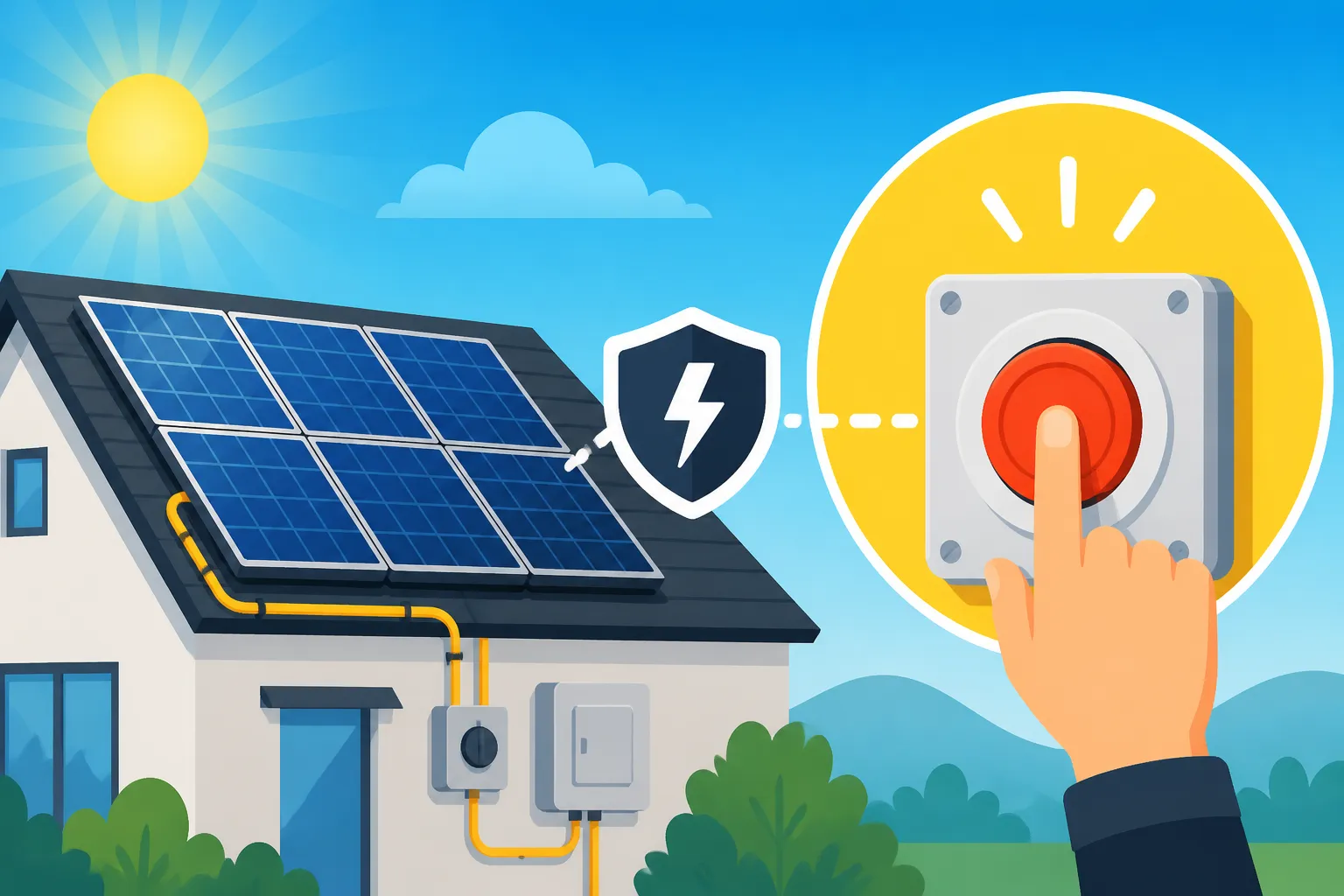
At its core, a rapid shutdown system does exactly what its name implies: it rapidly shuts down the power generation of your solar array. When activated, typically by a designated switch (often located near your main service panel or inverter), it dramatically reduces the voltage in the DC conductors leading from the solar panels into your home within a matter of seconds. Instead of hundreds of volts, the system will drop the voltage to a safe, low level, usually around 80 volts or less, within 30 seconds.
This de-energization process creates a safer environment by minimizing the risk of shock for firefighters and other emergency responders. It doesn't necessarily turn off the individual solar panels entirely, as they still produce power if exposed to sunlight, but it ensures that the dangerous high voltage is contained at the module level or very close to it, preventing it from traveling down into the building's accessible areas. It’s a vital safety net, allowing emergency teams to focus on their critical tasks without additional electrical hazards.
Components and Technologies Involved
The actual magic of rapid shutdown happens thanks to specific hardware integrated into your solar energy system. This isn't just a simple on/off switch; it involves intelligent devices that can respond quickly to a command.
Different Types of Rapid Shutdown Devices
There are generally two main approaches to rapid shutdown, primarily differentiated by where the voltage reduction occurs:
- Module-Level Power Electronics (MLPEs): These are devices installed at each individual solar panel, such as microinverters or power optimizers. Systems utilizing MLPEs inherently comply with rapid shutdown requirements because they can reduce the voltage at each panel. For example, microinverters convert DC power to AC power right at the panel, meaning only low-voltage AC wiring leaves the roof. Power optimizers condition the DC power at each panel and can be commanded to reduce their output voltage. This "module-level" shutdown is often considered the safest because the high-voltage DC is confined to the panel itself. You can learn more about the differences in our guide on Microinverter vs String Inverter: Pros and Cons
- String-Level Rapid Shutdown: In systems with traditional string inverters, a rapid shutdown device is installed at the string level, usually near the panels or at the inverter. These devices interrupt the DC circuit for an entire string of panels, reducing the voltage in the lines running from the roof. While effective, they may leave slightly more "live" high-voltage wiring on the roof between the panels and the shutdown device itself, compared to MLPE solutions. However, the critical pathway into the building is de-energized just as effectively.
The choice between these types often comes down to your system design, budget, and installer's recommendations. Both are designed to meet safety standards, but MLPEs offer more granular control and often higher safety margins by minimizing high-voltage DC on the roof.
Key Manufacturers and Their Solutions
Several prominent manufacturers have developed robust rapid shutdown solutions, often integrated directly into their inverter or optimizer technology. Companies like Enphase Energy and SolarEdge are leaders in this space, with their products frequently cited in rapid shutdown discussions.
Enphase microinverters, for instance, are inherently rapid shutdown compliant because they convert DC to AC power at each panel. This means that if power to the home is cut, the microinverters stop producing AC power, and the DC voltage on the roof remains contained at the panel, making them a popular choice for safety-conscious homeowners. Similarly, SolarEdge's power optimizers, which are paired with a central inverter, also provide module-level shutdown capabilities. When the inverter loses power or the rapid shutdown switch is activated, the optimizers automatically reduce the voltage output of each panel to a safe level. Understanding the nuances of Enphase vs SolarEdge: Which Inverter Is Better can help you decide which technology suits your needs best.
Beyond these giants, other inverter manufacturers, such as SMA and Fronius, offer string inverters that are compatible with external rapid shutdown devices, often from third-party component makers like Tigo Energy. Tigo's optimizers, for example, can be added to standard solar panels to provide rapid shutdown functionality, offering flexibility for various system designs. When you're talking with potential installers, perhaps through a service like Modernize, they will be able to explain which solutions they typically use and why they recommend them for your specific roof and system needs.
Regulatory Requirements and Standards
The widespread adoption of rapid shutdown technology didn't happen by accident; it's a direct result of evolving electrical codes and a commitment to public safety. Understanding these regulations is key to ensuring your solar installation is compliant and safe.
NEC Code Requirements for Rapid Shutdown
The National Electrical Code (NEC), published by the National Fire Protection Association (NFPA), is the cornerstone of electrical safety in the United States. It's not a law itself, but it's adopted by states and local jurisdictions, making its provisions legally binding for most installations. Rapid shutdown provisions first appeared in NEC 2014, evolved in NEC 2017, and were further refined in NEC 2020.
- NEC 2014: This was the initial introduction of rapid shutdown. It required that PV (photovoltaic) systems have a means to rapidly de-energize conductors outside the array boundary. The goal was to reduce voltage in DC conductors to less than 30 volts within 10 seconds, but only up to 10 feet from the array. This still left a significant area within the array itself where high voltage could exist.
- NEC 2017: Recognizing the limitations of the 2014 code, NEC 2017 expanded the requirements to include rapid shutdown within the array boundary. This meant that the voltage within 1 foot of the array boundary had to be reduced to below 80 volts within 30 seconds. This significantly enhanced safety by ensuring that most of the high-voltage wiring on the roof was de-energized.
- NEC 2020: The latest iteration of the NEC code introduced even stricter rules, specifically regarding control limits and accessibility. It mandates that controlled conductors within the array boundary must be reduced to 80 volts or less within 30 seconds, and conductive parts (like metal framing) must also be brought to a safe level. This continuous evolution reflects a commitment to making solar installations as safe as possible for emergency personnel. You can often find a good installer through platforms like Modernize who can clearly explain how their proposed system meets the current NEC standards in your area.
Local Permitting and Inspection Considerations
Even with federal guidelines like the NEC, the actual enforcement and specific interpretations often happen at the local level. When you decide to go solar, the process of Solar Permitting & Interconnection (PTO) Explained involves navigating a variety of local regulations. Before any solar panels can be installed, permits must be secured from your city or county building department. These permits ensure that the proposed installation adheres to all local building, fire, and electrical codes, including those pertaining to rapid shutdown.
During the permitting and inspection phases, local authorities will scrutinize the rapid shutdown components and their installation. They want to verify that the system is correctly wired, the emergency shut-off switch is clearly labeled and easily accessible, and that all equipment is listed for rapid shutdown compliance. Depending on where you live – say, in bustling Los Angeles or a quiet town in New Hampshire – the specific forms, fees, and inspection checklists can vary. Some jurisdictions might even have additional requirements beyond the NEC if they've identified specific local concerns. A reputable solar installer will handle all these permitting details, ensuring your system meets every local code requirement, paving the way for smooth installation and eventual What Is Permission to Operate (PTO)? from your utility.
Benefits and Potential Drawbacks
Like any advanced technology, rapid shutdown systems bring a host of benefits, primarily centered around safety, but also introduce some considerations regarding cost and system complexity.
Enhanced Safety for Emergency Responders
The most significant and undeniable benefit of rapid shutdown technology is the vastly improved safety it offers to firefighters and other emergency personnel. Before these requirements, responding to a fire or other emergency at a home with solar panels meant navigating a roof that could have hundreds of volts of live DC electricity coursing through its wiring. This was a silent, invisible threat that could easily lead to severe injury or fatality.
With rapid shutdown, emergency responders can quickly de-energize the critical pathways, creating a much safer environment for them to perform their duties. This means they can cut ventilation holes in a burning roof, enter a compromised structure, or work around damaged electrical systems with a much lower risk of electrocution. It allows them to focus on saving lives and property, rather than worrying about an unpredictable electrical hazard. For homeowners, this provides immense peace of mind, knowing that if the unthinkable happens, their solar system won't inadvertently endanger those trying to help them. It's a testament to the industry's commitment to evolving safety standards and protecting public servants.
Impact on System Cost and Complexity
While the safety benefits are clear, rapid shutdown technology does introduce some additional factors into a solar project, primarily related to cost and system complexity. Integrating rapid shutdown devices, especially module-level power electronics, can add to the overall Solar Panel Cost Per Watt Explained. Microinverters and power optimizers, which inherently provide rapid shutdown, are often more expensive per panel than simply using a traditional string inverter without these features. If a string inverter is used, external rapid shutdown devices like those from Tigo Energy need to be purchased and installed separately. This hardware, along with the additional labor for installation and wiring, contributes to the upfront investment.
Furthermore, adding more components can slightly increase the complexity of the system design and installation. Each rapid shutdown device needs to be installed correctly, communicate with the inverter, and be properly configured. While modern installers are well-versed in these systems, it's an added layer compared to a very basic, non-compliant string inverter setup from years ago. This might mean a slightly longer Solar Installation Timeline: What to Expect or more intricate troubleshooting down the line, though reputable installers minimize these issues. Despite these considerations, the safety benefits overwhelmingly outweigh the minor increases in cost and complexity, making rapid shutdown a non-negotiable feature for modern solar installations.
Disclaimer
This article is for general informational purposes only and does not constitute professional advice. Laws, prices and regulations vary by location and change over time. Consult a qualified professional for guidance on your specific situation.