What Should I Look for in a Solar Contract?
Navigating the world of home solar can feel incredibly exciting when you’re imagining those lower electricity bills, but then you get handed a thick stack of papers labeled "solar contract," and suddenly it feels like you need a law degree. It's truly overwhelming to sort through all the jargon and tiny print, making you wonder if you're missing something crucial. This comprehensive guide will walk you through exactly what to scrutinize in a solar contract, empowering you to sign with confidence and ensure your solar journey is smooth and successful.
Understanding the Essential Components of a Solar Contract
When that solar contract lands in your lap, it's easy to feel rushed or intimidated. But think of it as your blueprint and rulebook for the entire project. It's not just a formality; it's the legally binding document that outlines everything from what you're buying to when it will be installed and how it will perform. Taking the time to understand each section is paramount, especially since some contracts can be dense with legal and technical terms that aren't immediately clear to the average homeowner. Rushing this stage is where many people run into problems down the line, so grab a cup of coffee and settle in to review it thoroughly.
Scope of Work and System Design
The "Scope of Work" section is arguably one of the most critical parts of your contract. This isn't just a brief mention; it should be a detailed outline of everything the installer promises to do. It needs to clearly describe the solar energy system they will be installing on your home, including the type and number of solar panels. For example, it shouldn't just say "20 solar panels"; it should specify "20 Qcells G10+ 400W monocrystalline panels." The same goes for inverters; it should state whether you're getting string inverters, microinverters like Enphase IQ8, or power optimizers, along with the specific model numbers.
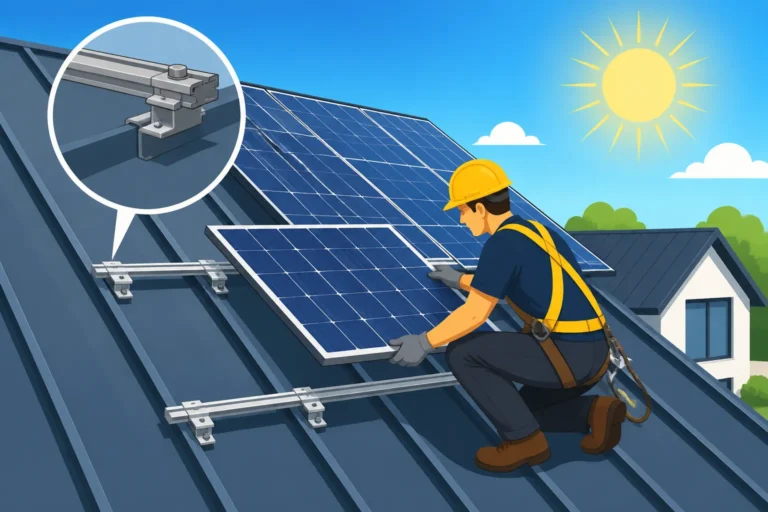
Beyond the major components, the scope of work should also detail the mounting system (e.g., rail-based, rail-less), the electrical wiring, and any necessary upgrades to your main service panel. If you've discussed adding a solar battery, like a Tesla Powerwall or Enphase IQ Battery, this needs to be explicitly listed with its make, model, and capacity. Any modifications to your roof structure, trenching for ground-mount systems, or aesthetic considerations like conduit paint colors should also be included. Don't be afraid to ask for clarification on any item that seems vague or missing. A good installer will appreciate your thoroughness and be happy to explain every detail, ensuring you know precisely what to expect when your solar panels are installed.
Equipment List and Specifications
Never settle for a generic equipment list. A proper solar contract will list every single piece of major equipment being installed, down to the specific model numbers. This includes your solar panels, inverters (or microinverters), racking system, and any energy storage solutions. For instance, instead of just "inverter," you should see "SolarEdge HD-Wave Inverter, SE7600H-US model" or "Enphase IQ8+ Microinverters." This level of detail is crucial for several reasons. First, it ensures you're getting exactly what you discussed and agreed upon during the sales process. Second, it allows you to research the specific performance and warranty details of each component.
Understanding the specifications means knowing the wattage of your panels, the efficiency rating, and the brand reputation. High-quality panels from reputable manufacturers like Maxeon, REC, or Jinko Solar often come with better warranties and performance guarantees. Make sure these specific brands and models are explicitly named. If the contract is vague, pushing for specifics is a must. If they resist providing detailed information, that's a significant red flag. You're making a substantial investment, and you have every right to know the exact specifications of the technology being installed on your home.
Key Financial and Ownership Details
The financial aspect of your solar contract is where most homeowners focus, and for good reason. This section will dictate how much you pay, how you pay it, and what incentives you're eligible for. It’s also where you confirm your ownership structure, which has significant implications for long-term savings and flexibility. Don't gloss over these numbers or assumptions; they are the bedrock of your solar investment.
Total System Cost and Payment Schedule
This part of the contract should clearly state the total cost of your solar energy system, including all equipment, installation labor, permitting fees, and interconnection fees. Look for a breakdown of costs rather than just a single lump sum. This transparency helps you understand what you're paying for and can help identify any hidden costs or adders that might be tucked away. If you've been quoted a "price per watt," make sure the total cost aligns with that calculation based on the system's size (total wattage). For a detailed understanding of how these costs are broken down, check out our guide on Solar Panel Cost Per Watt Explained.
The payment schedule should also be laid out explicitly. Typically, you'll see a small upfront deposit, followed by progress payments at various milestones, such as material delivery, installation completion, and system activation (Permission to Operate, or PTO). Be wary of contracts that demand a very large upfront payment, especially before any work has begun. A fair payment schedule protects both you and the installer, ensuring that payments are tied to tangible progress. Understanding the financial commitments at each stage will prevent unexpected financial strain and give you leverage if there are delays in the installation process.
Financing Options and Incentive Capture
How you finance your solar system dramatically impacts your long-term savings. The contract should clearly detail whether you are purchasing the system outright with cash, opting for a solar loan, or entering into a solar lease or Power Purchase Agreement (PPA). Each option has its own set of terms and conditions. If it's a loan, you need to see the interest rate, loan term, monthly payment amount, and any associated dealer fees. If it's a lease or PPA, scrutinize the monthly payments, annual escalator clauses, and what happens at the end of the term. Our article on Solar Lease vs PPA vs Buy: Which Is Best? delves deeper into these options.
Equally important is how the contract addresses incentives. This includes the Federal Solar Incentives That Still Exist in 2026 (often called the Investment Tax Credit or ITC), state-specific incentives, and local utility rebates. The contract should clearly state whether the price includes these incentives or if they are savings you, the homeowner, are responsible for claiming. Some less scrupulous installers might inflate the system price and then claim the federal tax credit on your behalf, reducing their cost while leaving you with a higher net cost. Ensure the contract makes it clear who benefits from each incentive and how you will receive or apply them. If your state offers things like SRECs Explained: Selling Solar Renewable Energy Credits or has Net Metering Explained: How It Works by State, these should also be discussed and accounted for.
Warranty Details
Warranties are your long-term protection for a solar investment. A comprehensive solar contract should clearly outline three main types of warranties:
- Product Warranty: This covers the physical solar panels themselves, protecting against manufacturing defects and premature failure. Most quality panels come with a 25-year product warranty.
- Performance Warranty: This guarantees that your panels will produce a certain amount of power over time, accounting for natural degradation. Typically, panels are guaranteed to produce at least 80-85% of their original output after 25 years.
- Workmanship Warranty: This covers the installation itself, ensuring the installer fixes any issues related to their work, such as leaks or faulty wiring. This can range from 10 to 25 years.
Don't just look for the existence of warranties; read the fine print. Who is backing the warranty – the installer or the manufacturer? What's the process for making a claim? What specific parts or issues are excluded? Understanding these details is crucial for peace of mind. For more in-depth information, you can read our guide on Solar Panel Warranties Explained.
Installation, Activation, and Post-Installation Support
Getting your solar system installed is more than just putting panels on your roof. It’s a multi-step process involving permits, inspections, and utility approvals. Your contract should give you a clear roadmap for this entire journey, setting expectations for timelines and responsibilities.
Installation Timeline and Permitting Process
A good contract will provide a realistic timeline for the entire solar installation process, from contract signing to final system activation. This timeline should include key milestones such as permit application submission, expected permit approval duration, material delivery, actual installation dates, inspections, and finally, obtaining Permission to Operate (PTO) from your utility. While delays can happen (weather, supply chain, permit backlogs), the contract should set reasonable expectations and ideally include clauses about communication regarding any delays. Be wary of installers promising unrealistically fast timelines, as this often leads to frustration.
The permitting process alone can be quite lengthy and complex, varying significantly from one city or county to another. The contract needs to clarify who is responsible for securing all necessary permits – typically, it's the installer. It should also state that the final system activation is contingent upon successful inspection by local authorities and approval from your utility company. Understanding Solar Permitting & Interconnection (PTO) Explained will help you ensure these critical steps are adequately covered in your agreement. You don't want to be stuck with an installed system that you can't legally turn on.
Maintenance and Monitoring
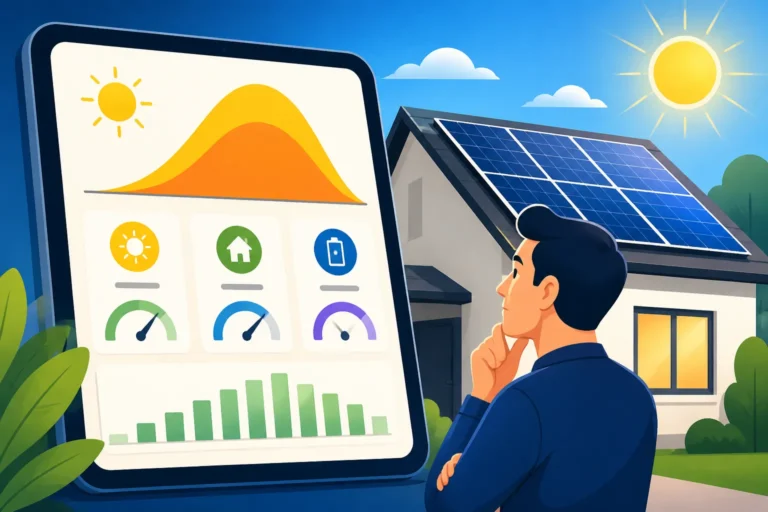
After your solar panels are installed and running, what happens next? A good contract might include details about system monitoring. Many modern solar systems come with monitoring apps that allow you to track your energy production in real-time. The contract should specify if this service is included, for how long, and who is responsible for setting it up. Some premium installers might also offer basic maintenance packages, such as panel cleaning, for a certain period.
While solar panels generally require minimal maintenance, it's worth knowing if any post-installation services are explicitly included or if they are add-ons. Most homeowners find that occasional cleaning is sufficient, but in dusty regions or areas with heavy pollen, more frequent attention might be necessary. Clarify whether there are any service fees for diagnostic checks or repairs not covered by warranty after a certain period. Knowing these details upfront helps you budget for the long-term care of your system and understand the full scope of your relationship with the installer.
Identifying Red Flags and Protecting Yourself
This is where your critical eye comes in. Not all solar companies operate with the same level of integrity, and knowing what to watch out for can save you a lot of headache and money. Trust your gut, but also trust the details (or lack thereof) in the contract.
High-Pressure Sales Tactics and Vague Language
Be extremely wary of any contract presented under high-pressure sales tactics. If an installer insists you sign "today or lose the deal," or pressures you with limited-time offers that seem too good to be true, step back. A reputable company will give you ample time to review the contract, ask questions, and even seek legal advice if you wish. This is a significant financial commitment, not an impulse purchase. Similarly, vague language in the contract should set off alarms. Phrases like "standard industry panels" or "sufficient wiring" are not acceptable. You need specifics, as discussed earlier. If it's not written down in black and white, it's not guaranteed.
Another common red flag is a contractor who doesn't seem to want to explain things thoroughly or gets defensive when you ask detailed questions. Your installer should be a partner, guiding you through the process, not a salesperson trying to close a deal as quickly as possible. Don't be afraid to walk away if you feel uncomfortable or if the contract doesn't clearly articulate everything you expect. It's much easier to find a new installer now than to deal with contract disputes later. Platforms like Modernize can help connect you with multiple reputable installers, making it easier to compare offers without feeling pressured by a single company.
Unreasonable Clauses and Missing Information
Scrutinize clauses that seem one-sided or unusually restrictive. For example, look for excessive cancellation fees that are disproportionate to the work performed, or clauses that waive your right to dispute resolution. Ensure there are clear provisions for what happens if the project is delayed or if the system doesn't perform as promised. A fair contract should protect both parties. Also, ensure all verbally agreed-upon terms are reflected in the written contract. If a salesperson promised a specific installation date or a certain aesthetic detail, it needs to be explicitly written into the contract.
Missing information is just as problematic as vague language. Is there a clear start and end date for the project? Are all financing terms spelled out? Is the utility interconnection process detailed? Does the contract mention who is responsible for removing and reinstalling panels if roof repairs are needed in the future? These are practical considerations that can become major issues if not addressed. Taking the time to compare solar installer quotes will highlight differences in what's included and what's missing, making it easier to spot an incomplete or unfair contract.
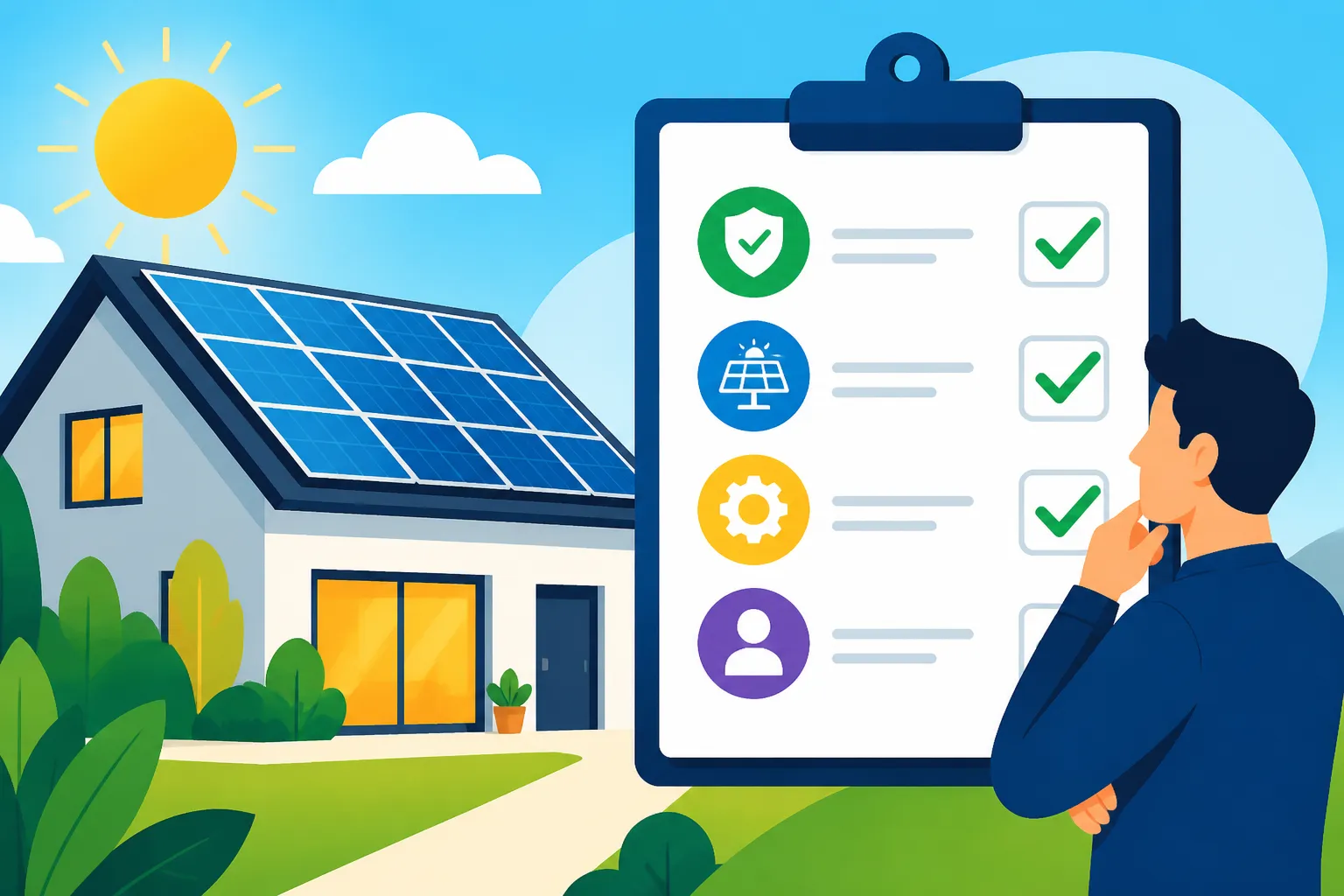
Here’s a handy checklist to help you review your solar contract:
| Contract Section | Key Items to Look For | My Contract Status | Notes |
|---|---|---|---|
| System Details | Specific panel make, model, wattage, quantity | e.g., "20 x Qcells G10+ 400W" | |
| Specific inverter/microinverter make, model | e.g., "Enphase IQ8+ Microinverters" | ||
| Racking system type and brand | |||
| Battery storage (if applicable): make, model, capacity | e.g., "Tesla Powerwall 3, 13.5 kWh" | ||
| Detailed scope of work (electrical upgrades, trenching, etc.) | |||
| Financial Terms | Total system cost, broken down by components/labor | No hidden fees, clear adders | |
| Payment schedule with clear milestones and amounts | Large upfront payment? (Red flag) | ||
| Financing details (loan terms, interest rates, monthly payments, dealer fees) | If applicable, compare with separate loan documents | ||
| Clarification on incentive capture (ITC, state, local rebates, SRECs) | Who claims what? When do I receive funds? | ||
| Installation & Activation | Estimated project timeline with key milestones | Permitting, installation, inspection, PTO | |
| Responsibility for permits and utility interconnection | Should be the installer's role | ||
| Clauses for delays or unforeseen circumstances | |||
| Warranties | Product warranty (panels) length and coverage | e.g., 25-year against defects | |
| Performance warranty (panels) length and degradation rate | e.g., 25-year, 85% output | ||
| Workmanship warranty (installation) length and coverage | e.g., 10-25 years against leaks, faulty wiring | ||
| General & Legal | Clear cancellation policy and fees | Reasonable, not punitive | |
| Dispute resolution process | Arbitration or mediation options | ||
| Contact information for customer support | |||
| Any verbally agreed-upon terms written into the contract | "Get it in writing!" |
What to do if You Spot Red Flags
If you find something concerning in your contract, don't just ignore it. Your first step should be to directly ask the installer for clarification or amendment. A reputable company will be transparent and willing to adjust clauses or provide more detail. If they are evasive, defensive, or refuse to make reasonable changes, consider it a serious warning. It's often better to walk away and find a different solar provider. There are many excellent companies out there, and you don't want to tie yourself to one that makes you uncomfortable.
Remember, you are the customer, and you have the right to a clear, fair, and comprehensive contract. Before signing, consider getting a second opinion, perhaps from a trusted friend who has gone solar, or even a legal professional if the investment is particularly large or complex. Don't let the excitement of going solar overshadow the importance of due diligence. By being thorough and proactive, you'll ensure your solar journey begins on the right foot, with a contract that genuinely protects your interests. Finding good information and reputable installers through resources like Modernize can significantly ease this process.
Final Review and Signing Your Contract
Once you've diligently reviewed every section, asked all your questions, and feel confident that everything is in order, you're ready for the final step: signing. But even at this stage, a few last checks can prevent future headaches. This isn't just about the legality; it's about your peace of mind and ensuring a smooth transition to solar ownership.
Before You Sign: Final Checks
Before you put pen to paper, do one last sweep. Double-check that all the numbers add up, all the specific equipment agreed upon is listed with correct model numbers, and that the timeline and responsibilities are crystal clear. Ensure the contract accurately reflects the system size you need for your home's energy consumption, which you can determine by looking at past utility bills. Confirm the start date and estimated completion date, and make sure any special requests you had (like conduit routing or painting) are noted.
It's also a good idea to ensure you have contact information for key personnel at the solar company, not just the salesperson. Knowing who to reach for project management, technical support, or billing questions can be incredibly helpful throughout the installation and beyond. Take a deep breath, and if everything aligns with your expectations and understanding, then you can confidently sign. Remember that in many states, you have a right to cancel within a certain period (often three business days) after signing a home improvement contract, so be aware of that cooling-off period if you have any last-minute jitters.
What Happens After Signing
After signing, the real work begins! The installer will typically start the process of submitting permit applications to your local municipality and an interconnection application to your utility company. They'll likely schedule a site survey if one hasn't been completed already, which involves a team coming to your home to take precise measurements and assess your roof and electrical panel in detail. Keep all your copies of the contract and related documents in a safe place.
Throughout the installation process, maintain open communication with your installer. Don't hesitate to ask for updates or express concerns. Knowing What Happens After Solar Is Installed? can help you anticipate the next steps. Once the system is fully installed and inspected, the utility company will grant Permission to Operate (PTO), at which point you can flip the switch and start generating your own clean electricity. This comprehensive review process ensures that your investment is sound and your transition to solar energy is as seamless as possible.
Disclaimer
The information provided in this article is for general informational purposes only and does not constitute financial, legal, or professional advice. While we strive to provide accurate and up-to-date content, solar incentives, regulations, and market conditions can change rapidly. Always consult with a qualified solar professional, financial advisor, or legal expert for advice tailored to your specific situation.