What Direction Should Solar Panels Face?
Deciding to go solar is a fantastic step toward energy independence and saving money, but it can feel overwhelming trying to figure out all the technical details. One of the biggest head-scratchers for homeowners is often, "Which way should my solar panels face?" You want to make sure you're getting the most bang for your buck, and the direction your panels are installed plays a huge role in how much electricity they'll generate. This guide will demystify solar panel orientation, helping you understand the ideal setup and what to do if your home isn't perfectly aligned for maximum sunlight.
The Primary Goal: Maximizing Sunlight Exposure
When it comes to solar panels, the name of the game is sunlight. The more direct, unobstructed sunlight your panels receive throughout the day, the more electricity they'll produce. It sounds simple, but several factors go into optimizing that exposure, from the cardinal direction to the angle of your roof.
The Golden Rule: Why South is Still Optimal for Most
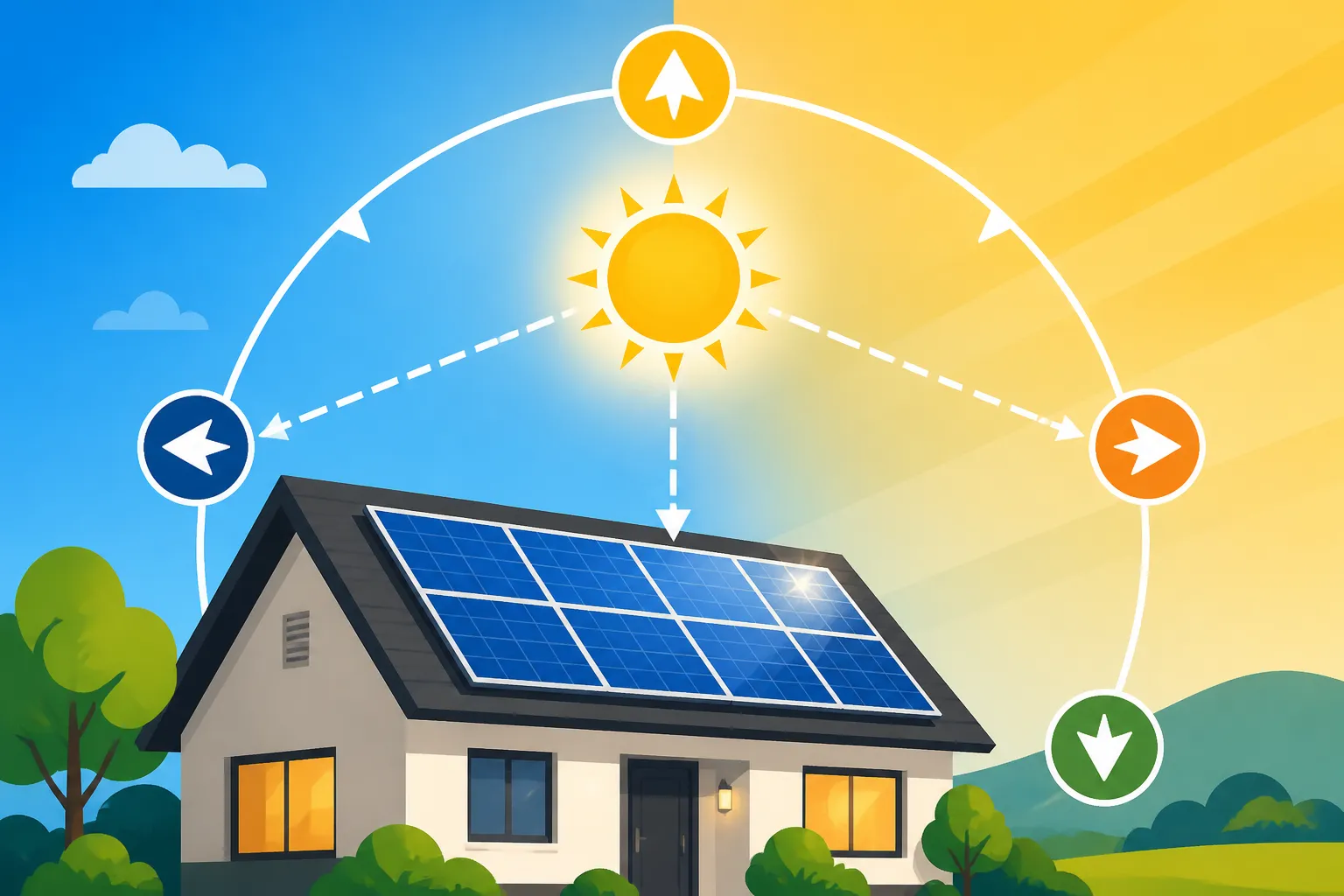
If you're living in the Northern Hemisphere, like most of us in the United States, facing your solar panels directly south is generally considered the holy grail for maximizing annual energy production. This isn't just a random recommendation; it's based on the sun's path across the sky. Throughout the day, and especially over the course of the year, a south-facing array will get the longest and most intense period of direct sunlight. Think about it: the sun rises in the east, arcs across the southern sky, and sets in the west. A panel facing south can capture that sunlight more consistently than one facing any other direction.
For a homeowner in, say, Phoenix, Arizona, with a clear, unobstructed south-facing roof, this means their panels will be soaking up powerful rays for most of the daylight hours. This continuous exposure translates directly into higher kilowatt-hour output over the year, leading to greater savings on your electricity bill. While factors like your local utility's time-of-use rates might shift the peak savings slightly, for sheer volume of generation, south is undeniably the champion.
Understanding Azimuth and Tilt Angles
Beyond just saying "south," we need to get a little more precise with the terminology. When we talk about the direction your panels face, we're referring to their azimuth angle. Imagine a compass: due north is 0 degrees or 360 degrees, east is 90 degrees, south is 180 degrees, and west is 270 degrees. So, an ideal south-facing array would have an azimuth angle of 180 degrees. Even a slight deviation, perhaps facing southeast (around 135 degrees) or southwest (around 225 degrees), will still yield excellent results, though usually with a marginal drop in overall production compared to true south.
Then there's the tilt angle, which is the angle of your panels relative to the horizontal ground. For rooftop installations, this is often dictated by your roof's pitch. For optimal annual production, the ideal tilt angle generally mirrors your geographic latitude. For example, if you live in Raleigh, North Carolina, which is around 35 degrees latitude, a panel tilted at roughly 35 degrees would be ideal for capturing the most sunlight year-round. An experienced installer will carefully consider both your azimuth and tilt angles during the design phase, using sophisticated software to model the expected energy production and find the sweet spot for your specific home and climate. This meticulous planning is key to maximizing your solar investment.
Navigating Less-Than-Ideal Roof Orientations
What if your roof doesn't have a perfect south-facing exposure? Don't despair! Many homes successfully go solar with east- or west-facing roofs, and even a north-facing section might, in rare circumstances, be part of a viable system. It's all about understanding the trade-offs and how to maximize the sun you do get.
Capitalizing on East- and West-Facing Roofs
If your roof faces east or west, you're still in a great position to go solar, often with only a 10-20% reduction in annual output compared to a perfectly south-facing system. East-facing panels are fantastic at catching the morning sun. This can be a huge advantage if your household consumes a lot of electricity in the early hours – maybe you're brewing coffee, running the dishwasher, or getting ready for work. Having that morning production can directly offset your utility bill during those times. Plus, east-facing panels tend to run cooler because they avoid the intense afternoon sun, which can slightly boost their efficiency compared to their west-facing counterparts.
West-facing panels, on the other hand, are champions of the afternoon and early evening. This orientation can be incredibly valuable, especially if your utility company uses time-of-use (TOU) rates, where electricity costs more during peak demand hours, often late afternoon and early evening. By orienting panels to the west, you can generate more power when electricity prices are highest, leading to significant savings. Imagine running your air conditioning in the late afternoon or cooking dinner, knowing your solar panels are working overtime to cover those expenses. Many homeowners actually prefer a west-heavy or even split east-west system to perfectly align their solar production with their family's actual energy consumption patterns. This strategy can often lead to better financial returns than simply aiming for maximum overall production. If you're wondering about specific utility rates, our guide on Net Metering Explained: How It Works by State can provide more detail.
The Challenges and Rare Cases for North-Facing Systems
Now, let's talk about north-facing roofs. Generally speaking, solar panels on a north-facing roof in the Northern Hemisphere are the least productive option. Because the sun arcs through the southern sky, a north-facing surface receives very little direct sunlight throughout the year, especially during winter months when the sun is lower. This translates to significantly lower energy production, often making a system on a purely north-facing roof uneconomical for most residential applications.
However, there are a few niche situations where north-facing panels might be considered. If you have a flat roof, installers can use racking systems to tilt the panels toward the south, effectively transforming a "north-facing" section into a productive one. In areas with extremely high electricity rates, even the minimal power generated from a north-facing section might contribute to savings if there's absolutely no other viable roof space. Additionally, new technologies like bifacial solar panels, which can absorb light from both their front and back surfaces, could potentially eke out a bit more production from reflected light, even on less-than-ideal orientations. That said, for most homeowners, if north is your only option without significant tilt adjustment, a comprehensive cost-benefit analysis will likely show it’s not the most efficient investment.
Beyond Direction: Critical Factors Affecting Panel Performance
While the direction your panels face is paramount, it's not the only piece of the puzzle. Several other environmental and structural elements play a huge role in how much power your solar system will generate, and overlooking these can significantly impact your return on investment.
The Impact of Shading and Roof Obstructions
Even the most perfectly south-facing roof can be severely hampered by shading. Trees, chimneys, dormers, neighboring buildings, or even utility poles can cast shadows on your solar panels at various times of the day or year. Just a small amount of persistent shade on even one panel can drastically reduce the output of an entire string of panels in a traditional setup. This is because panels are often wired together in series, and the weakest link (the shaded panel) can bring down the performance of the whole chain.
During a professional site assessment, a good installer will meticulously analyze your roof for shading patterns throughout the year. They use specialized tools that simulate the sun's path and potential obstructions, allowing them to design a system that minimizes shade impact. Sometimes, a tree can be trimmed, or panels can be placed strategically to avoid shadows. Modern solar systems often incorporate microinverters or power optimizers, like those from Enphase or SolarEdge. These devices manage each panel individually, so if one panel is shaded, it doesn't drag down the performance of the others. This technology is a game-changer for roofs with unavoidable partial shading and ensures you maximize every bit of available sunlight. Understanding your Roof Considerations for Solar Panels is a key step in planning.
How Local Climate Influences Optimal Orientation
Your local climate isn't just about how sunny it is; it also plays a subtle but important role in optimal panel orientation. While general rules apply, specific regional weather patterns can influence the best design. For instance, in an area known for morning fog that typically burns off by midday, like certain coastal parts of California, a slightly more west-leaning orientation might actually be advantageous. The panels wouldn't be doing much during the foggy morning anyway, but they'd be perfectly positioned to capture the powerful afternoon sun once the sky clears.
Conversely, in regions with consistently hot summers, like much of Texas or Florida, an east-facing array might offer a small benefit by avoiding the most intense, heat-inducing afternoon sun. Solar panels, like most electronics, can lose a tiny bit of efficiency when they get extremely hot. While this effect is usually minor, an installer will factor in these nuances, combining their knowledge of local weather with your specific energy consumption patterns to fine-tune the system's design. The goal is always to maximize your annual savings and tailor the system to your unique situation.
Expert Design for Maximum Savings
Going solar is a significant investment, and you want to ensure your system is designed for peak performance and savings. This isn't a one-size-fits-all endeavor; it requires expertise to truly customize a solution that works best for your home and lifestyle.
Why a Professional Site Assessment is Non-Negotiable
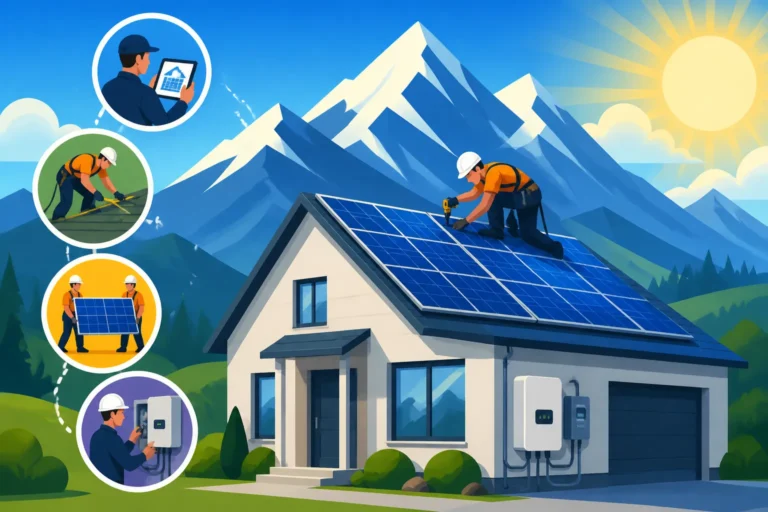
While online calculators and general advice can give you a rough idea, nothing replaces a thorough, in-person site assessment by a qualified solar professional. They're not just looking at your roof direction; they're evaluating its structural integrity, age, pitch, and potential obstructions. They'll also analyze your past electricity bills to understand your energy consumption habits—when you use the most power, and how much. This allows them to design a system that not only maximizes energy production but also aligns perfectly with your household’s specific needs and your utility's rate structure. Trying to DIY this crucial design phase can lead to costly mistakes and underperforming systems.
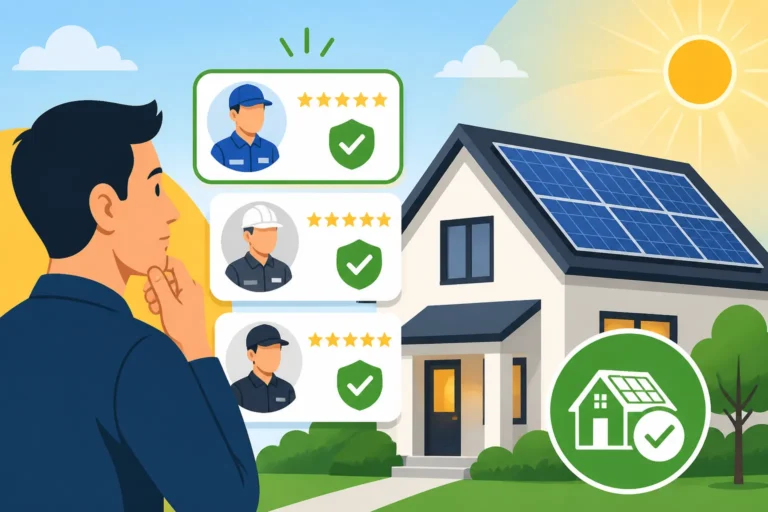
A reputable installer will use sophisticated software to simulate how different panel orientations and system sizes would perform on your particular roof throughout the year. They can show you projected energy output, expected savings, and the potential impact of various design choices. They also navigate the complex world of permits and interconnection with your utility, ensuring your system is compliant and operates smoothly. If you're unsure where to start, platforms like Modernize can connect you with multiple pre-vetted local installers who can provide these detailed assessments and competitive quotes. This allows you to compare options and choose the best fit for your home. Finding the right installer is as important as the panels themselves, so check out our guide on How to Choose a Solar Installer.
Utilizing Technology and Split Designs for Diverse Roofs
Modern solar technology offers incredible flexibility, even for homes without that "perfect" south-facing roof. For instance, if you have roof sections facing both east and west, an installer might recommend a "split system" design. This means installing panels on both sides to spread out your energy production throughout the day. East-facing panels will generate power in the morning, and west-facing panels will kick in during the afternoon and evening. This strategy can be particularly effective in areas with time-of-use (TOU) billing, where electricity prices are higher during peak demand hours.
Furthermore, integrating a solar battery, like a Tesla Powerwall or Enphase IQ Battery, can further decouple your production from your consumption. Any excess energy generated by your panels, regardless of their orientation, can be stored in the battery for use later when the sun isn't shining or when utility rates are high. This provides energy independence and backup power during outages. There are also various Solar Battery Incentives in 2026 that can make adding a battery even more affordable. By combining strategic panel placement with advanced inverter technology and battery storage, a skilled solar designer can craft a highly efficient and cost-effective system for almost any roof orientation.
Comparing Solar Panel Orientations
Orientation Primary Benefits Considerations Best For South-facing is optimal for maximum yearly generation. Lower production during morning/evening. Homeowners seeking to maximize annual solar production, good for strong net metering or high overall consumption.
East-Facing Strong morning production, less afternoon heat. Lower overall daily production than south. Early risers, work-from-home individuals, or those with high morning energy consumption. Particularly useful with Time-of-Use rates that have morning peaks.
West-Facing Strong afternoon/evening production, valuable during peak TOU rates. Panels get hotter in the afternoon, potentially slight efficiency loss compared to east/south. Homeowners with high afternoon/evening energy use (e.g., AC in summer, cooking), especially valuable with Time-of-Use rates that have afternoon/evening peaks.
North-Facing Very low production, generally not recommended for rooftop solar in Northern Hemisphere. Minimal direct sunlight, significantly lower energy output, often not cost-effective. Rarely ideal; possibly for flat roofs with adjustable tilt, bifacial panels in specific scenarios, or extremely high electricity rates where any generation helps.
Disclaimer
This article is intended for informational purposes only and does not constitute professional advice. The solar industry is complex, and incentives, regulations, and technologies can change rapidly. Always consult with a qualified and reputable solar installer or energy consultant for personalized advice regarding your specific home and energy needs. They can provide an accurate site assessment, system design, and financial analysis.