Is a South-Facing Roof Best for Solar?
It's totally understandable to wonder if your home needs that perfectly south-facing roof to truly benefit from solar panels. For years, this was the golden rule in solar, making many homeowners with east, west, or even north-facing roofs feel like they were out of luck. But here's the good news: the world of solar has evolved dramatically, and while south can be fantastic, it's definitely not the only path to energy independence and savings anymore. This guide will walk you through why a south-facing roof was once paramount, why other orientations are now perfectly viable, and what modern technology and smart planning mean for your unique home and solar journey.
The South-Facing Advantage: Why It's Historically Ideal
For a long time, if you were serious about going solar, the first question your installer would ask was, "Is your roof facing south?" There was a very good reason for this, rooted in basic physics and the technology available back then. Capturing the maximum amount of sunlight for the longest duration was key, and a south-facing roof offered just that.
Maximizing Sun Exposure Throughout the Day
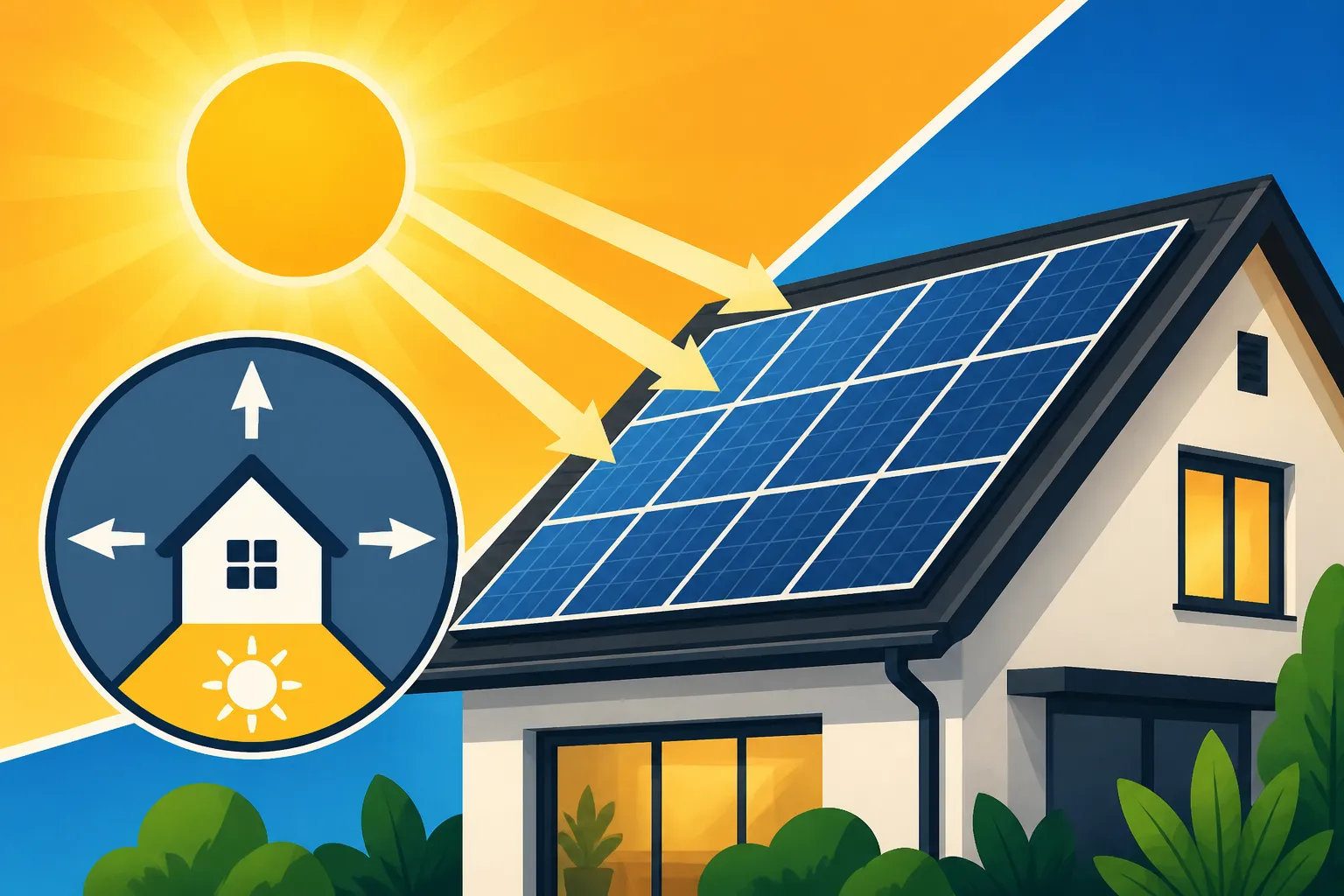
Think about how the sun moves across the sky from sunrise to sunset. In the Northern Hemisphere, where most of the United States is located, the sun tracks an arc across the southern sky. This means a roof surface that directly faces south will receive the most direct sunlight for the longest period throughout the day, especially around midday when the sun's intensity is at its peak. This prolonged, direct exposure translates to more kilowatt-hours (kWh) of electricity produced over the course of the day, leading to higher overall system efficiency and faster returns on your investment.
Imagine a sunny summer day in, say, Phoenix, Arizona. A panel array perfectly angled on a south-facing roof would begin soaking up intense rays mid-morning, hit its stride at noon, and continue to produce robust power well into the afternoon. This consistent, powerful energy capture was, and still is, a primary driver for maximum energy generation, allowing systems to produce more power with fewer panels or to achieve higher overall savings. It’s about leveraging the sun's path to its fullest potential, capturing every photon possible from dawn until dusk.
The Angle of the Sun and Panel Performance
Beyond just the direction, the angle at which sunlight hits a solar panel significantly impacts how much energy it can convert. When sunlight hits a panel perpendicularly (at a 90-degree angle), the panel absorbs the maximum amount of solar radiation. As the angle of incidence decreases, meaning the sun's rays hit the panel at a shallower angle, the amount of energy absorbed diminishes. This is where a south-facing roof truly shines. Throughout the peak production hours of the day, a south-facing roof allows panels to be installed at an angle that often closely approximates the ideal tilt for perpendicular sun exposure, especially when considering the seasonal changes in the sun's path.
For example, in a state like Colorado, where the sun can be intense but seasons vary, a south-facing roof allows for an optimal fixed tilt that balances year-round production. While some high-tech systems use trackers to follow the sun, these are expensive and rare for residential use. For a standard fixed-mount system, a south-facing orientation offers the best natural compromise for consistent, high-yield performance, ensuring that more of the sun's energy is captured rather than reflected.
Historical Data and Optimal Production
Early solar installations relied heavily on this south-facing sweet spot because the technology wasn't as forgiving as it is today. Panels were generally less efficient, and inverters were typically "string inverters," which meant if one panel was shaded or underperforming due to a less-than-ideal angle, it could drag down the performance of the entire string. To achieve meaningful electricity production and make solar economically viable, maximizing every ray of direct sunlight was critical.
This historical reliance on south-facing roofs created a narrative that it was the only way to go solar effectively. Many utility companies and incentive programs were even designed with this assumption, often offering the best rates or easiest interconnection for systems that demonstrated optimal orientation. This tradition is part of why the question "Is a south-facing roof best for solar?" still comes up so often. It was, for a long time, the undeniable champion for optimal solar production, setting the benchmark for what was considered a high-performing system.
Beyond South: Other Orientations and Their Viability
While south-facing roofs remain excellent candidates, the landscape of solar has broadened considerably. Thanks to advancements in panel technology and inverter systems, homes with east, west, or even carefully managed north-facing roofs can now go solar and see significant savings. It's all about understanding how your specific situation interacts with modern solutions.
East and West Facing Roofs: Capturing Morning and Evening Sun
If your roof faces east or west, you might actually be in a fantastic position for solar in today's energy market, especially depending on your utility's time-of-use (TOU) rates. An east-facing array will start producing power early in the morning, capturing the initial surge of sunlight as it rises. This is perfect for homeowners who use a lot of electricity in the morning, perhaps for charging electric vehicles or running appliances before heading out for the day. While the peak production might not be as high as a south-facing system at midday, the early morning generation can be highly valuable.
Conversely, a west-facing array truly shines in the afternoon and early evening. As the sun begins its descent, these panels will be perfectly angled to capture the last strong rays of the day. This aligns incredibly well with many homeowners' peak electricity consumption, often referred to as the "duck curve" demand, when people return home, turn on lights, cook dinner, and use air conditioning. Utilities in states like California, with its NEM 3.0 policies, are increasingly moving towards time-of-use billing, where electricity is most expensive during these evening hours. A west-facing system can offset those high-cost periods directly, leading to significant savings that might even rival or surpass a purely south-facing system's financial benefits, despite potentially lower overall kWh production. This strategic alignment with your actual energy usage is often more important than just raw production numbers.
North Facing Roofs: When They Might Work (and when they won't)
Historically, installing solar panels on a north-facing roof was considered a no-go. The logic was simple: in the Northern Hemisphere, north-facing surfaces receive very little direct sunlight throughout the year, especially compared to their southern counterparts. This still holds true for most typical residential setups, making north-facing roofs generally the least ideal for solar panel placement. You'd get significantly less energy production, meaning a longer payback period and less overall savings, potentially making the investment not worthwhile without other strong incentives.
However, there are niche scenarios where a north-facing roof might play a role, though almost always in conjunction with other arrays or specific technologies. For instance, if you have a very steeply pitched roof, or if you live in a region very close to the equator (though still in the Northern Hemisphere), the sun's path might be high enough in the sky for some direct exposure. More commonly, a north-facing section might be considered as a supplement to larger arrays on south, east, or west roofs if you have exceptionally high energy demands and absolutely no other available space. In such cases, specialized mounting systems can sometimes adjust the tilt of panels to maximize what little direct sunlight is available. This is a rare consideration and typically only explored after all other options have been exhausted and a thorough energy analysis confirms it could contribute meaningfully to your overall energy needs, without dramatically extending your Solar Panel Payback Period Explained.
The Impact of Roof Pitch and Local Latitude
Beyond the cardinal direction, the pitch or slope of your roof is another crucial factor. A low-pitched roof, for example, on a ranch-style home, will capture sunlight differently than a steep gable roof on a two-story colonial. The ideal pitch for solar panels in the Northern Hemisphere is generally an angle roughly equivalent to your geographical latitude, allowing the panels to be more perpendicular to the sun's rays year-round. So, if you live in Seattle, Washington, at about 47 degrees latitude, an ideal roof pitch would be around 47 degrees. However, most residential roofs aren't designed to this exact specification.
The good news is that solar panels are quite forgiving, and there's a wide "sweet spot" for optimal performance. A roof pitch between 20 and 45 degrees usually works very well, regardless of the precise match to your latitude. For flatter roofs, installers often use tilt-up racking systems to achieve a more favorable angle, though this can add to installation costs and may not always be aesthetically pleasing. Conversely, a very steep roof, especially if facing east or west, might produce less energy overall as the sun struggles to hit it at an efficient angle. Your local latitude also affects the sun's arc; homes closer to the equator, like in Miami, Florida, will experience a higher sun path year-round, meaning even less-than-perfect roof pitches can perform quite well. Understanding these nuances is why a detailed site assessment is so vital, ensuring that the proposed system is truly optimized for your specific home and location.
Modern Solar Technology: Adapting to Diverse Roofs
The solar industry has undergone a quiet revolution in recent years, making solar accessible and efficient for a much wider range of homes. Today, the focus isn't just on having the "perfect" roof; it's about smart technology that optimizes performance even when conditions are less than ideal. This is great news for homeowners who thought solar wasn't an option for them.
Microinverters and Power Optimizers: Mitigating Shade and Suboptimal Angles
One of the biggest game-changers for diverse roof layouts has been the widespread adoption of module-level power electronics (MLPEs), specifically microinverters and power optimizers. In traditional "string" inverter systems, panels are wired together in a series, and if one panel is shaded, dirty, or at a suboptimal angle, it can reduce the output of the entire string. It's like a string of old Christmas lights where one bulb going out makes the whole string go dark.
Microinverters, like those offered by Enphase, are installed directly under each individual solar panel. They convert DC power to AC power at the panel level. This means that if one panel is shaded by a tree branch or a chimney, or if it's facing a slightly different direction due to roof architecture, it doesn't affect the performance of the other panels in the array. Each panel operates independently at its maximum potential. Power optimizers, often seen with SolarEdge systems, work similarly but pair with a central string inverter. They optimize the DC power at each panel before sending it to the inverter. Both technologies are incredible for roofs with complex layouts, multiple orientations (like an L-shaped roof with east and west sections), or intermittent shading, ensuring you get the most energy possible from every panel, regardless of its individual conditions. This dramatically improves overall system efficiency, especially compared to older designs. For more details, you can compare the pros and cons in our guide on Enphase vs SolarEdge: Which Inverter Is Better?.
High-Efficiency Solar Panels: Squeezing More Power from Less Ideal Conditions
Another major advancement comes from the panels themselves. Modern solar panels are significantly more efficient than those from even a decade ago. What does this mean for homeowners without a perfectly south-facing roof? It means that even if a panel isn't receiving absolutely direct, perpendicular sunlight all day, it can still convert a higher percentage of the available light into electricity. High-efficiency panels, such as those from brands like Maxeon (SunPower), Qcells, or REC, are designed to perform exceptionally well even in lower light conditions or when the sun's angle isn't perfectly optimized.
This increased efficiency translates to needing fewer panels to meet your energy needs. If you have limited roof space, or if parts of your roof aren't ideally oriented, higher-efficiency panels can help you maximize the power output from the available real estate. For example, a 400W panel today might be roughly the same physical size as a 250W panel from a few years ago. This means more power per square foot, making solar more viable for smaller roofs or those with challenging layouts. Even if your west-facing roof gets excellent afternoon sun but less consistent midday direct light, these panels can still capture substantial energy, improving your overall Solar Panel Efficiency & Degradation Explained over the system's lifetime.
Bifacial Panels and Ground-Mount Systems: Expanding Installation Possibilities
Beyond traditional rooftop installations, innovative panel designs and mounting options are opening up even more possibilities. Bifacial solar panels, for example, can capture sunlight from both their front and back sides. While primarily used in large-scale solar farms or commercial settings, they are beginning to appear in residential ground-mount systems. If light can reflect off the ground (like a light-colored gravel or even snow in winter) onto the backside of the panel, these panels can produce significantly more energy. This could be particularly interesting for certain ground-mount setups where reflected light is abundant.
Speaking of ground-mount systems, they completely circumvent the roof orientation issue. If your property has open land with good southern exposure, a ground-mount system allows you to position your panels at the absolute optimal tilt and orientation, regardless of your home's roof. This is a fantastic option for homes with heavily shaded roofs, complex rooflines, or limited suitable roof space. While ground-mount systems require more space and typically higher upfront costs for the racking and trenching, they offer unparalleled flexibility in maximizing solar production. They also make maintenance and cleaning easier. For homeowners concerned about their roof's age or structural integrity, a ground-mount system offers an alternative that doesn't put any stress on your home's structure. You can learn more about this alternative in our article, Ground-Mount vs Roof-Mount Solar.
Factors Beyond Orientation: What Really Matters for Your Solar ROI
While roof direction is an important piece of the solar puzzle, it's just one part of a much larger picture that determines how much you'll save and how quickly your system pays for itself. Focusing solely on a south-facing roof might cause you to overlook other critical considerations that could make or break your solar investment.
Roof Size and Condition: Space and Longevity
Before you even think about orientation, you need to consider the physical characteristics of your roof. First, is it large enough to accommodate the number of solar panels needed to offset a significant portion of your electricity usage? Our guide on How Many Solar Panels Do I Need for My Home? can help you estimate this, but generally, a typical residential system might require 15-30 panels. If your roof has many dormers, skylights, chimneys, or is simply too small, even a perfectly south-facing section might not be enough. You might need to explore options like combining panels on different roof sections or considering a ground-mount system.
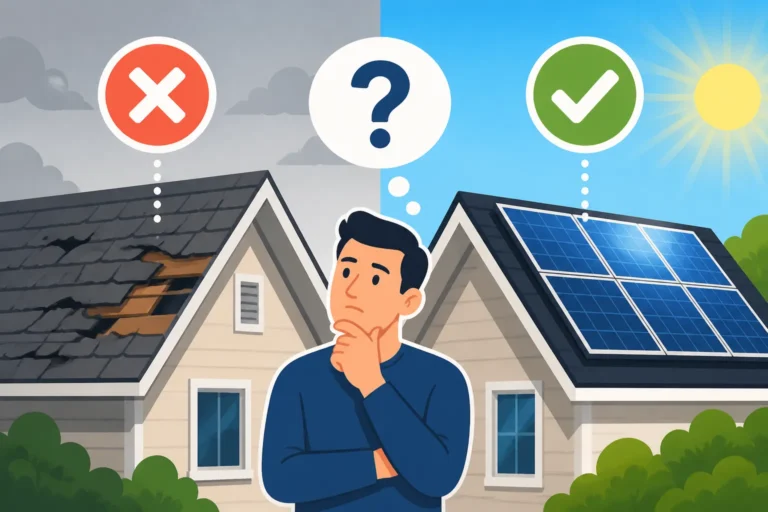
Second, and equally important, is the condition and age of your roof. Solar panels are designed to last 25-30 years or even more. You absolutely do not want to install a brand-new solar system on a roof that's nearing the end of its lifespan. Replacing a roof after solar panels have been installed is a costly and complicated process, as the panels must be carefully removed and reinstalled, adding significant labor costs. Most installers will strongly recommend, or even require, that your roof has at least 10-15 years of life left. If it doesn't, factor in the cost of a new roof before solar. This upfront investment ensures your solar system can live out its full productive life without major disruptions.
Local Climate and Shading: Trees, Buildings, and Weather Patterns
No matter how perfectly south-facing your roof is, persistent shading will kill your solar production. Trees, neighboring tall buildings, or even architectural features on your own home (like a large chimney or an adjacent dormer) can cast shadows that drastically reduce the output of your panels. Even partial shading for a few hours a day can have a surprisingly significant impact, particularly with older string inverter systems. This is where modern microinverters or power optimizers truly shine, as they allow unshaded panels to continue producing at full capacity.
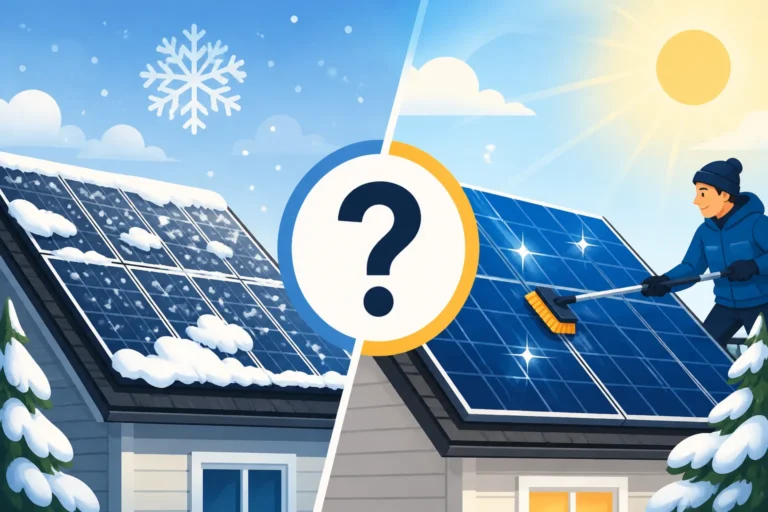
Beyond shade, your local climate plays a huge role. Do you live in a notoriously cloudy city like Portland, Oregon, or one with abundant sunshine like San Diego, California? While solar panels still work in cloudy weather, they won't produce as much as on a clear, sunny day. Similarly, extreme heat can slightly reduce the efficiency of some panels, though modern designs are increasingly resilient. Consider also local weather patterns like heavy snow. While panels typically shed snow, prolonged accumulation can temporarily halt production. A good solar installer will use specialized software to analyze your home's specific shading profile throughout the year and account for local weather conditions, providing you with a realistic estimate of your potential energy production. Don't let a perfectly clear south-facing roof fool you if it's consistently shaded for half the day by a giant oak tree!
Utility Net Metering Policies and Electricity Rates
Perhaps the most critical financial factor for your solar ROI, regardless of roof orientation, is your local utility's net metering policy and current electricity rates. Net metering is a billing mechanism that allows solar owners to send excess electricity generated by their panels back to the grid and receive credit for it, often at the full retail electricity rate. Without robust net metering, the financial benefits of solar diminish considerably, as you might only receive a fraction of the retail rate for your exported power, or sometimes nothing at all. States like California, with its transition to NEM 3.0 (Net Billing), have significantly altered the financial landscape for solar owners by reducing export compensation. Understanding the specifics of Net Metering Explained: How It Works by State is paramount.
High electricity rates also make solar more financially attractive. If you live in an area with expensive power, like many parts of the Northeast (e.g., Massachusetts or New York), the money you save by generating your own electricity will be substantial, leading to a quicker payback period for your system. Conversely, if electricity rates are very low, your financial savings might take longer to materialize. Furthermore, time-of-use (TOU) rates, where electricity costs more during peak demand hours (typically late afternoon/early evening), can make west-facing panels incredibly valuable, as they produce power when electricity is most expensive. Your installer should thoroughly explain how your local utility's policies and rates will impact your specific solar savings, ensuring you have a clear financial projection.
Getting a Personalized Assessment: Your Best Path Forward
Trying to figure out all these variables on your own can feel overwhelming. This is where professional expertise becomes invaluable. A truly effective solar solution isn't one-size-fits-all; it's a carefully designed system tailored to your unique home, energy needs, and local conditions.
The Importance of Professional Site Surveys
Before anyone can tell you definitively if solar is right for your home, a comprehensive site survey is essential. This isn't just a quick glance at your roof from the street. A qualified solar professional will visit your home, often using drones and specialized software, to conduct a detailed analysis of several key factors:
- Roof Dimensions and Layout: They'll precisely measure all suitable roof planes, noting any obstructions like chimneys, vents, or skylights. This helps them determine the maximum number of panels that can fit and the best placement for optimal sun exposure.
- Shading Analysis: This is crucial. They'll assess shading patterns throughout the year from trees, neighboring buildings, and other obstructions. Advanced software can simulate the sun's path and project shadows minute-by-minute across your roof for every day of the year, giving a highly accurate picture of potential energy losses.
- Roof Condition and Structure: They'll check the age and condition of your roofing material, looking for any signs of wear or damage that would necessitate repair or replacement before installation. They’ll also evaluate the structural integrity to ensure it can safely support the weight of the panels.
- Electrical Panel Assessment: Your existing electrical system needs to be capable of handling the new solar array. They'll inspect your main service panel to ensure it has enough capacity and space for the new solar breakers, or recommend an upgrade if needed.
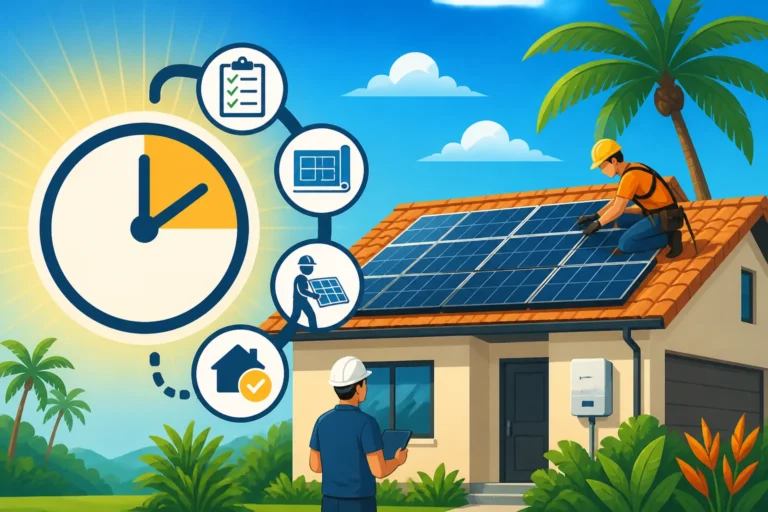
A detailed site survey is the bedrock of an accurate solar proposal. Without it, any quote you receive is largely an educated guess. Don't commit to a system until a thorough, professional assessment has been completed. This crucial step is part of the overall Solar Installation Timeline: What to Expect.
Comparing Multiple Quotes and System Designs
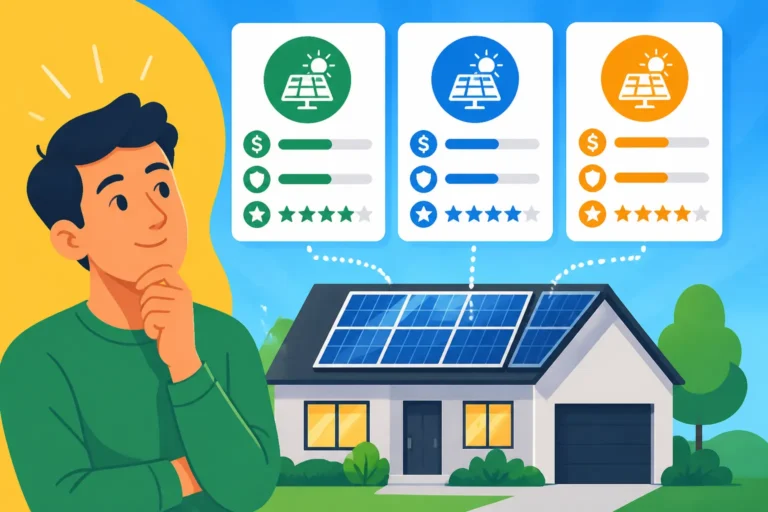
Once you have a professional assessment, the next critical step is to gather and compare multiple quotes from different solar installers. This isn't just about finding the cheapest price; it's about comparing different system designs, equipment choices, and proposed solutions. One installer might propose a system heavily focused on a south-facing section with string inverters, while another might suggest splitting panels across east and west roofs with microinverters, arguing it better aligns with your evening energy consumption and local utility rates.
When comparing quotes, pay close attention to:
- System Size (kW): Does it align with your energy usage goals?
- Estimated Annual Production (kWh): How much electricity is the system projected to generate? This should be clearly explained based on their shading analysis and panel placement.
- Equipment: Are they proposing high-quality, efficient panels and reliable inverters (like Enphase or SolarEdge)? What are the warranties on this equipment?
- Cost Per Watt: This is a key metric for comparing overall system value.
- Financing Options: Understand the terms of any loans or leases, including interest rates, dealer fees, and total cost.
- Warranty and Service: What kind of workmanship warranty do they offer? What's their reputation for post-installation support?
Don't hesitate to ask questions about why they chose a particular design or specific components. A reputable installer will be transparent and able to clearly articulate the rationale behind their proposal. This comparative process ensures you get the best value and a system that truly meets your needs.
Leveraging Tools to Find Qualified Installers
Finding reliable, trustworthy solar installers can feel like a daunting task, especially with so many companies vying for your business. This is where platforms designed to connect homeowners with vetted professionals can be incredibly helpful. Services like Modernize can simplify this process by providing you with quotes from pre-screened installers in your local area. Instead of you sifting through endless search results and making cold calls, these platforms do some of the legwork for you, allowing you to quickly receive multiple bids from qualified companies.
Using such a service can save you a significant amount of time and stress. You can often input your basic information and roof orientation details once, and then receive tailored proposals from several installers who are familiar with local regulations, incentives, and the specific challenges of your region. This makes it much easier to compare options, ask informed questions, and ultimately choose an installer that you feel confident about. Remember, the goal is not just to get solar, but to get a high-quality, long-lasting system installed by a competent and reputable company that will stand behind their work. This is a big investment in your home, and finding the right partner is paramount.
Here's a quick comparison of how different roof orientations generally perform:
| Roof Orientation | General Performance | Best for | Considerations |
|---|---|---|---|
| South | Excellent | Maximum year-round production, faster ROI in many scenarios | Ideal when unobstructed; less critical with modern tech and TOU rates |
| South-East | Very Good | Good morning production, strong overall energy capture | Excellent if afternoon shading is an issue |
| East | Good | Strong morning production, offsets early daily usage | Great for homes with high morning energy use or specific TOU rates |
| South-West | Very Good | Good afternoon/evening production, strong overall energy capture | Excellent if morning shading is an issue; often financially advantageous with TOU rates |
| West | Good | Strong afternoon/evening production, offsets peak demand | Ideal for homes with high evening energy use or expensive TOU rates |
| North | Poor / Minimal | Rarely recommended for primary array; only for supplemental if no other space and specific conditions | Very low production; generally not cost-effective for residential |
Disclaimer
The information provided in this guide is intended for general informational purposes only and does not constitute financial, legal, or professional advice. Solar system performance, costs, savings, and incentives can vary significantly based on your specific location, utility provider, energy consumption, system design, equipment choices, and applicable local, state, and federal policies, which are subject to change. Always consult with qualified solar professionals, financial advisors, and tax experts before making any decisions related to solar energy installations.