What Is the New Jersey Solar Incentive in 2026?
If you have spent any time looking at your PSE&G or JCP&L bill lately, you have probably felt that familiar sting of rising delivery charges and "adjustment" fees that seem to climb every single summer. Living in the Garden State means dealing with some of the highest electricity rates in the country, and this guide breaks down how New Jersey’s 2026 solar incentives can finally help you fight back.
Understanding the SuSI Program and the SREC-II Market
The landscape of solar in New Jersey has shifted significantly over the last few years. If you talk to a neighbor who installed panels five or six years ago, they probably brag about "SRECs" and making thousands of dollars a year. While the original SREC program is closed to new applicants, it has been replaced by the Successor Solar Incentive (SuSI) Program. Specifically for homeowners, this is managed through the Administratively Determined Incentive (ADI) segment.
In 2026, the SuSI program functions as a performance-based incentive. Instead of the old market-based SREC system where prices fluctuated wildly like a tech stock, the ADI provides a fixed, guaranteed price for every megawatt-hour (MWh) of electricity your system produces. For a typical residential rooftop system, this value is currently set at a stable rate for a 15-year term. This stability is a huge win for homeowners because it allows you to calculate your exact return on investment without worrying if the "green credit" market is going to crash next Tuesday.
When you install your system, your installer will help you register with the New Jersey Clean Energy Program. Once you are up and running, you will receive one SREC-II (also called a NJ Class I REC) for every 1,000 kilowatt-hours your panels churn out. Most average-sized homes in NJ produce between 8 and 12 SRECs per year. For a deeper dive into the mechanics of these credits, you should check out the New Jersey SREC-II / SuSI Program Guide to see exactly how the registration process works.
The beauty of the SuSI program is that it provides a "second check" alongside your utility savings. You aren't just saving money by not buying power from the grid; you are actually earning a commodity that the state requires utilities to buy. This makes the Solar Panel Payback Period Explained much more favorable in New Jersey than in states that lack a dedicated renewable energy credit market.
The New Jersey State Sales Tax Exemption
One of the most immediate financial reliefs you will encounter when going solar in New Jersey is the 100% Sales Tax Exemption. While we are all used to the 6.625% sales tax on almost everything from patio furniture to electronics, the state government decided to completely waive this for solar energy equipment. This is not a "rebate" you have to wait six months to receive; it is a point-of-sale exemption.
Think about the math on a $25,000 solar installation. In many other states, you would be writing a check for an additional $1,600 or more just in state taxes. In New Jersey, that money stays in your pocket from day one. This exemption applies to the panels, the racking system, the inverters, and even the solar batteries if you choose to add energy storage to your setup. Because of this, the Solar Sales Tax Exemptions by State show that NJ remains one of the most buyer-friendly markets in the Northeast.
When you are comparing quotes through a platform like Modernize, make sure the line items reflect this tax-free status. Sometimes out-of-state contractors might forget the specific NJ nuances, so it is always worth double-checking that you aren't being charged for a tax you don't owe. This exemption essentially acts as an automatic discount that lowers the "net cost" before you even start looking at federal incentives or SREC income.
Property Tax Exemptions for Renewable Energy Systems
A common fear among Jersey homeowners is the dreaded property tax reassessment. We already pay some of the highest property taxes in the nation, so the idea of adding a $30,000 asset to our roof only to have the local assessor hike our annual bill is enough to make anyone hesitate. Fortunately, New Jersey law specifically protects you from this through the Property Tax Exemption for Renewable Energy Systems.
Under this law, the "added value" of the solar system is exempt from your home’s property tax assessment. If your solar panels add $20,000 of value to your home, your property tax bill stays exactly where it was as if the panels weren't there. This is a massive long-term incentive because it allows you to increase your home’s equity without the penalty of increased annual taxes. For more context on how this works across the country, you can read about Solar Property Tax Exemptions by State.
To claim this, you typically need to file a specific form (Form BR-602) with your local municipal tax assessor. This is usually a one-time filing after your system is fully installed and has received its final inspections. It is a small piece of paperwork that saves you thousands of dollars over the 25-plus-year lifespan of your system. It’s also one of the reasons why many argue that Solar Panels Increase Home Value more effectively in NJ than in states where the tax man takes a cut of your solar investment.
| Incentive Name | Type | Value / Benefit | Duration |
|---|---|---|---|
| SuSI (ADI) Program | Performance-Based | Fixed price per MWh produced | 15 Years |
| NJ Sales Tax Exemption | Point-of-Sale | 6.625% savings on equipment | Immediate |
| Property Tax Exemption | Tax Assessment | 100% exemption on added home value | Permanent |
| Net Metering | Utility Credit | 1:1 credit for excess power | Ongoing |
| Federal Solar Tax Credit | Federal Income Tax | 30% of total system cost | One-time |
Net Metering and Utility Interconnection
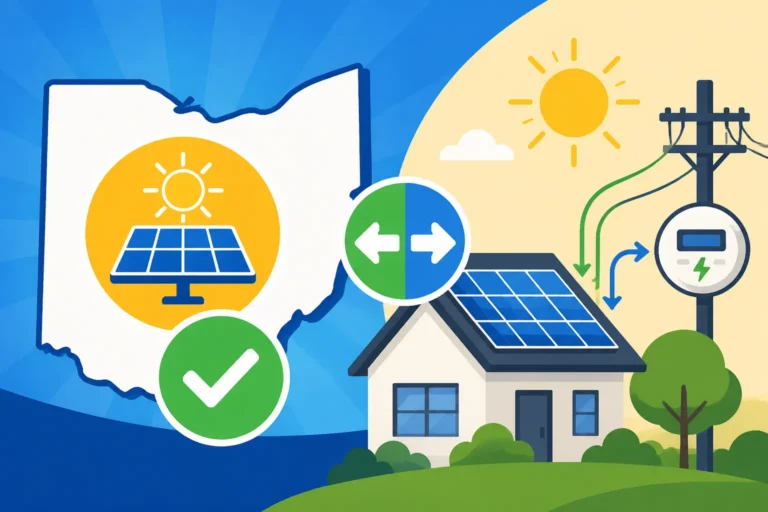
While the SREC-II payments are great for your bank account, the meat of your savings comes from Net Metering. New Jersey has some of the strongest net metering laws in the country, which is a relief for those watching what happened in California recently. In NJ, your utility (like Atlantic City Electric or Orange & Rockland) is required to credit you at the full retail rate for every kilowatt-hour of excess energy you send back to the grid.
Imagine a sunny Tuesday in May. You are at work, the AC is off, and your solar panels are screaming. All that extra power goes back through your meter and out to the neighborhood. Your meter literally spins backward. Then, at 9:00 PM when you are running the dishwasher and watching TV, you "pull back" those credits from the grid. At the end of the month, you only pay for the "net" difference. If you produced more than you used, those credits usually roll over to the next month.
The process of getting this set up is called Interconnection. Your installer handles the heavy lifting, but you should be aware of What Is Permission to Operate (PTO)? because that is the official "green light" from the utility. You cannot turn your system on until the utility has swapped your meter for a bidirectional one and issued the PTO letter. In New Jersey, this can take anywhere from two weeks to two months depending on how backed up the utility’s engineering department is.
When exploring your options on Modernize, ask potential installers about their experience with your specific utility's interconnection portal. Some utilities in the southern part of the state have "closed" certain circuits because they are already saturated with solar, so getting a preliminary look at your local grid capacity is a smart first step. If your local grid is constrained, you might want to look into Solar Battery Incentives in 2026 to see if storing your own power is a better move than sending it back to a crowded grid.
Combining State Perks with Federal Incentives
While this guide focuses on New Jersey's specific goodies, you can't talk about 2026 solar without mentioning the federal side of things. The 30% Federal Tax Credit (ITC) is still a powerhouse, and yes, it can be combined with every single NJ state incentive mentioned above. If your system costs $30,000, the federal government gives you a $9,000 credit against your income tax liability.
When you combine that $9,000 credit with the $1,987 you saved on sales tax, and the roughly $800–$1,000 you'll make in SREC-II payments in your first year, the "real" cost of the system drops dramatically. For a lot of Jersey homeowners, this brings the "break-even" point down to somewhere between 5 and 8 years. Considering solar panels are warrantied for 25 years, that is a lot of "free" electricity in the second half of the system's life.
If you are concerned about the future of these programs, you might find Is the Solar Tax Credit Really Gone? worth a read, as it addresses the common myths surrounding the expiration of these credits. In reality, New Jersey has doubled down on its commitment to solar, making it one of the most stable markets for homeowners even as federal policies shift.
How to Maximize Your NJ Solar Savings
To get the most out of the NJ solar landscape, you need to be strategic. The ADI program has "capacity blocks," meaning they only allow a certain number of megawatts of solar to be installed each year at the current incentive price. If a block fills up, the price for the next block might be lower. This is why "waiting until next year" often ends up costing you money in the long run.
Using a service like Modernize can help you compare multiple local NJ contractors who know the SuSI registration process inside and out. You want an installer who doesn't just slap panels on the roof, but one who acts as a consultant for the paperwork. Ask them about the New Jersey Solar Incentives in 2026 specifically to ensure they are up to date on the latest ADI pricing tiers.
Finally, don't forget the impact of your roof's condition. New Jersey's weather—from humid summers to heavy winter snow—puts a lot of stress on shingles. If your roof is more than 15 years old, it is almost always better to replace it at the same time you do solar. Not only does this prevent a costly "remove and reinstall" fee ten years down the line, but in some cases, if the roof work is necessary for the solar installation, you may be able to talk to a tax professional about including part of that cost in your 30% federal credit calculation. To see if your home is a good candidate for this combo, review Do I Need a New Roof Before Solar? before signing any contracts.
Disclaimer
This guide is provided for informational purposes only and does not constitute legal, tax, or financial advice. Solar incentive programs, including the NJ SuSI/ADI program and federal tax credits, are subject to legislative changes, utility policy updates, and availability. Tax eligibility depends on individual financial circumstances; always consult with a qualified tax professional or financial advisor before making a large investment. Utility rates and net metering rules may vary by provider and location within New Jersey.