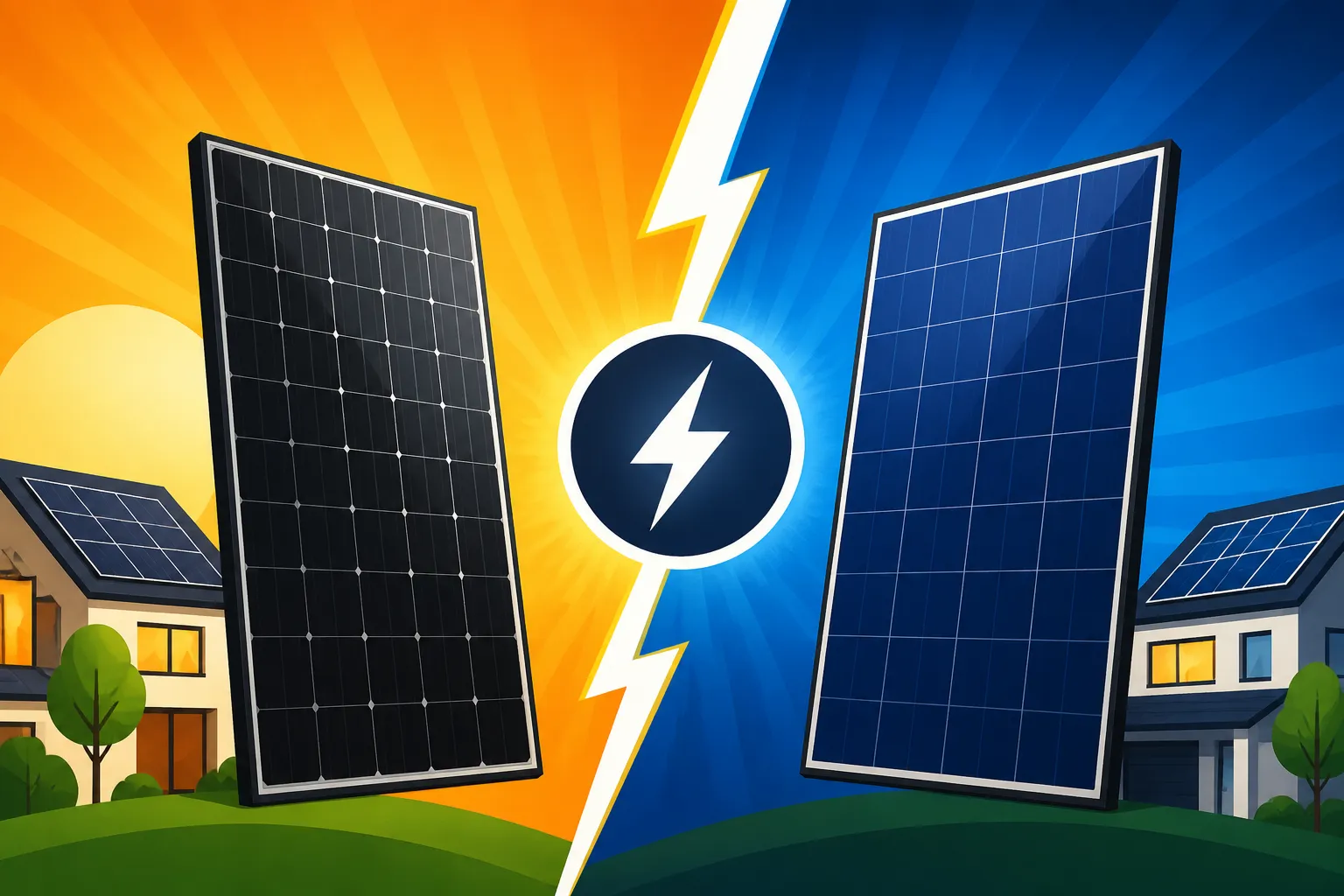
Silfab vs Qcells Solar Panels
Choosing solar panels for your home can feel like navigating a maze, especially when you're trying to compare reputable brands that each promise excellent performance and savings. It's tough to cut through the jargon and marketing speak to understand what truly sets one brand apart from another. If you're weighing your options between two strong contenders like Silfab and Qcells, you're in the right place. This guide will dive deep into the world of these two prominent solar panel manufacturers, breaking down their histories, technologies, and what they mean for your home, so you can make a confident, well-informed decision.
Understanding Silfab Solar Panels
Silfab is a name often associated with high-quality, North American-made solar panels. For many homeowners, the idea of supporting a company with a strong domestic manufacturing footprint is a significant draw, and Silfab definitely delivers on that front. They've built a reputation for rigorous quality control and a focus on reliability, which translates into peace of mind for those looking to invest in solar.
Company Background and Manufacturing Philosophy
Founded in 2009, Silfab Solar is headquartered in Bellingham, Washington, with manufacturing facilities in Washington and Toronto, Canada. This North American presence is a major selling point, as it often means shorter supply chains and adherence to stringent labor and environmental standards. Their manufacturing philosophy is deeply rooted in automation and advanced technology, allowing them to produce panels with remarkable precision and consistency. When you choose Silfab, you’re not just getting a solar panel; you’re getting a product that’s been crafted with a close eye on every detail, from the silicon cells to the final framing.
Their commitment to quality extends to their vertical integration, meaning they control much of the manufacturing process in-house. This level of control helps ensure that every component meets their high standards, which directly impacts the performance and longevity of the panels on your roof. They've also been a long-time partner for many top-tier installers, a testament to their consistent product quality and service.
Key Technologies and Performance
Silfab panels typically feature monocrystalline PERC (Passivated Emitter Rear Contact) cell technology, which is a standard for high efficiency in the solar industry. What sets them apart is their dedication to optimizing these cells for real-world conditions. They focus on features like excellent temperature coefficients, meaning their panels perform better in hot climates compared to some competitors. This is a crucial factor for homeowners in scorching regions like Arizona or Texas, where panel efficiency can take a hit when temperatures soar.
Beyond raw efficiency, Silfab panels are designed for durability. They often incorporate features like robust frames and enhanced module construction to withstand harsh weather conditions, from heavy snow loads in states like Colorado to high winds in coastal areas. Their latest lines, such as the Silfab Prime and Silfab Elite series, often push the boundaries of wattage output, giving homeowners more power per square foot. This can be especially beneficial if you have limited roof space but still want to maximize your energy production. When you're looking at specific panel models, always check the individual specifications, but generally, Silfab aims for a blend of high performance and long-lasting resilience. For those interested in understanding how panel output affects your overall system, our guide on How Many Solar Panels Do I Need for My Home? offers more insights.
Warranty and Reliability
A solar panel warranty is essentially the manufacturer's promise about how long their product will perform. Silfab offers a very competitive warranty package that speaks volumes about their confidence in their product. Typically, you'll find a 25-year product warranty, which covers defects in materials or workmanship. This is often an industry-leading figure, as many manufacturers offer 10-12 years. On top of that, they provide a 30-year linear performance warranty, guaranteeing that their panels will produce at a certain percentage of their original output after three decades. For example, a common guarantee is 85% or more of original power output after 30 years.
This extensive warranty coverage provides significant peace of mind. Should something go wrong with the panel itself or if its performance degrades faster than expected, you have a solid backing from the manufacturer. This long-term commitment is a key indicator of reliability and the expected lifespan of your solar investment. It's always wise to dive into the specifics of any warranty, as explained in our detailed article on Solar Panel Warranties Explained, to understand what exactly is covered and for how long.
Exploring Qcells Solar Panels
Qcells, part of the Hanwha Group, is another powerhouse in the solar industry, known for its innovative technologies and significant global presence. They've been a major player for years, consistently pushing boundaries in terms of efficiency and reliability. For many, Qcells represents a blend of cutting-edge research and widespread availability.
Company Overview and Global Presence
Hanwha Qcells is a South Korean company with extensive global operations, including a large manufacturing facility in Dalton, Georgia, which serves the North American market. This dual global and domestic presence makes them a strong competitor, balancing large-scale production capabilities with local job creation. Qcells has a history stretching back to 1999, evolving from a German-based innovator to a global leader under the Hanwha umbrella.
Their expansive reach means that Qcells panels are installed on roofs and in utility-scale projects worldwide, giving them a broad understanding of various climate conditions and energy demands. This international perspective informs their research and development, ensuring their products are robust enough for diverse environments. Their scale allows them to invest heavily in R&D, leading to continuous improvements in their panel technology.
Innovative Technology and Output
Qcells is perhaps best known for its proprietary Q.ANTUM DUO Technology. This is their advanced PERC (Passivated Emitter Rear Contact) cell technology, which uses a special rear surface and quantum wells to capture more sunlight, even in low-light conditions or when the sun isn't directly overhead. The "DUO" aspect refers to their half-cut cell design, where solar cells are cut in half, which reduces electrical resistance and helps minimize power loss, especially when part of a panel is shaded. This innovative design allows Qcells panels to achieve impressive efficiency ratings, making them a top choice for maximizing energy production from a given roof area.
Their panels are also engineered for durability and longevity, often featuring reinforced frames and advanced anti-LID (Light Induced Degradation) and anti-PID (Potential Induced Degradation) technologies. These protections help ensure that the panels maintain their output over their lifetime, even when exposed to sunlight and varying electrical potentials. When you read a Qcells Solar Panel Review, you'll often find homeowners praising their consistent output and resilience.
Warranty and Customer Support
Like Silfab, Qcells offers a comprehensive warranty package that is highly competitive in the industry. For most of their residential panels, you can expect a 25-year product warranty, covering manufacturing defects, and a 25-year linear performance warranty. This performance warranty typically guarantees that the panels will retain at least 85% of their original rated power output after 25 years.
While their performance warranty is typically for 25 years compared to Silfab's 30 years, 25 years is still an excellent standard that exceeds the lifespan of many other household appliances. Their global presence also means they have extensive customer support networks, often working closely with local certified installers to handle any warranty claims or technical issues that might arise. This partnership approach with installers ensures that homeowners have a direct line to support if needed, reinforcing the reliability of their brand.
Direct Comparison: Silfab vs Qcells
Now that we've looked at each brand individually, let's put them head-to-head on the factors that truly matter when you're making a significant investment in your home. It’s not just about who’s "better" overall, but which one aligns best with your specific needs and priorities.
Efficiency, Performance, and Degradation
When comparing raw efficiency, both Silfab and Qcells are at the top of their game, often hitting efficiency ratings in the 20-22% range for their flagship residential panels. Qcells often boasts slightly higher peak efficiency numbers on some models due to their Q.ANTUM DUO technology, which is designed to excel in various light conditions and mitigate shading effects. This can mean a bit more power generation in scenarios where your roof might experience partial shading throughout the day.
Silfab, while also highly efficient, places a strong emphasis on consistent performance, particularly in higher temperatures. Their excellent temperature coefficient ensures that even when the summer sun beats down, the drop in power output is minimized. This can be a real advantage in regions with long, hot summers.
Regarding degradation, Qcells typically offers a 25-year performance warranty guaranteeing around 85% output. Silfab often extends this to a 30-year performance warranty with a similar or slightly higher retained output percentage. While this difference might seem small, over three decades, it could equate to a measurable amount of additional electricity produced by Silfab panels. This long-term view is critical when considering the overall Solar Panel Payback Period Explained.
Durability and Build Quality
Both brands are considered Tier 1 manufacturers, meaning they use high-quality materials and automated processes, which you can learn more about in our article Are Tier 1 Solar Panels Worth It?. This translates into excellent build quality across the board. Silfab's North American manufacturing allows for extremely tight control over their supply chain and production, often resulting in robust frames and precise assembly. Homeowners who prioritize knowing their panels were manufactured under specific labor and environmental regulations often lean towards Silfab.
Qcells panels are also incredibly durable, built to withstand heavy snow loads, strong winds, and other environmental stressors. Their extensive global testing and certifications ensure that their panels meet a wide array of international standards. Both brands typically use strong anodized aluminum frames and tempered glass, designed to protect the cells from impact and weather. The difference often comes down to very subtle engineering choices or specific model features that might appeal to individual buyers.
Value Proposition and Cost Considerations
The cost of solar panels can vary significantly based on your installer, location, and the specifics of your system, so it's challenging to give exact figures. However, generally speaking, both Silfab and Qcells are premium brands. This means they might have a slightly higher upfront cost per watt compared to some budget-tier manufacturers. You can explore this further in our guide on Solar Panel Cost Per Watt Explained.
| Feature | Silfab Solar Panels | Qcells Solar Panels |
|---|---|---|
| Headquarters | Bellingham, WA (USA) / Toronto (Canada) | Seoul (South Korea), Major US presence in Georgia |
| Primary Markets | North America | Global, Strong in North America and Europe |
| Key Technology | Monocrystalline PERC, optimized for temperature | Q.ANTUM DUO (Half-cut PERC cells, anti-LID/PID) |
| Typical Efficiency | 20-21.5% | 20-22% |
| Product Warranty | 25 years (often industry-leading) | 25 years |
| Performance Warranty | 30 years (e.g., 85% after 30 years) | 25 years (e.g., 85% after 25 years) |
| Manufacturing Focus | North American manufacturing, high automation | Global scale, significant US manufacturing |
| Cost Per Watt (Avg) | Often slightly higher premium due to NA focus | Premium, generally competitive |
What you get for that investment is long-term reliability, excellent performance, and robust warranties. For Silfab, part of the value comes from its North American manufacturing, which some homeowners are willing to pay a premium for. For Qcells, the value lies in its advanced Q.ANTUM DUO technology and its strong global backing, which means cutting-edge innovation. Ultimately, the "value" will depend on whether you prioritize domestic manufacturing, slight variations in efficiency or temperature performance, or extended warranty length. Remember, the true cost of solar is not just the upfront price, but the savings over the system's lifetime, which is detailed in our guide How Much Do Solar Panels Cost? 2026 Guide.
Making the Right Choice for Your Home
Deciding between Silfab and Qcells isn't about one being objectively "better" in all situations. Both are excellent choices that will serve you well. The key is to evaluate which brand's strengths align more closely with your personal circumstances and priorities. This really is where the rubber meets the road, as your specific roof, budget, and climate play a huge role.
Factors to Consider
Before you commit, take a moment to consider these important aspects:
- Roof Space: If you have limited roof space but high energy needs, you'll want to prioritize panels with the highest possible efficiency to maximize output from a smaller footprint. Both brands offer high-efficiency options, but specific models might have a slight edge.
- Budget: While both are premium brands, there can be subtle differences in pricing between installers and regions. Always get multiple quotes and compare the total system cost, not just the panel price.
- Climate: As mentioned, Silfab often boasts an excellent temperature coefficient, which could be a deciding factor if you live in an area with consistently high temperatures like Nevada or Florida. Qcells' low-light performance can be a benefit in cloudier regions or where morning/evening sun is more prevalent.
- Aesthetic Preferences: Both brands offer sleek, all-black panel options that blend seamlessly with most rooflines. However, if aesthetics are paramount, look at specific model images from your installer.
- Warranty Length: If having the longest possible performance warranty is a non-negotiable for your long-term investment strategy, Silfab's 30-year performance warranty might tip the scales for you. This commitment to longevity can make a real difference over the decades, as explored in Solar Panel Efficiency & Degradation Explained.
When Silfab Might Be the Better Fit
Silfab stands out for homeowners who prioritize North American manufacturing and exceptional long-term reliability. If knowing that your panels were largely produced in the U.S. or Canada, adhering to those specific standards, brings you peace of mind, Silfab is a fantastic choice. Their emphasis on robust build quality and superior high-temperature performance also makes them an ideal candidate for homes in warmer climates, ensuring your system maintains peak efficiency even on scorching summer days. For those looking for an extra-long performance guarantee, Silfab's 30-year linear performance warranty provides that added layer of confidence. If you're looking for a dependable workhorse with a strong domestic pedigree, Silfab is definitely worth a closer look.
When Qcells Might Be the Better Fit
Qcells truly shines for homeowners looking for cutting-edge technology and optimal performance across varying light conditions. Their Q.ANTUM DUO Technology, with its half-cut cells and advanced low-light capabilities, can be particularly beneficial if your roof experiences some shading throughout the day or if you live in a region that isn't always blessed with bright, direct sunlight. Qcells' extensive global presence and significant investment in R&D mean you're getting a product from a company constantly at the forefront of solar innovation. If you're a tech-savvy homeowner who values maximum energy harvest and a globally recognized brand with a proven track record, Qcells could be the perfect match. Also, when you're looking at supplementary purchases like smart home devices or solar monitoring gadgets, you might find a wider range of accessories and compatible systems designed with a global market in mind, often leading you to platforms like Amazon for reviews or unique finds.
Ultimately, the best way to decide is to get detailed quotes from reputable installers who carry both brands. Discuss your specific energy needs, roof characteristics, and budget with them. For any additional components or accessories, many homeowners might browse platforms like Amazon for specific features or comparison data, but for the main solar installation, working with a certified installer is always the smartest route. Make sure to consult our guide on How to Choose a Solar Installer to ensure you pick the right professional for your project.
Disclaimer
Please remember that this article provides general information and recommendations. Solar technology, incentives, and pricing can change rapidly. Always consult with certified solar professionals for personalized advice and specific quotes tailored to your home and location. Warranties and product specifications should be verified directly with the manufacturer or your chosen installer.