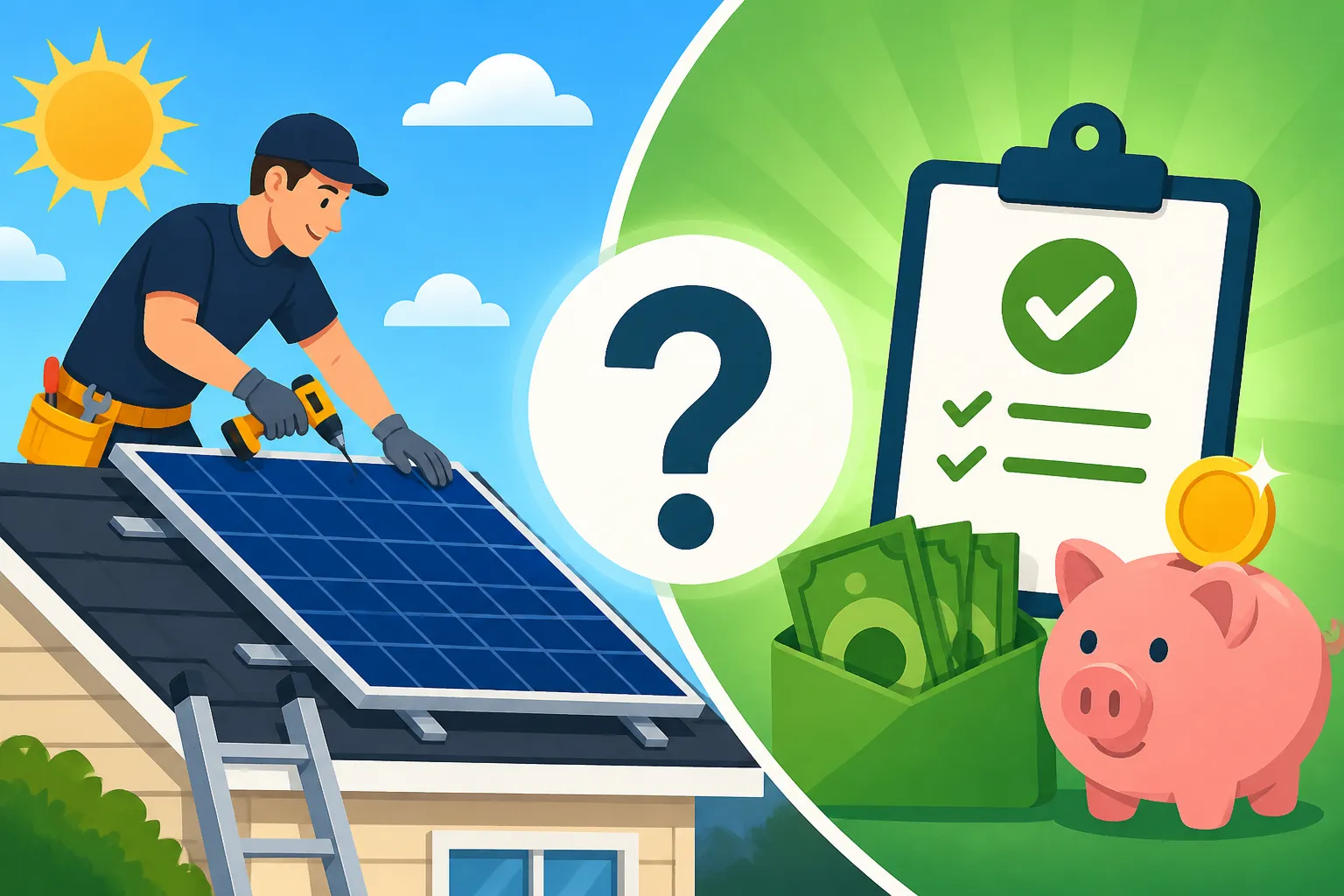
Do Solar Incentives Apply to DIY Installations?
If you are tired of watching your monthly utility bills skyrocket while your neighbors bask in the glow of their renewable energy systems, you have probably considered a DIY approach. Many homeowners find themselves in a frustrating limbo, wondering if they can save thousands by installing panels themselves without forfeiting the massive tax breaks and rebates that make solar affordable. This guide breaks down exactly which incentives apply to DIY projects and where you might encounter the "professional-only" fine print.
Understanding the Federal Landscape for DIY Solar
The biggest question on every DIYer’s mind is whether the federal government will still play ball if you are the one climbing the ladder. The good news is that the federal tax credit has historically been quite inclusive of the "owner-installed" model, though the landscape has shifted slightly as we have moved into this year. When you are looking at Solar Tax Credit 2026: What Happened to the Federal Credit, the primary takeaway for a DIY enthusiast is that the credit applies to the "expenditures" of the system. This means the money you spend on panels, inverters, racking, and even the wiring usually qualifies for the credit.
However, there is a massive catch that often breaks a homeowner’s heart: you cannot claim a tax credit for your own labor. If a professional crew charges you $10,000 for labor, that entire amount is eligible for the tax credit. If you spend 200 hours of your own time doing the same work, the "value" of your time is essentially zero in the eyes of the IRS. This is why many people use platforms like Modernize to compare the cost of a professional installation against their own projected DIY savings; sometimes the loss of the tax credit on labor actually makes the professional route cheaper.
The Investment Tax Credit and DIY Equipment Costs
When you purchase a DIY solar kit or source individual components, you are still making a significant capital investment. The Federal Solar Incentives That Still Exist in 2026 are designed to reward the adoption of the technology, regardless of who tightens the bolts. To claim the credit, you must technically "own" the system, which is a non-issue for DIYers since you are buying the hardware outright. You will need to keep every single receipt for every component, from the high-end monocrystalline panels down to the stainless steel lag bolts used for the racking.
The documentation process for a DIYer is significantly more rigorous than for someone who hires a full-service firm. When a company handles the job, they provide a single invoice that summarizes the "qualified solar electric property costs." As a DIYer, you are the project manager, and you must ensure that every part you buy meets the federal requirements for "readily available" and "new" equipment. Used panels found on a local marketplace, for instance, generally do not qualify for federal tax credits, which is a mistake that costs DIYers thousands every year.
Eligibility Requirements for Self-Installed Systems
To remain eligible for federal perks, your system must be installed at your primary or secondary residence in the United States. If you are building a solar array for a tiny house that isn't connected to a permanent foundation or a dedicated utility meter, you might run into trouble with the IRS definitions of a "dwelling unit." For those living in traditional homes, the panels must be "placed in service" during the tax year you claim them.
"Placed in service" is a technical term that usually means the system is ready and functional for its intended use. For a DIYer, this often hinges on the final sign-off from your local building department. You cannot simply have the panels sitting on your roof; they must be wired and capable of generating power. If you find yourself overwhelmed by the technical requirements of the electrical code, using a service like Modernize to find a local consultant or a "solar-friendly" electrician can help you bridge the gap between a pile of parts and a system that actually qualifies for federal money.
State and Local Incentives The Professional Only Trap
While the federal government is relatively hands-off regarding who does the work, state governments are much more protective. Many State Solar Incentives: Complete 2026 Guide specifically mandate that systems must be installed by a "Certified Lead Installer" or a contractor holding a specific solar-specialty license. States like Oregon and Massachusetts have historically tied their rebate programs to high-quality installation standards that effectively shut out the average DIYer.
The frustration here is real. You might find a state rebate worth $2,000, only to realize that the state requires a NABCEP-certified professional to sign off on the work. In these cases, the "savings" of DIY are immediately eroded because you are leaving thousands of dollars on the table. It is vital to check your specific state’s database of incentives before you turn a single screwdriver.
State Rebates vs Performance Based Incentives
State rebates are usually "upfront" money that reduces the initial cost of your system. If your state’s rebate requires a pro, you are out of luck as a pure DIYer. However, Performance-Based Incentives (PBIs) or SRECs are sometimes a different story. These are credits you earn based on the actual power your system produces over time. In some jurisdictions, as long as your system is permitted, metered, and connected to the grid, you can still participate in these programs regardless of who performed the installation.
The logic here is that the state wants the green energy you are producing, and they care less about who installed the panels than they do about the accuracy of the meter. If you are in a state with a robust SREC market, you could potentially recoup a significant portion of your DIY investment over the next decade. However, you will still need to prove the system is up to code, which almost always requires a licensed electrician to handle the final interconnection.
Navigating Net Metering for DIYers
Net metering is arguably the most valuable long-term "incentive" for any solar owner. It allows you to "sell" your excess power back to the utility. But here is the catch: most utilities will not allow you to connect a DIY system to the grid unless it has been inspected and approved by a licensed electrical professional. If you cannot get Net Metering Explained: How It Works by State, your DIY system becomes a "behind-the-meter" or "off-grid" setup, which significantly reduces your ROI.
When you apply for an interconnection agreement, the utility will ask for the "contractor of record." If you leave that blank or put your own name, they may require a professional engineering (PE) stamp on your electrical diagrams. This is a common hurdle where many DIY projects stall out. To navigate this, many savvy homeowners use Modernize to find an electrician willing to do a "service-only" contract—where the homeowner mounts the panels and the pro handles the high-voltage wiring and the utility paperwork.
The Hidden Costs of Going DIY Without Incentives
It is a common misconception that DIY solar is always cheaper. When you factor in the potential loss of How Do Property Tax Exemptions for Solar Work? or specialized local rebates, the math starts to shift. Some municipalities offer property tax abatements only if the system was installed by a licensed professional to ensure it meets fire safety codes. If your DIY system isn't "certified," your local tax assessor might not grant you the exemption, meaning your home's value goes up, and so do your taxes.
Furthermore, there is the issue of permitting. A professional installer handles the labyrinth of local zoning laws and building permits. As a DIYer, you are responsible for every filing fee and every correction requested by the building inspector. If you fail an inspection twice, those re-inspection fees can quickly add up, eating into the money you thought you were saving.
Permitting and Utility Interconnection Hurdles
The paperwork involved in a solar installation is often more taxing than the physical labor. You need a structural analysis of your roof, a detailed electrical three-line diagram, and a site map. Most DIYers underestimate the complexity of these documents. Without the "Permission to Operate" (PTO) from your utility, your system is just expensive roof decoration. Knowing What Is Permission to Operate (PTO)? is crucial because, without it, you can’t legally turn the system on.
Many utilities have moved to online portals for interconnection applications. These portals often require a contractor license number to create an account. If you are a DIYer, you may have to submit paper applications, which can take weeks or months longer to process. This delay is an "invisible cost" because every month you aren't producing power is a month you are still paying full price for electricity.
Warranty and Insurance Implications
When you buy panels as a DIYer, you still get a manufacturer’s product warranty. However, many manufacturers will only honor that warranty if the panels were installed according to their strict guidelines. If you accidentally crack a backsheet or use the wrong torque settings on your mid-clamps, the manufacturer may deny your claim. Professionals carry "errors and omissions" insurance and offer labor warranties that a DIYer simply doesn't have.
Additionally, your homeowner's insurance company may have something to say about your DIY array. Some insurers will only cover solar panels if they were installed by a licensed contractor. If a windstorm rips a DIY panel off your roof and it crashes through your neighbor’s windshield, you might find yourself personally liable if your insurance denies the claim based on "improper installation." This is a major reason why people often consult Modernize to find pros who can provide the necessary certifications for insurance peace of mind.
Practical Steps to Ensure Your DIY System Qualifies
If you are determined to go the DIY route, you need a strategy to ensure you don't leave money on the table. First, purchase a pre-engineered kit. These kits come with the electrical diagrams and structural stamps that many building departments and utilities require. This takes the guesswork out of the documentation and makes it much more likely that you will qualify for federal tax credits without a fight from the IRS.
Second, don't be afraid of "hybrid DIY." This is where you do the "grunt work"—the racking and the panel mounting—but hire a professional for the "system design" and the "final tie-in." By hiring a pro for just 10-20% of the job, you can often satisfy the requirements for state rebates and utility interconnection while still saving a massive amount on the total project cost.
Documentation and Compliance
Keep a "Solar Bible" for your project. This should include every receipt, a copy of your approved building permit, photos of the installation at various stages (especially the flashing and grounding), and the specification sheets for every component. When it comes time to file your taxes, having a neat package of evidence makes claiming the tax credit much smoother. You should also look into Solar Panel Maintenance & Cleaning to ensure your DIY system continues to meet the performance standards required by some PBI programs.
The IRS Form 5695 is your best friend. Study it before you even buy your equipment. It will show you exactly what information you need to provide. If you are also doing other home upgrades, remember to look into How Much Do Solar Panels Cost? 2026 Guide to see how your solar budget fits into your overall home improvement plan.
Consulting the Experts When Necessary
Even the most seasoned DIYer should know when to call for backup. If your roof is particularly steep or complex, or if your main electrical panel is outdated and requires a "line-side tap," these are not projects for an amateur. In fact, many DIYers find that by the time they buy the specialized tools needed for a one-time solar install (like a high-quality crimper for MC4 connectors or a torque wrench that meets specific NM requirements), they've spent hundreds that could have gone toward a pro.
| Incentive Type | DIY Eligibility | Common Requirements |
|---|---|---|
| Federal Tax Credit (ITC) | Yes (Equipment Only) | New equipment, primary/secondary residence |
| State Rebates | Varies (Often No) | Licensed or NABCEP-certified installer |
| Net Metering | Yes (With Pro Sign-off) | Utility-approved interconnection, electrical permit |
| SRECs / PBIs | Yes (Usually) | Revenue-grade meter, system registration |
| Property Tax Exemption | Varies by State | Building permit, system must be "certified" |
The table above illustrates that while the federal government is your biggest ally in a DIY project, the local and utility-level hurdles are where you are most likely to lose out. Balancing Solar Panel Cost Per Watt Explained against the value of lost incentives is the only way to truly know if DIY is the right move for your wallet.
Finally, before you commit to the DIY path, consider the long-term integrity of your home. A poorly installed array can lead to roof leaks that cost far more than any solar savings. Always ask yourself: Do Solar Panels Damage My Roof?—the answer is "not if installed correctly," but that "correctly" part is much harder to achieve when you're learning on the fly.
Disclaimer
The information provided in this guide is for educational and informational purposes only. Solar incentives, tax codes, and utility regulations are subject to change and vary significantly by jurisdiction. This guide does not constitute legal, financial, or professional tax advice. Always consult with a qualified tax professional and your local building authority before beginning a DIY solar project to ensure compliance with all current laws and safety standards.