Are Solar Panels Worth It Without the Tax Credit in 2026?
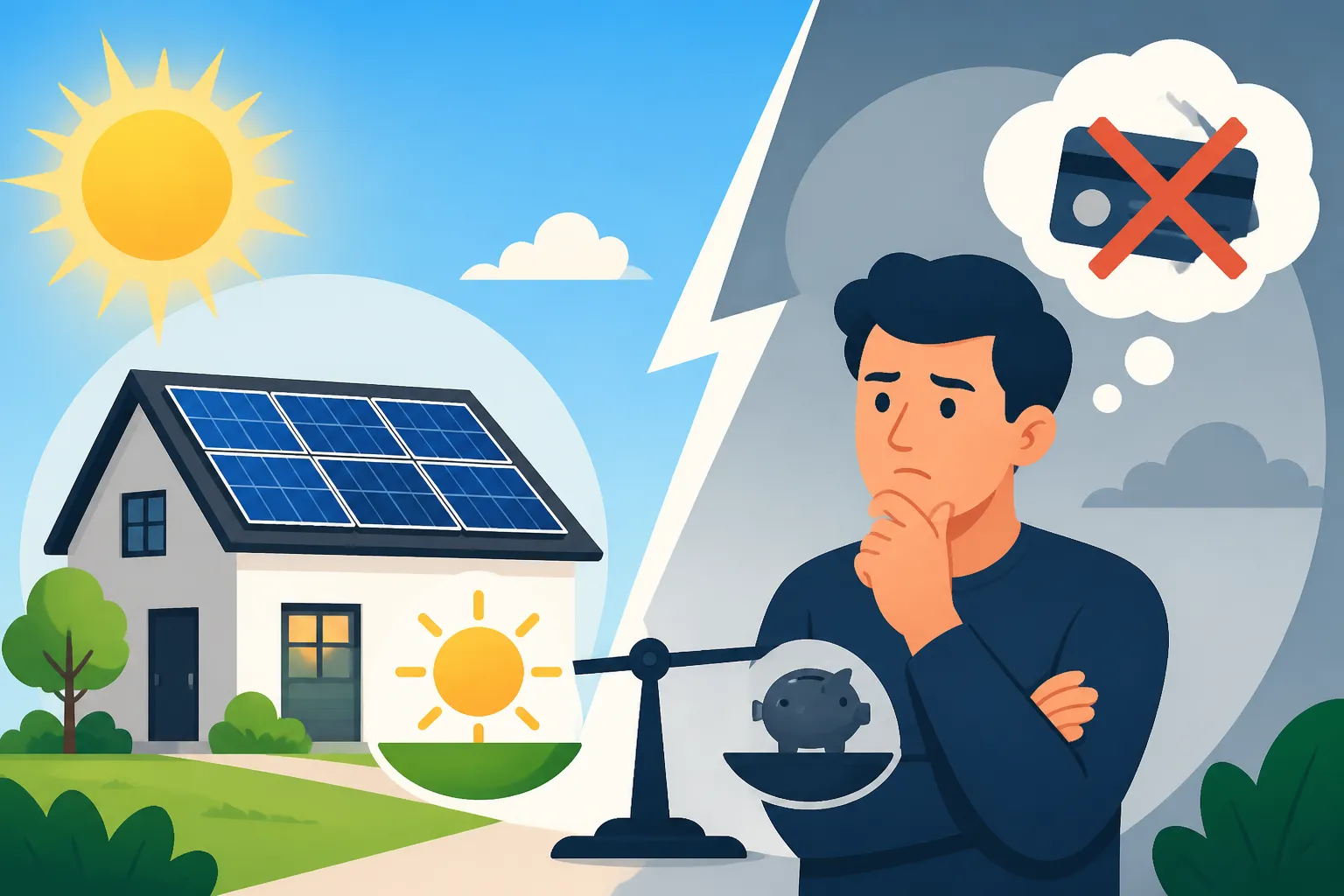
Many homeowners feel a real pang of disappointment, and let's be honest, maybe a little frustration, when they hear that the federal solar tax credit isn't around in 2026. It was such a significant incentive, and it’s natural to wonder if going solar still makes financial sense without that huge boost. This guide is here to unravel that very question, showing you that even with the federal credit gone, solar can absolutely still be a worthwhile and rewarding investment for your home.
The Shift in Solar Economics: Beyond the Federal Tax Credit
For years, the federal solar Investment Tax Credit (ITC) was the bedrock of solar economics for countless homeowners across the United States. It offered a substantial percentage — peaking at 30% of the total system cost — directly off your federal income taxes. That's a huge chunk of money, a direct reduction in the upfront cost that made solar instantly more appealing and brought down the payback period significantly. So, it's completely understandable why its absence in 2026 might make you pause and question the value proposition of solar panels now.
The truth is, while that specific federal incentive is no longer available for new residential installations as it was, the solar industry hasn't simply collapsed. Far from it. What we're seeing is a natural evolution in the market, pushing states, local municipalities, and utility companies to step up and fill the void with their own robust programs. This means the landscape of incentives has become more localized, requiring a bit more homework, but the financial benefits are still very much alive and well. It's less about one giant federal carrot and more about a collection of state and local opportunities that, when stacked together, can still make solar a fantastic deal.
The key takeaway here is not to despair. The decision to go solar was never solely about the federal tax credit, although it certainly helped push many fence-sitters over the edge. It’s always been about long-term savings, energy independence, and increasing your home’s value. These core benefits remain, and with smart planning and a good understanding of what’s available in your specific area, solar panels can absolutely still be worth it today.
Maximizing Savings with State, Local, and Utility Incentives
Without the federal tax credit, the spotlight has swung firmly onto the diverse array of state, local, and utility incentives that are still very much in play. It's a patchwork quilt of opportunities, and understanding what's available in your specific area is crucial for determining your overall return on investment. This is where partnering with a reputable resource like Modernize can really make a difference, as they can help connect you with installers who are experts in navigating these local programs.
State-Specific Solar Tax Credits and Rebates
Many states have recognized the value of encouraging solar adoption and have introduced their own incentives to keep the momentum going. These can take various forms, from direct cash rebates paid out by state energy offices to state income tax credits that function similarly to how the federal credit used to work, albeit usually at a lower percentage.
For example, states like New York continue to offer a state tax credit, which can significantly reduce your out-of-pocket costs. Massachusetts has programs like SMART (Solar Massachusetts Renewable Target) which provide performance-based incentives. Meanwhile, some states might offer rebates that directly reduce the upfront cost of your system. To truly understand what’s available, you’ll need to research your state's energy department website or consult with local solar installers. They often have the most up-to-date information on programs, their eligibility requirements, and application deadlines. Don't assume that just because the federal credit is gone, all tax-related savings have vanished too; many states are actively encouraging solar through their own fiscal policies. For a more detailed look, check out our guide on State Solar Incentives: Complete 2026 Guide.
Net Metering and Solar Renewable Energy Credits (SRECs)
Beyond upfront cost reductions, ongoing financial benefits come from how your solar system interacts with the grid. This is where concepts like net metering and SRECs become incredibly important, especially in a post-federal-tax-credit world.
Net metering is a billing mechanism that allows solar panel owners to receive credit for the electricity they generate and feed back into the grid. When your solar panels produce more electricity than your home consumes, that excess power doesn't just vanish; it's sent to the grid, and your utility company credits your account. This effectively turns your meter backward, reducing your overall electricity bill. Policies vary wildly by state and even by utility, with some states offering full retail rate credit for exported energy, while others have transitioned to less favorable "net billing" or "avoided-cost" rates. Knowing your local Net Metering Explained: How It Works by State rules is paramount to accurately calculate your long-term savings.
SRECs, or Solar Renewable Energy Credits, are another powerful incentive, primarily found in states with Renewable Portfolio Standards (RPS). An SREC represents the environmental attributes of 1 megawatt-hour (MWh) of electricity generated by a solar system. Essentially, you're getting paid for the greenness of your electricity. You can sell these credits on a market, providing an additional income stream on top of your electricity bill savings. The value of SRECs fluctuates based on supply and demand within a given state's market, and programs like New Jersey's SREC-II / SuSI program or Illinois Shines have made solar highly attractive. Companies like SRECTrade or Sol Systems specialize in facilitating these transactions for homeowners. Understanding SRECs Explained: Selling Solar Renewable Energy Credits can unlock significant long-term value from your solar investment.
Local Programs and Utility Rebates
Don't forget to look at the hyper-local level! Many cities, counties, and even specific utility companies offer their own incentives to encourage renewable energy adoption. These can range from small grants to property tax exemptions, which prevent your solar installation from increasing your home's assessed value for tax purposes. Some utilities provide direct rebates for installing solar, or even for adding a solar battery to your system.
For instance, a utility like Pepco in Maryland or Pacific Gas & Electric (PG&E) in California might have specific rebate programs for their customers, or offer incentives for energy efficiency upgrades that pair well with solar. These programs are often designed to meet local energy goals and can be incredibly beneficial. Searching for "utility solar rebates" or contacting your local energy provider directly can uncover these hidden gems. Resources like Modernize can also assist in identifying these hyper-local opportunities. It’s all about layering these incentives together to build a strong financial case for your solar project. You can dive deeper into this by exploring Utility Solar Rebates: How to Find Yours.
| Incentive Type | Federal Availability (2026) | State/Local Availability (2026) | Description | Impact on ROI |
|---|---|---|---|---|
| Federal Tax Credit | Expired | N/A | Direct reduction of federal income tax liability. | Previously significant upfront cost reduction. |
| State Tax Credit | N/A | High (varies by state) | Direct reduction of state income tax liability. | Good upfront cost reduction, state-specific. |
| Cash Rebates | N/A | Moderate (varies by state/utility) | Direct payment or discount on system cost. | Immediate reduction in out-of-pocket expenses. |
| Net Metering | N/A | High (varies by state/utility) | Credit for excess electricity fed to grid. | Ongoing savings, reduced electricity bills. |
| SRECs | N/A | Moderate (specific states) | Tradable credit for solar electricity generated. | Additional revenue stream, market-driven value. |
| Property Tax Exemptions | N/A | Moderate (specific states/localities) | Prevents solar from increasing home's property tax assessment. | Avoids increased property tax burden. |
The Long-Term Financial Impact: Beyond Incentives
Even if you stack every available state and local incentive, the biggest financial argument for solar panels still boils down to long-term savings and increased home value. This isn't just about the initial purchase; it's about shifting your finances over decades.
Substantial Savings on Electricity Bills
Think about your monthly electricity bill. For many, it's a recurring headache, especially as utility rates continue their relentless climb. When you install solar panels, you essentially lock in your electricity costs for the lifetime of your system, typically 25 to 30 years or even longer. Instead of paying your utility company for every kilowatt-hour you consume, you're generating your own clean power right on your rooftop.
Consider a homeowner in Phoenix, Arizona, where summers bring scorching temperatures and high air conditioning usage. Without solar, their monthly electricity bill could easily skyrocket during these months. With a properly sized solar system, they might only pay a small connection fee to the utility, essentially erasing the bulk of their energy expenses. Over the course of a year, and certainly over two or three decades, these savings can amount to tens of thousands of dollars, making a significant impact on your household budget. This isn't just a hypothetical; it's a tangible benefit that homeowners across the country experience. Understanding How Much Can You Save With Solar Panels? can help you quantify this benefit for your specific situation.
Calculating Your Solar Payback Period
The "payback period" is a crucial metric for any significant home investment, including solar. It refers to the time it takes for your cumulative energy savings and incentives to offset the initial cost of your solar panel system. While the absence of the federal tax credit might extend this period slightly compared to previous years, it's still often a very attractive timeframe.
Let's say a solar system costs $25,000 to install after all available state and local rebates. If you save $1,500 on electricity bills annually, and you're receiving an additional $500 per year from SRECs, your total annual savings and income are $2,000. In this scenario, your payback period would be 12.5 years ($25,000 / $2,000). Considering that most solar panels come with performance warranties of 25 years or more, you're looking at a decade or more of "free" electricity after your system has paid for itself. This calculation is a simplification, of course, as it doesn't account for rising electricity rates which can shorten your effective payback period, or potential maintenance costs. However, it gives you a clear financial benchmark. Learn more about this by reading our guide on Solar Panel Payback Period Explained.
Increased Home Value and Market Appeal
Beyond direct financial savings, installing solar panels is a significant home improvement that consistently adds value to your property. Studies have repeatedly shown that homes with solar energy systems sell for a premium and often sell faster than comparable non-solar homes. Think of it as investing in an asset that pays dividends every month.
When a potential buyer looks at a home with solar panels, they're not just seeing the panels; they're seeing significantly lower utility bills, a smaller carbon footprint, and a modern, desirable feature. In competitive housing markets, this can be a major differentiator. For example, a home in San Diego, California, with an owned solar system might fetch a higher price and spend fewer days on the market than a similar home without solar. Even if you're not planning to sell anytime soon, this added equity is a valuable asset. The exact increase in value can vary based on your location, system size, and local market conditions, but it's a recognized benefit by appraisers and real estate agents alike. Explore this topic further with our resource on Do Solar Panels Increase Home Value?.
Intangible Benefits: Why Solar is More Than Just Money
While the financial arguments for solar are strong, there are also significant non-monetary benefits that can make the investment worthwhile, even without the federal tax credit. These often contribute to a greater sense of security, peace of mind, and responsible living.
Energy Independence and Grid Resilience
One of the most compelling reasons to go solar in today's unpredictable world is the enhanced energy independence it provides. Relying solely on the traditional grid means you're at the mercy of blackouts, brownouts, and fluctuating supply. We've all experienced the frustration of power outages due to extreme weather, overloaded infrastructure, or even utility equipment failures.
With a solar panel system, especially when paired with a battery storage solution like a Tesla Powerwall or Enphase IQ Battery, you gain a significant degree of autonomy. Your home can become its own microgrid, capable of generating and storing electricity to power essential loads even when the main grid goes down. Imagine a major storm knocking out power to your neighborhood in Austin, Texas, but your solar-plus-battery system keeps your lights on, your refrigerator running, and your phones charged. This resilience isn't just a luxury; it's a critical component of modern home preparedness, offering genuine peace of mind that's hard to put a price on. For those interested in battery storage, consider exploring Solar Battery Incentives in 2026.
Environmental Stewardship and Reduced Carbon Footprint
For many homeowners, the decision to go solar extends beyond their pocketbook to their conscience. There's a deep satisfaction that comes from knowing you're actively contributing to a cleaner, more sustainable future. By generating your own electricity from the sun, you're directly reducing your reliance on fossil fuels, which are major contributors to greenhouse gas emissions and climate change.
Every kilowatt-hour produced by your solar panels means one less kilowatt-hour generated by a coal-fired power plant or other less sustainable methods. This positive environmental impact isn't just abstract; it's a tangible reduction in your personal carbon footprint. Families in places like Portland, Oregon, known for their strong environmental consciousness, often prioritize solar not just for the savings, but for the inherent good it does for the planet. It’s about building a legacy of sustainability and setting an example for future generations.
Predictable Costs in an Unpredictable Market
One of the most insidious aspects of traditional utility bills is their unpredictability. Rates can change, often unexpectedly, influenced by everything from fuel costs and infrastructure investments to regulatory decisions. This makes long-term budgeting for electricity a guessing game, and few things are more frustrating than seeing your essential utility costs steadily creep upwards.
Solar offers a powerful antidote to this uncertainty. While the initial investment might seem significant, once your system is installed and paid for (whether upfront or through a fixed-rate solar loan), your primary energy source becomes free. You're no longer vulnerable to the whims of the energy market or the rate hike requests of your utility company. For a homeowner in, say, California, where electricity rates have seen substantial increases in recent years, this predictability can be a huge relief, allowing for more stable financial planning and peace of mind for decades to come. Even if you finance your system, a fixed monthly loan payment is often far more predictable than a fluctuating utility bill. To understand how solar might fit into your budget, it's worth looking into Solar Loans: Complete Guide.
What to Consider Before Making the Leap
Even with all these benefits, going solar is a big decision, and it’s smart to approach it with careful consideration. Without the federal tax credit to smooth over some of the edges, being well-informed about your specific circumstances is more important than ever.
Your Home's Solar Potential
Not all roofs are created equal when it comes to solar. The amount of sunlight your roof receives throughout the day, the direction it faces (south-facing is generally ideal), its pitch, and any shading from trees or neighboring buildings will significantly impact your system's performance and, consequently, your financial returns. A professional solar installer will conduct a detailed site assessment to determine your home's solar suitability.
For instance, a home in Seattle, Washington, known for its cloudy weather, might need more panels or higher-efficiency panels than a home in Phoenix to achieve the same energy offset. If your roof is heavily shaded for large parts of the day, solar might still be an option, but it may require specific technologies like microinverters to optimize performance, or you might need to consider alternatives like a ground-mount system or even participating in Community Solar: How It Works & Who Qualifies if available in your area. Additionally, the age and condition of your roof are vital; it’s often more cost-effective to replace an old roof before installing solar panels, as removing and reinstalling panels later can be costly.
Finding the Right Solar Installer
Choosing a reliable, experienced solar installer is paramount to a successful solar journey. This isn't just about getting a good price; it's about ensuring quality equipment, proper installation, navigating permits, and reliable customer service for the long haul.
Look for installers with a strong local reputation, good customer reviews, and relevant certifications (like NABCEP). Ask for multiple quotes to compare not just price, but also equipment brands, warranty coverage, and financing options. Be wary of high-pressure sales tactics or companies that promise unrealistic savings. A trustworthy installer will provide transparent pricing, a clear explanation of all available incentives (including state and local), and a detailed breakdown of your expected savings and payback period. Resources like Modernize can help you connect with vetted local installers who understand the specifics of your regional market. Don't hesitate to ask questions about their experience with specific panel types, inverter technology, and even their process for handling things like interconnection with your local utility. This due diligence can save you a lot of headaches and ensure your investment is sound. You can learn more about How Much Do Solar Panels Cost? and factors influencing Solar Panel Cost Per Watt Explained to better evaluate quotes.
Disclaimer
The information provided in this article is intended for general informational purposes only and does not constitute financial, tax, or legal advice. Solar incentives, regulations, and costs are subject to change and vary significantly by location. We strongly recommend consulting with a qualified solar professional, tax advisor, and local authorities to understand the specific implications for your individual circumstances.