Net Metering Explained: How It Works by State
The constant worry about ever-increasing electricity bills is a real burden for many homeowners, making you wonder if there's any way to truly take control of your energy costs. You've heard whispers about solar panels and how they can generate your own power, but what happens when your panels produce more electricity than your home needs at any given moment? This comprehensive guide is here to demystify net metering, explaining exactly how it works across different states, so you can understand how this crucial policy can turn your excess solar generation into valuable credits and significant savings.
Understanding Net Metering
When you decide to install solar panels on your home, you're embarking on a journey towards energy independence. But let's be realistic: your home's energy needs aren't static. There will be times, especially on bright, sunny afternoons when everyone's at work or school, that your solar array is pumping out more electricity than your lights, appliances, and HVAC system can consume. Without a smart system in place, that extra power would simply go to waste. That's where net metering steps in, acting as a crucial bridge between your home's solar production and the wider electricity grid. It's designed to ensure that every kilowatt-hour (kWh) your panels generate counts, even the surplus.
What Exactly Is Net Metering?
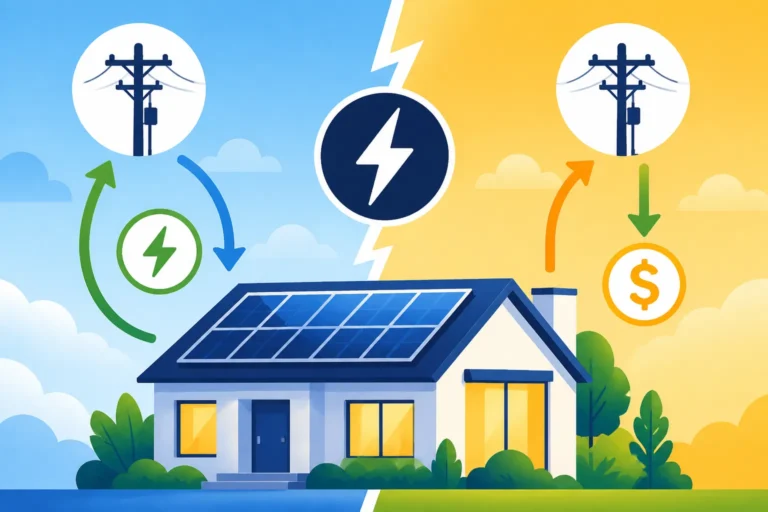
At its heart, net metering is a billing mechanism that allows residential and commercial solar customers to send any excess electricity they generate back to the utility grid. Think of your electricity meter, but instead of just measuring the power coming into your home, a special bi-directional meter also measures the power flowing out of your home. When your solar panels produce more electricity than you're using, that surplus energy doesn't just disappear; it flows onto the grid, effectively spinning your meter backward (or registering as an export). For every unit of electricity you send back, your utility provides a credit on your electricity bill. This credit can then be used to offset the cost of electricity you draw from the grid at times when your solar panels aren't producing enough power, such as at night or on cloudy days.
It’s an elegant solution that incentivizes solar adoption by ensuring homeowners are fairly compensated for the clean energy they contribute. Imagine a scenario where you're out of town for a week, and your solar system is churning out power daily. Instead of those sunny days being wasted, net metering ensures that all that energy is sent to the grid, benefiting your neighbors and earning you credits that will dramatically reduce or even eliminate your next electricity bill. It fundamentally changes the relationship between you and your utility from a one-way consumption model to a two-way energy exchange.
The Different Flavors of Net Metering
While the basic concept of net metering – sending excess power to the grid for credits – remains consistent, the value of those credits can vary wildly depending on your state and even your local utility. This is where things get a bit more nuanced, and understanding these distinctions is key to predicting your potential savings.
First, we have full retail net metering. This is often considered the "gold standard" for solar homeowners because it means you receive a credit for your exported electricity at the same rate you would pay to purchase electricity from the utility. So, if your utility charges $0.15 per kWh, you get $0.15 per kWh for every unit you send back. This direct, one-to-one credit makes solar particularly attractive and helps achieve shorter payback periods. States like Hawaii have historically offered generous net metering, though policies can shift.
Then there's net billing or net metering with reduced compensation. In this model, you still send excess power to the grid, but the credit you receive for that exported energy is less than the retail rate. For instance, you might pay $0.15 per kWh to buy power, but only get $0.08 per kWh for the power you export. This can significantly impact your savings and the overall economics of your solar system. California's NEM 3.0, for example, transitioned from a more favorable net metering structure to a net billing approach with lower export compensation, particularly affecting new solar installations. Understanding the difference between Net Metering vs Net Billing: What's the Difference? is crucial for potential solar owners.
Finally, some utilities operate on an avoided-cost rate system. This is generally the least favorable for solar homeowners. Under avoided-cost rates, utilities compensate you for your excess electricity at the rate it "avoids" having to generate that power itself, which is often a very low wholesale rate. It's essentially what the utility would pay to generate or procure electricity from a large power plant, rather than what you'd pay as a retail customer. This rate can be significantly less than your retail electricity rate, making it harder to realize substantial savings from your solar investment. You might find more details on this in an explanation of Avoided-Cost Rate & Export Credits Explained.
Another variant, less common for residential, is aggregated net metering. This allows a single customer with multiple meters (e.g., a farm with several buildings) to offset the electricity use of one meter with the excess generation from another meter on the same property. This isn't usually relevant for typical single-family homes but is worth noting for larger properties.
The policy landscape is dynamic, with utilities and state legislatures frequently reviewing and adjusting net metering rules. What might be full retail net metering today could shift to a net billing model tomorrow, directly influencing your Solar Panel Payback Period Explained. It's vital to research your specific state and utility's current policies before making a commitment.
How Net Metering Works in Practice
So, you've got your solar panels installed, the sun is shining, and your home is buzzing with clean energy. But how does all that translate into tangible savings on your monthly bill? It's not magic, but a well-orchestrated system involving smart meters and specific billing cycles that work in conjunction with your utility provider. Getting a handle on these practical aspects can help you better manage your energy consumption and understand your credits.
The Smart Meter and Your Bill
The star of the net metering show is undoubtedly the bi-directional meter, often referred to as a "smart meter." Unlike older, one-way meters that only measure electricity flowing into your home from the grid, these modern devices are designed to measure power flow in both directions.
Here’s how it typically works:
- Imported Energy: When your solar panels aren't producing enough power (like at night, on very cloudy days, or during periods of exceptionally high household demand), your home will draw electricity from the utility grid. The smart meter records this imported energy, just like a traditional meter.
- Exported Energy: When your solar panels are generating more electricity than your home is actively consuming, that surplus power is automatically sent back to the utility grid. The bi-directional meter accurately measures and records this exported energy.
Your monthly electricity bill will then reflect this two-way exchange. Instead of just seeing a charge for all the electricity you consumed, you'll see separate line items: one for the electricity you imported from the grid, and another for the credits you earned by exporting power. The net difference is what you're billed or credited for. For example, if you imported 1,000 kWh from the grid and exported 800 kWh, your bill would be calculated based on the net 200 kWh you consumed, assuming full retail net metering. Some utilities might break it down differently, showing your gross consumption, gross generation, and then applying credits. This transparency is key to understanding how much you're saving.
Billing Cycles and Rollover Credits
Utilities don't just clear the slate at the end of every day. Net metering operates on defined billing cycles, typically monthly, but the accumulation and use of credits often span a longer period. This is where the concept of "rollover credits" and "annual true-up" comes into play, and it's a huge benefit for solar homeowners.
Most net metering policies allow you to accumulate excess credits from months where your solar production is high (think long, sunny summer days) and use them to offset your consumption in months where production is lower (shorter, cloudier winter days). These accumulated credits "roll over" from one month to the next within a specific billing year.
At the end of a designated period, usually 12 months, your utility performs what's known as an "annual true-up." This is when they tally up all the electricity you imported and exported over the entire year.
- If you've been a net consumer: Meaning you imported more electricity than you exported over the year, you'll pay for the remaining balance.
- If you've been a net producer: Meaning you exported more electricity than you imported, you'll have a surplus of credits. What happens to these depends on your state and utility's specific policy. Some utilities will pay you out for these excess credits, often at a reduced wholesale or avoided-cost rate (not the full retail rate). Others might simply zero out the credits, essentially losing any unused surplus. A few very generous programs might allow a small portion to roll over into the next billing year, but this is less common.
Understanding your utility's annual true-up policy is critical for properly sizing your solar system to avoid over-production that goes uncompensated, or under-production that leaves you with a high utility bill. For example, in California, understanding your annual true-up under NEM 3.0 is more complex due to the varying export rates. This also directly impacts your Solar ROI & 25-Year Savings Breakdown.
Net Metering Policies by State: A Deep Dive
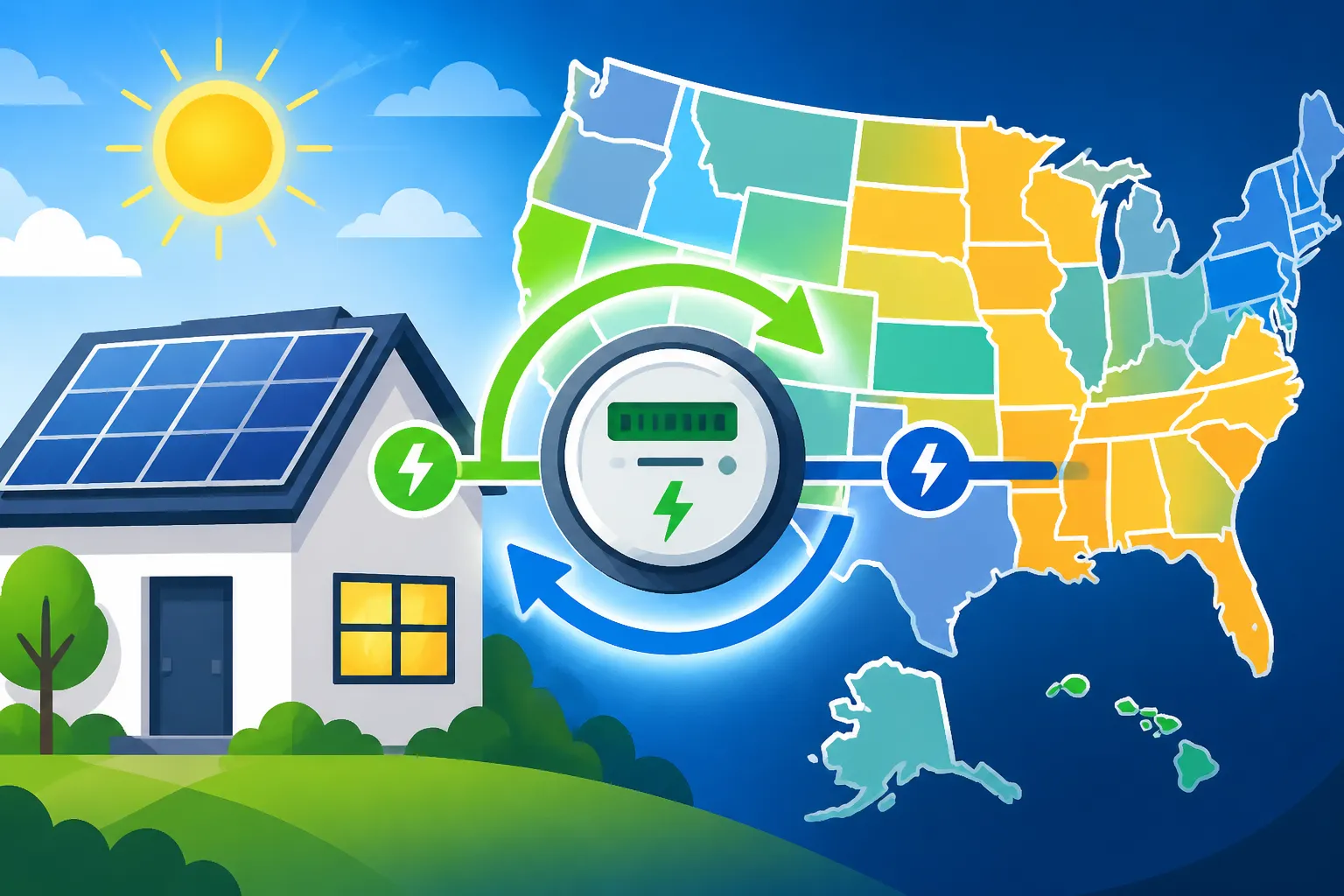
The national landscape for net metering is anything but uniform. While the federal government has supported renewable energy, the specifics of net metering policies are largely determined at the state level, and often by individual utilities. This creates a patchwork of regulations that can make understanding your potential solar savings a bit like navigating a maze. It’s important to remember that these policies are dynamic and subject to change, so always check the most current regulations for your specific location.
States with Robust Net Metering Programs
Some states have long been leaders in promoting solar energy through very favorable net metering policies, typically offering full retail rate compensation for exported electricity. This makes the financial case for solar exceptionally strong in these areas.
- New York: The Empire State has a strong commitment to renewable energy, and its net metering program through NY-Sun is generally considered quite favorable, offering full retail credit for residential systems up to 25 kW. This policy helps drive significant solar adoption across the state. If you're in New York, you'll want to look into New York NY-Sun & State Solar Tax Credit (25%) for more details.
- New Jersey: The Garden State has a history of robust solar incentives, including net metering. While its Solar Renewable Energy Certificates (SREC) program has transitioned to the SREC-II / SuSI Program, net metering remains a key component, allowing homeowners to offset their electricity costs with credits for excess generation. A guide to the New Jersey SREC-II / SuSI Program Guide can provide deeper insight.
- Massachusetts: The Commonwealth has also been a leader in solar, partly due to programs like the SMART (Solar Massachusetts Renewable Target) Program. While SMART offers performance-based incentives, the state generally maintains strong net metering policies that complement these initiatives, ensuring solar owners are compensated for their exported power. Understanding the Massachusetts SMART Program Explained can help contextualize its net metering.
- Maryland: The Old Line State offers favorable net metering and also has a strong SREC market, allowing homeowners to earn additional income from their solar production. This dual benefit makes Maryland a very attractive state for solar investment. For more specifics, check out the Maryland Solar Incentives & SREC Guide.
- Arizona: Despite its abundant sunshine, Arizona's net metering policies have seen shifts. However, many customers still benefit from favorable arrangements, particularly if they were grandfathered into older, more generous programs. New policies often involve an export rate that is lower than retail, but still offers substantial savings.
- Rhode Island, Connecticut, Delaware: These smaller Northeastern states also generally offer strong net metering policies, making solar a viable and often lucrative option for residents. They often provide full retail rate compensation, or very close to it, for exported energy.
In these states, the economics of solar are often very compelling, with shorter Solar Panel Payback Period Explained and significant long-term savings.
States with Evolving or Challenging Policies
Not every state offers the same level of support for net metering. Some have shifted away from full retail compensation, while others have more complex or less generous programs.
- California (NEM 3.0 / Net Billing): This is perhaps the most significant recent example of a policy shift. California's NEM 3.0, officially called the Net Billing Tariff, dramatically reduced the compensation rate for excess solar electricity exported to the grid for new solar customers starting in April 2023. While existing NEM 1.0 and NEM 2.0 customers were grandfathered in, new installations receive credits based on an "avoided cost" calculator, which is significantly lower than retail rates and varies hour by hour. This has shifted the value proposition for solar, making solar batteries much more attractive to store excess power for self-consumption rather than exporting it. For current residents, the California NEM 2.0 vs NEM 3.0 Explained article is essential reading. You might also want to read about How Does California Net Billing (NEM 3.0) Affect Savings?
- Texas: The Lone Star State doesn't have a statewide net metering mandate. Instead, net metering policies are set by individual utilities, leading to a highly varied landscape. Some utilities offer decent solar buyback programs, while others provide very little compensation for exported power, often at avoided-cost rates. Residents in areas served by deregulated utilities might find a variety of Solar Buyback Programs in Texas to choose from.
- Florida: Like Texas, Florida lacks a statewide net metering mandate, though it does generally require utilities to offer net metering. However, legislative attempts to roll back net metering have been frequent. Current policies usually offer full retail rate compensation, but the political climate means homeowners need to stay vigilant about potential changes.
- Idaho, Oklahoma, Kansas, Arkansas, Louisiana, Alabama, Mississippi: Many states in the central and southern U.S. either have no statewide net metering mandates or offer less favorable compensation, often at avoided-cost rates. In these regions, utilities might have their own small-scale programs, but the overall incentive for exporting power can be low. This means a solar battery often becomes more critical to maximize self-consumption and savings.
The trend in many parts of the country is towards net billing or avoided-cost compensation, largely due to utility lobbying efforts arguing that solar owners aren't paying their fair share for grid maintenance. These shifts underscore the importance of understanding the precise terms of your utility's program.
Variations and Exceptions
Beyond statewide mandates, it's also worth noting that some local municipalities or specific utility companies might offer unique programs or variations on the standard net metering.
For example, a municipal utility or electric cooperative might have a different net metering structure than a large investor-owned utility in the same state. Some may offer more generous programs to encourage local renewable energy, while others might be more restrictive. In states without strong statewide policies, these local initiatives can be the primary way to access any form of compensation for excess solar. Sometimes, rather than direct net metering, a utility might offer a separate incentive program, such as performance-based incentives (PBIs), where you get paid a set rate for every kWh your system produces, regardless of whether you consume it or export it. These are less common for residential systems but exist.
Another thing to consider is the size limit. Most net metering programs have a cap on the size of the solar system that can qualify, typically ranging from 10 kW to 25 kW for residential properties. Systems larger than this might be subject to different rules or a less favorable compensation scheme.
| State/Policy | Compensation Rate for Exports | Annual True-Up | Key Consideration |
|---|---|---|---|
| California (NEM 3.0) | Avoided-cost (varies hourly, often low) | Yes (annual true-up) | Encourages battery storage to maximize self-consumption. |
| New York (NY-Sun) | Full retail rate | Yes (credits roll over) | Strong support, high incentive for solar. |
| New Jersey (SuSI Program) | Full retail rate (for net metering component) | Yes (credits roll over) | Generous state, combined with SRECs for added value. |
| Texas (Various Utilities) | Highly variable (some retail, some avoided-cost) | Depends on utility | No statewide mandate, research individual utility buyback programs. |
| Florida | Generally full retail rate (subject to legislative changes) | Yes (credits roll over) | Good current policy but political climate warrants caution. |
| Arizona | Reduced compensation (export rate lower than retail) | Yes (credits roll over) | Grandfathered customers have better rates; new installs have lower export value. |
This table provides a snapshot, but always verify the latest information with your specific utility and state energy office, as policies can change rapidly.
The Benefits and Challenges of Net Metering
Net metering has been a cornerstone of solar growth for decades, empowering countless homeowners to embrace renewable energy. However, like any policy, it comes with both significant advantages and certain hurdles, especially as energy grids evolve and utilities adapt to a more distributed energy landscape.
Why Net Metering is a Game-Changer for Homeowners
For homeowners considering solar, net metering is often the single most important policy driving the financial viability of their investment. It's truly a game-changer for several compelling reasons:
- Significant Cost Savings: This is the most immediate and tangible benefit. By getting credits for your excess power, you can dramatically reduce or even eliminate your monthly electricity bills. Instead of being a passive consumer, you become an active participant in your energy supply, cutting ties with rising utility rates. This directly translates into lower household expenses over the 25+ year lifespan of your solar system.
- Faster Return on Investment (ROI): With proper net metering, your solar panels effectively "pay for themselves" quicker. The credits you receive accelerate the payback period, making solar a more attractive financial investment. When you can sell power back at or near retail rates, the capital invested in your solar array is recouped much faster compared to scenarios with low or no compensation for exports. This is crucial for understanding Are Solar Panels Worth It in 2026?.
- Optimal System Sizing and Flexibility: Net metering allows homeowners to size their solar systems to meet a significant portion, or even all, of their annual electricity needs without worrying about immediate consumption. You don't have to perfectly match your real-time generation with your real-time usage; the grid acts as a giant, free battery, storing your credits until you need them. This flexibility makes solar a practical option for a wider range of homes.
- Grid Stability and Resilience: From a broader perspective, net metering benefits the entire grid. By allowing homeowners to feed excess power back, it helps reduce demand on centralized power plants during peak times, lessening the strain on the grid. It also promotes distributed generation, which can make the grid more resilient to outages by having multiple smaller power sources rather than relying solely on a few large ones.
- Environmental Benefits: Every kilowatt-hour of clean, solar-generated electricity that offsets fossil fuel power reduces greenhouse gas emissions. By making solar more financially appealing, net metering accelerates the transition to a cleaner energy future, contributing to better air quality and combating climate change.
Common Pitfalls and Policy Shifts
While the benefits are clear, the world of net metering isn't without its challenges. Policy shifts, often driven by utility lobbying, can introduce uncertainty and diminish the value proposition of solar.
- Decreasing Compensation Rates: The most significant pitfall is the trend towards reduced compensation for exported energy. As seen with California's NEM 3.0, utilities often argue that full retail net metering shifts costs to non-solar customers, leading to policies that offer less than retail rates for exports. This can significantly reduce the financial benefit of solar, pushing homeowners to invest in costly batteries to avoid exporting cheap power. You might find more information in Is Net Metering Going Away?.
- Capacity Limits and Program Sunsets: Some states or utilities impose capacity limits on their net metering programs. Once a certain percentage of customers or a total megawatt capacity of solar is reached, the program might change or even sunset for new participants. This creates a "rush" for homeowners to go solar before favorable policies expire.
- Complex Interconnection and Fees: While net metering aims to simplify billing, the process of connecting your solar system to the grid (interconnection) can sometimes be cumbersome, involving permit fees, inspection processes, and waiting times to receive Permission to Operate (PTO). These can add to the upfront cost and timeline of your installation.
- Utility Pushback: Utilities often resist net metering, arguing that solar customers don't pay their fair share for maintaining the grid infrastructure, which they still rely on at night or during cloudy periods. This pushback frequently leads to efforts to change net metering rules, add fixed charges for solar customers, or implement demand charges.
- Lack of Uniformity: The state-by-state, and sometimes utility-by-utility, variation in net metering policies can be incredibly confusing. What's a fantastic deal in one town might be non-existent or barely beneficial just a few miles away. This lack of consistency makes it hard for homeowners to quickly understand their options without deep research.
- Impact on Home Value: While solar panels generally increase home value, the complexities of net metering and whether a system is owned or leased can affect how your home is appraised. For instance, selling a house with leased solar panels can sometimes be more challenging if the new homeowner doesn't want to assume the lease agreement.
These challenges highlight the importance of doing your homework and working with reputable solar installers who are well-versed in local regulations. The landscape is always shifting, and staying informed is your best defense against unexpected changes.
Maximizing Your Net Metering Benefits
Even with evolving policies and varying state-by-state rules, net metering can still be a powerful tool for maximizing the savings and environmental impact of your home solar system. The key is to be strategic in your approach, from how you size your system to how you manage your energy consumption.
System Sizing for Optimal Net Metering
One of the most critical decisions you'll make when going solar is determining the right size for your system. With net metering, especially under full retail rate compensation, the goal is often to match your annual electricity consumption as closely as possible with your annual solar production.
- Avoid Over-Sizing: While it might seem tempting to install as many panels as possible to produce abundant "free" electricity, over-sizing your system beyond your annual consumption can lead to diminishing returns, particularly if your utility pays out excess annual credits at a low avoided-cost rate or simply zeros them out. If you're consistently producing significantly more power than you use over a year, you're investing in panels that aren't providing their full financial benefit.
- Consider Future Needs: Conversely, don't under-size your system if you anticipate future increases in electricity consumption, such as buying an electric vehicle, adding an electric heat pump, or expanding your home. Many net metering policies allow for system expansion, but it's often more cost-effective to install a slightly larger system upfront if you have concrete plans for increased usage.
- Analyze Historical Usage: Work with your solar installer to analyze your past 12-24 months of electricity bills. This data will give you a clear picture of your annual and monthly consumption patterns, which is the best baseline for accurately sizing your system. An experienced installer will help you figure out How Many Solar Panels Do I Need for My Home? based on this data.
- Factor in Shading and Orientation: Your roof's orientation (ideally south-facing in the Northern Hemisphere) and any potential shading from trees or nearby buildings will impact your system's actual production. A good installer will account for these factors when proposing a system size. You might find more insights in How Does Roof Shading Affect Solar?.
The sweet spot is to size your system to meet 90-100% of your current (and anticipated future) annual electricity needs, ensuring that most, if not all, of your exported power translates into valuable credits against your imported power.
Combining Net Metering with Solar Batteries
In states where net metering policies are less favorable (e.g., net billing with low export compensation like California's NEM 3.0), or if you simply want greater energy independence and backup power, integrating a solar battery storage system can dramatically enhance your savings and resilience.
Here's how batteries complement net metering:
- Time-of-Use (TOU) Rate Optimization: Many utilities, especially those with less favorable net metering, employ Time-of-Use rates, where electricity prices are higher during peak demand hours (e.g., late afternoon/early evening) and lower during off-peak hours. A solar battery allows you to store excess solar power generated during the day and then discharge it during these expensive peak hours, reducing your reliance on the grid when rates are highest. This strategy is often called "peak shaving."
- Maximizing Self-Consumption: Instead of exporting excess solar power for a low credit, you can store it in your battery for later use, effectively increasing your self-consumption of your own generated electricity. This is particularly valuable in net billing environments where export compensation is low.
- Backup Power: Beyond economic benefits, a solar battery provides critical backup power during grid outages. While solar panels typically shut down during a blackout for safety reasons (unless paired with specific inverters that allow for islanding), a battery system can keep your essential appliances running. You can learn more about this in Do I Need a Battery With Solar?.
- Grid Services: In some advanced markets, batteries can participate in grid services, where utilities pay you to discharge or charge your battery to help stabilize the grid during demand fluctuations. These programs are less common for residential customers but are an emerging area.
Brands like Tesla Powerwall, Enphase IQ Battery, and FranklinWH are leading the charge in home battery storage, offering robust solutions to help homeowners make the most of their solar investment, especially as net metering policies evolve. You can dive deeper into options with Best Solar Batteries of 2026.
Staying Informed About Policy Changes
The solar incentive landscape is not static; it's a constantly evolving environment. State legislatures, public utility commissions, and even individual utilities frequently review and modify their net metering rules. What might be an excellent policy today could be significantly altered in a few years.
- Monitor Local and State Energy News: Keep an eye on news related to renewable energy policy in your state. Industry associations, environmental groups, and local news outlets often report on proposed changes to net metering or other solar incentives.
- Engage with Your Utility: Your local utility's website is the authoritative source for their specific net metering program details, interconnection agreements, and any upcoming changes. Don't hesitate to call their solar or renewable energy department with specific questions.
- Consult Your Solar Installer: Reputable solar installers are typically experts in local and state policies. They can provide up-to-date information on current net metering rules and even help you understand how potential future changes might impact your system. When you're choosing a solar installer, make sure to ask them about their knowledge of local policies and how they advise clients on potential changes.
- Advocate for Solar: Consider joining local solar advocacy groups or environmental organizations. These groups often work to protect and expand favorable solar policies, and your voice as a solar homeowner can be powerful.
By staying proactive and informed, you can make the best decisions for your solar investment and adapt to any policy changes that may occur, ensuring your system continues to provide maximum benefits for years to come.
Disclaimer
The information provided in this guide is for general informational purposes only and does not constitute financial, legal, or professional energy advice. Net metering policies, incentives, and regulations are subject to change and vary significantly by state, county, municipality, and even individual utility provider. While we strive to keep our content up-to-date, we cannot guarantee the absolute accuracy or completeness of all information as of the date of reading. We strongly recommend consulting with a qualified solar professional, your local utility company, and relevant state and local government agencies to obtain the most current and accurate information pertaining to your specific location and circumstances before making any decisions related to solar energy installation or financing.