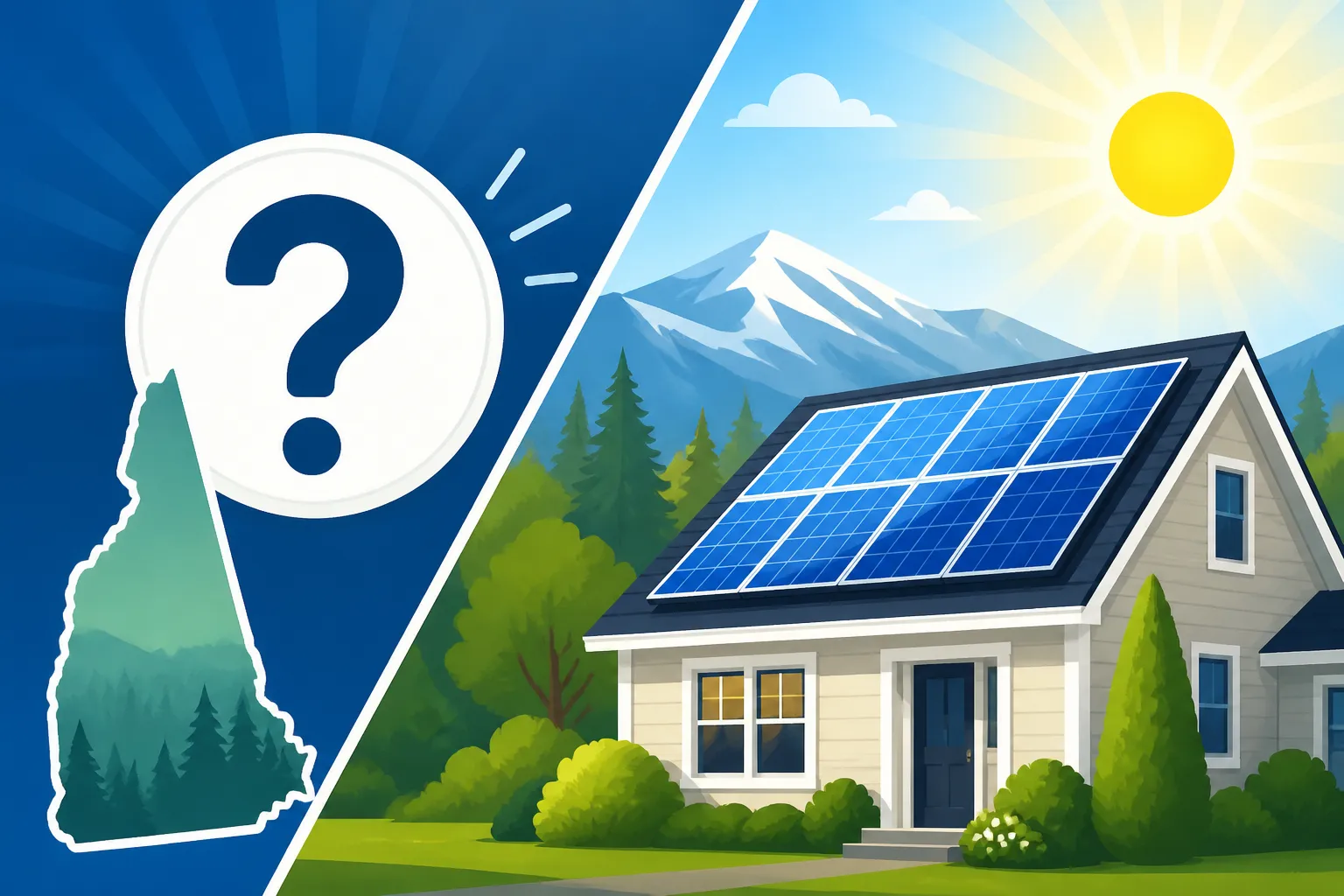
Is Solar Worth It in New Hampshire?
Deciding whether to go solar in New Hampshire can feel like navigating a maze, especially with varying energy prices, local regulations, and the ever-present question of whether the investment truly pays off in the Granite State's climate. Many homeowners worry if their roof is suitable, if the savings are real, or if the process will be too complicated. This comprehensive guide will break down everything you need to know about installing solar panels in New Hampshire, helping you understand the financial benefits, practical considerations, and long-term value so you can make an informed decision for your home.
Understanding the New Hampshire Solar Landscape
New Hampshire, often seen as a state with its fair share of cloudy days and winter snow, still offers a compelling case for solar energy. The key lies in understanding the unique mix of incentives, electricity costs, and regulatory frameworks that shape the solar market here. It's not just about sunshine; it's about the economic environment.
Current State of Solar Incentives
While New Hampshire might not boast the most aggressive state-level incentives compared to some of its New England neighbors, there are still significant programs that make solar an attractive proposition. The most impactful incentive for New Hampshire homeowners remains the federal solar tax credit, officially known as the Investment Tax Credit (ITC). This allows you to claim 30% of your solar energy system's cost as a tax credit. This isn't just a deduction; it's a dollar-for-dollar reduction in what you owe the IRS, and it can be carried forward if you don't use it all in one year. If you're wondering, you absolutely can still get a solar tax credit in 2026.
Beyond the federal level, New Hampshire offers essential policies like net metering, which is a game-changer for grid-tied solar systems. Net Metering Explained: How It Works by State delves into the specifics, but in New Hampshire, you generally benefit from full retail rate net metering for systems up to 100 kW. This means that if your solar panels produce more electricity than your home consumes, your utility company credits your account at the same rate you would pay for electricity. These credits can then be used to offset future bills, particularly during shorter, cloudier winter days when your solar production might be lower. This policy effectively allows your solar system to "store" excess energy on the grid, maximizing your savings throughout the year.
Electricity Rates and Energy Demand
One of the strongest arguments for solar in New Hampshire is the state's consistently high electricity rates. New Hampshire homeowners often face some of the highest electricity prices in the contiguous United States, with average residential rates frequently topping 25 cents per kilowatt-hour (kWh). These high rates mean that every kilowatt-hour of electricity your solar panels produce directly translates into substantial savings on your monthly utility bill. The more expensive electricity becomes, the faster your solar investment pays for itself.
Consider a family in Manchester or Nashua with a typical monthly electricity bill of $200-$300. With solar, a significant portion, or even all, of that bill could be offset by your own clean energy generation. This becomes even more critical when you consider the volatility of energy markets. Traditional electricity prices are subject to global fuel costs, supply chain issues, and regulatory changes, leading to unpredictable rate hikes. Investing in solar essentially locks in your electricity costs for decades, providing a stable, predictable energy expense for the long term. It offers a powerful hedge against future rate increases, allowing you to control your energy destiny rather than being at the mercy of the utility company.
The Financial Side of Going Solar in New Hampshire
Let's get down to brass tacks: what does solar cost in New Hampshire, and how much can you realistically expect to save? Understanding the financial mechanics is crucial to determining if solar is a wise investment for your specific situation.
Initial Costs and Potential Savings
The upfront cost of installing solar panels can seem daunting, but it's important to view it as a long-term investment, not just an immediate expense. The average solar panel cost in New Hampshire generally ranges from $2.80 to $3.50 per watt before incentives. For a typical 7 kW (7,000-watt) residential system, this could mean an initial cost of $19,600 to $24,500. However, this is where incentives like the federal tax credit drastically reduce your out-of-pocket expenses. After the 30% federal tax credit, that same system could effectively cost you between $13,720 and $17,150. If you're curious about general pricing, our guide on How Much Do Solar Panels Cost? 2026 Guide provides a broader overview.
The potential savings are substantial and accumulate over the 25-30+ year lifespan of your system. With New Hampshire's high electricity rates, homeowners can often save hundreds, if not thousands, of dollars annually. For example, a system designed to offset 100% of a $250 monthly electricity bill would save you $3,000 in the first year alone. Over 25 years, factoring in conservative estimates for electricity rate increases (historically around 2-4% per year), these savings could easily exceed $75,000 to $100,000 over the system's lifetime. This long-term financial stability and energy independence are significant draws for many New Hampshire residents.
Incentives and Financial Mechanisms
Beyond the federal tax credit and net metering, New Hampshire has other mechanisms that bolster the financial appeal of solar. One significant benefit is the statewide Solar Property Tax Exemptions by State. This exemption ensures that the added value to your home from a solar energy system is not included in your property tax assessment. Without this exemption, installing solar could potentially increase your property taxes, dampening the financial benefits. This policy means you get all the increased home value and energy savings without the added tax burden, making solar an even more attractive investment.
While state-specific rebate programs can vary and sometimes have limited funding or specific eligibility criteria, it's always worth checking for additional utility solar rebates. Companies like Eversource or Liberty Utilities occasionally offer specific programs that can provide additional upfront savings. Connecting with local installers through platforms like Modernize can help you identify all available incentives in your specific area, ensuring you don't miss out on any financial boosts. They often have the most up-to-date information on localized programs.
Understanding financing options is also crucial. Many homeowners choose solar loans, which allow them to install a system with little to no upfront cost. The monthly loan payment is often structured to be less than or comparable to your previous electricity bill, meaning you start saving money from day one. When considering the question, "Are Solar Panels Worth It in 2026?", these financing strategies play a massive role in making solar accessible and affordable.
| Incentive/Mechanism | Description | How it Helps NH Homeowners |
|---|---|---|
| Federal Solar Tax Credit | 30% tax credit on the total cost of your solar system. | Reduces the overall cost by nearly a third, making the investment more affordable. |
| Net Metering | Receive credits for excess solar energy sent back to the grid, often at the full retail rate. | Maximizes savings by ensuring all generated electricity is accounted for, offsetting future bills. |
| Property Tax Exemption | Excludes the value added by solar panels from your home's property tax assessment. | Prevents an increase in property taxes due to solar installation, preserving financial benefits. |
| Utility Rebates | Specific programs offered by local utility companies (e.g., Eversource, Liberty Utilities). | Can provide additional upfront financial incentives, further reducing initial costs. (Availability varies) |
Practical Considerations for New Hampshire Homeowners
Beyond the financial spreadsheet, there are practical aspects that New Hampshire homeowners need to evaluate. From your roof's readiness to how local weather patterns influence performance, these details can significantly impact your solar experience.
Roof Suitability and Weather Challenges
The condition and characteristics of your roof are paramount for a successful solar installation. Ideally, your roof should be in good repair, with at least 10-15 years of life left. If your roof is nearing the end of its lifespan, it might be more cost-effective to replace it before installing solar panels, as removing and reinstalling panels for a new roof can be an added expense later on. A south-facing roof is generally optimal for maximum sunlight exposure, but east or west-facing roofs can also be highly effective, especially when electricity rates are higher during morning and evening peak hours. Shading from trees or nearby buildings can reduce panel efficiency, so a clear, unobstructed roof is best.
New Hampshire's weather, with its snowy winters and occasional cloudy stretches, is a common concern for potential solar owners. However, modern solar panels are incredibly durable and designed to perform well even in varied conditions. Snow often slides off panels due to their dark color absorbing sunlight and their tilted angle. While heavy snow cover will temporarily reduce production, it's rarely a long-term issue. Furthermore, solar panels actually perform better in cooler temperatures, so New Hampshire's crisp weather can sometimes boost efficiency compared to scorching hot climates. Solar installers in New Hampshire are experienced in designing systems that account for local weather patterns, ensuring optimal year-round performance.
Choosing the Right Installer and System
Selecting a reputable solar installer is perhaps one of the most critical steps in the entire process. You'll want a company with a strong track record, local expertise, and excellent customer service. Don't rush into the first offer you receive. It's highly recommended to get multiple quotes from different installers. This allows you to compare pricing, equipment options, warranties, and proposed system designs. Platforms like Modernize can connect you with pre-vetted local solar companies, simplifying the process of obtaining competitive bids.
When evaluating system components, consider the quality of solar panels and inverters. High-efficiency panels from brands like Qcells or REC are popular choices known for their performance and reliability. For inverters, you'll typically choose between string inverters, which are more traditional, or microinverters (like those from Enphase) or power optimizers (like SolarEdge), which offer panel-level optimization and are excellent for roofs with partial shading. How to Choose a Solar Installer provides in-depth advice on finding the right fit. Don't forget to inquire about warranties – most panels come with a 25-year performance warranty and a 10-12 year product warranty, offering long-term peace of mind.
Real-World ROI and Long-Term Value
At the end of the day, the question "Is solar worth it?" often boils down to return on investment (ROI) and how it affects your property's value over time. For New Hampshire homeowners, the answer is often a resounding yes, driven by high electricity costs and solid incentive structures.
Calculating Your Payback Period
The "payback period" is the time it takes for your solar energy system to generate enough savings on your electricity bills to cover its initial cost. In New Hampshire, with its elevated electricity rates and the robust federal tax credit, the average solar payback period is generally quite favorable, often ranging from 7 to 12 years. This timeframe can fluctuate based on several factors, including the initial system cost, your household's electricity consumption, the amount of sunlight your roof receives, and any specific local incentives you qualify for. Our guide on Solar Panel Payback Period Explained offers more details on how to calculate this for yourself.
For instance, if your 7 kW system costs $17,000 after the federal tax credit, and you save $2,500 annually on electricity, your simple payback period would be 6.8 years ($17,000 / $2,500). After this period, your system continues to produce free electricity for decades, generating pure profit. Many homeowners find that their system pays for itself well within the warranty period, making it a sound financial decision. Modernize can connect you with installers who can provide detailed savings estimates and payback calculations tailored to your specific home.
Impact on Home Value and Resale
Installing solar panels significantly enhances your home's value, a fact supported by numerous studies across the country. While the exact increase can vary, homes with solar panels generally sell for a premium and spend less time on the market. In New Hampshire, where energy costs are a concern for many buyers, a home with an owned, fully paid-off solar system is particularly appealing because it offers immediate and substantial savings on utility bills. Imagine telling prospective buyers their electricity costs could be drastically reduced or even eliminated – that's a powerful selling point.
The key here is that the system should be owned, not leased. While leased solar panels can still offer monthly savings, they can sometimes complicate home sales because the new owner must assume the lease agreement. However, an owned system is a clear asset. Furthermore, New Hampshire's property tax exemption for solar energy systems ensures that this increased home value doesn't lead to higher property taxes, sweetening the deal even further. If you're curious about the broader picture, check out Do Solar Panels Increase Home Value? for more insights. This added value and marketability provide another layer of financial return on your solar investment, making it a smart choice for both immediate savings and long-term property appreciation.
Disclaimer
Please note that this content is intended for informational purposes only and does not constitute financial, tax, or legal advice. Solar incentives, regulations, and costs are subject to change. We recommend consulting with a qualified solar professional, tax advisor, or financial expert to assess your specific situation and determine the best course of action for your home and finances.