Solar Loan Dealer Fee Red Flags
It's incredibly frustrating when you're trying to do something good for your home and the planet, like going solar, only to feel like you're navigating a minefield of hidden costs and confusing financial jargon. Many homeowners jump into solar loans hoping for transparent savings, but then get blindsided by unexpected charges that eat into their long-term benefits. This guide is here to shed light on one of the most common, yet often misunderstood, culprits: solar loan dealer fees, helping you identify and avoid the red flags.
Understanding Solar Loan Dealer Fees
When you're looking at solar financing, the term "dealer fee" might not jump out at you right away. It often hides behind other names or is simply baked into the total loan amount without much explanation. But make no mistake, this fee can significantly inflate the cost of your solar system.
What Exactly Is a Dealer Fee?
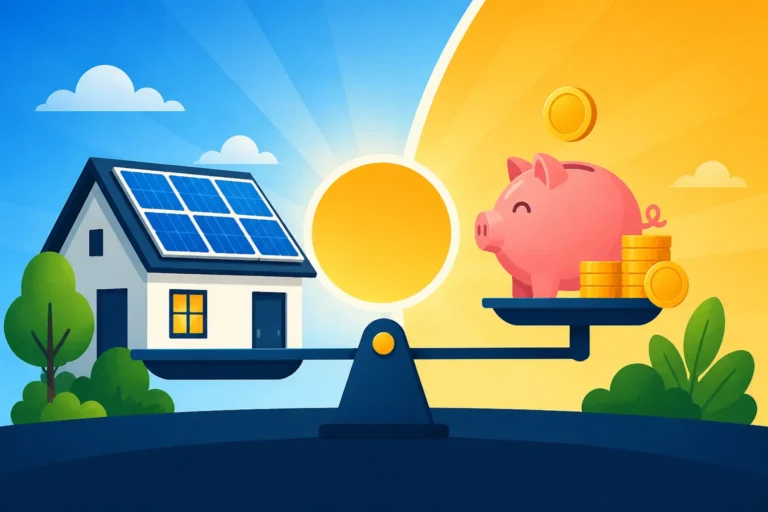
At its core, a dealer fee, also known as an origination fee or a loan fee, is essentially a commission paid by the solar loan lender to the solar installer. Think of it as the cost for the installer bringing the business to the lender. In the solar industry, it's a common practice where a lender offers a lower, attractive interest rate to the homeowner on paper, but then charges the installer a substantial fee—often between 15% and 30% of the total system cost—to "buy down" that interest rate.
So, while you, the homeowner, might see a loan with a seemingly fantastic 2.99% or 3.99% interest rate, the actual cost of facilitating that low rate isn't disappearing into thin air. Instead, the installer has to recuperate that dealer fee. How do they do that? By increasing the upfront price of the solar system. This means that the total loan amount you take out is not just for the solar panels and installation itself, but also includes this hefty dealer fee. It’s a common, if often opaque, mechanism that allows lenders to compete on advertised interest rates while ensuring profitability for themselves and the installer.
How Dealer Fees Impact Your Total Loan Cost
The impact of dealer fees on your total loan cost is profound, even if it's not immediately obvious. Let's say you're getting a quote for a $30,000 solar system. If the loan comes with a 25% dealer fee, that means the installer is paying the lender $7,500 right off the bat to secure that "low" interest rate for you. To cover that cost, the installer inflates your system price to $37,500, and that's the amount you're actually borrowing.
This hidden inflation means you're paying interest on a much larger principal than the true cost of your solar equipment and labor. Over the typical 20-25 year lifespan of a solar loan, that extra $7,500 in principal, plus the interest accrued on it, adds up to thousands of dollars more out of your pocket. It dramatically changes your long-term financial picture, often without you even realizing it until you start to dig deep into the fine print. Understanding how these fees are structured is the first step in protecting your investment and ensuring you truly benefit from going solar.
Common Red Flags in Solar Loan Quotes
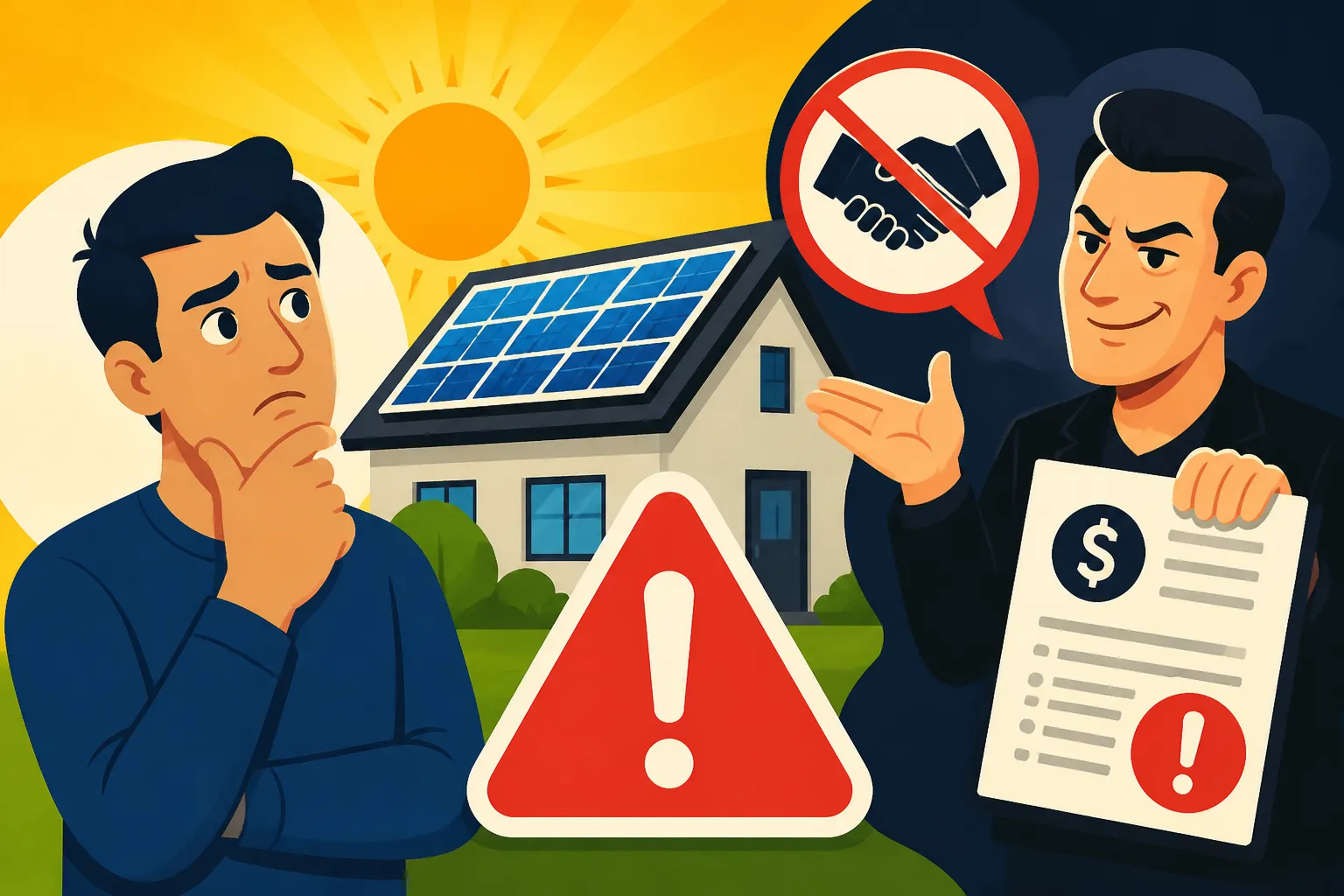
Navigating solar loan offers can feel like deciphering a secret code. Many companies use marketing tactics that highlight attractive features while subtly obscuring the true cost. Knowing what to look for can save you a lot of headache and money in the long run.
Unexplained or Obscured Fees
One of the biggest warning signs is a lack of transparency regarding all the costs involved. If an installer presents you with a loan offer that only shows a monthly payment and a low interest rate, but doesn't provide a clear, itemized breakdown of the total system cost before financing, be wary. An ethical solar provider will be upfront about all charges, including any loan origination fees, administrative costs, or "dealer fees." If these are vaguely described as "financing costs" or simply folded into a higher "system price" without detailed explanation, it's a major red flag.
For instance, imagine an installer tells you your system costs $30,000, but the loan document shows a principal of $37,500. When you ask about the discrepancy, if they struggle to explain the additional $7,500 or brush it off as "just how solar loans work," it's time to pause. Always demand a clear explanation for every dollar you're borrowing. This is particularly important when considering long-term investments like solar, where small differences in fees can translate to significant amounts over the life of the loan. This due diligence ensures you're not paying for hidden charges.
Inflated Interest Rates Coupled with "No Money Down"
The "no money down" offer sounds incredibly appealing, doesn't it? It allows many homeowners to access solar energy without a large upfront investment, which is a fantastic benefit. However, sometimes this convenience comes at a hidden cost. Many of the "no money down" programs are the very ones that incorporate substantial dealer fees. The logic is simple: if you're not paying anything upfront, the lender needs to recover their costs and risk in another way, and the dealer fee is that mechanism.
While a low monthly payment might be enticing, it's crucial to understand that these plans often lead to a much larger overall loan amount due to the embedded dealer fee. This means you end up paying interest on a significantly higher principal for the entire loan term. So, while you might not write a check on day one, you'll be paying for that convenience every single month for the next 20 to 25 years. Always ask for the true cash price of the system versus the financed price, and compare the total amount you'd pay over the life of the loan.
High APR Despite Low Advertised Rates
This is perhaps the most insidious red flag because it directly plays on how most consumers understand interest. You might see an advertised interest rate of, say, 1.99% or 0.99%, which sounds too good to be true for a home improvement loan. And often, it is. The actual Annual Percentage Rate (APR) tells the real story. The APR includes the interest rate plus other charges and fees associated with the loan, like those pesky dealer fees.
A low advertised interest rate often means that a substantial dealer fee has been added to the system price to "buy down" that rate. So, while the nominal interest rate might be low, the effective interest rate you're paying on the true value of the solar system is much higher because you're borrowing more money. For example, a $30,000 system with a 25% dealer fee becomes a $37,500 loan. If that loan has an advertised 2.99% interest rate, your APR could easily be 6% or 7% on the original $30,000 value, because you're paying interest on that extra $7,500 that isn't even for equipment. Always compare the APR, not just the advertised interest rate, to get an accurate picture of the loan's true cost. You'll want to review your specific solar loan documents, especially the Truth in Lending Disclosure, which legally requires lenders to show the APR.
The Impact of Dealer Fees on Your Solar ROI
Dealer fees don't just add to your initial cost; they ripple through your entire financial journey with solar, directly affecting how long it takes for your system to pay for itself and how much money you ultimately save. Ignoring these fees is like starting a race with ankle weights – you'll still get there, but it'll take a lot longer and be much harder.
How Dealer Fees Extend Your Payback Period
One of the most exciting aspects of going solar is calculating your potential Solar Panel Payback Period Explained. This is the point at which the money you've saved on electricity bills equals the initial investment you made in your solar system. It’s a crucial metric for determining if solar is a worthwhile investment for your home. However, dealer fees can significantly stretch out this timeframe, diminishing the immediate financial gratification.
Let's revisit our example: a solar system that truly costs $30,000 but gets financed for $37,500 due to a $7,500 dealer fee. If your annual electricity savings are, say, $1,500, a $30,000 system would theoretically pay for itself in 20 years ($30,000 / $1,500). But because you actually borrowed $37,500, your payback period now extends to 25 years ($37,500 / $1,500). That's an additional five years of waiting before you break even, all because of a fee that many homeowners aren't fully aware they're paying. This extended payback period can significantly impact your perception of "Is Solar Worth It?" for your specific situation.
Eroding Your Long-Term Savings
Beyond just delaying your payback, dealer fees also eat into the total amount of money you'll save over the 25-30 year lifespan of your solar panels. Solar is often touted as a way to lock in lower energy costs and protect yourself from rising utility rates. And it is! But the higher your initial loan principal, the more you pay in interest over the life of the loan, directly reducing those anticipated savings.
Consider the long game: if you're paying an extra $7,500 in principal due to dealer fees, and that money is compounding interest over two decades, the total cost of that fee could easily double or triple over the loan term. While your electricity savings remain constant, the additional money spent on loan payments for the inflated principal means less money ultimately stays in your pocket. This erosion of long-term savings is a stark reminder of why it's so critical to understand every line item in your Solar Loans: Complete Guide and ensure you're getting the most efficient return on your investment.
How to Spot and Avoid Dealer Fee Pitfalls
Navigating the financial landscape of solar can feel daunting, but with the right knowledge and approach, you can protect your investment and avoid unnecessary costs. It's all about asking the right questions and knowing what a transparent offer looks like.
Demanding a Detailed Breakdown of All Costs
One of the most powerful tools you have as a consumer is the right to a clear, itemized quote. Never accept a solar proposal that only shows a lump sum price and a monthly payment. Insist on a document that meticulously breaks down every single cost. This should include the price of the solar panels, the inverter, mounting hardware, labor costs for installation, permitting fees, and crucially, any financing fees or dealer fees.
A transparent installer will provide a separate "cash price" for the system (what it would cost if you paid for it outright) and then show how that price changes when financing is applied, clearly outlining any dealer fees or loan origination charges. If an installer is hesitant or refuses to provide this level of detail, consider it a major warning sign. They might be trying to obscure the true cost of their financing options. Don't be afraid to ask direct questions like, "What is the cash price of the system?" and "Are there any dealer fees, loan origination fees, or interest rate buy-downs included in this financed price, and if so, how much are they?" Your goal is to see the raw cost versus the financed cost.
Comparing Multiple Loan Offers
This step is absolutely critical, and it’s where many homeowners fall short due to time constraints or feeling pressured to sign quickly. Never settle for the first solar loan offer you receive. Just as you wouldn't buy the first car you test drove, you shouldn't commit to the first financing package. Get at least three to five different quotes from reputable solar installers and their preferred lenders. This allows you to compare not just the equipment and installation quality, but also the financing terms side-by-side.
Look for consistency in the cash price of similar systems, and then scrutinize the financing details. Pay close attention to the total loan amount, the advertised interest rate, and most importantly, the APR. Different lenders will have different dealer fee structures, even for the same installer, so comparing them can reveal significant savings. Platforms like Modernize can be incredibly helpful here, as they connect you with multiple pre-screened solar installers, making it easier to gather diverse quotes and compare options without the hassle of individual research. This competitive shopping helps ensure you find the best deal, whether you're looking at a Solar Lease vs PPA vs Buy: Which Is Best? or a direct loan.
Prioritizing APR Over Monthly Payment
It's natural to focus on the monthly payment—it's what comes out of your bank account every month. However, a low monthly payment can be deceiving. A long loan term (e.g., 25 years) combined with a high dealer fee rolled into the principal can result in a seemingly affordable monthly payment, but a much larger total cost over the life of the loan.
Instead, always prioritize the Annual Percentage Rate (APR). The APR is the true cost of borrowing money for a year, expressed as a percentage, and it factors in the interest rate and most fees. A low advertised interest rate with a high dealer fee will translate into a higher APR than a slightly higher interest rate with no dealer fee. The APR provides a more accurate representation of the actual cost of your loan. Don't let a "low monthly payment" distract you from the bigger picture; always calculate the total cost of the loan over its entire term, considering the APR, to understand your true financial commitment. For more on this, check out our guide on Cash vs Financing Solar: Which Saves More?.
The Role of Transparency in Solar Financing
In any significant investment, transparency is key, and solar financing is no exception. Knowing who you're dealing with and understanding every line of your contract can prevent costly surprises down the road. It’s about building trust and ensuring you're making an informed decision.
Ethical Solar Providers vs. Predatory Lenders
The solar industry has seen incredible growth, which unfortunately also attracts some less-than-reputable players. Ethical solar providers prioritize educating their customers, offering clear pricing, and standing behind their products and services. They will openly discuss all financing options, including the pros and cons of each, and will readily provide detailed breakdowns of cash prices versus financed prices, explicitly pointing out any dealer fees or origination costs. They understand that a well-informed customer is a happy customer.
On the other hand, predatory lenders or installers might use high-pressure sales tactics, refuse to provide itemized quotes, gloss over financing details, or push a "too good to be true" low interest rate without explaining the underlying fees. They might rush you into signing contracts before you've had a chance to fully understand the terms. If you encounter an installer who discourages you from getting multiple quotes or from taking time to review the contract, these are major red flags. A good indicator of a trustworthy company is their willingness to walk you through the Solar Installation Timeline: What to Expect and patiently answer all your questions, no matter how small.
Reading the Fine Print
This might sound like a cliché, but with solar loans, reading the fine print is not just important—it's absolutely essential. The main document you'll want to scrutinize is the loan agreement itself, along with the Truth in Lending Disclosure (TILD) statement. The TILD is a federal requirement that provides key information about the loan, including the total amount financed, the finance charge (total interest and fees you'll pay), the APR, and the total of all payments. This document is designed to give you the real, full cost of the loan.
Look for sections detailing "loan origination fees," "dealer fees," "discount points," or "prepaid finance charges." These are often where the dealer fees are explicitly stated, even if they were hidden in the sales pitch. Pay attention to the loan term, prepayment penalties, and any clauses about what happens if you sell your home. Don't be afraid to ask for clarification on anything you don't understand, and if necessary, consult with a financial advisor or a trusted third party before signing. Remember, once you sign, these terms are legally binding.
The Financial Implications of High Dealer Fees
Let's put some numbers to these concepts to illustrate just how significantly dealer fees can alter your solar investment. It’s easy to get caught up in the excitement of going solar and gloss over the financial details, but a thorough comparison can reveal thousands of dollars in difference.
Imagine a scenario where you're looking to install a 7 kW solar system, which might have a cash price of around $25,000 (before any incentives).
| Loan Feature | Scenario A: Low Dealer Fee (5%) | Scenario B: High Dealer Fee (25%) |
|---|---|---|
| System Cash Price | $25,000 | $25,000 |
| Dealer Fee | $1,250 (5% of $25,000) | $6,250 (25% of $25,000) |
| Total Loan Amount | $26,250 | $31,250 |
| Advertised Interest Rate | 4.99% | 0.99% |
| Loan Term | 25 Years (300 months) | 25 Years (300 months) |
| Estimated Monthly Payment | ~$139 | ~$115 |
| Estimated Total Interest Paid | ~$15,500 | ~$2,500 on the 0.99% portion |
| Estimated Total Amount Paid (Principal + Interest) | ~$41,750 | ~$33,750 on the 0.99% portion |
| True APR (approx.) | 5.2% | ~6.5% |
Wait, what's going on with Scenario B's "total interest" and "total amount paid" values? This is where the deception lies. The low advertised interest rate (0.99%) only applies to the principal after the dealer fee has inflated it. The true cost of the loan is hidden by the higher principal. In Scenario B, while the advertised interest rate is very low, you are paying interest on $6,250 that went to the dealer, not to equipment.
Let's re-calculate Scenario B's actual total cost to the consumer, considering the inflated principal and how it impacts the "true" APR (which is roughly what you'd pay if the system truly cost $25,000 and had the equivalent financing cost spread out).
A system with a 0.99% interest rate on a $31,250 loan over 25 years would indeed have a very low total interest paid. However, the true cost to the consumer relative to the actual value of the system ($25,000) is much higher. The lender makes their money not through high interest, but by essentially selling the loan to you at a premium through the installer. This is why calculating the effective APR or total cost relative to the system's cash price is so important.
If you took out a $25,000 loan at a "true" 6.5% APR over 25 years, your total payments would be closer to $50,000-$52,000. So, while Scenario B's monthly payment looks lower and the advertised interest total seems small, it's because you're paying a huge portion of the financing cost upfront via the inflated loan principal. You're still paying that $6,250 for the dealer fee, and then interest on top of that. This is why you need to compare the total amount paid in the end, or the APR.
Alternative Financing Options to Consider
While solar loans can be an excellent way to go solar, they aren't the only path. Exploring other financing avenues can sometimes help you avoid dealer fees altogether or secure a more financially advantageous deal, especially if you're sensitive to hidden costs.
Cash Purchase and Home Equity Loans
For homeowners who have the means, paying for your solar system in cash is almost always the most cost-effective option. When you pay cash, you completely bypass all loan-related fees, including dealer fees and interest charges. This means the entire investment goes directly into your solar system, maximizing your return on investment and ensuring the quickest Solar Panel Payback Period Explained. You'll own the system outright from day one, giving you full control and often the highest long-term savings. You also get to claim any state or federal incentives directly, without any financing complexities.
If you don't have the full cash amount readily available but have significant equity in your home, a home equity loan (HEL) or a home equity line of credit (HELOC) can be a fantastic alternative. These loans typically come with much lower interest rates and significantly fewer, if any, dealer fees compared to dedicated solar loans. The interest on a HEL or HELOC used for home improvements may also be tax-deductible, adding another layer of savings (though always consult a tax professional for personalized advice). The downside is that your home serves as collateral, so there's a higher risk if you default. However, for many, it's a more transparent and cost-efficient way to finance their solar system.
Solar Leases and Power Purchase Agreements (PPAs)
For those who want to avoid upfront costs and don't want to worry about maintenance or ownership, solar leases and Power Purchase Agreements (PPAs) are popular options. With a solar lease, you essentially rent the solar system on your roof from a third-party company. You pay a fixed monthly "rent" payment, and in return, you get to use the electricity generated by the panels. The solar company owns, installs, and maintains the system. Since you're not taking out a loan, there are typically no dealer fees to worry about.
A Power Purchase Agreement (PPA) is similar but structured slightly differently. Instead of paying a fixed monthly lease payment, you agree to purchase the electricity generated by the solar panels at a predetermined, often reduced, rate per kilowatt-hour (kWh). The solar company still owns, installs, and maintains the system, and you only pay for the power it produces. Like leases, PPAs usually eliminate the concern of dealer fees because you're not financing the purchase of the equipment yourself. Both leases and PPAs offer predictable monthly energy costs, but they also mean you don't own the system and typically don't qualify for tax credits or other Federal Solar Incentives That Still Exist in 2026 directly, as the owning company claims those benefits. For many, the simplicity and lack of upfront cost make them attractive, but it's essential to understand that you won't build equity in the system itself.
Navigating Specific State Regulations and Incentives
Understanding how dealer fees are regulated, or not, can be a bit of a patchwork, as rules often vary significantly by state. It's not just about the national landscape; local policies play a huge role in the transparency and overall cost of solar financing.
State-Specific Loan Protections and Disclosures
While the Truth in Lending Act (TILA) provides federal oversight requiring lenders to disclose the Annual Percentage Rate (APR) and other key loan terms, some states have additional regulations or consumer protections specifically for home improvement or solar loans. For instance, states like California, with its robust consumer protection laws, might have more stringent requirements for disclosures regarding financing costs in solar contracts. They might demand more explicit itemization of all fees, even beyond federal requirements.
Other states, however, might have less specific regulations, leaving more room for varied practices among lenders and installers. This lack of uniformity means that a dealer fee structure that's common and accepted in one state might be viewed with more scrutiny or even be subject to different disclosure rules in another. It's always a good idea to check with your state's consumer protection agency or even the Attorney General's office to understand any specific laws that apply to solar financing in your area. Knowing your rights can empower you to ask the right questions and demand the transparency you deserve.
Impact of State Incentives on Financing Structure
State-specific solar incentives can also indirectly influence how financing, including dealer fees, is structured. In states with generous programs like New York NY-Sun & State Solar Tax Credit (25%) or the Illinois Shines & Solar for All program, the potential for high rebates or performance-based incentives (PBIs) might allow installers and lenders more flexibility. Sometimes, a portion of these incentives might be used to offset the dealer fee, or conversely, a high dealer fee might be used to compensate for a lower system price offered to attract customers with high state incentives.
For example, in a state where a significant upfront rebate is available, an installer might be able to offer a lower cash price for the system, making the impact of a dealer fee seem less pronounced in the overall loan amount, or they might factor in the value of SRECs Explained: Selling Solar Renewable Energy Credits when structuring financing. It’s a complex dance. This is why when you're looking at solar in places like California Solar Incentives in 2026 or Massachusetts SMART Program Explained, it's crucial to understand exactly how incentives interact with your financing. Always ask how any state or local incentives are applied to your system cost and loan, and ensure they are clearly reflected in the final figures. Transparency here is paramount to understanding your true investment and expected Solar ROI & 25-Year Savings Breakdown.
Final Thoughts on Protecting Your Solar Investment
Navigating the world of solar financing, especially when it comes to understanding hidden costs like dealer fees, can feel like a daunting task. However, by being vigilant, asking informed questions, and comparing multiple offers, you can confidently choose a solar loan that truly benefits you. Don't let the allure of low advertised interest rates overshadow the importance of understanding the total cost of your investment. Your journey to energy independence should be empowering, not confusing. Always prioritize transparency, and remember that an honest solar provider will be your best partner in this endeavor.
Disclaimer
The information provided in this article is for general informational purposes only and does not constitute financial, legal, or professional advice. Solar financing options, incentives, and regulations can vary significantly by location and change over time. Always consult with qualified financial advisors, solar professionals, and local authorities to make informed decisions tailored to your specific circumstances.