Should I Buy or Lease Solar in 2026?
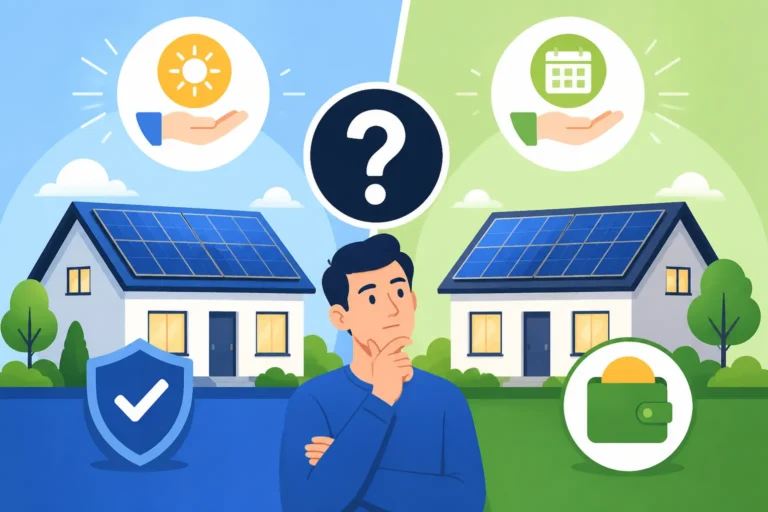
Deciding to go solar is a huge step toward energy independence and often, significant savings. But once you've made that decision, another big question looms: should you buy your solar panels outright, finance them with a loan, or opt for a lease or Power Purchase Agreement (PPA)? This choice can feel overwhelming, with installers often pushing one option over another, leaving you wondering what truly makes the most sense for your home and your wallet. This guide will walk you through the nuances of each option, helping you confidently determine the best path for your solar journey and beyond.
Understanding Solar Ownership: Buying vs. Leasing
When you start looking into solar, you'll quickly discover there are essentially two main categories for acquiring a system: ownership (which includes cash purchases and solar loans) and third-party ownership (leases and Power Purchase Agreements). It's not just about how you pay, but who legally owns the panels and, crucially, who gets to reap the long-term benefits and responsibilities.
What Does "Buying" Solar Really Mean?
When we talk about "buying" solar, we're usually referring to one of two scenarios: a direct cash purchase or securing a solar loan. In both cases, the solar energy system becomes your property, just like any other home improvement. This means you own the hardware, from the panels on your roof to the inverters and mounting equipment. This direct ownership is a big deal because it determines who qualifies for solar incentives, who is responsible for maintenance, and who benefits from the system's output over its lifespan.
A cash purchase is straightforward: you pay the full price upfront. While this requires a significant initial investment, it also typically offers the fastest payback period and the highest long-term savings. You avoid interest payments and can immediately start enjoying reduced electricity bills. On the other hand, a solar loan works much like a home improvement loan or a mortgage. You borrow money from a bank or a specialized solar lender, and you make monthly payments to repay the loan, plus interest. The loan terms can vary widely, from shorter, unsecured personal loans to longer, secured loans that might use your home as collateral. With a loan, you still own the system and qualify for incentives, but your monthly savings will be offset by your loan payments. Understanding the nuances of different Solar Loans: Complete Guide can be incredibly beneficial here, as interest rates and dealer fees can significantly impact your overall cost.
Demystifying Solar Leases and PPAs
Solar leases and Power Purchase Agreements (PPAs) fall under the umbrella of third-party ownership. This means a solar developer or company — not you, the homeowner — buys, installs, and owns the solar panels on your property. While the panels are physically on your roof, they legally belong to the solar provider. Your role is primarily to provide the roof space and agree to a contract to pay for the solar energy.
With a solar lease, you pay a fixed monthly "rent" for the solar equipment for a predetermined period, typically 20 to 25 years. This payment is usually lower than what your previous utility bill would have been, providing immediate savings. However, your monthly lease payment might have an escalator clause, meaning it increases by a small percentage (e.g., 2.9% annually) each year, so it's essential to read the fine print. A Power Purchase Agreement (PPA) is similar but slightly different. Instead of paying for the equipment itself, you agree to purchase the electricity generated by the panels at a fixed rate per kilowatt-hour (kWh). This rate is typically lower than your utility's rate, offering savings. Like leases, PPAs also often come with annual rate escalators. These options are often marketed as "$0 down solar" because they require little to no upfront cost, making solar accessible to a broader range of homeowners.
The Financial Realities of Buying Solar
For many homeowners, the ultimate goal of going solar is to save money and increase their home's value. When you buy your solar system, whether with cash or a loan, you position yourself to capture the maximum financial benefits over the system's lifetime. This path offers the most control and the greatest potential for return on investment.
Upfront Costs and Potential Savings
The most significant hurdle for many considering buying solar is the upfront cost. A typical residential solar system can range anywhere from $15,000 to $30,000 or more, depending on its size, location, and the specific equipment chosen. For example, a 6 kW system might cost around $18,000 to $25,000 before incentives. Paying this amount in cash means you avoid all interest charges and loan fees, drastically reducing your total out-of-pocket expense over the system's life. While it's a large sum initially, the money you save by not paying utility bills, combined with incentives, can lead to a much quicker Solar Panel Payback Period Explained. Once the system is paid off, your electricity costs could drop to nearly zero, aside from a small grid connection fee. This immediate and long-term reduction in energy expenses is one of the most compelling reasons to purchase your system.
If you don't have the cash readily available, a solar loan allows you to spread the cost over many years. While you'll pay interest, the monthly loan payments are often structured to be less than or equal to your previous electricity bill, meaning you can go solar without a major change to your monthly budget, and still build equity in your system. It’s a delicate balance, and comparing Cash vs Financing Solar: Which Saves More? is a critical step in making an informed decision.
Maximizing Incentives with Ownership
One of the most significant advantages of owning your solar system is qualifying for all available incentives. The federal solar tax credit, known as the Investment Tax Credit (ITC), is a prime example. This credit allows homeowners to deduct a significant percentage of their solar system's cost from their federal taxes. This credit remains robust, offering a substantial reduction in your overall investment.
Beyond the federal credit, many states and local utilities offer additional incentives. These can include state tax credits, cash rebates, or programs like Solar Renewable Energy Credits (SRECs), where you earn credits for the clean electricity your system generates and can sell them on a market. For instance, homeowners in Massachusetts can benefit from the SMART program, while those in Illinois might look into Illinois Shines. Only the system owner can claim these valuable financial benefits, which can dramatically reduce the net cost of your system and shorten its payback period. If you're wondering about the big picture, our guide on Federal Solar Incentives That Still Exist in 2026 can provide more detailed information on what’s available.
Solar Loans and Their Implications
While a cash purchase offers the best financial return, it's not feasible for everyone. Solar loans bridge this gap, allowing homeowners to own their systems without a massive upfront investment. However, not all solar loans are created equal. You'll encounter various options, including secured loans (like a home equity loan or PACE financing) and unsecured personal loans. Secured loans typically offer lower interest rates because your home acts as collateral, but they can be more complex to obtain. Unsecured loans are simpler but usually come with higher interest rates.
It's crucial to scrutinize loan terms, particularly "dealer fees." These are fees that solar installers sometimes bake into the loan, effectively increasing the principal amount you borrow. While they allow the installer to offer a lower advertised interest rate, they mean you're financing a larger sum. Understanding Solar Dealer Fees Explained Hidden Loan Costs is vital to ensure you're getting a fair deal. Always shop around for loan options, not just solar installers. Comparing offers from various lenders, including local credit unions and national banks, can help you find the most favorable rates and terms, ensuring your solar investment is as cost-effective as possible.
Exploring Solar Lease and PPA Agreements
For many homeowners, the idea of having solar panels installed with little to no upfront cost is incredibly appealing. Solar leases and Power Purchase Agreements (PPAs) offer just that, providing an accessible entry point into renewable energy. However, this convenience often comes with trade-offs in terms of long-term savings and ownership benefits.
How Leases and PPAs Structure Payments
The core appeal of solar leases and PPAs is their simplicity and lack of initial financial burden. With a lease, you agree to a monthly payment for the use of the solar equipment. Think of it like renting an apartment; you get to use the space, but you don't own it. The solar company maintains ownership of the panels and is typically responsible for their maintenance and performance. Your monthly lease payment is usually fixed, though many lease agreements include an annual escalator clause, meaning your payment will increase by a small percentage each year (e.g., 2% to 3%). This is an important detail to be aware of, as those escalators can eat into your long-term savings if electricity rates don't rise at a similar or faster pace.
A PPA, on the other hand, means you pay per kilowatt-hour (kWh) for the electricity your solar system produces, similar to how you pay your utility company, but at a lower, agreed-upon rate. If the panels produce more power, you pay more; if they produce less, you pay less. This arrangement effectively locks in a predictable electricity price, insulating you from volatile utility rate hikes. However, like leases, PPAs can also include annual rate escalators, which means your per-kWh rate will increase each year. Both leases and PPAs typically span 20 to 25 years, and at the end of the term, you usually have options to renew the contract, have the panels removed, or purchase them at their depreciated value. This flexible structure makes solar achievable for many who might not qualify for a loan or prefer not to make a large investment.
Who Benefits from Leased Solar?
Leased solar or PPAs are often a good fit for specific homeowner profiles. They are particularly attractive to those who want to go solar but lack the upfront capital for a cash purchase and may not qualify for attractive solar loan terms. If your credit score isn't strong enough for a favorable loan, or you simply prefer to avoid taking on debt, a lease or PPA can be an excellent alternative. Additionally, because the solar company owns the system, they are the ones who claim the federal solar tax credit and any other ownership-based incentives. This means homeowners who, for whatever reason, cannot fully utilize the tax credit (e.g., they don't have enough tax liability) can still benefit from solar savings through a lease or PPA, as the developer passes some of these savings on through lower monthly rates.
Homeowners who aren't interested in the responsibility of system maintenance also find leases and PPAs appealing. Since the solar provider owns the system, they are typically responsible for monitoring performance, repairs, and even cleaning, giving you peace of mind. This can be a huge benefit for those who prefer a hands-off approach to their energy system. It’s also a way to secure predictable energy costs in areas with rapidly rising utility rates, like parts of California, without the financial commitment of ownership. For a deeper dive into the specifics, check out our article on What Is a Solar PPA and How Does It Work?.
Understanding Lease Escalators and Terms
Before signing a lease or PPA, it's absolutely critical to understand every detail of the contract, especially the annual escalator clauses. An escalator clause means your monthly payment (for a lease) or your per-kWh rate (for a PPA) will increase by a set percentage each year. While a 2-3% annual increase might seem small, over 20-25 years, it can add up significantly. For example, a $100 monthly lease payment with a 2.9% escalator would become over $175 per month by year 20. If your utility rates don't rise as quickly, your savings could diminish over time, or even turn into a higher overall cost compared to your original utility bill.
It's also important to consider the end-of-term options. What happens after 20-25 years? Can you renew the lease, purchase the system, or will it be removed? If you plan to sell your home during the lease term, transferring a solar lease or PPA can sometimes complicate the sale. While most agreements allow for transfer, some buyers may be hesitant to take on an existing contract. Our guide on Buying a House With Leased Solar Panels delves into this more deeply. Always negotiate terms where possible and ensure you're comfortable with the long-term financial commitments. Don't hesitate to ask for a contract without an escalator if available, or at least a lower escalator rate.
Key Factors Influencing Your Decision
Choosing between buying and leasing solar isn't a one-size-fits-all decision. Your personal financial situation, long-term plans, and even your geographic location can all play a significant role in determining which option offers the most benefits for you.
Your Financial Situation and Credit Score
Your current financial standing is arguably the most crucial factor in this decision. If you have significant savings and can afford to pay for a solar system upfront, a cash purchase will almost always yield the highest return on investment and the shortest payback period. You avoid all interest and fees, maximizing your long-term savings. However, for most homeowners, a solar loan is the more realistic path to ownership. For a solar loan, your credit score will heavily influence the interest rates you qualify for. A higher credit score (typically 700+) can unlock lower interest rates, making your monthly loan payments more manageable and your overall solar investment more cost-effective.
If your credit score isn't stellar, or you have other debt obligations, a solar loan might come with less favorable terms, potentially making the long-term savings less attractive. In such cases, a solar lease or PPA might be a better fit, as they often have more lenient credit requirements, focusing more on your ability to make consistent monthly payments. The low or $0-down entry point for leases and PPAs makes solar accessible without tying up your capital or requiring significant credit approval. This is where options like those provided by companies working with Modernize can come in handy, as they can connect you with various solar providers who offer different financing models tailored to diverse financial situations.
Length of Homeownership and Future Plans
How long you plan to stay in your current home is another critical consideration. Solar systems are a long-term investment designed to generate electricity for 25 years or more. If you plan to remain in your home for a decade or longer, purchasing your system (cash or loan) generally offers the best return. Over that extended period, you'll have ample time to pay off your system and then enjoy years of free or drastically reduced electricity bills, potentially seeing your Solar ROI & 25-Year Savings Breakdown truly materialize. Owning the system also typically adds value to your home, which can be a significant benefit when you eventually sell. Our guide on Do Solar Panels Increase Home Value? delves into this topic.
However, if you anticipate moving within the next five to ten years, the calculus changes. Selling a home with an owned solar system is usually straightforward and can even be a selling point. Selling a home with a solar lease or PPA, however, can sometimes be more complicated. The new buyer must assume the lease, and if they don't qualify or are unwilling to take on the contract, it can create a hurdle for your sale. In some cases, you might even be required to buy out the remainder of the lease to close the sale. While not impossible, it's an extra layer of complexity. So, if your residential future is uncertain, a lease or PPA might not align with your flexibility needs.
Local Electricity Rates and Solar Incentives
The financial attractiveness of solar, regardless of whether you buy or lease, is heavily influenced by your local electricity rates and the available incentives in your area. In states with high electricity prices, like California or Hawaii, solar offers more substantial savings simply because you're offsetting a more expensive product. The higher your utility rates, the quicker an owned system pays for itself, and the more pronounced your monthly savings will be with a lease or PPA.
Conversely, in areas with lower electricity rates, the financial benefits of solar might take longer to materialize, making the decision between buying and leasing even more critical. Similarly, the array of State Solar Incentives: Complete 2026 Guide varies dramatically from state to state. Some states offer generous tax credits, rebates, or robust net metering programs that compensate you fairly for excess electricity. These incentives primarily benefit system owners, further tilting the scales towards purchasing. Leases and PPAs generally do not allow you to claim these direct financial incentives, as they are claimed by the third-party owner. Therefore, a comprehensive understanding of what’s available in your specific state or city, whether it’s a program like New York's NY-Sun or Maryland's SREC market, is essential.
Evaluating Your Long-Term Goals
Beyond the immediate financial impact, your choice between buying and leasing solar will have implications for the long-term value of your home, your responsibilities as a homeowner, and your flexibility regarding future energy choices. Considering these broader goals can help solidify your decision.
Impact on Home Value and Resale
One of the significant long-term benefits of owning your solar system is the positive impact it can have on your home's value. Studies consistently show that homes with owned solar panels sell for a premium and often sell faster than comparable homes without solar. This is because the new homeowner inherits a system that provides free or reduced electricity costs, a tangible benefit that improves their quality of life and lowers their cost of living from day one. When you sell, you can recoup a significant portion of your initial investment, sometimes even more, especially in regions with high electricity rates. Our guide on Selling a House With Solar Panels provides detailed insights into navigating this process.
In contrast, solar leases and PPAs can present challenges during a home sale. While many lease agreements allow for transfer to the new homeowner, the process can sometimes be a hurdle. Buyers might be wary of taking on a long-term contract, especially if they prefer to own their energy system or if the lease terms include escalating payments. If the buyer doesn't qualify to assume the lease or simply refuses, you might find yourself in a difficult position, potentially having to buy out the remainder of the lease yourself, which can be a substantial unexpected cost. For a comprehensive comparison, it’s worth reviewing Lease vs Own Solar: Impact on Home Sale.
Maintenance, Warranties, and Responsibility
Ownership also means responsibility. When you buy your solar panels, you are responsible for their maintenance, monitoring, and any repairs. While solar panels are incredibly durable and require minimal maintenance, things like cleaning (especially in dusty areas) and occasional inspections are up to you. Crucially, you're also responsible for the performance and product warranties. Most quality solar panels come with 25-year performance warranties, and inverters often have 10-12 year warranties. If a component fails, you'll work directly with the manufacturer or your installer's service department to resolve it.
With a solar lease or PPA, the third-party owner typically handles all maintenance, monitoring, and repairs. This can be a huge relief for homeowners who prefer a "set it and forget it" approach. The solar company is motivated to keep the system performing optimally because its revenue is directly tied to the electricity generated. They will also handle all warranty claims, taking that burden off your shoulders. This hands-off approach is a major draw for many, as it minimizes the worries associated with owning complex equipment. However, it also means you have less control over the specific brands of equipment used or the timing of repairs.
Flexibility and System Upgrades
Owning your solar system provides the ultimate flexibility. As the owner, you have complete control over your energy future. If you decide to add more panels down the line, incorporate a Solar Battery Incentives in 2026 for backup power, or even go completely off-grid, you have the freedom to do so. You can choose any contractor for upgrades or maintenance, and you can shop around for the best deals on new technology as it emerges. This level of autonomy is invaluable for homeowners who want to fully customize their energy solution and adapt it to their evolving needs.
With a lease or PPA, your flexibility is limited by the terms of your contract. Since you don't own the system, any modifications or additions typically require the solar company's approval. Adding more panels might involve amending your lease, and incorporating a battery might be a separate project altogether, possibly with a different provider. This can restrict your options if you decide you want to expand your system's capabilities in the future. Additionally, if you want to take advantage of new, more efficient panel technology, you'll likely have to wait until the end of your lease term, or pay to break the contract, to upgrade.
Making the Right Choice for Your Home
The decision to buy or lease solar panels is a deeply personal one, influenced by a multitude of factors unique to your situation. There's no single "best" answer, but rather a choice that aligns with your financial goals, lifestyle, and long-term plans for your home.
A Comparative Look: Pros and Cons
To help summarize, let's lay out the general pros and cons of buying (including loans) versus leasing/PPAs:
| Feature | Buying Solar (Cash/Loan) | Leasing/PPA Solar |
|---|---|---|
| Ownership | You own the system. | Third-party company owns the system. |
| Upfront Cost | High (cash) or moderate (loan down payment) | Low to none (often advertised as $0 down) |
| Long-Term Savings | Highest potential savings, especially after payback. | Immediate but more modest savings; can diminish with escalators. |
| Incentives | Qualify for all federal, state, and local incentives (e.g., ITC, SRECs). | No direct eligibility for incentives (company claims them). |
| Home Value | Typically increases home value; easier to sell. | Can complicate home sale; value impact less certain or negative. |
| Maintenance/Warranty | Your responsibility (often covered by manufacturer warranties). | Company's responsibility (included in contract). |
| Flexibility | Full control for upgrades, additions, and modifications. | Limited; requires company approval for changes. |
| Monthly Payments | Variable (loan payment) or none (cash after initial cost). | Fixed monthly payment (lease) or per-kWh rate (PPA), often with escalators. |
| End of Term | You own it. | Options to renew, buy out, or remove system. |
This table highlights that while buying solar offers the greatest financial reward and control, it demands a higher upfront commitment or a willingness to take on a loan. Leases and PPAs, conversely, provide a low-risk, low-hassle entry into solar, but at the cost of maximized savings and home value appreciation. The right option for you truly boils down to your comfort with investment, debt, and long-term responsibility. Exploring Solar Lease vs PPA vs Buy: Which Is Best? will offer a more in-depth discussion on these comparisons.
Seeking Expert Advice
Given the complexity and long-term implications of this decision, it’s always wise to seek personalized advice. Don't rely solely on the first solar installer you speak with; they often have a vested interest in selling you the financing option that benefits them most. Instead, gather multiple quotes from different solar companies. When you're ready to explore options and get competitive bids, platforms like Modernize can be incredibly helpful. They connect you with pre-vetted local installers who can provide customized proposals for both purchase (cash or loan) and lease/PPA options, allowing you to compare apples to apples.
Beyond installers, consider consulting with a financial advisor or a tax professional. They can offer insights into how the federal tax credit and state incentives might impact your specific tax situation, or how a large purchase or loan might fit into your overall financial plan. They can also help you project the true long-term costs and savings, factoring in potential utility rate increases and lease escalators. Remember, this is a significant investment in your home and your future energy independence, so taking the time to thoroughly research and consult with experts will ensure you make the most informed and beneficial choice.
Disclaimer
The information provided in this guide is for general informational purposes only and does not constitute financial, tax, or legal advice. Solar incentives, costs, and regulations are subject to change and can vary significantly by location. Always consult with qualified professionals, including a solar installer, financial advisor, and tax specialist, before making any decisions related to solar energy for your home.