How Much Does an Inverter Replacement Cost?
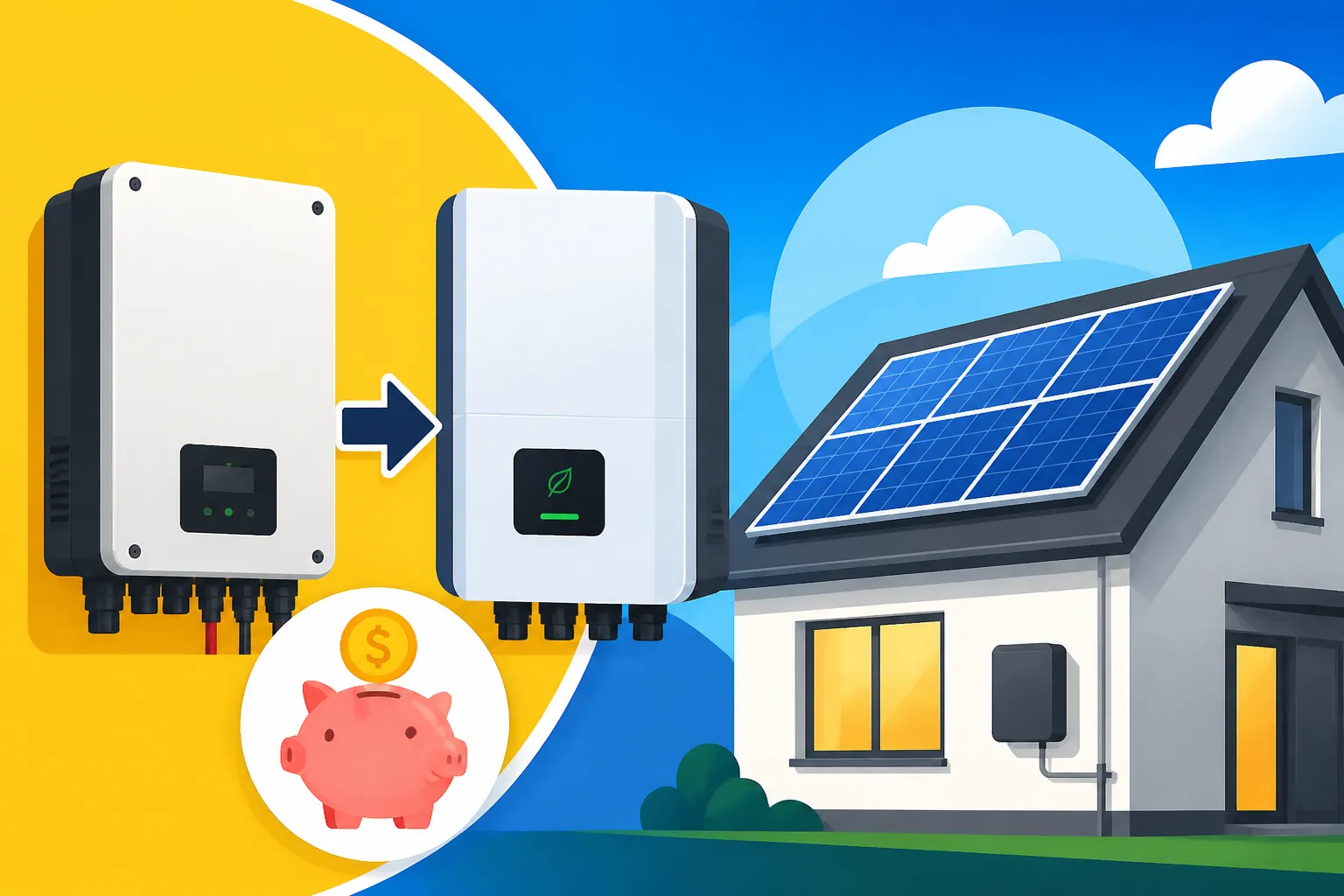
It's incredibly frustrating when you've invested in solar panels, expecting smooth sailing and endless energy savings, only to be hit with an issue from one of your core components. If your solar system isn't performing as it should, or if you've been told your inverter is on its last legs, you're likely wondering, "How much does an inverter replacement cost?" This guide will break down everything you need to know about replacing this crucial piece of your solar puzzle, from component prices to labor fees and how to navigate the process without breaking the bank.
Understanding Your Solar Inverter and Why It Matters
When you think about your solar system, the panels often get all the glory, soaking up those rays. But there's a hardworking, often overlooked component doing some serious heavy lifting: your inverter. Without it, those panels are just expensive roof decorations.
The Vital Role of Your Inverter
Think of your solar inverter as the brain and translator of your entire solar power system. Solar panels produce direct current (DC) electricity, but your home appliances, and the electrical grid itself, run on alternating current (AC) electricity. Your inverter's job is to flawlessly convert that DC power into usable AC power. It's constantly working, monitoring your system's performance, and ensuring that the electricity generated by your panels can actually power your lights, charge your devices, and potentially even feed excess energy back to your utility company. When it malfunctions, your entire system grinds to a halt, leaving you back on grid power and wondering what went wrong.
Common Reasons for Inverter Replacement
While modern inverters are built to be robust, they're not immune to failure. One of the most common reasons for replacement is simply age. Inverters typically have a shorter lifespan than solar panels themselves. Panels often come with 25-year performance warranties, but string inverters might only last 10-15 years. Microinverters and power optimizers often have longer warranties, closer to 20-25 years. Beyond age, factors like exposure to extreme weather, voltage surges, manufacturing defects, or even pests can lead to an inverter failing prematurely. Sometimes, it's not a complete failure but a significant drop in performance that warrants a replacement to ensure your system is generating maximum power.
Different Types of Inverters and Their Lifespans
The type of inverter you have plays a massive role in both its expected lifespan and, consequently, its replacement cost. There are three main types:
- String Inverters: These are the traditional workhorses. All your solar panels are wired together in "strings," and one central string inverter converts the DC power from the entire array. They are generally the least expensive upfront but have the shortest lifespan, often around 10-15 years. If one panel in a string is shaded or underperforming, it can affect the output of the entire string, which is a drawback.
- Microinverters: These revolutionary devices are installed directly on each individual solar panel. Each panel gets its own microinverter, converting DC to AC right at the source. This means if one panel is shaded, the others continue to perform optimally. Microinverters tend to be more expensive per unit than a single string inverter but offer superior performance and usually come with longer warranties, often 20-25 years. Companies like Enphase are well-known for their microinverter technology. You can learn more about the differences in our guide on Solar Inverters: String vs Microinverter vs Optimizer.
- Power Optimizers: These are a hybrid solution, often paired with a string inverter. An optimizer is installed on each panel (like a microinverter), conditioning the DC power and sending optimized DC to a central string inverter. They help mitigate shading issues and improve panel-level performance, offering a compromise between the cost of a string inverter and the panel-level optimization of microinverters. Their lifespan is often similar to microinverters, around 20-25 years. SolarEdge is a leading brand in power optimizer technology, often compared to Enphase, as detailed in our article Enphase vs SolarEdge: Which Inverter Is Better?.
Understanding which type you have is the first step in estimating your replacement costs.
Breaking Down the Cost of Inverter Replacement
Okay, let's get down to the numbers. Replacing a solar inverter isn't a one-size-fits-all expense. The final bill can vary significantly depending on several factors, including the type of inverter, the brand, labor costs in your area, and any unexpected issues that might pop up.
Component Costs: The Inverter Itself
The biggest chunk of your replacement cost will be the new inverter itself. Here's a general breakdown of what you might expect:
- String Inverters: A standard string inverter for a typical residential system (around 5-10 kW) can range from $1,500 to $4,000. Brands like SMA or Fronius are common in this category. The price will depend on the wattage output and specific features.
- Microinverters: Since you'll need one per panel, the cost adds up differently. Each microinverter typically costs $150 to $300 per unit. For a 20-panel system, that's potentially $3,000 to $6,000 just for the microinverters. However, remember they often have longer warranties and better performance in shaded conditions.
- Power Optimizers: Power optimizers usually run $50 to $150 per unit, plus the cost of the central string inverter they pair with (which might be in the $1,000-$3,000 range). So, for a 20-panel system, you're looking at $1,000-$3,000 for optimizers, plus the string inverter.
These prices are for the hardware alone. When considering the cost of solar panels or the cost for a full system, the inverter is a significant, but often overlooked, part of the overall investment.
Labor and Installation Fees
Beyond the cost of the hardware, you'll need to factor in the labor required to remove the old inverter and install the new one. This can vary widely based on your location and the complexity of the job.
- Average Labor Costs: Generally, expect to pay $500 to $1,500 for labor for a string inverter replacement. This includes the electrician's time, any necessary wiring adjustments, and testing the new system.
- Microinverter Labor: While the individual microinverters are smaller, replacing them can sometimes involve more work if they are hard to access under the panels. However, many systems are designed for easy swap-outs. Labor for replacing microinverters might be similar or slightly higher if more panels need to be lifted, potentially ranging from $700 to $2,000 for a full array replacement, depending on the number of units.
- Permitting and Inspection: Don't forget that electrical work often requires permits and inspections, which can add $100 to $300 to the total cost. This ensures the work is done safely and to code. Our guide on Solar Installation Labor Cost delves deeper into these aspects.
Finding a reputable local installer is key here. It’s always a good idea to seek out multiple quotes from different professionals. Services like Modernize can help connect you with qualified solar installers in your area who can provide accurate estimates.
Additional Costs and Unexpected Surprises
Sometimes, the replacement isn't as straightforward as swapping out one box for another.
- Wiring Updates: If your old inverter was outdated, the new one might require different wiring or upgrades to your electrical panel to meet current safety standards or integrate more effectively. This could add a few hundred dollars or more.
- System Upgrades: While replacing your inverter, it might be a good time to consider if other components of your system need attention. Perhaps you want to add a battery, which would require a battery-ready inverter, or maybe upgrade to a higher efficiency model to optimize your energy production.
- Diagnostics and Troubleshooting: If the cause of the inverter failure isn't immediately obvious, the installer might need to spend time diagnosing the issue, which can add to labor costs. It's always best to get a clear understanding of what diagnostics are included in the quote.
| Inverter Type | Typical Hardware Cost (Residential) | Typical Labor Cost | Average Total Replacement Cost | Expected Lifespan (Years) |
|---|---|---|---|---|
| String Inverter | $1,500 – $4,000 | $500 – $1,500 | $2,000 – $5,500 | 10 – 15 |
| Microinverter | $3,000 – $6,000 (for 20 panels) | $700 – $2,000 | $3,700 – $8,000 | 20 – 25 |
| Power Optimizer | $1,000 – $3,000 (plus string inv.) | $700 – $2,000 | $1,700 – $5,000+ | 20 – 25 |
Note: These are estimated ranges. Actual costs can vary based on brand, system size, location, and specific installer rates.
Navigating the Replacement Process and Saving Money
Replacing an inverter can feel like a daunting task, especially if it's an unexpected expense. But with the right approach, you can manage the process efficiently and potentially save some money.
Checking Your Warranty Coverage
This is absolutely the first step you should take. Most inverters come with a manufacturer's warranty, which typically covers defects in materials and workmanship. String inverters often have warranties ranging from 5 to 12 years, with options to extend them. Microinverters and power optimizers usually boast longer warranties, often 15 to 25 years.
If your inverter is still under warranty, the manufacturer might replace the unit for free, though you'll often still be responsible for the labor costs of removal and reinstallation. Make sure you understand the terms of your Solar Panel Warranties Explained and contact your original installer or the inverter manufacturer directly. Sometimes, the warranty might even cover a portion of the labor. Don't leave this stone unturned!
Getting Multiple Quotes and Choosing an Installer
Just like when you first installed your solar system, getting multiple quotes is crucial for an inverter replacement. Different solar companies will have varying rates for labor, markups on equipment, and experience with specific inverter brands.
- Ask for detailed breakdowns: Ensure each quote clearly separates the cost of the new inverter from labor, permitting fees, and any potential additional services.
- Verify credentials: Confirm that the installer is licensed and insured to perform electrical work in your state and local municipality. Look for certifications, such as from the North American Board of Certified Energy Practitioners (NABCEP).
- Check references and reviews: What do other homeowners say about their experience with this installer? A quick search on consumer review sites or the Better Business Bureau can provide valuable insights.
- Don't rush: High-pressure sales tactics are a red flag. Take your time to compare offers and ask questions.
Platforms like Modernize can be a great resource for finding vetted local solar installers and comparing quotes side-by-side, making the process much easier. They help ensure you're connecting with reliable professionals who can handle your inverter replacement effectively.
Potential for Upgrades and System Enhancements
While a replacement is an expense, it can also be an opportunity. If your old inverter was a basic string inverter, you might consider upgrading to microinverters or power optimizers, especially if your roof has shading issues. This could significantly improve your system's overall efficiency and energy production.
- Improved Monitoring: Many newer inverters offer more sophisticated monitoring capabilities, allowing you to track your system's performance in real-time, sometimes even at the panel level.
- Battery Compatibility: If you've been thinking about adding a solar battery for backup power or to maximize savings with time-of-use rates, now might be the perfect time to install a battery-ready inverter. This could save you from another expensive upgrade down the line. Check out our guide on the Best Solar Inverters of 2026 for ideas on modern options.
- Higher Efficiency: Newer inverter models might boast higher conversion efficiencies, meaning more of the DC power from your panels gets converted into usable AC power for your home. This can lead to greater long-term savings. You can explore how even small gains in efficiency can affect your overall energy output in our article on Solar Panel Efficiency & Degradation Explained.
Considering these upgrades during replacement can future-proof your system and enhance its performance, potentially turning an unexpected cost into a smart investment.
When to Replace Versus Repair
The decision to repair or replace an inverter isn't always clear-cut. It often depends on the nature of the fault, the age of the unit, and your overall goals for your solar system.
Weighing the Repair vs. Replace Decision
Repairing an inverter can seem like the more cost-effective option, especially if the issue is minor, like a faulty fuse or a loose connection. However, sometimes a repair is just a temporary fix for an underlying problem, or the cost of parts and labor for a significant repair might approach the cost of a new unit.
- Age of the Inverter: If your string inverter is already 8-10 years old, or your microinverter/optimizer is 15+ years old, and it's experiencing a significant issue, replacement is usually the wiser choice. You'll get a new warranty, improved technology, and peace of mind. Continuing to repair an aging unit can become a money pit.
- Severity of the Problem: A simple component swap might be fine for a repair. But if the main circuit board is fried or there's extensive damage, replacement is often necessary.
- Availability of Parts: For older or less common inverter models, finding replacement parts can be difficult or expensive, making a new inverter a more practical solution.
Signs Your Inverter Needs Attention
Your solar system will usually give you clues when something is amiss with the inverter. Ignoring these signs can lead to further issues or prolonged periods without solar production.
- No Power Production: The most obvious sign is that your solar system isn't generating electricity. Check your monitoring app or the inverter's display. If it shows zero production when the sun is shining, there's a problem.
- Error Codes or Warning Lights: Most modern inverters have diagnostic displays that will show specific error codes or illuminated warning lights when there's a fault. Consult your inverter's manual to understand what these codes mean.
- Unusual Noises or Odors: While inverters typically make a low humming sound, excessive buzzing, grinding, or a burning smell are definite red flags that indicate an internal issue.
- System Shutdowns: If your system frequently shuts down unexpectedly, especially during peak production hours, it could be a sign of an overheating or malfunctioning inverter.
- Reduced Production Over Time: While some solar panel degradation is normal, a sudden or significant unexplained drop in your overall energy production, especially when your panels appear clean and unshaded, might point to an inverter issue.
If you notice any of these signs, it's best to contact a qualified solar technician to diagnose the problem. Modernize can help you find local experts who can accurately assess whether a repair or replacement is needed.
Long-Term Savings and ROI Considerations
While an inverter replacement is an unexpected cost, it's also an investment in the continued performance and savings of your solar system. A properly functioning, efficient inverter ensures you're maximizing your energy production and, therefore, your savings on electricity bills.
Considering that the How Long Do Solar Panels Last? is typically 25-30 years, an inverter replacement is a necessary part of the long-term ownership of your system. If your inverter fails prematurely or is nearing the end of its life, replacing it ensures your system continues to deliver on its promise of clean, affordable energy. Delaying a necessary replacement can lead to lost savings, as you'll be paying more for grid electricity. Ultimately, a new, efficient inverter contributes to a stronger Is Solar a Good Investment in 2026? for your home. Keeping your system running optimally means you get the most out of your initial solar investment for years to come.
Disclaimer
The information provided in this guide is for general informational purposes only and does not constitute professional financial, tax, or energy advice. Solar system costs, incentives, and regulations vary significantly by location and change over time. Always consult with qualified solar professionals, financial advisors, and tax experts before making any decisions related to your solar energy system.