What Is Panel Degradation Rate?
It’s a natural worry when you invest in something as significant as a home solar system: will it actually last, and will it continue to perform as well as it does on day one? Many homeowners stress about their panels becoming less effective over time, wondering if their initial savings projections will hold up. The truth is, all solar panels experience a slight decline in performance as they age, a phenomenon known as panel degradation. This guide will walk you through exactly what that means for your system, why it happens, and what you can do to ensure your investment stays strong for decades to come.
Understanding Solar Panel Degradation
The idea that your shiny new solar panels won't produce power at 100% efficiency forever can be a bit unsettling. But let's be realistic: almost everything we buy, from our cars to our smartphones, experiences some form of wear and tear, and solar panels are no different. Understanding this natural process, rather than fearing it, is key to being a well-informed solar homeowner.
What is Solar Panel Degradation?
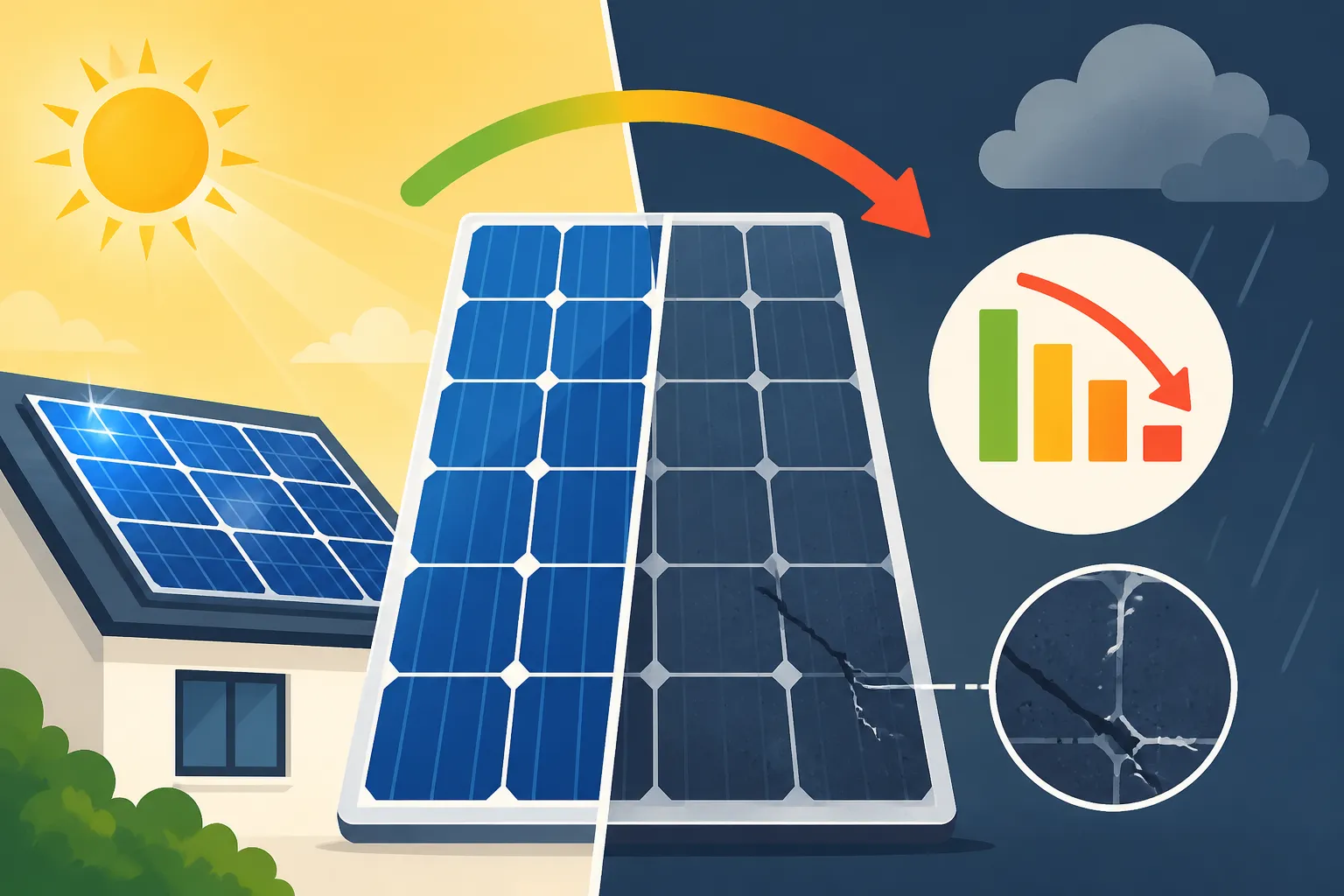
At its core, solar panel degradation refers to the gradual, unavoidable decrease in a solar panel's electricity-producing capacity over time. Think of it like a rechargeable battery that slowly loses its ability to hold a full charge after many cycles, or a car engine that, over hundreds of thousands of miles, doesn't quite have the same pep it did when it rolled off the lot. For solar panels, this decline isn't sudden or dramatic; it’s a slow, steady reduction in how much power a panel can generate from the sunlight it absorbs. This means that a panel rated for, say, 400 watts today might only produce 398 watts a year from now, and a little less the year after that. It's a fundamental aspect of photovoltaic technology, and manufacturers design panels with this in mind.
This gradual loss of efficiency is largely due to the exposure of the panel's components to the elements—sunlight, heat, cold, and humidity—over many years. While panels are built to be incredibly durable and withstand harsh conditions, the semiconductor materials that convert sunlight into electricity, primarily silicon, can undergo microscopic changes that reduce their effectiveness. This isn't a sign that your panels are failing prematurely; it's a normal part of their operational lifespan.
How Degradation is Measured
Manufacturers are quite transparent about how much degradation to expect, and they often include this information in what's called a "linear performance warranty." This warranty typically guarantees that your panels will still produce a certain percentage of their original power output after a specific number of years, usually 25. The industry standard degradation rate typically hovers around 0.5% to 1% per year.
For example, a common warranty might promise that your panels will still produce at least 80% to 85% of their initial rated power after 25 years. This means if you installed a 10-kilowatt (kW) system today, producing 10,000 watts under ideal conditions, after 25 years, it would still be expected to produce between 8,000 and 8,500 watts. This consistent, predictable decline allows you and your installer to make accurate long-term financial projections for your system's savings. When you're looking into Solar Panel Payback Period Explained, the degradation rate plays a crucial role in those calculations, ensuring you have a realistic picture of your investment's return over its lifetime.
Common Causes of Solar Panel Degradation
While degradation is a natural process, it’s helpful to understand what factors contribute to it. It’s not just about time; it’s about the constant interaction of your panels with their environment and the inherent properties of the materials themselves.
Environmental Factors
Your solar panels are constantly exposed to the elements, and over decades, this exposure inevitably takes a toll. These environmental stressors are a primary driver of the gradual decrease in performance.
- Heat (Thermal Stress): High temperatures are perhaps the most significant environmental factor. While solar panels need sunlight to produce electricity, excessive heat can reduce their efficiency in the short term and accelerate material degradation in the long term. The constant heating and cooling cycles throughout the day and year cause expansion and contraction in the panel materials, which can lead to stress on the cells and connections. This is why you'll often see panels performing slightly better on a cool, sunny day than a scorching hot one.
- UV Radiation: Just as UV rays can damage our skin or fade car paint, they can slowly degrade the materials in a solar panel, particularly the encapsulant layers and backsheets that protect the photovoltaic cells. Over time, these materials can yellow or become brittle, reducing light transmission to the cells and compromising the panel's structural integrity.
- Humidity and Moisture: Prolonged exposure to high humidity or moisture ingress can lead to corrosion of internal components, especially the electrical connections. If water penetrates the protective layers due to seal failure, it can cause delamination (the separation of layers) or create electrical shorts, impacting performance and potentially causing failures.
- Physical Stress: While solar panels are built to be robust, they are still subject to physical wear and tear. High winds can cause subtle stresses, hail storms can cause microcracks in the cells (often invisible to the naked eye), and heavy snow loads can put pressure on the frames. Even dust and dirt accumulation, if not regularly cleaned, can slightly reduce efficiency, though this is more about temporary obstruction than permanent degradation. Regular Solar Panel Maintenance & Cleaning can help mitigate some of these physical stressors.
Material and Manufacturing Issues
Beyond environmental wear and tear, some forms of degradation are inherent to the panel's materials or can arise from manufacturing processes. These issues highlight the importance of choosing high-quality panels and reputable brands.
- Potential Induced Degradation (PID): This phenomenon occurs when a high negative voltage difference between the solar cells and the grounded module frame causes ions to migrate within the panel, leading to significant power loss. While modern panels and inverters are often designed to mitigate PID, it was a more prevalent issue in older panels and can still occur with lower-quality components. It's an electrical issue that can significantly accelerate performance decline if not addressed.
- Light Induced Degradation (LID): Often occurring in the first few weeks or months after installation, LID is an initial, slight drop in power output when solar cells are first exposed to sunlight. This is a well-known effect, especially in certain types of silicon cells, and manufacturers usually account for it in their initial power ratings. Newer technologies, such as TOPCon and HJT cells, have significantly reduced or eliminated LID, offering more stable performance from the get-go.
- Delamination and Microcracks: Delamination is when the various layers of the solar panel, particularly the encapsulant layer, separate from each other. This can be caused by thermal stress, moisture ingress, or manufacturing defects, leading to hot spots and reduced efficiency. Microcracks are tiny, hairline fractures within the silicon cells, often invisible to the eye. They can be caused by physical impact during manufacturing, shipping, or installation, or by extreme temperature fluctuations over time. While small, they can isolate parts of the cell, reducing its overall output.
- Junction Box Failures: The junction box on the back of the panel houses the bypass diodes and electrical connections. If it's poorly sealed or experiences extreme heat, these components can fail, leading to reduced power output from an entire string of panels. High-quality panels use robust junction boxes and diodes to prevent this.
Installation and Maintenance Practices
Believe it or not, how your system is installed and cared for can also play a role in its long-term degradation. A poorly designed or maintained system can exacerbate natural degradation or introduce additional problems.
- Shading: While not a direct cause of panel degradation, consistent shading can lead to "hot spots" on panels, where shaded cells act as resistors, generating heat and potentially stressing the bypass diodes and surrounding cells. Over time, this localized heat can accelerate degradation in those specific areas. Proper system design aims to minimize shading from trees, chimneys, or other roof obstructions. This is a critical consideration during the initial Solar Installation Timeline: What to Expect.
- Improper Wiring and Connections: Faulty wiring or loose connections can lead to resistance and heat buildup, impacting the efficiency of the power flow and potentially stressing components. A professional installer ensures all electrical connections are secure and properly terminated, minimizing these risks.
- Poor Mounting: If panels are not securely mounted, they can experience excessive vibration or stress from wind, which can contribute to microcracks or delamination. Quality mounting hardware and correct installation techniques are essential for the physical longevity of the panels.
- Lack of Cleaning: While minor dust accumulation generally has a minimal impact on efficiency, severe buildup of dirt, pollen, bird droppings, or other debris can significantly block sunlight. Over time, these shaded areas can create localized heating, similar to environmental shading, which can potentially accelerate degradation in those spots. Regular, gentle cleaning, especially in dusty or heavily wooded areas, can help maintain optimal performance.
Impact of Degradation on Your Solar System Performance
Understanding the causes of degradation is one thing, but what does it actually mean for your daily life and your wallet? The real impact is felt in two key areas: the amount of energy your system produces and the financial benefits you receive over its lifespan.
Reduced Energy Production
The most direct consequence of solar panel degradation is a gradual decrease in the amount of electricity your system generates. When your panels lose, say, 0.5% of their efficiency each year, it means that by year 10, they'll be producing about 5% less power than they did in the first year. By year 25, that could be a 12.5% reduction.
Let's put this into perspective. Imagine you have a 10 kW system that was designed to produce around 14,000 kilowatt-hours (kWh) of electricity annually in its first year, offsetting a significant portion of your utility bill. With a 0.5% annual degradation rate, by year 10, that same system might only produce around 13,300 kWh, and by year 25, perhaps 12,250 kWh. While this is still a substantial amount of energy, it means your system will be offsetting slightly less of your electricity usage over time, or your excess generation for Net Metering Explained: How It Works by State will gradually decrease. You might start to see your utility bills creep up slightly in later years if your household electricity consumption remains constant, or even increases. This is why careful planning during the design phase, potentially oversizing slightly or accounting for future needs, can be beneficial.
Financial Implications and ROI
The long-term financial viability of your solar investment is directly tied to your system's output. A steady decline in energy production means a steady decline in your savings. This can affect your overall return on investment (ROI) and how quickly your system pays for itself.
If your system is producing less electricity than originally projected, it will take longer to reach the break-even point where your cumulative savings equal your upfront investment. For instance, if your initial calculations suggested a 10-year payback period, a higher-than-expected degradation rate could push that to 11 or 12 years. This is why when you’re asking Are Solar Panels Worth It in 2026?, the degradation rate is a critical piece of the puzzle. Moreover, the total lifetime savings you accumulate over 25 or 30 years will be lower than if your panels maintained their peak efficiency. This doesn't mean solar isn't a good investment; it simply means the projections need to be realistic and factor in this inevitable decline. The performance warranty provided by manufacturers is your best friend here, as it offers a guarantee against excessive degradation and helps secure your long-term financial benefits.
Manufacturer Warranties and Degradation
One of the most reassuring aspects of investing in solar is the robust warranty coverage offered by reputable manufacturers. These warranties are specifically designed to protect your investment against excessive or unexpected degradation.
Understanding Performance Warranties
A performance warranty, sometimes called a power output warranty, is a manufacturer's promise about how much power your solar panels will produce over their lifespan. This is distinct from a product warranty, which covers manufacturing defects or material flaws. For performance, the industry standard for most quality solar panels is a 25-year warranty, although some premium brands might offer 30 years.
This warranty typically outlines a two-tiered degradation guarantee:
- Year 1 Guarantee: Manufacturers usually guarantee that the panels will produce at least 97% or even 98% of their nominal power output in the first year. This accounts for any initial "Light Induced Degradation" (LID) that might occur.
- Linear Degradation Guarantee: After the first year, they guarantee a maximum annual degradation rate, usually between 0.25% and 0.7% per year. This ensures that after 25 years, the panels will still produce at least 80% to 85% (or even higher, for premium panels) of their original rated power.
For example, Maxeon (formerly SunPower), a leader in high-efficiency panels, often offers some of the best performance warranties, guaranteeing 92% power output after 25 years. Brands like REC Solar and Qcells also stand out with strong performance guarantees, often exceeding the 80% industry minimum. When comparing quotes, always look closely at the performance warranty details. It’s a key indicator of a manufacturer's confidence in their product's long-term durability.
Product vs. Performance Warranties
It’s crucial to understand the difference between a product warranty and a performance warranty, as they cover different aspects of your solar panels. Both are important for protecting your investment.
- Product Warranty (or Equipment Warranty): This warranty covers defects in the manufacturing, materials, or workmanship of the solar panel itself. It's essentially a guarantee that the panel won't physically fail due to a flaw. Typical product warranties range from 10 to 12 years, but many premium brands, like Maxeon, REC, and LG (before they exited the solar market), offer 20 to 25 years or more. If a panel stops working due to a manufacturing defect, this is the warranty that would cover its repair or replacement. This covers things like a broken frame, issues with the glass, or faulty internal connections.
- Performance Warranty (or Power Output Warranty): As discussed, this warranty guarantees that the panel will produce a certain percentage of its original power output over time. It doesn't mean the panel will stop working if it dips below the guaranteed percentage; it means the manufacturer will compensate you or replace the panel if its degradation rate exceeds the warranted threshold. This is what protects you from excessive, unexpected drops in energy production due to degradation that falls outside the normal, expected range.
A robust product warranty provides peace of mind that your physical panels are built to last, while a strong performance warranty ensures your long-term energy savings are protected against premature efficiency loss. When evaluating Solar Panel Warranties Explained, ensure you look at both types of coverage to fully understand your protection.
Mitigating and Managing Solar Panel Degradation
While some degradation is inevitable, there are proactive steps you can take as a homeowner to mitigate its effects and ensure your solar system performs optimally for as long as possible. It starts with informed decisions before installation and continues with mindful care afterward.
Choosing High-Quality Solar Panels
The foundation of a long-lasting, high-performing solar system lies in the quality of the panels themselves. Investing in reputable brands and advanced technologies can significantly reduce the impact of degradation.
When you're researching solar panels, look for manufacturers with a proven track record and strong warranties. Companies like Maxeon, REC, and Qcells are known for their high-quality products, excellent durability, and often superior performance warranties, sometimes guaranteeing up to 92% of original output after 25 years. These brands often employ advanced technologies like TOPCon, PERC, or HJT cells, which are inherently more resistant to degradation mechanisms like LID and PID, and perform better in varying temperatures.
It's also worth looking into panels that are specifically designed for resilience in your local climate. For example, some panels have enhanced features for resistance against salt mist in coastal areas or heavier snow loads in northern regions. While premium panels might have a slightly higher upfront cost, their lower degradation rates and longer lifespans often translate into greater lifetime savings and a better return on your investment. You can often find detailed comparisons and customer reviews for different brands on platforms like Amazon, which can help in your research process. Don't just focus on the upfront price; consider the long-term value and performance. Exploring guides like Best Solar Panels of 2026 can provide valuable insights into top-tier options.
Proper Installation and System Design
Even the best panels can underperform or degrade faster if the system isn't designed and installed correctly. Professional installation is paramount to minimizing issues and maximizing your system's longevity.
A qualified solar installer will conduct a thorough site survey to assess your roof's condition, sun exposure, and potential shading issues. They’ll design a system that optimizes panel placement for maximum sunlight capture throughout the year, minimizing the impact of shading. Proper system sizing, which accounts for your energy consumption and the expected degradation over time, is also crucial. For example, if you're concerned about future energy needs or potential degradation, a good installer might suggest slightly oversizing your system or installing more efficient panels.
Furthermore, correct installation techniques are vital. This includes secure mounting to withstand local wind and snow loads, precise wiring to prevent hotspots or electrical inefficiencies, and proper grounding to protect against PID. Microinverters or power optimizers (like those from Enphase or SolarEdge) can also help mitigate the impact of individual panel degradation or shading, as they allow each panel to operate independently. If one panel degrades slightly faster, it won't drag down the performance of the entire string. A thorough Solar Installation Process in California (or any state) will highlight the importance of these meticulous steps from site assessment to final interconnection.
Regular Monitoring and Maintenance
Once your solar system is up and running, a little proactive attention can go a long way in ensuring its long-term health and minimizing degradation.
- Monitoring System Performance: Most modern solar systems come with monitoring platforms (often accessible via a smartphone app) that allow you to track your daily, weekly, and monthly energy production. Regularly checking these dashboards can help you identify any unusual drops in performance that might signal a problem beyond normal degradation. If you notice a significant, sudden drop in output from a particular panel or string, it could indicate a defect or an external issue like new shading. Many systems integrate with smart home devices, and you can even find third-party monitoring tools and smart plugs that track individual appliance usage on sites like Amazon, helping you see the bigger picture of your energy consumption versus production.
- Occasional Cleaning: While rain often does a good job of washing away dust and dirt, a build-up of grime, pollen, or bird droppings can accumulate, especially during dry spells or in agricultural areas. An occasional gentle cleaning with water and a soft brush can help maintain optimal light absorption. Be sure to check your installer's recommendations and safety guidelines for cleaning. You can often find specialized solar panel cleaning kits or extendable brushes for purchase on Amazon or at local hardware stores.
- Visual Inspections: Every few months, take a moment to visually inspect your panels from the ground (or from a safe distance). Look for any obvious physical damage, such as cracks in the glass, loose wiring, or significant debris buildup. If anything seems amiss, contact your solar installer or a qualified technician.
- Professional Check-ups: Consider scheduling a professional inspection every few years. A technician can perform more detailed checks, including thermal imaging to detect hotspots, and ensure all electrical components are in good working order. This can catch potential issues before they become major problems and help prolong the life of your system.
By combining high-quality equipment, expert installation, and consistent, proactive maintenance, you can ensure your solar system delivers strong performance and savings for decades, far exceeding the typical warranty periods.
What to Expect: Real-World Degradation Scenarios
It’s easy to get caught up in the numbers and percentages, but what does solar panel degradation actually look like in practice for a homeowner over the many years your system will be generating power? Let’s walk through a realistic scenario.
Typical Performance Over 25 Years
Imagine you've just installed a brand-new 8 kW solar system on your roof in Arizona. In its first year, under ideal conditions, it might produce approximately 13,000 kWh of electricity. Let’s assume your panels have a very common performance warranty: 97% output in the first year, then a linear degradation rate of 0.5% per year for the next 24 years, guaranteeing at least 84.5% output after 25 years.
Here's a simplified look at how its annual production might change:
| Year | Annual Degradation | Cumulative Degradation | Remaining Output % | Estimated Annual Production (kWh) |
|---|---|---|---|---|
| 1 | N/A | N/A | 97.0% | 12,610 |
| 2 | 0.5% | 0.5% | 96.5% | 12,545 |
| 5 | 0.5% | 2.0% | 95.0% | 12,350 |
| 10 | 0.5% | 4.5% | 92.5% | 12,025 |
| 15 | 0.5% | 7.0% | 90.0% | 11,700 |
| 20 | 0.5% | 9.5% | 87.5% | 11,375 |
| 25 | 0.5% | 12.0% | 85.0% | 11,050 |
Note: Initial output is adjusted to 97% for year 1, then subsequent degradation applies to the previous year's output. This table assumes consistent weather conditions and no other performance issues.
As you can see, even after 25 years, your system is still producing a substantial amount of electricity – over 80% of its initial first-year output. This steady, predictable decline is built into the financial models of solar ownership. While your system might not hit its absolute peak every single year after installation, it will continue to provide significant energy savings for well over two decades. This longevity is a key reason why Are Solar Panels Worth It in 2026? is still a resounding yes for many homeowners.
When to Consider Upgrades or Replacements
Given that solar panels are designed to last 25-30 years, and often continue producing beyond that, when should you start thinking about upgrades or replacements?
- Beyond the Warranty Period: Once your panels pass their 25-year performance warranty, their degradation rate might start to accelerate slightly, or simply continue at the established pace without further warranty coverage. At this point, you'll need to weigh the diminishing returns against the cost of new technology. Your panels might still be producing 75-80% of their original output, which is still quite good, but newer panels available might be 25-50% more efficient than your original ones.
- Significant Efficiency Drop: If you notice that your system's output has fallen significantly below what the degradation curve predicted, even within the warranty period, it's worth investigating. This could indicate a specific panel failure, a wiring issue, or a problem with your inverter. In such cases, your performance warranty might kick in.
- Technological Advancements: Solar technology is constantly evolving. After 25-30 years, the efficiency and power output of new panels will likely be vastly superior to what you installed initially. You might find that replacing your older, less efficient panels with modern, higher-wattage ones allows you to generate significantly more power from the same roof space, or even reduce the number of panels needed. For instance, a 25-year-old panel might have been 15% efficient, while today's panels regularly hit 20-23% efficiency.
- Major Roof Repair or Home Renovation: If you're undertaking a major roof replacement or home renovation that requires removing your solar panels anyway, it might be an opportune time to consider upgrading to new, more efficient panels. The labor cost for removal and reinstallation will be incurred regardless, making the cost-benefit analysis for new panels more favorable.
Ultimately, the decision to upgrade or replace will depend on your energy needs, financial goals, and the specific performance of your aging system. Most homeowners will find their panels continue to provide reliable power for many years beyond the warranty, but knowing when to reassess your options is part of being a savvy solar owner.
Disclaimer
Please note that this content is intended for informational purposes only and does not constitute professional financial, tax, or energy advice. Solar panel degradation rates and system performance can vary based on specific equipment, installation quality, environmental factors, and individual usage patterns. Always consult with certified solar professionals and financial advisors for personalized recommendations tailored to your unique situation.