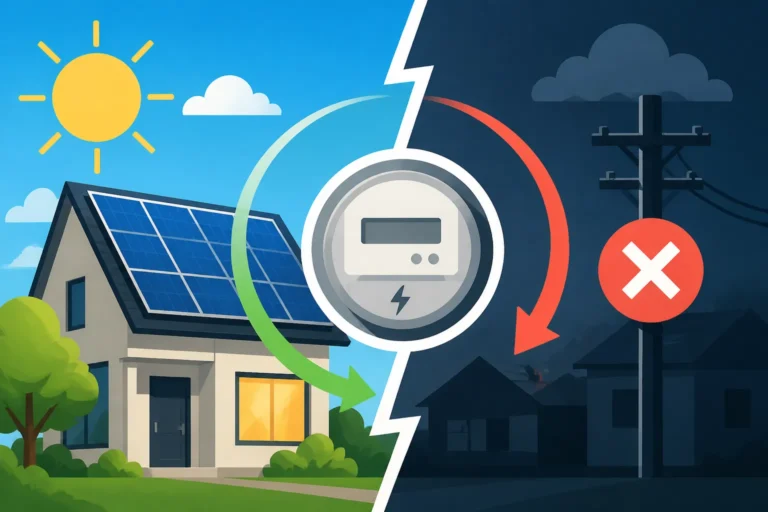
Texas Net Metering Rules in 2026
Texas homeowners often feel like they are wandering through a maze when trying to understand how their utility bill works after going solar. Unlike many other states, Texas does not have a statewide mandate for net metering, which leaves residents at the mercy of individual retail providers and varying local regulations. This guide untangles the complex web of Texas net metering rules in 2026, helping you navigate the deregulated market to ensure your solar investment actually pays off.
The Reality of Net Metering in the Texas Deregulated Market
If you live in a part of Texas where you can choose your own electricity provider, like Houston, Dallas, or Fort Worth, you are in a deregulated market. This is both a blessing and a curse. While it means you have the freedom to shop for the best rates, it also means there is no legal requirement for any company to offer you a fair price for the extra energy your panels produce. In 2026, the landscape has shifted significantly from the "1-to-1" credit days of the past, making it more important than ever to understand the fine print of your contract.
The Difference Between True Net Metering and Buyback Programs
In many states, net metering is a simple 1-to-1 exchange. If you send one kilowatt-hour (kWh) to the grid, you get a credit that covers the cost of one kWh you pull from the grid later. In Texas, we rarely see this simple exchange anymore. Instead, we have Solar Buyback Programs in Texas that function more like a marketplace. Some Retail Electric Providers (REPs) will pay you the full retail rate for your energy, but many others only pay the "avoided-cost" rate, which is essentially the wholesale price of electricity. This gap between what you pay for power and what you get paid for power can be frustrating, especially when you see your panels producing more than enough to cover your needs during a sunny July afternoon.
Why ERCOT and Local Utilities Matter
The Electric Reliability Council of Texas (ERCOT) manages the grid for most of the state, but they don't set the net metering rules. That responsibility falls to your specific REP or, if you live in a regulated area like Austin or San Antonio, your municipal utility. For instance, Austin Energy and CPS Energy have their own specific structures that are much more predictable than the open market. However, for most Texans, the rules can change every time you renew your electricity contract. Using a service like Modernize can help you connect with local experts who understand which providers in your specific zip code are currently offering the most favorable buyback terms for the 2026 season.
The Vanishing 1-to-1 Credit Plans
As we move through 2026, the 1-to-1 credit plans are becoming a rarity. Most REPs have moved toward a "Net Billing" system. In this setup, you are charged the full retail rate for any electricity you consume from the grid, but you are credited a lower rate for the surplus you export. This transition has made many homeowners wonder Is Solar Worth It in Texas? if they aren't getting the full value for their production. The truth is that while the credits are lower, the rising cost of traditional electricity still makes solar a strong hedge against inflation, provided you choose the right plan.
How to Compare Texas Solar Buyback Plans in 2026
Choosing a solar plan in Texas is no longer just about finding the lowest cent-per-kWh rate. You have to look at the "export rate," the "import rate," and the "base charges." Some plans might look attractive because they offer a high buyback rate, but they hide high monthly "customer charges" or "metering fees" that eat away at your savings. You have to be a bit of a detective to find the plan that fits your specific production and consumption patterns.
Understanding Real-Time Pricing and Wholesale Volatility
Some modern Texas plans are moving toward real-time pricing. This means the credit you receive for your solar energy fluctuates based on the current demand on the Texas grid. During a heatwave, when the grid is stressed, your solar energy might be worth ten times the normal rate. Conversely, on a mild spring day, it might be worth almost nothing. This volatility is a major reason why many people are looking into Solar Battery Incentives in 2026 to store their energy and only sell it back when the rates are at their peak. It requires a more "active" approach to energy management, but the rewards for those who pay attention are substantial.
The Impact of Transmission and Distribution Charges (TDU)
One of the biggest "gotchas" in Texas solar billing is the TDU charge. Even if your REP offers a 1-to-1 buyback on the "energy" portion of your bill, they almost never credit you back for the TDU charges. These are the fees charged by companies like Oncor or CenterPoint to maintain the wires and poles. In 2026, these charges represent a significant portion of the average bill. When you pull energy from the grid at night, you pay for the energy plus the TDU fee. When you send energy back during the day, you only get credited for the energy. This "delivery gap" is a primary reason why your bill might not be zero, even if your production matches your consumption perfectly.
Comparing Popular 2026 Texas Providers
To give you an idea of the variation, here is a comparison of how different types of plans currently function in the Texas market.
| Plan Type | Export Credit Rate | Roll-Over Rules | Best For |
|---|---|---|---|
| Retail 1-to-1 | Full Retail Price | Credits usually expire monthly | Homes with no battery and high daytime use |
| Wholesale/Avoided Cost | Market Spot Price | Credits roll over indefinitely | Homes with large systems and low exports |
| Capped Buyback | Retail Price (up to usage) | No roll-over of excess | Systems sized exactly to 100% offset |
| Time-of-Use (TOU) | Varies by time of day | Varies by provider | Tech-savvy users with smart home automation |
Finding the right fit often requires looking at your historical usage data. If you are just starting your journey, consulting with professionals through Modernize can provide a baseline for what to expect in your specific utility territory, as they can match you with installers familiar with the latest REP offerings.
Strategic Moves for Texas Homeowners
Given that the Texas Net Metering Rules in 2026 are less favorable than they were five years ago, homeowners have to be more strategic about how they use their solar power. The goal has shifted from "selling as much as possible to the grid" to "consuming as much of your own power as possible." This is known as "self-consumption," and it is the key to maximizing your return on investment in the current regulatory environment.
The Necessity of Home Energy Storage
If you aren't getting a fair price for the energy you send to the grid, stop sending it. Adding a battery allows you to save your midday solar production for use in the evening. This bypasses the need to buy expensive power from the grid and avoids the "delivery gap" mentioned earlier. When you look at the Solar Battery Cost: Full Breakdown, it might seem like a large upfront expense, but in the context of Texas's current buyback rules, it often shortens the overall payback period of the system by protecting you from unfavorable export rates.
Utilizing Smart Home Technology for Load Shifting
Load shifting is the practice of moving your most energy-intensive tasks to the middle of the day when your panels are soaking up the Texas sun. This includes running the dishwasher, doing laundry, or pre-cooling your home. By doing this, you are "consuming" your own solar credits at the full retail value rather than exporting them for a fraction of that price. Many installers now offer smart home integration as part of the Solar Installation Process in Texas, allowing your appliances to automatically turn on when production is high.
Navigating the Lack of a Statewide Mandate
Since there is no state mandate, the rules can literally change overnight. We saw this with several providers in 2025 who suddenly capped their buyback programs or added new fees for solar customers. To stay protected, it is wise to look for Texas Solar Incentives in 2026 that offer some level of price certainty, such as long-term contracts. Always read the "Electricity Facts Label" (EFL) carefully. This document is the only place where the REP is legally required to disclose exactly how they treat solar exports. If the EFL is vague, move on to a different provider.
Local Utility Incentives and Rebates
While the deregulated market is a bit of a gamble, many of the regulated utilities and local cooperatives in Texas still offer excellent incentives. These programs are often designed to help the utility manage local grid demand rather than just as a favor to solar owners. If you are lucky enough to live in one of these areas, your path to a Solar Panel Payback Period Explained is much clearer and often much shorter.
Austin Energy and CPS Energy Programs
Austin Energy has long been a leader in solar, though they have transitioned to a "Value of Solar" (VoS) tariff. Instead of traditional net metering, they credit you a fixed rate for every kWh your system generates, regardless of whether you use it or export it. This makes your savings very predictable. In San Antonio, CPS Energy offers both rebates and a net billing structure that remains one of the most competitive in the state. If you are in these areas, be sure to check Utility Solar Rebates: How to Find Yours to see if you qualify for any additional local cash back on top of the federal incentives.
Transmission and Distribution Utility (TDU) Rebates
Even in deregulated areas, the companies that own the wires (like Oncor or CenterPoint) sometimes offer "Solar Rebate" programs to encourage homeowners to install systems that help stabilize the grid. These programs are usually "first-come, first-served" and have very specific requirements for the type of equipment used. Working with a reputable contractor found through Modernize ensures that your system meets the technical specifications required to snag these local rebates before the annual funding runs out.
The Role of SRECs in Texas
Unlike states in the Northeast, Texas does not have a robust market for Solar Renewable Energy Credits (SRECs). While you might see some information about SRECs Explained: Selling Solar Renewable Energy Credits, the "voluntary" nature of the Texas market means these credits are usually worth very little here compared to New Jersey or Massachusetts. Do not let a high-pressure salesperson tell you that SRECs will pay for your system in Texas; in 2026, the real value remains in your monthly bill savings and the Solar Property Tax Exemptions by State which keeps your property taxes from rising even as your home value increases.
Important Considerations for 2026 Solar Planning
Before you sign a contract, you need to look at the big picture. Solar in Texas is a long-term play. The rules for Does Texas Have Net Metering in 2026? are significantly different than they were just a few years ago, and they will likely continue to evolve. Being informed is your best defense against a system that doesn't perform as advertised.
Checking Your Roof and Interconnection
Before worrying about net metering, make sure your home is actually ready for solar. A site survey will determine if your roof can handle the weight and if you have enough unshaded space to make the system worth it. Furthermore, you must obtain "Permission to Operate" (PTO) from your TDU before you can legally turn your system on and start earning credits. Understanding What Is Permission to Operate (PTO)? is crucial because the process can take several weeks after the panels are already on your roof.
Preparing for Grid Instability
Texas homeowners aren't just going solar for the money; they are doing it for resilience. The Texas grid has faced significant challenges in recent years, and having your own power source provides peace of mind. Even if the net metering rules aren't perfect, the ability to keep your lights on during a grid failure is a value that doesn't show up on a standard ROI spreadsheet. This is why many are choosing to focus on Solar Plus Battery Cost to ensure they have a true "microgrid" at home.
Conclusion and Next Steps
The Texas solar market is complex, but it is still one of the best states in the country for solar potential. With abundant sunshine and a growing population, the demand for energy isn't going away. By choosing a provider with a fair buyback plan, investing in battery storage, and maximizing your self-consumption, you can still achieve incredible savings. If you are feeling overwhelmed by the choices, remember that you don't have to do it alone. Utilizing tools like Modernize can help you cut through the noise and find a partner who will help you navigate these rules with ease.
Disclaimer
The information provided in this guide is for educational purposes only and does not constitute financial, legal, or professional tax advice. Net metering rules, utility rates, and solar incentives in Texas are subject to change by the Public Utility Commission of Texas, ERCOT, and individual retail electric providers. Always consult with a qualified solar professional and a tax advisor to understand the specific implications for your home and local area.