Is Net Metering Going Away?
Homeowners across the country are waking up to a frustrating reality: the "grid as a battery" promise they were sold years ago is shifting beneath their feet. As utility companies lobby for new rules, many people feel like the goalposts are being moved just as they’re ready to invest. This guide clears the air on the state of net metering, helping you navigate disappearing incentives and find the best path forward for your energy independence.
The Changing Landscape of Net Metering in 2026
If you feel like the news about solar incentives has been a bit of a roller coaster lately, you aren't alone. For years, net metering was the gold standard. You put panels on your roof, sent extra power to the grid during the day, and the utility company gave you a 1-to-1 credit on your bill. It was simple, fair, and made the Solar Panel Payback Period Explained relatively short. However, by 2026, that "1-to-1 retail credit" model is becoming increasingly rare.
Utility companies in states like California, Idaho, and North Carolina have successfully argued that paying homeowners the full retail rate for their solar power is a "subsidy" they can no longer afford. They claim that because solar owners use the grid to "store" power, they should pay more for its upkeep. This has led to a massive shift toward "Net Billing" or "NEM 3.0" structures. In these new systems, the utility doesn't credit you the retail price (what they charge you) for your excess power; instead, they credit you at a much lower "avoided cost" rate.
For a family in a suburb like Roseville, California, or Charlotte, North Carolina, this shift means that sending power to the grid at noon is worth significantly less than it was three years ago. You might be paying 30 cents per kilowatt-hour to pull power from the grid at night, but only receiving 5 to 8 cents for the power you export during the day. Understanding What Is NEM 3.0 (California Net Billing)? is essential because it has become the blueprint for other states looking to reduce their solar payouts.
Why Net Metering Is Evolving Into Net Billing
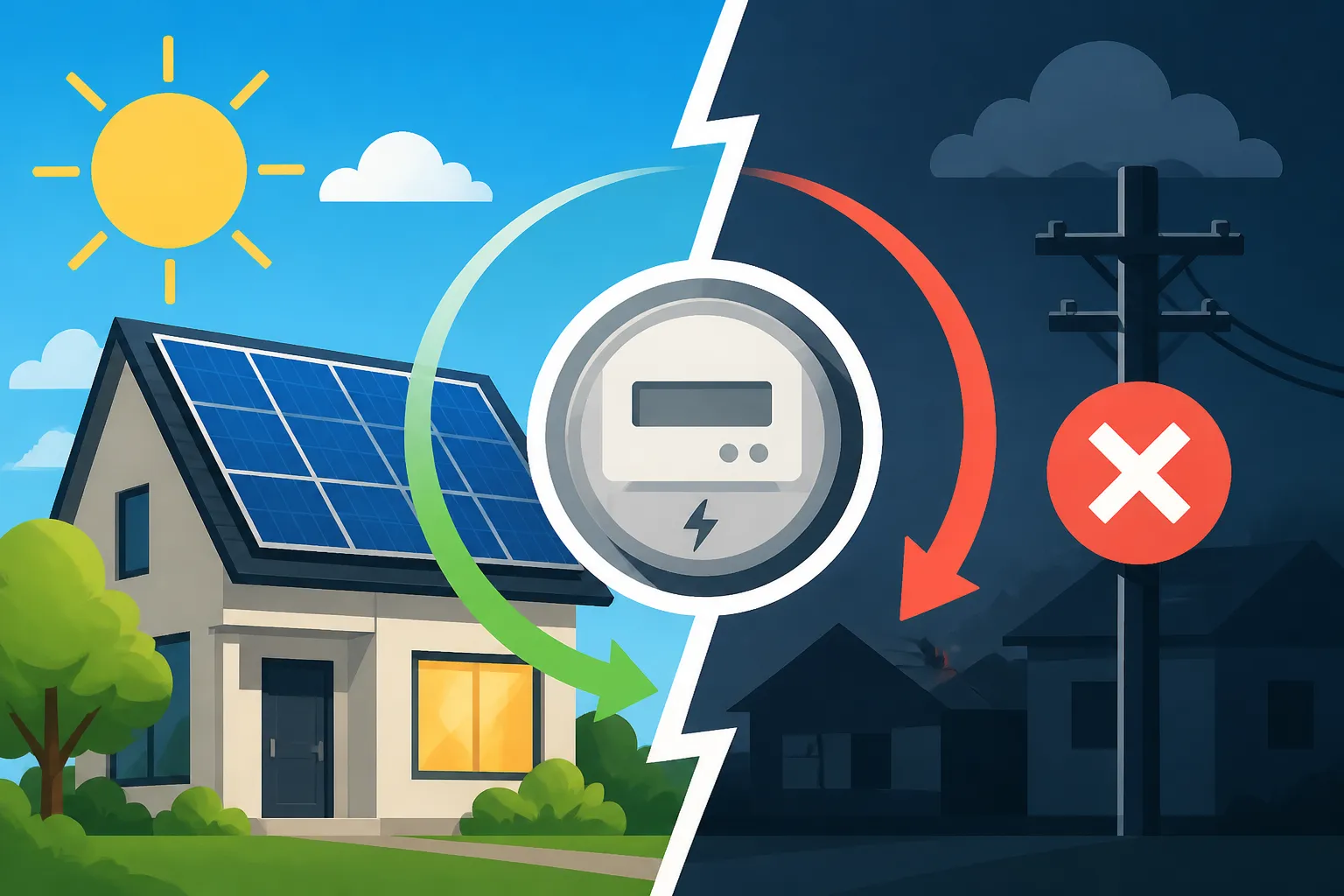
The term "going away" is a bit of a misnomer; it's more accurate to say net metering is being "devalued." The industry is moving toward a model where the value of your solar energy depends entirely on when you produce it and when you use it. This is why we see a rise in Net Metering vs Net Billing: What's the Difference? discussions among savvy homeowners.
In a traditional net metering setup, the grid acted as a free, infinite battery. In a net billing setup, the grid acts as a buyer of your excess energy at wholesale prices. This change is often driven by "Time-of-Use" (TOU) rates. Under TOU, electricity is expensive in the evening when everyone is home using appliances, and cheap in the middle of the day when solar production is at its peak. Utilities argue that because they have an overabundance of solar power during the day, your excess energy is worth less to them.
This transition has fundamentally changed how we design solar systems. It is no longer about just "covering your bill" with as many panels as possible. Now, it is about "self-consumption." If the utility is only going to give you pennies for your power, the smartest move is to keep that power in your own home. This shift is a major reason why Are Solar Batteries Still Eligible for Incentives in 2026? has become one of the most searched topics for new solar buyers. By storing your midday sun in a battery, you can use it at 7:00 PM when the utility rates are at their highest, effectively "saving" the full retail value of that energy.
What Happens if Your State Ends Net Metering
If you live in a state that is currently debating these changes, the most common question is: "Am I grandfathered in?" Usually, the answer is yes, but with a catch. Most states that have moved away from retail net metering allow existing solar customers to keep their original rates for a set period—typically 10 to 20 years. However, once that period expires, or if you sell the home, the system might be moved to the new, less favorable rates.
It is vital to understand the California Net Metering Rules in 2026 or the equivalent rules in your specific state, as they often dictate what happens during a property transfer. For example, if you are Selling a House With Solar Panels, the buyer will want to know if they get to keep your 1-to-1 net metering credits or if they will be forced onto a net billing plan the moment the utility account changes names.
For those in states that have already transitioned, you are likely looking at an Avoided-Cost Rate & Export Credits Explained document from your utility. This document outlines the "wholesale" price they will pay you. In some regions, these rates are so low that homeowners are opting for smaller solar arrays that only cover their baseline daytime needs, rather than trying to offset 100% of their annual usage.
| Feature | Traditional Net Metering (NEM 1.0/2.0) | Modern Net Billing (NEM 3.0/Current) |
|---|---|---|
| Export Credit Rate | Full Retail Rate (e.g., $0.30/kWh) | Avoided Cost/Wholesale (e.g., $0.05 – $0.08/kWh) |
| Grid Usage | Grid acts as a "free" battery | Grid acts as a low-price buyer |
| Payback Period | Faster (usually 5-8 years) | Slower (usually 9-13 years without a battery) |
| Battery Necessity | Optional (Low ROI impact) | High (Crucial for maximizing ROI) |
| Best Strategy | Maximize panel count | Maximize self-consumption & storage |
How to Protect Your Solar Savings in a Post Net Metering World
Is the era of saving money with solar over? Absolutely not. It just requires a more tactical approach. If you are asking Is Solar Worth It if I Don't Have Net Metering? the answer is still yes, but the "how" has changed. You have to stop thinking of yourself as just a consumer and start thinking like a tiny utility company.
The first line of defense is energy storage. Installing solar without a battery in a net billing state is like buying a car without a gas tank; you can only use it while the pump is running. A battery allows you to "arbitrage" the rates—storing cheap solar power and using it to avoid expensive grid power later. Even though the federal landscape for credits has shifted, many local programs still offer Solar Battery Incentives in 2026 to help offset these costs.
The second strategy is load shifting. Modern smart home tech can automatically run your dishwasher, pool pump, and laundry during the peak of the day when your panels are producing the most. By "consuming" your own solar power as it's generated, you avoid the need to export it to the grid for a low credit and then buy it back later for a high price. You should also look into What Happens to Net Metering When I Sell My House? to ensure your investment adds the maximum possible value to your property's resale price, even under new utility rules.
The Future of the Grid: Virtual Power Plants
While the "death" of 1-to-1 net metering feels like a step backward, it is actually paving the way for a more sophisticated energy grid. We are seeing the rise of Virtual Power Plants (VPPs). In a VPP, the utility company actually pays you for the right to tap into your home battery during an energy crisis or a heatwave. Instead of a measly 5-cent export credit, you might receive a significant incentive or a premium payment for helping keep the lights on in your neighborhood.
States like Massachusetts and New York are leading the way with these programs. They realize that while they can't pay retail rates for every kilowatt-hour exported, they can pay a premium for "dispatchable" power—energy they can use exactly when they need it most. This is the new frontier of solar ROI. It’s no longer about a passive credit on a bill; it’s about active participation in a smart grid.
Ultimately, the question isn't just about whether net metering is going away—it’s about whether you are prepared for what’s replacing it. By focusing on storage, smart energy management, and staying informed on Net Metering Explained: How It Works by State, you can still achieve a massive reduction in your monthly expenses and protect yourself from the ever-rising costs of traditional utility power.
Disclaimer
This guide is provided for informational purposes only and does not constitute financial, legal, or professional tax advice. Solar policies, net metering regulations, and utility rates vary significantly by jurisdiction and are subject to frequent change. Always consult with a qualified solar professional or financial advisor before making significant investment decisions regarding home energy systems.