Is Canadian Solar a Good Solar Panel Brand?
Deciding on a solar panel brand for your home can feel like navigating a maze. With so many options out there, all promising the best efficiency and durability, it’s easy to get overwhelmed and wonder if you're truly making a smart, long-term investment. Many homeowners specifically ask, "Is Canadian Solar a good solar panel brand?" This guide dives deep into what makes Canadian Solar a prominent player in the industry, helping you understand their technology, reliability, and overall value.
Understanding the Landscape of Solar Panel Brands
When you're looking into going solar, the brand of panel you choose is a pretty big deal. It’s not just about the name; it’s about the technology, the reliability, and the peace of mind that comes with knowing your investment is sound. Let's peel back the layers and see where Canadian Solar fits into this intricate picture.
Why Brand Reputation Matters in Solar
Think about it: installing solar panels on your roof is a significant upgrade, akin to getting a new roof or a major kitchen remodel. It's a long-term investment, usually intended to last 25 years or more. Because of this, the reputation of the manufacturer behind those panels is incredibly important. You want a company that has been around for a while, has a proven track record, and will honor their warranties should anything go awry. A strong brand means better customer service, a more stable product line, and generally a higher quality standard.
One term you’ll often hear thrown around is "Tier 1" manufacturer. This isn't a measure of panel quality or efficiency, but rather a financial rating developed by BloombergNEF, indicating that a company is financially sound, bankable, and uses highly automated manufacturing processes. Canadian Solar consistently ranks as a Tier 1 manufacturer, which means they are considered a safe bet in terms of financial stability and production quality control. This designation helps give homeowners and investors confidence that the company will be around to back its products for decades to come, unlike some smaller, newer players that might offer tempting prices but lack long-term stability.
The Global Player: Canadian Solar's Footprint
Canadian Solar might have "Canadian" in its name, but it's truly a global powerhouse. Founded in Ontario, Canada, in 2001, the company has grown into one of the largest solar panel manufacturers in the world. While their roots are Canadian, much of their manufacturing capacity is now located in countries like China, Brazil, Vietnam, and Thailand. This global presence allows them to scale production efficiently and serve markets across continents.
They are not just making panels; Canadian Solar is involved in the entire solar ecosystem, including developing large-scale solar power plants and energy storage projects. This holistic approach means they have deep expertise across the board, from R&D to manufacturing to project deployment. For you, the homeowner, this translates to a brand that understands the intricacies of solar technology and its real-world application, ensuring that the panels they produce are designed for optimal performance and integration into various systems. Their long history and extensive market share position them as a reliable and experienced choice in the highly competitive solar industry.
Canadian Solar Panels: Performance and Technology Deep Dive
When you're comparing solar panels, two big questions always come up: how efficient are they, and how well do they hold up over time? Canadian Solar has built a solid reputation by consistently delivering on both fronts, often hitting a sweet spot between cutting-edge performance and affordability.
Efficiency and Power Output
Let's talk numbers, but in a way that makes sense for your home. Panel efficiency refers to how well a solar panel converts sunlight into usable electricity. Higher efficiency means you need fewer panels to generate the same amount of power, which can be a huge advantage if you have limited roof space. Canadian Solar panels typically offer efficiency ratings ranging from about 20% to 22%. This places them squarely in the competitive middle-to-upper tier of the residential solar market.
While you might find a few premium brands pushing 22.5% or even 23% efficiency, those often come with a significantly higher price tag. Canadian Solar strikes a really good balance, offering excellent efficiency that rivals many top brands without necessarily breaking the bank. This makes them a fantastic value proposition for many homeowners. For example, a typical Canadian Solar 400-watt panel with a 21% efficiency will generate a substantial amount of power, making it an efficient choice for most homes. If you're keen on understanding more about how panels perform over their lifetime, take a look at our guide on Solar Panel Efficiency & Degradation Explained.
Canadian Solar continually invests in research and development to improve their panel technology. They utilize advanced cell technologies like Passivated Emitter and Rear Cell (PERC) technology, which improves light capture and reduces energy loss. More recently, they've embraced N-type TOPCon (Tunnel Oxide Passivated Contact) cell technology, which is known for even higher efficiencies and better performance in low-light conditions and at higher temperatures. These innovations mean their panels are not just good today, but they're also designed to remain competitive as solar technology evolves.
Durability and Reliability in Real-World Conditions
Beyond raw efficiency, you need panels that can stand up to whatever Mother Nature throws at them. After all, they're going to be sitting on your roof for decades! Canadian Solar panels are engineered to be incredibly robust. They undergo rigorous testing to ensure they can withstand extreme weather conditions, from heavy snow loads in places like upstate New York to strong winds along the Florida coast. They're typically rated for high snow and wind resistance, giving you peace of mind that your investment is secure.
Their panels also perform reliably across a wide range of temperatures. While all solar panels lose a tiny bit of efficiency as temperatures climb, Canadian Solar panels are designed with excellent temperature coefficients, meaning their performance degradation in hot climates is minimized. This is a crucial factor for homes in sunny, hot regions like Arizona or Texas. For more detailed information on how panels perform in various climates, you might find our article on Best Solar Panels for Hot Climates quite insightful. Their construction includes durable frames and tempered glass, protecting the sensitive solar cells from physical impact and environmental stressors. This focus on durability contributes directly to the panels' long lifespan and consistent power production, year after year.
The Cost-Benefit Sweet Spot
Let's be real: cost is a major factor for everyone considering solar. Nobody wants to pay more than they have to, but nobody wants to sacrifice quality either. This is where Canadian Solar really shines. They are widely recognized for offering an excellent balance of quality, performance, and affordability. They often come in at a lower price point per watt compared to ultra-premium brands like Maxeon (formerly SunPower) or LG, but still deliver comparable performance and reliability to many higher-priced competitors.
For many homeowners, especially those on a budget or looking for a strong return on investment without paying for the absolute bleeding edge of technology, Canadian Solar represents a fantastic value. Their widespread availability and competitive pricing make them a go-to choice for many installers, which can also help keep installation costs down. Understanding how these costs break down can be tricky, so it's worth checking out our guide on Solar Panel Cost Per Watt Explained to get a clearer picture of what you're paying for. In essence, with Canadian Solar, you’re getting a reliable, efficient panel from a reputable company without the premium price tag often associated with luxury brands.
Warranties, Customer Support, and Long-Term Value
A solar panel system is a major commitment, so understanding the warranties and the company's commitment to its customers is just as vital as the panel's technical specs. Canadian Solar typically stands strong in this area, offering robust coverage that's standard for the industry.
Deciphering Canadian Solar's Warranties
When you invest in solar panels, you're essentially buying a mini power plant for your home, and you want that power plant to keep working for decades. That’s where warranties come in. Canadian Solar offers two main types of warranties, which are pretty standard across the industry:
- Product Warranty: This covers defects in manufacturing, materials, and workmanship. Canadian Solar typically provides a 12-year product warranty, though some of their newer, more advanced models might come with a longer 25-year product warranty. This means if a panel physically fails due to a manufacturing fault within that period, they'll replace it.
- Performance Warranty: This guarantees that your panels will produce a certain percentage of their original power output over time. For Canadian Solar, this is usually a 25-year linear performance warranty, ensuring that the panels will still produce at least 80-85% of their initial rated power after 25 years. This degradation rate is competitive; all panels naturally lose a little efficiency over time, but this warranty protects your long-term energy production.
These warranties are crucial for protecting your investment. Imagine five years down the line, a panel unexpectedly underperforms. A solid warranty means you have recourse. For a deeper dive into what these warranties mean for your long-term savings and protection, our guide on Solar Panel Warranties Explained is a great resource. It's also worth noting that the lifespan of solar panels often exceeds these warranty periods, with many continuing to produce power for 30 years or more, as discussed in How Long Do Solar Panels Last?.
Customer Experience and Industry Standing
A company's standing in the industry and its approach to customer support can make a world of difference, especially if you ever need to make a warranty claim or have technical questions. As a global Tier 1 manufacturer with a vast network, Canadian Solar has a well-established support system. While direct homeowner support might route through your installer, the installer in turn has robust channels to communicate with Canadian Solar.
Their long history in the market means they've refined their processes and built relationships with countless solar installers worldwide. This extensive installer network often means that if you need parts or support, your installer can access them efficiently. When choosing an installer, it's always a good idea to ask if they have experience with Canadian Solar products and what their process is like for warranty claims. You can find more tips on selecting a reliable professional in our article, How to Choose a Solar Installer. While most of your interaction will be with your local installer, knowing that a financially stable and reputable manufacturer stands behind the product provides an important layer of assurance.
Is Canadian Solar the Right Fit for Your Home?
So, after all this, are Canadian Solar panels a good fit for you? In short, yes, for a great many homeowners, they are an excellent choice. They consistently offer high-quality, reliable, and efficient panels from a financially stable company, all at a very competitive price point.
Pros:
- Tier 1 Manufacturer: Financial stability and high manufacturing standards.
- Good Efficiency: Competitive efficiency ratings (20-22%) for residential use.
- Strong Durability: Built to withstand various weather conditions.
- Excellent Value: Offers a fantastic balance of performance and affordability.
- Solid Warranties: Standard product and performance warranties.
- Global Presence: Widely available and supported.
Cons:
- Not the Absolute Highest Efficiency: While competitive, they don't always reach the peak efficiencies of ultra-premium, higher-priced niche panels.
- Manufacturing Locations: While global, manufacturing is not exclusively in North America, which might be a factor for some buyers prioritizing locally made products.
If you’re a homeowner looking for a reliable, high-performing solar system without the top-tier price tag, Canadian Solar should definitely be on your shortlist. They are a smart choice for those who want excellent long-term savings and a solid investment. To truly understand the financial benefits for your specific situation, it’s helpful to explore resources like How Much Can You Save With Solar Panels?.
Making the Smart Choice for Your Solar Investment
Choosing solar panels is a multi-faceted decision, and while Canadian Solar offers a compelling package, it's wise to consider the broader context of your entire solar system and installation.
Comparing Canadian Solar to Other Brands
It's helpful to visualize where Canadian Solar sits in the grand scheme of things. On one end, you have ultra-premium brands like Maxeon (formerly SunPower) that boast slightly higher efficiencies and extended warranties, often at a significant price premium. On the other end, you might find smaller, less established brands offering panels at rock-bottom prices, but potentially with less proven reliability or weaker long-term support. Canadian Solar fits comfortably in the "sweet spot" – a high-quality, high-value brand that provides excellent performance and reliability without pushing into the luxury price segment.
When you're gathering quotes, you'll likely see a mix of brands. Companies like Qcells, Jinko Solar, and Trina Solar are often in a similar category to Canadian Solar, offering robust, efficient, and cost-effective panels. Understanding these comparisons can really empower your decision-making. For a more direct comparison of leading brands, you might find our article REC vs Qcells Solar Panels useful, as it highlights key differences that apply across the competitive landscape. Ultimately, the "best" panel often comes down to your priorities: maximum efficiency at any cost, or a strong balance of performance and value. Canadian Solar consistently wins for the latter. For a broader overview of market leaders, check out Best Solar Panels of 2026.
Beyond the Panels: System Components and Installation
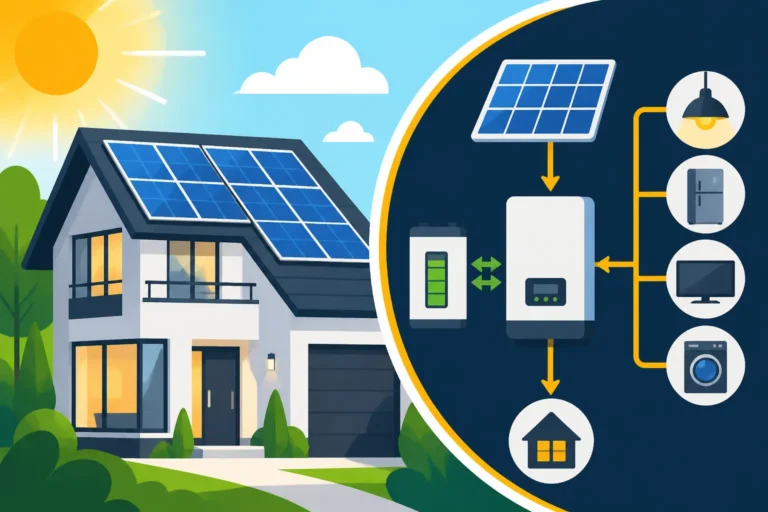
It's crucial to remember that your solar panels are just one part of a complete solar energy system. The inverter (which converts DC electricity from your panels to AC electricity for your home), the mounting hardware, and potentially a solar battery all play vital roles in the system's overall performance, efficiency, and longevity. An excellent solar panel brand like Canadian Solar needs to be paired with high-quality inverters (like those from Enphase or SolarEdge) and a professional installation to truly maximize your investment.
Even small considerations, like looking up detailed product specifications for solar panel components or researching user reviews for specific mounting brackets, can be done through online retailers. For example, some homeowners might look on Amazon for supplementary solar garden lights or small portable solar chargers, and in doing so, gain a better understanding of basic solar tech and customer feedback. It reinforces the idea that research extends beyond just the main panels. Considering adding a battery for energy independence or backup power? Our piece on Do I Need a Battery With Solar? offers valuable insights. The quality of your installation, from roof penetration to electrical wiring, is just as critical as the panels themselves. A shoddy installation can negate the benefits of even the best panels.
Actionable Steps for Homeowners
Ready to move forward? Here are some concrete steps to take when considering Canadian Solar or any other brand:
- Get Multiple Quotes: Always reach out to several reputable solar installers in your area. This will give you a range of system designs, pricing, and panel options, including Canadian Solar, so you can compare apples to apples.
- Ask Specific Questions: Don't hesitate to ask installers about the specific Canadian Solar panel model they're proposing, its efficiency, warranty details, and how it compares to other brands they offer.
- Check Local Incentives: Research state and local solar incentives, as these can significantly impact your overall cost and payback period. Information on various programs can be found in our State Solar Incentives: Complete 2026 Guide.
- Read Reviews and Testimonials: Look for reviews of both Canadian Solar panels and the specific installer you're considering. This gives you real-world insights from other homeowners.
- Understand Your Energy Needs: Ensure the proposed system size adequately meets your home's electricity consumption. You want to make sure the system is properly sized for maximum savings.
By taking a holistic approach and doing your homework, you can confidently choose a solar system that meets your needs, budget, and long-term energy goals. Canadian Solar offers a fantastic foundation for a high-performing, reliable, and cost-effective solar energy future for your home.
| Feature / Aspect | Canadian Solar | Ultra-Premium Brands (e.g., Maxeon) | Value Brands (e.g., lesser-known manufacturers) |
|---|---|---|---|
| Tier Status | Tier 1 | Tier 1 | Often Tier 2 or 3 |
| Typical Efficiency | 20-22% | 22.5%+ | 18-20% |
| Product Warranty | 12-25 years (model dependent) | 25-40 years | 10-15 years |
| Performance Warranty | 25 years (linear, ~80-85% retention) | 25-40 years (linear, ~87-92% retention) | 25 years (linear, ~80% retention) |
| Durability | High (robust construction, tested for harsh weather) | Very High (often premium materials & testing) | Varies, sometimes lower quality |
| Cost (per watt) | Mid-range / Excellent value | High-end / Premium | Low-end |
| Technology | PERC, TOPCon, half-cut cells | Advanced cell tech, proprietary designs | Standard cell tech |
| Market Reputation | Highly reputable, global leader | Premium, niche for maximum performance | Mixed, less established |
| Best For | Value-conscious buyers wanting reliable performance | Homeowners with limited space, budget not primary | Very tight budgets, higher risk tolerance |
Disclaimer
The information provided in this article is for general informational purposes only and does not constitute financial, legal, or professional advice. Solar incentives, costs, and regulations can vary significantly by location and change over time. Always consult with qualified solar professionals and financial advisors to assess your specific situation and make informed decisions.