How Do I Choose Solar Panels for My Home?
It’s easy to feel utterly overwhelmed when you start thinking about going solar for your home. You’re bombarded with jargon, conflicting advice, and countless options, leaving you wondering where on Earth to begin. The truth is, choosing the right solar panels isn't a one-size-fits-all decision; it requires understanding your specific needs and the technology available. This guide will walk you through the essential steps to demystify the process and help you select the perfect solar system for your unique situation.
Pinpointing Your Home's Specific Solar Needs
Before you even think about panel types or brands, the most crucial first step is to genuinely understand your home's energy profile and physical characteristics. This foundational knowledge will guide every subsequent decision, ensuring you get a system that truly meets your needs, rather than just a generic installation.
Analyzing Your Energy Footprint
The first puzzle piece is your electricity bill. It might seem daunting, but those monthly statements hold a treasure trove of information about your household's energy habits. You'll want to look at your average monthly kilowatt-hour (kWh) consumption over the past 12 to 24 months. This historical data gives installers a clear picture of how much energy your system needs to produce to offset your usage. Don’t just look at one month; seasonal variations can significantly impact consumption, with air conditioning in summer or heating in winter often driving peaks.
Beyond the numbers, think about your future. Are you planning on purchasing an electric vehicle (EV) in the next few years? Thinking about upgrading to an electric heat pump or adding a hot tub? These additions will drastically increase your energy demand, and it’s much more cost-effective to size your solar system for these future needs now, rather than trying to expand it later. A good installer will ask you these questions, but it helps to have thought about them beforehand. Understanding your energy footprint is key to answering the critical question: How Many Solar Panels Do I Need for My Home?
Assessing Your Roof's Solar Potential
Your roof is the stage for your solar array, so its condition and characteristics are incredibly important. Start with a visual inspection: how much direct sunlight does your roof receive throughout the day? Are there tall trees, neighboring buildings, or even architectural features that cast significant shadows, especially between 10 AM and 4 PM when solar production is highest? Shading can dramatically reduce a panel's output, sometimes making a particular section of the roof unsuitable.
Next, consider the physical attributes. The size of your usable roof space dictates how many panels can be installed. Its orientation (south-facing is generally ideal in the Northern Hemisphere) and pitch (the angle of the slope) affect how efficiently panels capture sunlight. A qualified solar professional will conduct a detailed site assessment, but it’s good for you to be aware of potential limitations. If your roof is older, say nearing the end of its typical 20-25 year lifespan for asphalt shingles, it might be more economical to Do I Need a New Roof Before Solar? installation to avoid the added expense of removing and reinstalling panels for a roof replacement down the line. You can learn more about Roof Considerations for Solar Panels.
Demystifying Solar Panel Technology and Performance
Once you know your home's needs, it's time to dive into the technology itself. The world of solar panels has evolved dramatically, offering various options with different efficiency levels, durability, and cost implications. Understanding these differences will help you make an informed choice that aligns with your budget and long-term energy goals.
Understanding Panel Types and Efficiency Ratings
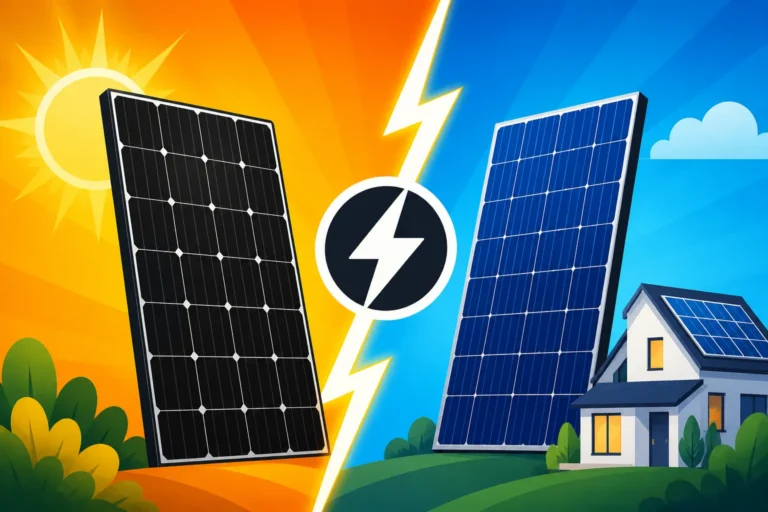
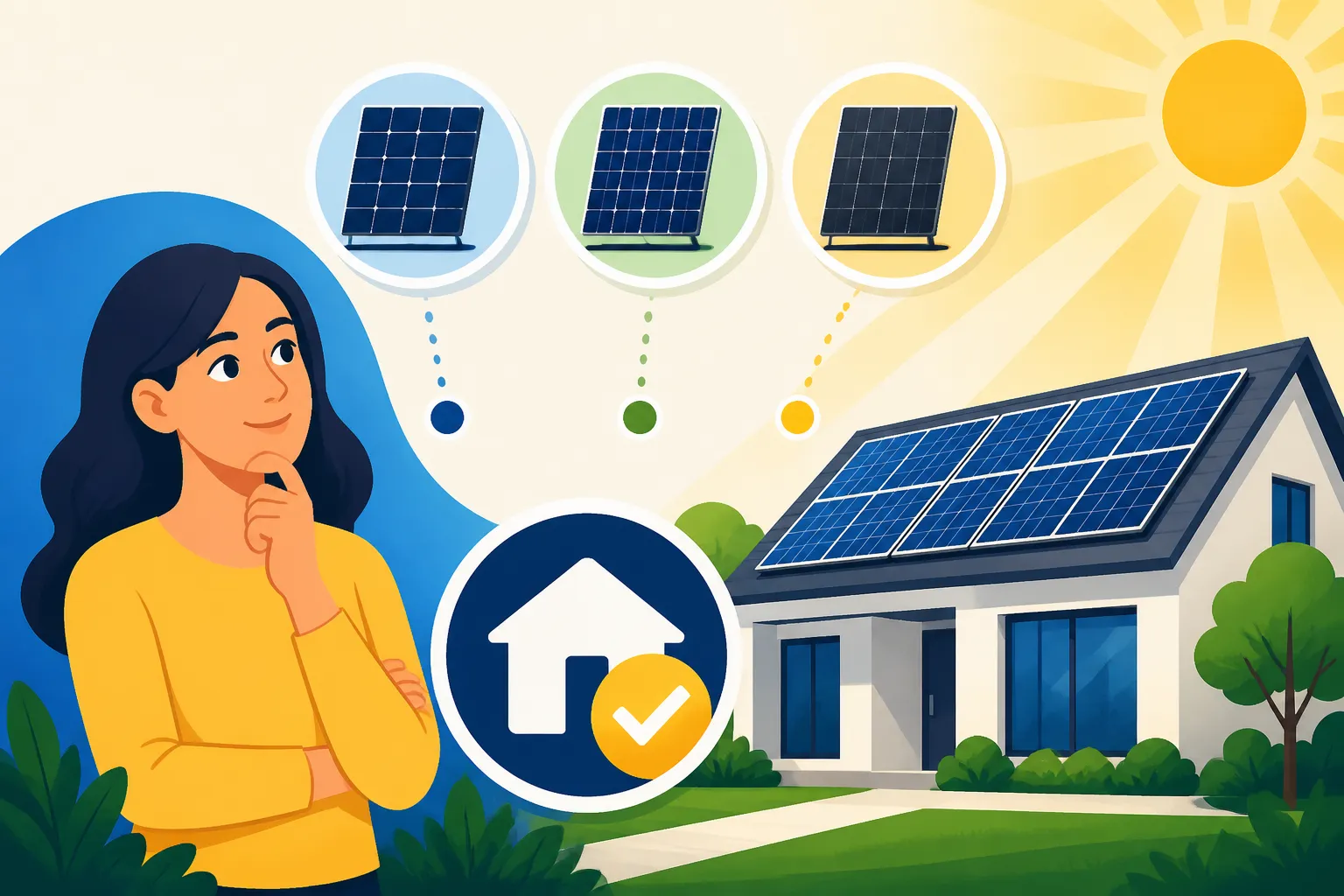
At a high level, residential solar panels primarily fall into two categories: monocrystalline and polycrystalline. Monocrystalline panels, often darker and more uniform in appearance, are known for higher efficiency ratings, typically ranging from 19-23%. This means they can convert more sunlight into electricity within a smaller footprint, making them ideal for homes with limited roof space or higher energy demands. Brands like Maxeon (SunPower) and REC are renowned for their high-efficiency monocrystalline offerings.
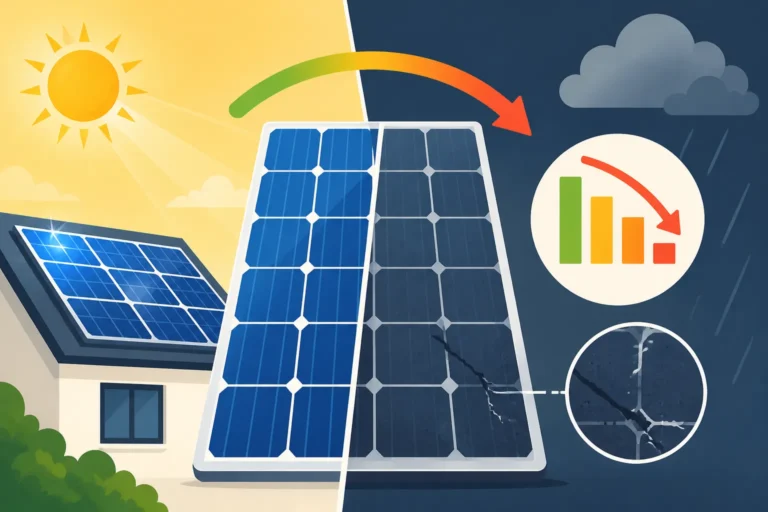
Polycrystalline panels, on the other hand, are generally a bit less efficient, usually in the 15-17% range, and have a more speckled, bluish appearance. While they require slightly more roof space to produce the same amount of electricity as monocrystalline panels, they are also typically more budget-friendly. Recent advancements, including technologies like TOPCon and HJT, are continually pushing the boundaries of efficiency for both types. Regardless of the type, remember that Solar Panel Efficiency & Degradation Explained is a critical concept; all panels will slightly lose efficiency over their lifespan, usually by less than 1% per year.
Evaluating Panel Durability and Warranties
Investing in solar is a long-term commitment, often for 25 years or more, so panel durability is paramount. You want panels built to withstand local weather conditions, whether that's heavy snow loads in the Northeast, extreme heat in Arizona, or coastal salt spray in Florida. Reputable manufacturers design their panels to meet rigorous testing standards for wind, hail, and temperature fluctuations.
Equally important are the warranties. You'll typically encounter two main types: a product warranty and a performance warranty. The product warranty covers defects in manufacturing and materials, ensuring the physical panel itself holds up. This usually ranges from 12-25 years, with some premium brands offering even longer coverage. The performance warranty, often lasting 25-30 years, guarantees that the panels will produce at a certain percentage of their original power output by the end of the warranty period (e.g., 85% after 25 years). Always compare these carefully, as a strong warranty package signals a manufacturer's confidence in their product's longevity. You can dive deeper into Solar Panel Warranties Explained to understand all the nuances.
Beyond the Panels: Inverters, Batteries, and System Design
Solar panels are just one part of the equation. To create a fully functional and optimized solar energy system for your home, you'll need to consider the crucial components that convert, manage, and store the electricity your panels generate. These choices significantly impact your system's performance, resilience, and overall cost.
Choosing the Right Inverter System
The inverter is the brain of your solar system, converting the direct current (DC) electricity produced by your panels into alternating current (AC) electricity that your home appliances use and that can be fed back into the grid. There are three main types, each with distinct advantages:
- String Inverters: These are the most traditional and often the most cost-effective. Multiple panels are wired together in "strings" and connected to a single central inverter. They work well for roofs with uniform sunlight exposure, but a drawback is that if one panel in the string is shaded or underperforming, it can affect the output of all other panels in that string.
- Microinverters: Instead of a single central inverter, microinverters are installed directly beneath each individual solar panel (e.g., Enphase IQ series). This means each panel operates independently. If one panel is shaded, dirty, or malfunctions, the others continue to produce at full capacity. They also offer panel-level monitoring, allowing you to see the performance of each individual panel. While typically more expensive upfront, they can offer greater production in shaded conditions and enhanced system resilience.
- Power Optimizers: A hybrid approach, power optimizers are installed at each panel and condition the DC power before sending it to a central string inverter (e.g., SolarEdge systems). They offer many of the benefits of microinverters, like panel-level optimization and monitoring, but can sometimes be a more cost-effective option than full microinverter systems.
The choice largely depends on your roof's specific conditions, particularly regarding shading, and your budget. For a deeper dive, explore Solar Inverters: String vs Microinverter vs Optimizer.
Considering Solar Battery Storage
A solar battery is an increasingly popular addition to home solar systems, offering a layer of energy independence and resilience. While not strictly necessary for grid-tied systems that use Net Metering Explained: How It Works by State to send excess power back to the utility, batteries become invaluable in several scenarios.
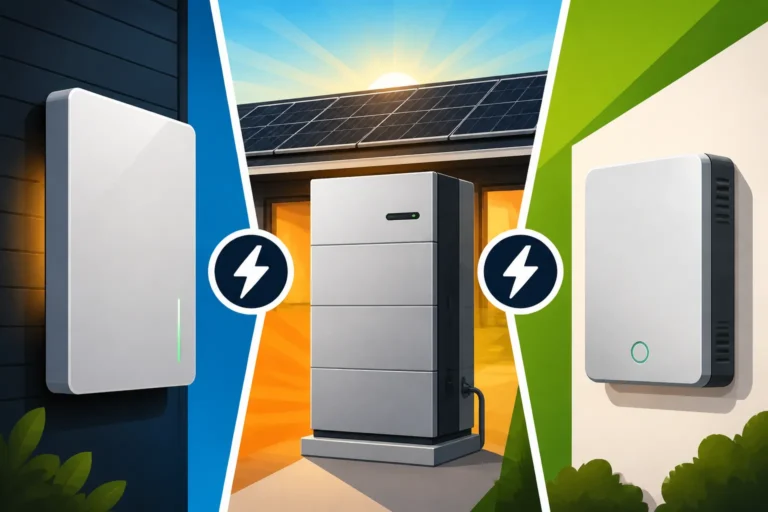
Firstly, for backup power during grid outages, a solar battery like a Tesla Powerwall or Enphase IQ Battery can keep essential appliances running, preventing disruptions. Secondly, if your utility has time-of-use (TOU) rates, where electricity costs more during peak demand hours, a battery allows you to store solar power generated during cheaper off-peak times and use it when rates are highest, maximizing your savings. Thirdly, in regions with less favorable net metering policies, a battery helps you maximize self-consumption of your own solar power, reducing reliance on the grid entirely. The decision to add a battery depends on your priorities, whether it's grid resilience, economic savings, or a desire for greater energy independence. If you're pondering this addition, read Do I Need a Battery With Solar?
Integrating Components for Optimal Performance
The best solar system is one where all components work seamlessly together. This means ensuring compatibility between your chosen panels, inverter system, and any battery storage. Many manufacturers now offer integrated ecosystems, where panels, inverters, and batteries are designed to communicate and optimize performance together. For instance, Enphase microinverters pair beautifully with their IQ Batteries, creating a coherent energy management system. Similarly, SolarEdge offers an integrated platform with its inverters, optimizers, and home batteries.
A well-designed system will not only maximize energy production but also offer intuitive monitoring through smartphone apps, allowing you to track your energy generation, consumption, and battery status in real-time. This holistic approach to system design is where an experienced solar installer truly shines, crafting a solution that’s more than the sum of its parts.
Selecting Reputable Brands and Expert Installers
Now that you understand the technical components, the next crucial step is choosing who you'll trust to provide and install your system. This involves researching specific manufacturers and, perhaps most importantly, finding a reliable, transparent, and experienced solar installer.
Researching Solar Panel and Equipment Brands
The solar market is vast, with many panel, inverter, and battery manufacturers. While there isn't one "best" brand for everyone, certain names consistently stand out for quality, performance, and warranty support. For solar panels, you’ll often hear about "Tier 1" manufacturers. This refers to a classification by Bloomberg New Energy Finance, indicating bankability and a robust, vertically integrated manufacturing process, rather than a direct measure of panel quality itself. However, it's often a good proxy for established, reliable companies. Brands like Qcells, REC, Jinko Solar, Canadian Solar, and Maxeon (formerly SunPower) are frequently praised for their durability and strong performance warranties. These companies have a long track record, often making their own cells and modules, and are heavily invested in R&D to push efficiency boundaries.
When researching, look beyond just the raw efficiency numbers. Consider the company’s financial stability (will they be around to honor warranties?), their environmental practices, and independent reviews. For inverters, Enphase and SolarEdge are dominant players for residential systems, each with their own loyal following. For batteries, Tesla Powerwall, Enphase IQ Battery, and FranklinWH are popular choices, each offering different capacities and features. While you might occasionally find solar accessories or small portable solar chargers on platforms like Amazon, buying a complete home solar system through a dedicated, licensed installer is always the recommended approach for quality assurance and warranty validation. You can start your research with a guide like Best Solar Panels of 2026.
The Crucial Role of Your Solar Installer
Choosing your solar installer is arguably as important as choosing your equipment – if not more so. Even the highest quality panels can underperform if poorly installed or improperly designed. Start by seeking out local installers with a strong track record and positive customer reviews. Look for certifications, especially from organizations like NABCEP (North American Board of Certified Energy Practitioners), which indicates a high level of expertise.
A good installer will:
- Perform a thorough site assessment, addressing any shading issues or roof concerns.
- Provide a detailed proposal that clearly outlines equipment, projected energy production, total cost, and financing options.
- Explain the permitting process and handle all necessary paperwork for interconnection with your utility.
- Offer clear communication throughout the entire Solar Installation Timeline: What to Expect.
- Be transparent about pricing, including any hidden costs or dealer fees often associated with solar loans.
- Provide ongoing support and warranty assistance.
Don't settle for the first quote you receive. Always get at least three detailed quotes from different local companies. This allows you to compare not only prices but also equipment choices, warranty offerings, and the installer's approach. This critical step ensures you find a reliable partner for your solar journey. Read more on How to Choose a Solar Installer.
Understanding Quotes and Contracts
When comparing quotes, it’s not just about the bottom-line price. You need to understand what that price includes. Look for a breakdown of equipment costs (panels, inverters, battery if applicable), labor, permitting fees, and any monitoring services. Pay close attention to the price per watt ($/W), which helps you compare the cost-effectiveness of different systems. A good installer will explain the estimated Solar Panel Cost Per Watt Explained and clarify all potential financing paths, whether it’s an outright cash purchase, a solar loan, or a lease/PPA agreement.
Carefully read the contract, paying attention to warranty details, maintenance responsibilities, and cancellation policies. Ensure all promises made during the sales process are documented. Don’t hesitate to ask questions or seek clarification on anything you don’t understand. This thorough review will prevent unexpected surprises down the road and ensure you’re confident in your investment. Also, remember to factor in potential State Solar Incentives: Complete 2026 Guide and any local rebates that can significantly offset your upfront costs.
Here's a quick comparison of typical residential solar panel characteristics:
| Feature | Monocrystalline Panels | Polycrystalline Panels |
|---|---|---|
| Appearance | Darker, uniform black/dark blue | Speckled blue |
| Efficiency | Higher (19-23% typically) | Lower (15-17% typically) |
| Space Needed | Less roof space for same output | More roof space for same output |
| Cost | Generally higher per watt | Generally lower per watt |
| Performance | Excellent in direct sunlight, good in low light | Good in direct sunlight, slightly less efficient in low light |
| Manufacturing | Made from a single silicon crystal, more complex process | Made from multiple silicon fragments, simpler process |
| Ideal For | Limited roof space, maximizing production, premium systems | Budget-conscious projects, ample roof space |
Disclaimer
Please remember that this article provides general information and recommendations regarding choosing solar panels for your home. The solar market, incentives, and regulations are constantly evolving. Always consult with certified local solar professionals for personalized advice, system design, and accurate cost estimates tailored to your specific location and energy needs. We are not responsible for decisions made based solely on the information presented here.