Tesla Powerwall 3 vs Enphase IQ Battery Solar Battery
Deciding to go solar is a big step, but figuring out the best way to store that precious energy can feel like navigating a maze. With power outages becoming more common and electricity rates constantly fluctuating, many homeowners are seriously considering adding a battery to their solar setup. Two of the biggest names in home energy storage are the Tesla Powerwall 3 and the Enphase IQ Battery system, and choosing between them can be incredibly challenging without a clear understanding of what each truly offers. This comprehensive guide is here to break down the features, benefits, and ideal use cases for both, helping you make the most informed decision for your home.
The Rising Need for Reliable Home Battery Storage
It's no secret that the way we consume and produce electricity is changing rapidly. More and more homeowners are looking for ways to take control of their energy future, and a big part of that involves understanding how to store the solar energy they generate. The days of simply sending excess power back to the grid and hoping for a good credit are slowly fading in many regions, making batteries an increasingly critical component of a truly resilient and cost-effective solar system.
Why Batteries Make More Sense Than Ever Before
Let's be honest, nobody likes seeing their electricity bill creep higher each month, and the thought of being left in the dark during a storm is a genuine worry for many. That's where home solar batteries truly shine. They allow you to capture the excess solar energy your panels produce during the day instead of exporting it all back to the grid. This stored energy can then be used in the evenings when your solar panels aren't producing, or during grid outages. This capability is especially valuable in areas with fluctuating electricity prices, often called "time-of-use" rates, where power is more expensive during peak evening hours. By drawing from your battery during these times, you effectively "arbitrage" the cost of electricity, saving you real money.
Beyond financial savings, the peace of mind that comes with energy independence is priceless. Imagine a severe weather event, like a blizzard in the Northeast or a hurricane in Florida, where power could be out for days. A robust home battery system means your essential appliances – lights, refrigerator, internet – can keep running. This isn't just about comfort; it's about safety and maintaining some semblance of normalcy when the world outside might be in chaos. For many, the decision to invest in solar storage ultimately boils down to this enhanced resilience and control. You might even wonder, do I need a battery with solar? Increasingly, the answer is yes, especially with changes to net metering policies in many states.
Different Battery Chemistries and What They Mean for You
When you dive into the world of solar batteries, you'll quickly encounter terms like NMC and LFP. These refer to the specific chemical composition of the lithium-ion batteries. Understanding the difference isn't about memorizing chemical formulas, but knowing what these translate to in terms of safety, performance, and longevity.
NMC (Nickel Manganese Cobalt) batteries have historically been popular due to their high energy density, meaning they can store a lot of energy in a smaller package. They're common in electric vehicles and consumer electronics. However, LFP (Lithium Iron Phosphate) batteries are quickly becoming the industry standard for home energy storage. Why? Because LFP batteries are known for their enhanced safety (less prone to thermal runaway), longer cycle life, and better performance in a wider range of temperatures. Both the Tesla Powerwall 3 and the Enphase IQ Battery systems utilize LFP chemistry, which is a significant step forward for homeowner peace of mind. It means these batteries are generally considered more stable and durable over their lifespan, which is exactly what you want when you're powering your home.
Unpacking the Tesla Powerwall 3: A Glimpse into the Future
Tesla has long been a trailblazer in the renewable energy space, and their Powerwall line has become almost synonymous with home battery storage. The Powerwall 3, in particular, represents a significant evolution, building on the success of its predecessors while introducing crucial new capabilities that streamline the entire solar-plus-storage experience. It’s an exciting piece of technology, especially for those looking for a powerful, all-in-one solution.
Key Features and Capabilities of Powerwall 3
The most striking feature of the Powerwall 3 is its integrated solar inverter. This is a game-changer for many homeowners because it means you don't need a separate inverter for your solar panels and another for your battery. Everything is contained within a single, sleek unit. This simplifies installation, reduces potential points of failure, and often makes for a cleaner aesthetic on the side of your house. The Powerwall 3 boasts an impressive 11.5 kW of continuous power output, which is generally enough to run most household appliances, including larger loads like air conditioning units, during an outage. Its usable energy capacity sits at 13.5 kWh, providing substantial backup.
Beyond the hardware, Tesla's software integration is a massive selling point. The Tesla app allows for incredibly intuitive monitoring and control of your entire home energy ecosystem. You can see your solar production, battery charge level, and home consumption in real-time. Features like "Storm Watch" automatically charge your Powerwall to full capacity when severe weather is detected, ensuring you're prepared for potential outages. And for those who are already part of the Tesla family with an electric vehicle, the seamless integration with your car's charging schedule through the app can be a very attractive bonus, further consolidating your energy management. If you’re curious about specific details, our Tesla Powerwall 3 Review delves much deeper.
Ideal Scenarios for Choosing the Powerwall 3
So, who is the Powerwall 3 perfect for? It's really designed for homeowners who want a powerful, comprehensive, and streamlined solution. If you're building a new home or completely overhauling your existing solar system, the Powerwall 3’s integrated inverter makes the design and installation process remarkably straightforward. It’s also an excellent choice for homes with higher energy demands, especially if you have significant loads you want to back up, like multiple air conditioning units or an electric vehicle charger. Its high power output means you'll experience less disruption during grid outages, feeling more like the grid is still up and running.
Furthermore, if you appreciate a cohesive technological ecosystem, and perhaps already own a Tesla vehicle or are considering one, the Powerwall 3 fits right in. The unified app experience and shared brand philosophy can be a big draw. Think of it as a singular, powerful heart for your home's energy system. While the initial investment might seem significant, considering the Solar Plus Battery Cost, the long-term benefits of an integrated system can be very compelling, offering both energy independence and potential savings.
Exploring the Enphase IQ Battery System: Modularity and Microgrid Prowess
Enphase has built its reputation on microinverter technology, transforming how solar panels convert sunlight into usable electricity. Their foray into home battery storage, the Enphase IQ Battery system, carries that same philosophy of modularity, distributed intelligence, and high reliability. It offers a distinctly different approach from Tesla, appealing to homeowners who value flexibility, granular control, and a robust, scalable architecture.
Modularity and Microinverter Integration
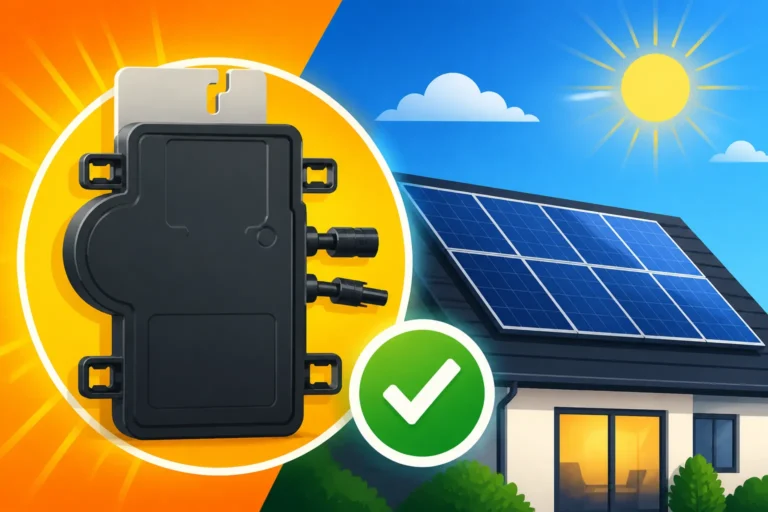
What truly sets the Enphase IQ Battery apart is its modular design, which is deeply rooted in Enphase's microinverter expertise. Instead of one large battery unit, the Enphase system is comprised of smaller, individual battery modules (like the IQ Battery 5P, 10, or 10T) that can be stacked and combined to meet specific energy needs. Each battery module includes its own integrated IQ microinverters. This is a crucial distinction: if one module were to experience an issue, the rest of your system continues to function normally. This "distributed architecture" enhances reliability and makes the system incredibly resilient.
This modularity also means unparalleled flexibility. You can start with a smaller system, say a couple of IQ Battery 5Ps, and then easily add more modules later as your energy needs evolve or as incentives like Solar Battery Incentives in 2026 become available. This "pay-as-you-grow" approach is very attractive for homeowners who might not want to make a huge upfront investment but want the option to expand. The system integrates flawlessly with Enphase's IQ System Controller and their powerful IQ microinverters on your roof, creating a truly seamless energy management ecosystem monitored through the intuitive Enphase App. You can learn more details in our Enphase IQ Battery Review & Cost.
Best Fit for Enphase IQ Batteries
The Enphase IQ Battery system is often the ideal choice for homeowners who value flexibility and redundancy. If your home has a complex roofline that requires many smaller solar arrays, or if you simply prefer the peace of mind that comes with a distributed system where a single point of failure won't bring everything down, Enphase is a strong contender. The ability to incrementally expand your storage capacity is also a significant advantage, particularly for those on a tighter initial budget or for families whose energy consumption might increase over time (e.g., adding an EV or more energy-intensive appliances).
It's also an excellent choice if you already have an Enphase microinverter-based solar system installed. Integrating the IQ Batteries becomes a straightforward process, leveraging your existing hardware and monitoring platform. Homeowners in regions prone to frequent, but perhaps short-duration, power outages often find the Enphase system's rapid response and high reliability very appealing. If you're thinking about how many solar panels to power a 2,000 sq ft house, the scalable nature of Enphase can precisely match your unique usage patterns and physical constraints.
Direct Comparison: Tesla Powerwall 3 vs. Enphase IQ Battery
Now that we've had a good look at each system individually, let's put them side-by-side. This is where the real decision-making happens, weighing the specifics of each against your personal priorities and home’s requirements. Understanding these differences is key to determining which solution is truly the best fit for your unique situation.
Technical Specifications & Performance
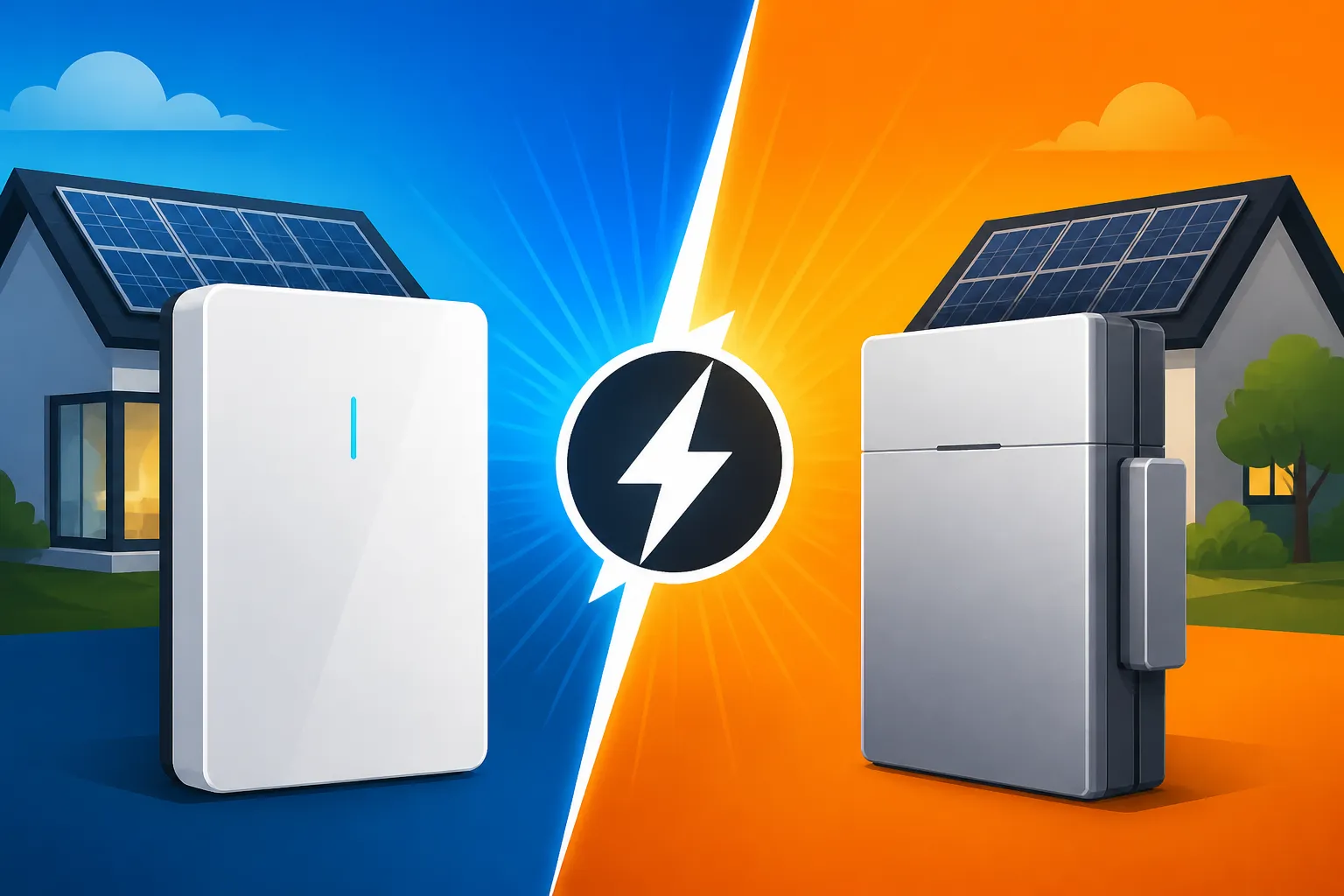
When comparing these two titans of home energy storage, it's crucial to look at the numbers. While both use LFP chemistry, their design philosophy leads to some distinct performance characteristics. The Powerwall 3 is a single, integrated unit, while Enphase offers modularity.
Let's break down some key specifications:
| Feature | Tesla Powerwall 3 | Enphase IQ Battery 5P (per module) | Enphase IQ Battery 10 (per module) |
|---|---|---|---|
| Usable Capacity | 13.5 kWh | 5.0 kWh | 10.1 kWh |
| Continuous Power | 11.5 kW | 3.84 kW (peak 7.68 kW for 30 min) | 3.84 kW (peak 7.68 kW for 30 min) |
| Integrated Inverter | Yes (for both solar and battery) | Yes (for battery only, works with IQ microinverters) | Yes (for battery only, works with IQ microinverters) |
| Round Trip Efficiency | 90% | 89% | 89% |
| Chemistry | Lithium Iron Phosphate (LFP) | Lithium Iron Phosphate (LFP) | Lithium Iron Phosphate (LFP) |
| Warranty | 10 years (70% capacity retention) | 15 years (70% capacity retention) | 15 years (70% capacity retention) |
| Scalability | Up to 6 units | Highly modular, multiple 5P or 10 units | Highly modular, multiple 5P or 10 units |
| Operating Temperature | -4°F to 122°F (-20°C to 50°C) | -4°F to 122°F (-20°C to 50°C) | -4°F to 122°F (-20°C to 50°C) |
| Dimensions | 43.1" x 24.1" x 7.6" (H x W x D) | 22.83" x 12.01" x 7.4" (H x W x D) | 42.1" x 12.6" x 7.4" (H x W x D) |
As you can see, the Powerwall 3 offers a very high continuous power output from a single unit, which is excellent for handling larger loads. Enphase's power output is per module, meaning you'd need multiple modules to match Powerwall 3's raw power. However, Enphase counters with a longer warranty and the inherent reliability of its modular, distributed design. Both systems are designed for outdoor installation and can handle a wide range of temperatures, ensuring year-round performance.
Installation and Scalability Considerations
The installation process and how easily you can expand your system are significant factors. The Tesla Powerwall 3, with its integrated inverter, often simplifies the initial installation, as it acts as a single point for both solar conversion and battery storage. This can sometimes lead to a quicker, more streamlined electrical setup for new solar-plus-storage systems. However, its scalability is limited to adding more Powerwall units, up to a maximum of six. Each additional Powerwall provides another 13.5 kWh of capacity and 11.5 kW of power.
Enphase, on the other hand, excels in modularity. Each IQ Battery 5P or 10 is relatively compact, allowing installers to place them in various configurations. This flexibility can be a huge advantage for homes with limited wall space or specific aesthetic preferences. The ability to start with a smaller capacity and add more modules later is a major draw for those who want to spread out their investment or simply aren't sure of their exact future energy needs. Imagine starting with a 10 kWh system (two IQ Battery 5P modules) and then deciding a year later that you want to add another 5 kWh without overhauling your entire setup – Enphase makes this seamless. This makes it easier to figure out what size solar battery do I need? as your requirements evolve.
Cost Considerations and Long-Term Value
The upfront cost of a solar battery system is, understandably, a major concern for many homeowners. When comparing the Tesla Powerwall 3 and Enphase IQ Battery, it's not always an apples-to-apples comparison due to their different architectures and package deals. Generally, the How Much Does a Tesla Powerwall Cost? and installation can range quite a bit depending on your installer and region, but typically you're looking at a significant investment for a single Powerwall 3, covering a large chunk of your home's needs.
Enphase's modular approach means you can tailor your initial investment. A smaller Enphase system (e.g., one IQ Battery 5P) will likely have a lower entry price point than a single Powerwall 3. However, if you need equivalent capacity and power output to a Powerwall 3, you'll likely be installing multiple Enphase modules, which can bring the total cost closer, or even exceed, that of a Powerwall system. It's essential to get detailed quotes from certified installers for both options, considering the entire system, including installation and any required electrical upgrades. Remember to also factor in incentives and rebates, which can significantly reduce the overall Solar Battery Cost: Full Breakdown. Long-term value also encompasses the warranty period and reliability. Enphase offers a 15-year warranty on its batteries, compared to Tesla's 10-year warranty, which could influence your long-term cost of ownership.
Ecosystem and Smart Home Integration
Both Tesla and Enphase offer sophisticated software and apps to manage your energy. Tesla's integrated approach means one app for everything, from solar production to EV charging. This can be very appealing for those who want a unified experience. The Powerwall 3's ability to communicate with other Tesla products creates a powerful, interconnected ecosystem.
Enphase, while not necessarily integrating with a broader automotive ecosystem, focuses intensely on home energy management. Its app provides granular data on each battery module and solar panel (thanks to the microinverters), allowing for highly detailed monitoring. For those who prioritize detailed energy insights and precise control over specific aspects of their solar production and storage, Enphase's robust monitoring capabilities are a huge advantage. Both systems are designed to be "smart" and can prioritize self-consumption, grid backup, or time-of-use optimization based on your preferences and local utility rates. You can even find some smart home energy monitors that complement these systems on platforms like Amazon, allowing you to further fine-tune your energy usage habits.
Making the Right Choice for Your Home
Choosing between the Tesla Powerwall 3 and the Enphase IQ Battery system is a big decision, and it’s important to remember that there's no single "best" option for everyone. The right choice depends entirely on your specific circumstances, priorities, and what you value most in a home energy storage solution. It's not just about the technical specs; it's about how the system fits into your lifestyle and long-term energy goals.
Assessing Your Energy Needs and Priorities
Before you even think about brands, sit down and honestly evaluate your energy consumption. How much electricity do you use daily? What appliances do you absolutely need to keep running during a power outage? Do you have an electric vehicle that needs charging? Are you considering adding one in the future? Understanding your baseline usage and critical loads is paramount. For instance, if you live in an area with frequent, long-duration power outages and have a large home with significant energy needs (think central AC, electric water heater, or a home office full of tech), the high continuous power output of the Tesla Powerwall 3 might be more attractive. It’s built to handle substantial loads simultaneously.
On the other hand, if your outages are typically shorter, or if you prefer to back up only essential circuits and want the flexibility to expand gradually, the modularity of the Enphase IQ Battery system could be a better fit. Its distributed architecture also offers peace of mind through redundancy, meaning if one module has an issue, the rest of your system keeps working. Furthermore, consider your solar setup. If you already have an Enphase microinverter system, adding Enphase batteries will likely be a more seamless integration, leveraging the existing communication and monitoring infrastructure. This is also where understanding your local utility's net metering policies comes into play. If your utility offers minimal compensation for exported solar, maximizing self-consumption with a battery becomes much more appealing. Many homeowners ask, Is it worth adding a battery to my solar system? If you want true energy independence and robust backup, the answer is often yes.
Budget and Long-Term Investment Goals
Let's talk money, because for most of us, that's a huge factor. The initial investment for either the Powerwall 3 or the Enphase IQ Battery system can be substantial. It's not just the cost of the batteries themselves, but also the installation labor, electrical upgrades, and permitting fees. Don't be shy about getting multiple quotes from different certified installers. These quotes should be comprehensive and clearly itemize all costs. When you're looking at the total cost, consider the available incentives. Many states and even local utilities offer rebates or tax credits for installing solar batteries, which can significantly offset the upfront price. Our guides on State Solar Incentives: Complete 2026 Guide and Utility Solar Rebates: How to Find Yours can provide valuable information here.
Beyond the initial outlay, think about the long-term return on investment. Both systems offer excellent warranties, but Enphase’s 15-year warranty is notably longer than Tesla’s 10-year offering, potentially impacting your peace of mind over the system’s lifespan. Factor in potential savings from time-of-use optimization and the avoided costs of grid outages. While these savings can be harder to quantify, they add real value. For example, avoiding spoiled food during an extended outage or not having to pay surge pricing from your utility can add up. Ultimately, evaluate which system aligns best with your financial planning, whether you prefer a single, larger investment or a more phased approach to building out your energy storage capabilities. Reviews and detailed comparisons, like our Solar Battery Comparison: Powerwall vs Franklin vs Enphase, can help you weigh these different aspects. You can even find comprehensive DIY solar guides on Amazon that might offer insights into cost-saving measures, though professional installation is almost always recommended for these complex systems.
Disclaimer
Please note that the information provided in this guide is intended for general informational purposes only and should not be considered as professional financial, legal, or energy consultation. The solar industry, including product specifications, incentives, and regulations, is subject to rapid changes. We strongly recommend consulting with qualified and licensed solar professionals to assess your specific energy needs, obtain accurate cost estimates, and understand all applicable incentives and permits in your local area before making any purchasing decisions.