FranklinWH aPower Battery Review
Thinking about adding solar to your home can feel like stepping into a maze, especially when it comes to understanding all the different battery storage options out there. Many homeowners feel overwhelmed by complex jargon and struggle to figure out which system actually makes sense for their specific needs and budget. This guide is here to untangle the details of the FranklinWH aPower Battery, providing a clear, in-depth look at its features, performance, and whether it’s the right fit to supercharge your home solar journey.
Understanding the FranklinWH aPower Battery System
When you start looking into home battery storage, you quickly realize it's not just about picking a single box. It's about an integrated system, and the FranklinWH aPower Battery is designed with exactly that in mind: a holistic approach to home energy management. Instead of just a battery, it presents itself as a complete energy management solution, promising seamless integration and intelligent control over your power. It's a significant investment, so understanding what you're actually getting is crucial.
The aPower Battery and aGate Explained
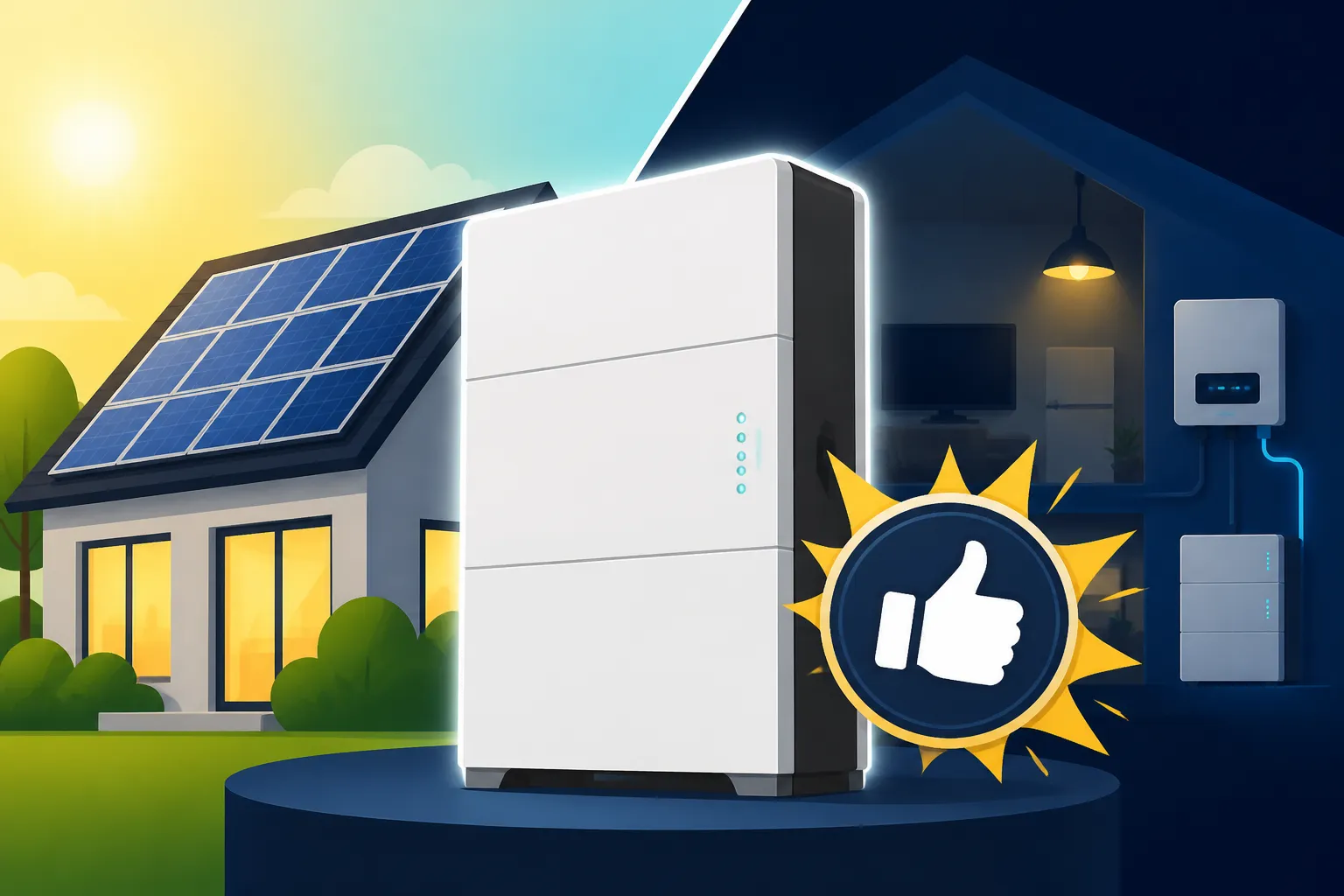
At the heart of the FranklinWH system are two main components: the aPower battery unit itself and the aGate energy management device. The aPower unit is where your energy is stored, a sleek, stackable battery that's designed for both indoor and outdoor installation. Its modular nature means you can expand your storage capacity as your needs grow, which is a huge plus for future-proofing your home. Each aPower unit offers a substantial amount of usable energy, typically around 13.6 kWh, and importantly, it comes with its own integrated inverter. This design simplifies the installation process and often means fewer separate components cluttering your garage or utility room.
The aGate, on the other hand, is the brains of the operation. This device connects your solar array, the aPower batteries, your home's electrical panel, and the utility grid. It's constantly monitoring energy flow, making intelligent decisions about when to charge the batteries, when to power your home directly from solar, when to draw from the grid, and crucially, when to export excess energy back to the grid. It acts as the central orchestrator, ensuring that your home's energy is managed efficiently, automatically prioritizing self-consumption or backup power depending on your programmed preferences. This level of integrated control is what sets systems like FranklinWH apart from simpler battery setups.
How FranklinWH Integrates with Home Solar Systems
One of the biggest headaches for homeowners considering solar-plus-storage is ensuring all the components play nicely together. The FranklinWH system aims to alleviate this by being an "all-in-one" solution that's compatible with most new and existing solar installations. Because the aPower battery units have their own built-in inverters, it means you don't necessarily need a separate, large central inverter for your battery storage if your solar already has microinverters or a string inverter. This simplifies the wiring and reduces potential compatibility issues, which can save a lot of headaches during the installation process.
When you're thinking about adding a battery, you might be asking yourself, "Do I need a battery with solar?" The answer often depends on your utility's net metering policies. In areas with less favorable net metering, like California's NEM 3.0, storing your own excess solar energy rather than sending it back to the grid for reduced credits becomes incredibly valuable. The FranklinWH system is particularly well-suited for these scenarios, allowing you to maximize your self-consumption and protect yourself from peak-time utility rates, thus maximizing your savings. It essentially creates a mini-grid for your home, allowing you more independence from fluctuating utility policies and rates.
Key Features and Advanced Technology
The FranklinWH aPower Battery isn't just another battery; it's packed with features designed to make home energy management intelligent, flexible, and robust. From its unique architecture to its smart control capabilities, these elements contribute to its overall performance and user experience. Understanding these specifics helps paint a clearer picture of how it stands out in a crowded market.
Modular Design and Scalability
Imagine your energy needs change over time. Maybe you add an electric vehicle, or your family grows, leading to higher electricity consumption. Many battery systems require you to commit to a fixed capacity from day one, making future expansion difficult or costly. The FranklinWH aPower Battery system shines in its modularity. Each aPower unit is a self-contained battery with an integrated inverter, meaning you can start with one or two units and easily add more as your energy demands increase. This flexibility is a significant advantage, allowing homeowners to tailor their investment to their current budget and scale up without replacing the entire system.
This "pay-as-you-grow" approach is perfect for homeowners who aren't quite sure what their long-term energy needs will be. You can begin with enough storage to cover basic backup or time-of-use shifting and later expand to achieve full home backup or greater energy independence. This design philosophy directly addresses one of the common frustrations homeowners face: committing to a large, upfront cost for a system that might not perfectly match their evolving needs down the line. It's like building with LEGOs for your home energy, allowing for gradual expansion and optimization.
Integrated Inverter Technology
A hallmark of the FranklinWH aPower Battery is its integrated inverter technology within each battery unit. Unlike traditional battery setups that require a separate, often bulky, battery inverter, the aPower units handle the conversion of DC power (from the solar panels and battery) to AC power (for your home's appliances) all within the battery enclosure itself. This design choice offers several compelling benefits. Firstly, it simplifies the installation process, reducing the amount of wiring and the number of components an installer needs to connect, which can lead to a quicker, cleaner setup.
Secondly, integrated inverters can improve overall system efficiency by minimizing energy losses that often occur when power travels between separate components. It also enhances system resilience; if one inverter were to have an issue, the other aPower units would continue to function, providing power. This is a considerable advantage when compared to systems reliant on a single point of failure in a large central inverter. The integrated approach also means less space is required for additional equipment, a practical consideration for many homes where utility room space is at a premium. This innovative design makes the FranklinWH aPower Battery a powerful and streamlined solution for modern home energy storage.
Smart Energy Management and Control
The true intelligence of the FranklinWH system lies in its aGate energy management device and the accompanying mobile app. This isn't just a simple on/off switch for your battery; it's a sophisticated energy brain that learns and adapts to your household's energy patterns. The aGate continuously monitors electricity prices, solar production forecasts, and your home's consumption habits, making real-time decisions about how to best utilize your stored energy. For instance, it can automatically charge the battery during off-peak hours when electricity is cheapest or prioritize charging from your solar panels during peak sun hours to maximize self-consumption.
Through the intuitive mobile app, homeowners gain granular control and visibility into their energy usage. You can set specific operating modes, like "Self-Consumption" to reduce reliance on the grid, "Backup Mode" to ensure power during outages, or "Time-of-Use" mode to save money by charging and discharging strategically. This level of intelligent control provides peace of mind, knowing that your system is constantly optimizing for both savings and resilience without requiring constant manual intervention. For those who enjoy tinkering and monitoring their home's performance, the detailed insights and customizable settings offer a truly empowering experience, allowing you to fine-tune your energy strategy and really take charge of your power.
Performance and Reliability Analysis
When you're making a significant investment in a home battery system, performance and reliability are paramount. You want to know that your battery will deliver power when you need it most, last for many years, and operate efficiently. The FranklinWH aPower Battery aims to address these concerns with its robust design and comprehensive warranties.
Backup Power Capabilities
The primary reason many homeowners consider a solar battery is for reliable backup power during grid outages. It's incredibly frustrating to have solar panels on your roof, only to find yourself without electricity when the grid goes down, simply because your system isn't set up for islanding. The FranklinWH aPower Battery is specifically engineered to seamlessly transition your home to battery power when an outage occurs. The aGate acts as an automatic transfer switch, disconnecting your home from the grid and activating the aPower units almost instantaneously, often so fast you won't even notice the lights flicker.
What truly sets it apart is its ability to back up an entire home. Many battery systems can only support a few critical loads, meaning you might have to pick and choose which appliances stay on. With sufficient aPower units, the FranklinWH system can provide whole-home backup, allowing your essential appliances, HVAC, and even larger energy users to continue running uninterrupted. This capability is a huge relief, especially during extended outages caused by severe weather or grid instability. Knowing you can maintain comfort and normalcy, rather than scrambling for flashlights and struggling to keep your refrigerator cold, makes the investment feel truly worthwhile.
Efficiency and Charge/Discharge Rates
Beyond just providing backup, the efficiency of a solar battery system directly impacts your long-term savings. Every time energy is converted or stored, there's a small loss. The FranklinWH aPower Battery, with its integrated inverter design, aims to minimize these losses. Its round-trip efficiency is quite competitive, meaning a high percentage of the energy you put into the battery is available for use. This is crucial for maximizing the value of your solar production, especially if you're operating under net billing (like California's NEM 3.0) where exporting excess energy might not be as lucrative as self-consumption.
The battery's charge and discharge rates are also important for practical use. A high charge rate means your battery can quickly store excess solar energy, preventing it from being sent back to the grid for minimal credit. A robust discharge rate ensures that the battery can provide enough power to meet your home's demands, even during periods of high usage. The aPower units are designed to handle significant power flows, ensuring that your home has access to the energy it needs, precisely when it needs it. This responsiveness is vital for smooth operation, whether you're shifting energy use to avoid peak charges or relying on battery power during an outage.
Longevity and Warranty Protection
Investing in a home battery means you expect it to last for years, reliably performing its job. The FranklinWH aPower Battery comes with a comprehensive warranty that provides peace of mind regarding its longevity and performance degradation. Typically, these systems offer a warranty period of 10 to 12 years, ensuring that the battery will maintain a certain percentage of its original capacity (usually 70-80%) throughout that time. This is a standard in the industry and indicates the manufacturer's confidence in the product's durability.
Like all batteries, the aPower units will gradually degrade over time, meaning their total storage capacity will slightly decrease with each charge and discharge cycle. However, the advanced battery management system within each unit is designed to optimize performance and extend lifespan by carefully controlling charging and discharging parameters. Understanding your Solar Panel Warranties Explained can provide a good comparison point for what to expect from major solar components. It's always a good idea to review the specific warranty details with your installer, including what constitutes a claim and the process for replacement or repair, ensuring you're fully protected for the long haul.
Cost and Value Proposition
Let's be real, the upfront cost of adding a solar battery system is a major consideration for any homeowner. You want to know that the investment will pay off, not just in peace of mind, but in tangible financial benefits. The FranklinWH aPower Battery, while a premium product, offers a compelling value proposition through its design, performance, and the long-term savings it can facilitate.
Initial Investment Costs
The exact cost of a FranklinWH aPower Battery system can vary significantly based on several factors: the number of aPower units you choose (dictated by your energy needs), installation complexity, and local labor rates. Generally, homeowners can expect the installed cost of a single aPower unit to be in the range of several thousands of dollars. When you factor in the aGate and the necessary electrical work, a complete system could easily be a five-figure investment. It's crucial to get detailed quotes from multiple certified installers to understand the full scope of the costs. This figure includes not just the hardware, but also the design, permitting, and labor associated with integrating the system safely and effectively into your home's electrical infrastructure.
When you're looking at the initial investment, it's easy to get sticker shock. However, it's important to remember that this isn't just the cost of a battery; it's the cost of an advanced energy management system that provides both backup power and intelligent energy optimization. Compared to other similar whole-home battery solutions, the FranklinWH system often falls within a competitive range, especially considering its integrated inverter and modular design advantages. Don't forget to ask your installer about any Utility Solar Rebates How to Find Yours or State Solar Incentives Complete 2026 Guide that might be available in your area, as these can significantly offset the upfront cost.
Long-Term Savings and ROI
The real financial value of a FranklinWH aPower Battery system often emerges over its lifespan through substantial electricity bill savings and increased energy independence. For homeowners in areas with high electricity rates or time-of-use (TOU) billing, the aGate's intelligent management can be a game-changer. By charging the batteries during off-peak hours (when electricity is cheapest) or directly from your solar panels, and then discharging during expensive on-peak periods, you can dramatically reduce your reliance on grid electricity during the costliest times. This strategy, known as "peak shaving," can lead to significant monthly savings on your utility bill.
Furthermore, in regions with less favorable net metering policies, like those moving towards net billing, the ability to store and use your own solar power rather than exporting it for low credit becomes incredibly valuable. By maximizing self-consumption, you're directly reducing the amount of electricity you need to buy from the utility. Over the 10-12 year warranted lifespan of the battery, and often beyond, these accumulated savings can lead to a considerable return on investment, making the initial cost much more palatable. Many homeowners find that their Solar Panel Payback Period Explained is significantly improved when paired with a smart battery system like FranklinWH, as it allows them to capture more value from their solar production.
Available Incentives and Tax Credits
Navigating the world of solar incentives can feel like a labyrinth, but there are often significant opportunities to reduce the net cost of a FranklinWH aPower Battery. While the federal solar tax credit primarily targets solar installation, battery storage paired with solar often qualifies. For example, the federal Investment Tax Credit (ITC) currently offers a 30% tax credit for qualifying residential solar installations, and this generally extends to batteries if they are charged at least 75% by solar. This means a substantial portion of your battery system's cost can be recouped through your tax return.
Beyond the federal credit, many states and local utilities offer their own incentives. These can range from direct rebates, performance-based incentives (PBIs), or even property and sales tax exemptions. For instance, some states might have specific programs for Solar Battery Incentives in 2026. It’s crucial to research what’s available in your specific location. An experienced solar installer familiar with the FranklinWH system will typically be well-versed in these programs and can help you identify and apply for all eligible incentives, maximizing your savings and improving the overall financial viability of your battery investment. This makes the high upfront cost less daunting, as a good chunk of it often comes back to you through these valuable programs.
Installation and Integration Considerations
Getting a home battery system isn't just about buying the hardware; it's about the entire installation process and how seamlessly it integrates into your existing home infrastructure. The FranklinWH aPower Battery is designed with installer-friendliness in mind, but there are still important considerations for homeowners.
Sizing Your System for Your Needs
Before installation begins, a critical step is correctly sizing your FranklinWH system to match your home's unique energy profile and goals. This isn't a "one-size-fits-all" scenario. Your installer will typically conduct a thorough energy audit, looking at your historical electricity consumption, especially during peak hours and at night. They'll also discuss your specific objectives: Are you looking for whole-home backup during outages, or just critical loads? Do you want to maximize self-consumption, or primarily shift energy use to save on time-of-use rates? The number of aPower units you need will directly depend on these factors.
For example, a home with high energy demands, central air conditioning, and a desire for extensive backup might require several aPower units to ensure continuous operation, while a smaller home focused purely on peak shaving might only need one or two. It's a balance between upfront cost and desired functionality. Your installer should provide a clear breakdown of how many solar panels and battery units are recommended, along with the expected runtime during an outage. This careful planning ensures you get a system that truly meets your expectations without overspending or being underprepared.
Placement and Aesthetics
While the performance of the FranklinWH aPower Battery is paramount, its physical presence on or in your home is also a factor. The aPower units are designed to be relatively sleek and compact, with a modern aesthetic that makes them less obtrusive than some industrial-looking battery solutions. They can be installed both indoors, typically in a garage, basement, or utility room, and outdoors, often on the side of a house or in a dedicated equipment area. The aGate, being the control center, is usually installed near your main electrical panel.
Factors influencing placement include local building codes, temperature requirements for optimal battery performance, and simply what looks best and works logistically for your property. An outdoor installation often requires specific mounting hardware and protection from the elements, while an indoor placement needs adequate ventilation and space. Your installer will assess your property during a site visit, taking into account available wall space, sunlight exposure (if installing near solar panels), and proximity to electrical connections to determine the most suitable and aesthetically pleasing location for your FranklinWH system. They'll work with you to ensure the installation is as unobtrusive as possible, blending into your home's exterior or interior design.
The Installation Process and Timeframe
Once your system is designed and permits are secured, the physical installation of the FranklinWH aPower Battery system is relatively straightforward for certified professionals. The modular nature of the aPower units and the integrated inverters simplify the wiring compared to multi-component systems. Typically, the installation involves mounting the aGate and the aPower battery units, connecting them to your solar inverter (if applicable), your home's electrical panel, and the utility grid. This process usually takes one to three days, depending on the complexity of your home's electrical system and the number of battery units.
After the physical installation is complete, there will be inspections by local authorities and your utility company to ensure everything is up to code and safely connected. This crucial step, often referred to as obtaining Permission to Operate (PTO), can sometimes be the longest part of the entire solar-plus-storage journey, varying greatly by location. Once PTO is granted, your FranklinWH system can be officially turned on, and you can start enjoying the benefits of energy storage. Your installer will also guide you through the mobile app setup and explain how to monitor and control your system, empowering you to manage your home's energy from day one.
Comparison with Competing Battery Systems
The market for home solar batteries is growing rapidly, offering homeowners a variety of choices. While the FranklinWH aPower Battery presents a strong case, it's helpful to see how it stacks up against some of its prominent competitors, particularly the popular Tesla Powerwall and Enphase IQ Battery systems. Each has its strengths, and the "best" choice often comes down to individual priorities.
FranklinWH vs. Tesla Powerwall
The Tesla Powerwall has become almost synonymous with home battery storage, known for its strong brand recognition, sleek design, and robust backup capabilities. When comparing the FranklinWH aPower Battery to the Tesla Powerwall, several distinctions emerge. The Powerwall typically comes in a single, larger unit (e.g., Powerwall 2 at 13.5 kWh usable capacity, or the newer Powerwall 3 with 13.5 kWh and an integrated solar inverter), offering substantial storage per unit. The FranklinWH aPower unit is similar in capacity (around 13.6 kWh) but truly shines with its modular integrated inverter approach. Each aPower unit has its own inverter, which some installers prefer for redundancy and flexible scaling.
Tesla's ecosystem is often seen as highly integrated, especially if you also have Tesla solar panels or a Tesla electric vehicle. The Powerwall excels at whole-home backup and sophisticated energy management through the Tesla app. FranklinWH, however, offers a similar level of smart energy management with its aGate and mobile app, focusing heavily on maximizing self-consumption and providing flexible whole-home backup with its stackable design. While both are premium solutions, FranklinWH's component-level inverter integration might offer more granular control and resilience, whereas Powerwall's simplicity and singular unit appeal to others. For a deeper dive, you might want to read a full Tesla Powerwall 3 Review.
FranklinWH vs. Enphase IQ Battery
Enphase is a dominant player in the microinverter market, and their IQ Battery system naturally complements their solar inverter technology, making them a popular choice for homes with Enphase solar setups. The Enphase IQ Battery system is often characterized by its smaller, modular battery units (e.g., IQ Battery 5P at 5 kWh usable capacity), which allows for highly customized sizing and incremental expansion. This contrasts with the FranklinWH aPower Battery, where each unit is a larger 13.6 kWh block.
The key difference lies in scale and integration. If you already have Enphase microinverters, integrating an IQ Battery system is incredibly seamless. Enphase's "Ensemble" technology provides a robust microgrid solution for backup. The FranklinWH system, with its larger aPower units and the central aGate, offers a more consolidated approach to energy management and backup. While both offer excellent backup and smart energy management, the choice often comes down to your existing solar infrastructure and preferred scaling strategy. If you're starting fresh, FranklinWH offers a powerful, all-in-one approach. If you're adding storage to an existing Enphase system, the IQ Battery might be a more natural fit. Consider exploring the Enphase IQ Battery Review for a comprehensive understanding.
Comparing Key Specifications
To further illustrate the differences, let's look at a quick comparison table of the general characteristics of these leading battery systems. Please note that exact specifications can vary by model year and regional offerings.
| Feature / System | FranklinWH aPower Battery | Tesla Powerwall (e.g., Powerwall 3) | Enphase IQ Battery (e.g., 5P) |
|---|---|---|---|
| Usable Capacity (per unit) | ~13.6 kWh | ~13.5 kWh | ~5.0 kWh |
| Integrated Inverter | Yes (per battery unit) | Yes (solar + battery inverter) | Yes (microinverters per unit) |
| Scalability | High (add 13.6 kWh units) | Moderate (add 13.5 kWh units) | High (add 5.0 kWh units) |
| Installation (Indoors/Outdoors) | Both | Both | Both |
| System Control | aGate & Mobile App | Gateway & Mobile App | IQ Gateway & Mobile App |
| Backup Capability | Whole-home potential | Whole-home potential | Critical/Whole-home (scalable) |
| Warranty (typical) | 10-12 years | 10 years | 10-15 years |
This table highlights that while all three are top-tier solutions, their approaches to capacity, integration, and scalability differ. The FranklinWH provides a robust, high-capacity, integrated inverter per battery, offering a unique blend of power and modularity. Ultimately, the best system for your home will depend on your specific energy needs, existing solar setup, budget, and personal preferences for system design and control. You can usually purchase components or even full systems like these through authorized distributors or even major online retailers like Amazon, though professional installation is always required.
Ensuring Compatibility and Future-Proofing Your Home
When you're making a long-term investment like a solar battery, thinking about how it fits with your current setup and how it will adapt to future changes is really important. No one wants to install something only to find it's obsolete or incompatible a few years down the line. The FranklinWH aPower Battery system is designed with this kind of foresight, aiming for broad compatibility and expandability.
Compatibility with Existing Solar Panels
One common concern for homeowners who already have solar panels is whether a new battery system will integrate seamlessly with their existing setup. The good news is that the FranklinWH aPower Battery system, with its independent aPower battery units (each with its own integrated inverter) and the central aGate controller, is designed to be highly compatible with most existing solar panel installations. Whether your current solar array uses string inverters (like SolarEdge or SMA) or microinverters (like Enphase), the aGate can typically manage the energy flow between your solar production, the grid, and the aPower batteries.
This flexibility means you don't necessarily have to overhaul your entire solar system just to add battery storage. The aGate acts as a universal translator, ensuring that your solar panels continue to operate efficiently while directing excess energy to the batteries when needed. This is a significant advantage, as it lowers the barrier to entry for homeowners looking to upgrade their existing solar setup with the benefits of energy storage. Before making a decision, your chosen installer will conduct a thorough assessment of your current solar equipment to confirm compatibility and ensure a smooth integration process.
Expanding Your System Over Time
As mentioned earlier, the modular design of the FranklinWH aPower Battery system is one of its standout features, making it inherently future-proof. Life changes, and so do energy demands. Maybe you're considering an electric vehicle down the road, or perhaps your family's electricity consumption increases. With the aPower system, you're not locked into your initial capacity. If you start with two aPower units, and later realize you need more storage for longer outages or greater energy independence, you can simply add more units to your existing setup.
Each aPower unit seamlessly integrates into the system, increasing your overall storage capacity and potentially your power output. This eliminates the need to replace your entire battery system, saving you money and hassle in the long run. This expandability is a huge benefit for homeowners who want to ease into battery storage or who anticipate their energy needs evolving over the next decade. It provides a level of flexibility that ensures your initial investment remains valuable and adaptable, growing with your home and family.
Smart Home Integration and Monitoring
In today's connected world, homeowners expect to monitor and control their systems with ease, often from their smartphones. The FranklinWH system delivers on this front with a user-friendly mobile app that provides real-time insights into your energy production, consumption, and battery status. You can see how much solar energy your panels are generating, how much electricity your home is using, how much power is going into or coming out of your batteries, and even what your current grid interaction looks like.
Beyond basic monitoring, the app allows you to customize your system's operating modes, prioritizing backup, self-consumption, or time-of-use savings with a few taps. For tech-savvy homeowners, this level of control is empowering. While FranklinWH primarily focuses on energy management, its robust API (Application Programming Interface) can allow for potential future integrations with other smart home devices or energy management platforms, further enhancing its utility. This capability ensures that your battery system isn't a standalone silo but rather an integral part of your connected, intelligent home.
Disclaimer
Please remember that the information provided in this guide is intended for general informational purposes only and does not constitute professional financial, tax, or energy advice. Solar and battery system costs, savings, incentives, and regulations can vary significantly based on your specific location, energy usage, utility provider, and prevailing market conditions. Always consult with a qualified and licensed solar professional to obtain accurate quotes, conduct a thorough site assessment, and understand the full details of any warranties, incentives, or financial implications specific to your situation.