How Many Solar Panels for a 2,500 Sq Ft House?
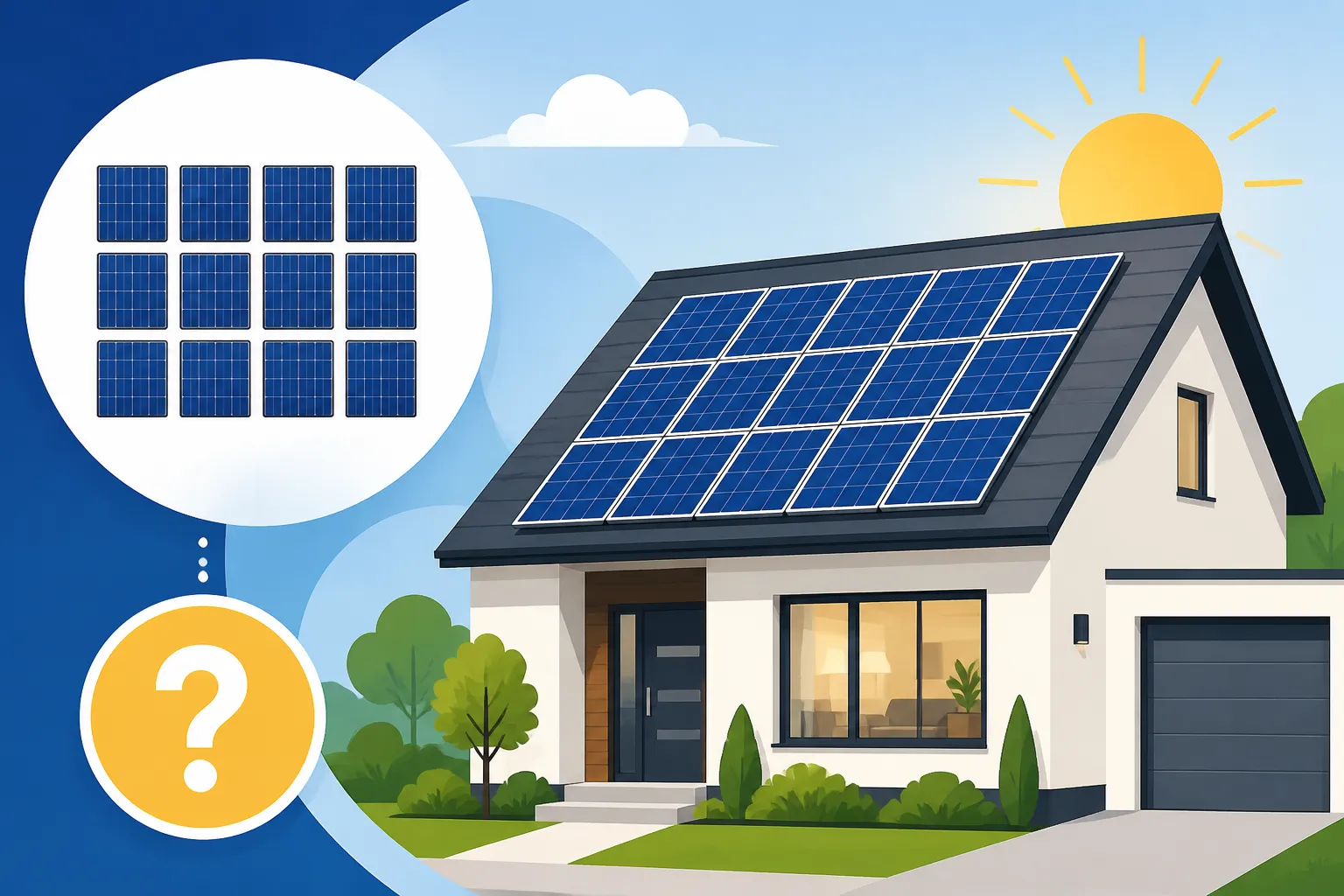
It’s a question that nearly every homeowner asks when they first start thinking about going solar: "How many solar panels do I need?" And if you live in a 2,500 square foot house, you’re probably wondering how that specific size translates into a solar setup. The truth is, while your home's footprint gives us a starting point, it's far from the only factor. This guide will help you cut through the confusion and understand exactly what goes into calculating the right number of solar panels for your 2,500 sq ft home.
Understanding the Factors That Influence Solar Panel Needs
When you’re looking at solar for your home, thinking about square footage as the primary determinant for panel count is like trying to guess how much gas your car needs just by looking at its overall length. It gives you a vague idea, but it misses all the critical details that truly matter. There's a lot more under the hood (or on the roof, in this case!) that influences how many solar panels you’ll actually need.
Your Home's Energy Consumption Habits
This is, hands down, the most crucial factor. Your electricity bill tells a much more accurate story than your home’s square footage ever could. A 2,500 square foot home occupied by a single, energy-conscious individual who works away from home all day will have drastically different energy needs than a similar-sized home with a family of five, two electric vehicles, and a passion for air conditioning.
Think about it: do you run your AC constantly in the summer? Are your kids gaming and streaming across multiple devices all day? Do you have an electric hot water heater, or maybe a pool pump that cycles frequently? All these habits contribute to your kilowatt-hour (kWh) usage, which is the actual unit of electricity you consume. You might be surprised to learn that a sprawling 1,800 sq ft ranch home in Phoenix, Arizona, could use more electricity than a 3,000 sq ft historic brownstone in Boston, Massachusetts, simply because of lifestyle, climate, and appliance choices. A good solar system design aims to offset a significant portion – or all – of your specific energy consumption, not just an arbitrary number based on your home's size. That’s why digging into those old utility bills is step number one.
Sunlight Exposure and Roof Characteristics
Even if two 2,500 sq ft homes use the exact same amount of electricity, their roofs might dictate very different solar solutions. The amount of direct, unobstructed sunlight your roof receives throughout the day is paramount. A perfectly south-facing roof in a sunny state like California or Florida, with no shading from trees or neighboring buildings, is an ideal canvas for solar panels. These homes will require fewer panels to produce the same amount of electricity compared to a home with a less-than-ideal roof.
Consider a house in Portland, Oregon, versus one in Albuquerque, New Mexico. While both might be 2,500 sq ft, the average number of peak sun hours they receive varies dramatically. Beyond geographic location, factors like your roof's pitch (how steep it is), its orientation (south, east, west, north), and any obstructions like chimneys, skylights, or even nearby tall trees can significantly impact solar production. A north-facing roof, for instance, receives very little direct sunlight in the Northern Hemisphere, making it inefficient for solar panel placement. Conversely, a west-facing roof might be fantastic for offsetting high afternoon energy use if your utility has time-of-use rates. These site-specific details are why a professional solar installer will always perform a detailed site survey to understand your unique solar potential.
Panel Efficiency and Wattage
Not all solar panels are created equal, and their individual performance characteristics play a significant role in how many you'll need. Solar panels are rated by their wattage, typically ranging from 300 to over 450 watts per panel for residential use. A higher wattage panel can produce more electricity in the same amount of space and sunlight. So, if you opt for high-efficiency, 400-watt panels, you'll need fewer of them to achieve a certain system size (in kilowatts) than if you choose 350-watt panels.
Panel efficiency, usually expressed as a percentage, indicates how well a panel converts sunlight into electricity. Modern panels often boast efficiencies between 18% and 23%. For a 2,500 sq ft home with limited roof space, choosing higher-efficiency panels can be a game-changer. They allow you to generate more power from a smaller footprint. This is especially relevant if you have a complicated roofline, multiple dormers, or other features that limit the available area for installation. Understanding Solar Panel Efficiency & Degradation Explained can really help you make informed choices about your system's components.
Estimating Solar Panels for a 2,500 Sq Ft House
Alright, let's get down to the nitty-gritty and try to put some numbers to this. While a professional assessment is always the most accurate way to determine your specific needs, we can walk through a reasonable estimation process. Remember, these are general guidelines, and your actual requirements could vary.
The kWh Method: Your Electricity Bill is Key
Forget square footage for a moment and pull out those utility bills. This is where the real work begins. You're looking for your average monthly kilowatt-hour (kWh) usage. Most utility bills will clearly state your current and historical usage. Try to gather at least 12 months of bills to account for seasonal variations – you probably use more electricity in the summer for AC or in the winter for heating.
Let's say, for a typical 2,500 sq ft home, your average monthly usage is around 1,000 to 1,500 kWh.
To calculate your annual usage, multiply your average monthly usage by 12.
- Low Usage Example: 1,000 kWh/month * 12 months = 12,000 kWh/year
- High Usage Example: 1,500 kWh/month * 12 months = 18,000 kWh/year
Next, you need to consider your local peak sun hours. This is the equivalent number of hours per day when the sun's intensity is at its maximum. This varies significantly by location. For instance, sunny states like Arizona or Nevada might see 5-6 peak sun hours daily, while cloudier regions like the Pacific Northwest might average 3-4. You can find this data online for your specific zip code. Let’s assume an average of 4.5 peak sun hours per day for our example.
Now, we can estimate the system size in kilowatts (kW) needed:
- System Size (kW) = (Annual kWh usage) / (Average daily peak sun hours * 365 days * system efficiency factor)
The "system efficiency factor" accounts for losses in the system (inverter efficiency, wiring, temperature, dust, etc.), typically ranging from 0.75 to 0.85. Let's use 0.80 for a conservative estimate.
- Low Usage (12,000 kWh/year): 12,000 kWh / (4.5 hours * 365 days * 0.80) = 12,000 / 1314 = approx. 9.1 kW
- High Usage (18,000 kWh/year): 18,000 kWh / (4.5 hours * 365 days * 0.80) = 18,000 / 1314 = approx. 13.7 kW
So, for a 2,500 sq ft home, you might be looking at a system size anywhere from 9 kW to 14 kW to fully offset your electricity usage, depending heavily on your consumption and sun exposure.
Average Panel Count for a 2,500 Sq Ft Home
Once you have your estimated system size in kilowatts, you can then figure out the number of panels. This depends entirely on the wattage of the individual solar panels you choose. As mentioned before, residential panels typically range from 350 to 450 watts (0.35 to 0.45 kW).
Let's stick with our examples of a 9 kW system and a 13.7 kW system, and assume you're considering panels that are 400 watts (0.4 kW) each:
- For a 9.1 kW system: 9.1 kW / 0.4 kW/panel = approx. 23 panels
- For a 13.7 kW system: 13.7 kW / 0.4 kW/panel = approx. 34 panels
So, on average, a 2,500 sq ft home could typically need between 23 and 34 solar panels. This broad range highlights why getting a precise estimate for your specific situation is so critical. Brands like Modernize can be a great resource here, connecting you with local installers who can provide tailored quotes based on your actual energy bills and roof assessment. They’ll help you translate those abstract numbers into concrete solutions.
System Size in Kilowatts (kW) and Panel Equivalents
To make this a bit clearer, let's put it into a table format. This shows how different energy consumption levels for a 2,500 sq ft home (assuming similar peak sun hours and system efficiency) translate into different system sizes and panel counts, using a common panel wattage.
| Average Monthly kWh Usage | Estimated Annual kWh Usage | Estimated System Size (kW) | Number of 400W Panels |
|---|---|---|---|
| 800 kWh | 9,600 kWh | 7.3 kW | 18 |
| 1,000 kWh | 12,000 kWh | 9.1 kW | 23 |
| 1,200 kWh | 14,400 kWh | 10.9 kW | 27 |
| 1,500 kWh | 18,000 kWh | 13.7 kW | 34 |
| 1,800 kWh | 21,600 kWh | 16.4 kW | 41 |
Assumptions for table: 4.5 peak sun hours/day, 80% system efficiency factor. Your numbers will vary based on your specific location and actual energy consumption.
As you can see, even within the context of a 2,500 sq ft home, the number of panels can fluctuate quite a bit, primarily driven by how much electricity you actually use. This table serves as a helpful reference point, but it's important to remember that it's a generalization. A home in a sunny state with lower usage might be at the lower end of the panel count, while a home in a less sunny area with higher usage might need more panels, even exceeding the higher end of this range if their energy needs are particularly high. This is why a detailed, personalized energy assessment is indispensable.
Practical Considerations and Next Steps
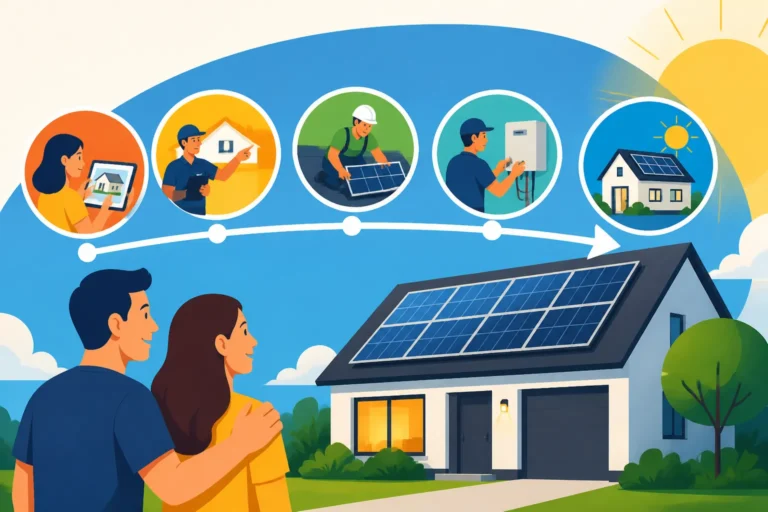
Once you have a rough idea of how many panels your 2,500 sq ft home might need, it’s time to think about the practicalities of getting solar installed. There's more to it than just the numbers; your home itself plays a big part in the feasibility and success of your solar project.
Maximizing Your Roof Space and Production
Even with a 2,500 sq ft home, you might not have an endless expanse of perfect roof real estate. Solar panels require specific spacing for optimal air circulation and access for maintenance, and they need to be installed on structurally sound sections of your roof. Professional installers are experts at designing layouts that maximize energy production while adhering to building codes and maintaining the aesthetic appeal of your home. They'll consider your roof's orientation, pitch, and any shading issues to determine the best placement for each panel.
Before installation, a thorough site survey will map out your roof, identifying ideal spots and any areas to avoid. This process will also verify the structural integrity of your roof. It's often recommended to address any significant roof repairs or even a full Do I Need a New Roof Before Solar? if your current roof is nearing the end of its lifespan. Installing solar panels usually means they'll be on your roof for 25-30 years, so you want the underlying structure to last just as long, if not longer. Planning ahead can save you a lot of hassle and expense down the road.
The Role of Batteries and Net Metering
When you're figuring out your solar panel needs, it's also worth thinking about how you'll handle excess energy. This is where solar batteries and net metering come into play. Net metering allows you to send any excess electricity your panels produce back to the grid in exchange for credits on your utility bill. This effectively lets the grid act as a giant battery, storing your surplus power for when your panels aren't producing (like at night or on cloudy days). The specifics of Net Metering Explained: How It Works by State vary greatly, with some states offering full retail credit and others providing less favorable compensation, like California's NEM 3.0.
In areas with less generous net metering policies, or if you simply desire more energy independence and backup power during outages, adding a solar battery storage system might be a smart move. A battery like a Tesla Powerwall or an Enphase IQ Battery stores your excess solar energy directly at your home, so you can use it later instead of sending it all to the grid. This can reduce your reliance on utility credits and potentially optimize your savings, especially if your utility has high time-of-use rates. Plus, there are often Solar Battery Incentives in 2026 that can help offset the cost. Consulting with an expert from a company like Modernize can help you understand if a battery makes financial sense for your 2,500 sq ft home and local utility rules.
Getting a Professional Assessment
The absolute best advice anyone can give you about going solar is to get multiple professional quotes. While our estimations are a good starting point, nothing beats a detailed, in-person (or virtual, with good satellite imagery) assessment from a qualified solar installer. They will look at your actual electricity bills, analyze your roof's specific characteristics, consider any future energy needs you might have (like adding an EV or a hot tub), and factor in local regulations and incentives.
When you're shopping for an installer, don't just ask, "How many solar panels for a 2,500 sq ft house?" Instead, ask them to design a system that meets your energy goals and provide a detailed breakdown of costs, savings, and the expected production of your system. You want a clear understanding of the proposed system's size, panel wattage, and projected offset of your electricity usage. Remember to compare quotes thoroughly, looking beyond just the bottom-line price per watt. Reputable installers will offer robust warranties on equipment and workmanship, and provide clear communication throughout the process. This is why learning How to Choose a Solar Installer is such a critical step.
Common Misconceptions and What to Avoid
Navigating the world of solar can sometimes feel like walking through a maze, especially with all the information, and sometimes misinformation, out there. It's easy to fall into common traps or misunderstand key aspects, so let's clear up a few things that often trip up homeowners.
Why Square Footage Alone Isn't Enough
We've touched on this, but it bears repeating: your home's square footage is a very poor indicator of your energy needs. It’s perhaps the most common misconception. Imagine two identical 2,500 sq ft homes side-by-side. One is a vacation home used only a few weeks a year, with most appliances turned off. The other is a bustling family home with three teenagers, a home office, an electric vehicle charging every night, and an always-on hot tub. Clearly, these two homes, despite being the same size, will have drastically different electricity bills and, therefore, require vastly different solar panel systems.
Relying solely on square footage to estimate your solar needs is like ordering clothes based only on height – you might get the length right, but the fit everywhere else could be way off. Your lifestyle, appliance efficiency, climate control habits, and even the number of occupants are far more influential than the physical dimensions of your house. Always prioritize your actual energy consumption (kWh) when discussing solar system sizing with installers.
Over-sizing vs. Under-sizing Your System
There’s a sweet spot when it comes to solar system sizing, and veering too far in either direction can lead to less-than-optimal results.
-
Over-sizing: Installing too many panels might seem like a good idea for maximum self-sufficiency, but it can be financially detrimental. If your system consistently produces significantly more electricity than you consume, and your utility's net metering policy only compensates you at a low "avoided-cost rate" (rather than full retail value for your excess power), you're essentially giving away valuable electricity. You've also paid for more panels than you truly needed, increasing your upfront costs and extending your Solar Panel Payback Period Explained. In some states or utility territories, there might even be limits on how large a residential system can be in relation to your historical consumption. For instance, in areas with an Avoided-Cost Rate & Export Credits Explained, producing too much could mean diminished returns.
-
Under-sizing: On the flip side, installing too few panels means you won't achieve your desired level of energy independence. Your utility bills will remain higher than necessary, and you won't maximize your potential savings. While it might have a lower upfront cost, it fails to deliver on the promise of significantly reduced or eliminated electricity bills, defeating a major purpose of going solar. It's crucial to balance cost with your energy goals.
The goal is to size your system optimally to cover 100% of your current usage, or perhaps a bit more if you anticipate future increases in consumption (like adding an EV). A good installer will work with you to find this balance, considering your budget, energy goals, and local utility regulations.
The Importance of Future Planning
Solar panels are a long-term investment, typically lasting 25-30 years or more. It's smart to think ahead when planning your system. Are you considering adding an electric vehicle in the next few years? Perhaps you're thinking about installing an electric heat pump to replace an older HVAC system, or maybe a new hot tub? All these additions will significantly increase your electricity demand.
Discussing your future energy needs with your solar installer is vital. They can design a system that either accounts for these potential increases from the start (if roof space allows) or is easily expandable later. Knowing Can You Add More Solar Panels Later? is a question many homeowners have, and it’s an important one. While adding panels later is often possible, it’s usually more cost-effective to plan for as much as you can reasonably accommodate upfront, within your budget and roof constraints. A little foresight now can prevent you from needing costly upgrades or finding your system inadequate down the line.
Disclaimer
Please note that the information provided in this guide is for general educational purposes only and should not be considered professional financial, tax, or energy advice. Solar system sizing, costs, and savings vary significantly based on individual circumstances, location, utility rates, available incentives, and specific product choices. Always consult with qualified solar professionals and financial advisors for personalized recommendations.