Do Solar Panels Work When the Power Goes Out?
It’s a common scenario: the power goes out, your neighbors are plunged into darkness, but you look up at your rooftop, see those shiny solar panels, and wonder, "Wait, why isn't my power still on?" This is a truly frustrating misconception, as most homeowners assume their solar system will automatically keep the lights on during an outage. This guide will clarify exactly why grid-tied solar panels typically shut down when the grid fails and what options you have to ensure your home has power when everyone else's doesn't.
The Reality of Grid-Tied Solar During a Power Outage
The primary purpose of a standard grid-tied solar panel system is to reduce your reliance on utility company electricity and lower your monthly bills. When the sun is shining, your panels generate electricity, which is then converted by an inverter into usable alternating current (AC) power for your home. Any excess power you produce is often sent back to the grid, potentially earning you credits through programs like Net Metering Explained: How It Works by State. However, this seamless exchange comes with a critical caveat: when the grid itself goes down, your solar system almost always goes down with it.
Why Grid-Tied Systems Shut Down: Anti-Islanding Protection
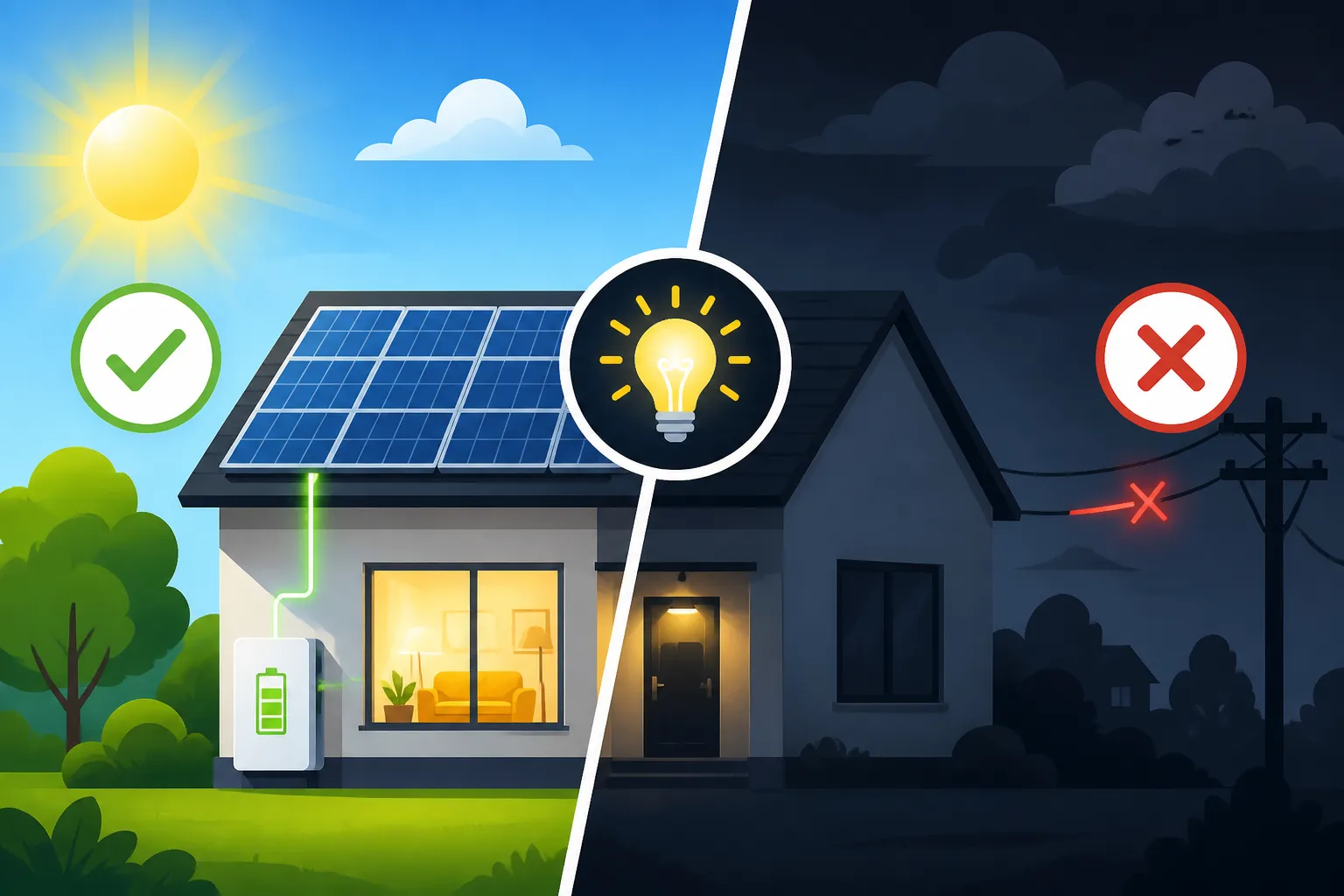
The reason your solar panels don't provide power during a blackout isn't because they've stopped working, but because they are designed to automatically shut off due to a crucial safety feature called "anti-islanding." This isn't a flaw; it's a non-negotiable safety protocol. When the main electrical grid experiences an outage, utility lineworkers are often out in the field trying to fix the problem. If your solar panels were still feeding electricity into the grid during this time, it would create an "island" of power, posing a severe electrocution risk to those working on the lines.
Think about it: a lineworker might assume the line is dead and safe to work on, but your active solar system could be energizing it. To prevent this, your solar inverter is equipped with technology that detects when the grid power is absent and immediately disconnects your home's solar production from the grid. This ensures that no electricity is accidentally fed back into the main utility lines during an outage, protecting both utility workers and the integrity of the electrical infrastructure.
The Frustration of Having Solar but No Power
It’s completely understandable to feel a sense of disappointment, or even betrayal, when you’ve invested in solar power, only to be left in the dark during an outage just like your non-solar neighbors. You’ve got this incredible clean energy source on your roof, but it’s sitting idle when you need it most. This is the core paradox many homeowners face, especially in areas prone to severe weather, wildfires leading to Public Safety Power Shutoffs (PSPS), or aging grid infrastructure. You bought solar to gain energy independence and potentially save money, yet true independence from outages often requires an additional investment beyond the basic grid-tied setup.
This situation can be particularly galling when you see clear skies and your panels are bathed in sunlight, perfectly capable of generating power. But because of the anti-islanding rules, that potential power goes unused, leaving you to fumble for flashlights or fire up a noisy, gas-guzzling generator. Understanding this critical design aspect upfront is key to setting realistic expectations for your solar system.
Solutions for Keeping the Lights On: Solar Batteries and Other Options
While standard grid-tied solar won't work during an outage, there are definitely ways to achieve true energy independence and keep your home powered when the grid goes down. These solutions involve adding components that allow your solar system to safely operate independently.
The Role of Solar Batteries: Storing Sunshine for Later
The most popular and effective way to ensure your solar panels continue to provide power during an outage is by adding a solar battery storage system. A solar battery, like a Tesla Powerwall or an Enphase IQ Battery, works by storing the excess electricity your solar panels generate during the day that your home doesn't immediately use.
When the grid goes down, the battery acts as a bridge. Your solar panels disconnect from the main grid (thanks to anti-islanding), but they can continue to charge your battery, and the battery can then power your home's critical loads. The system essentially creates a tiny, self-contained "microgrid" for your house. This means that even if the outage lasts for days, as long as the sun shines, your panels can recharge your battery, providing continuous backup power. Companies like Modernize can help connect you with installers who specialize in integrating battery storage solutions tailored to your specific needs. Understanding if Is It Worth Adding a Battery to My Solar System? is a crucial step in this process.
Stand-Alone or Off-Grid Systems: Complete Independence
For those seeking complete energy independence, an off-grid solar system is designed to operate entirely without a connection to the utility grid. These systems are inherently built with battery storage, as they need to store power for nighttime and cloudy days. Because they are never connected to the grid, the anti-islanding rules that apply to grid-tied systems don't apply here.
Off-grid systems are typically more complex and costly to install than grid-tied systems, as they require a much larger battery bank and often a backup generator to ensure power during extended periods of low solar production. They are common in remote locations where grid access is either impossible or prohibitively expensive. While they offer total independence, they also come with a greater responsibility for managing your own energy consumption and production. The Cost to Go Off-Grid With Solar is significantly higher than a grid-tied system, but for some, the peace of mind is priceless.
Critical Load Panels: Prioritizing Your Power Needs
When you integrate a solar battery or a generator into your system for backup, you often don't want to power everything in your home. Running your entire house, including high-energy appliances like electric ovens, central air conditioning, or clothes dryers, can quickly deplete a battery or overload a generator. This is where a "critical load panel" or "essential loads panel" comes in.
This separate electrical sub-panel is wired to only the essential circuits in your home – things like your refrigerator, a few lights, medical devices, your internet router, and charging outlets. When an outage occurs, your backup power source (battery or generator) will automatically switch to powering only these critical circuits. This extends the duration of your backup power significantly, allowing you to prioritize what truly matters during a blackout. Your solar installer will typically help you identify and plan for these critical loads during the design phase.
Understanding Anti-Islanding Technology
This safety feature is often the biggest surprise for new solar owners. It’s not a conspiracy, but a carefully engineered component vital for the safety and reliability of our electrical grid.
Protecting Lineworkers and Equipment
Imagine being a utility worker, restoring power after a storm. You’ve shut down a section of the grid you’re working on, but unbeknownst to you, several homes in that section have active solar panels feeding power back into the lines. This phenomenon, known as "islanding," creates a dangerous situation where lines thought to be de-energized are, in fact, still live. This poses a lethal risk of electrocution to any worker making contact.
Beyond human safety, islanding can also damage sensitive utility equipment that isn't designed to handle power fluctuations from disconnected, localized sources. The abrupt start and stop of unexpected power flows can cause serious issues, leading to further damage and prolonged outages. The anti-islanding protection in your solar inverter is constantly monitoring the grid's status, and the moment it detects a disruption, it disconnects your system in milliseconds.
Compliance and Regulations
Anti-islanding functionality isn't just a good idea; it's a mandatory requirement. Electrical codes and utility interconnection agreements across the United States, and indeed globally, stipulate that all grid-tied solar systems must include certified anti-islanding protection. Standards organizations like the Institute of Electrical and Electronics Engineers (IEEE) set stringent requirements for how inverters must behave during grid disturbances.
This means that whether you’re installing solar in sunny California or in a state like New Jersey, your system will be built to these safety standards. There's no way around it if you want to be connected to the public grid. When you're going through the Solar Permitting & Interconnection (PTO) Explained process, these safety features are thoroughly vetted by local authorities and your utility company before your system is allowed to go live. This compliance ensures that as more homes adopt solar power, the safety and reliability of the broader electrical grid are maintained.
Making an Informed Decision About Backup Power for Your Home
Deciding whether to invest in backup power, and what kind, is a significant decision. It involves weighing your needs, budget, and local conditions.
Your Energy Needs During an Outage
Before you commit to a battery or a generator, take a moment to really think about what you need during a power outage. Is it just enough power to keep your fridge cold, charge your phone, and run a few lights? Or do you have critical medical equipment, need to run your well pump, or want to maintain some level of comfort with a mini-split AC unit?
Create a list of essential appliances and their wattage. This will help you determine the size of the battery system or generator you'd need to adequately cover your critical loads. An experienced solar installer from a company like Modernize can conduct an energy audit and help you calculate your specific backup power requirements, ensuring you invest in a solution that truly meets your expectations. Don't forget that things like your internet router and charging stations for devices can feel pretty critical when you're disconnected!
Cost vs. Benefit Analysis
Adding battery storage significantly increases the upfront cost of a solar installation. While the federal solar tax credit (the Investment Tax Credit, or ITC) still applies to solar batteries when installed as part of a new solar system or added later, the initial investment can still be substantial. A typical solar battery can add anywhere from $10,000 to $20,000 or more to your total project cost, depending on its capacity and features. However, for many homeowners, the peace of mind during outages, the ability to capitalize on time-of-use (TOU) electricity rates, and increased energy independence make it a worthwhile investment.
On the other hand, traditional generators (gas or propane) offer a lower upfront cost but come with ongoing fuel expenses, maintenance, noise, and emissions. They also don't integrate with your solar panels in the same way a battery does to provide continuous, clean backup power. Understanding the Solar Plus Battery Cost is essential for this comparison.
Here’s a quick comparison of popular backup options:
| Feature | Grid-Tied Solar with Battery Backup | Stand-Alone (Off-Grid) Solar System | Portable Generator | Whole-Home Standby Generator |
|---|---|---|---|---|
| Power Source | Solar panels (charges battery) + Battery | Solar panels (charges battery) + Battery (often with generator) | Gasoline, propane, natural gas | Natural gas, propane |
| Automatic Activation | Yes (seamless transition) | Always on (no transition needed) | Manual (requires setup & fueling) | Yes (automatic switch) |
| Run Time (typical) | Days/Weeks (with sun) | Indefinite (with sun/fuel) | Hours (dependent on fuel supply) | Days/Weeks (dependent on fuel supply) |
| Noise | Silent | Silent (solar) / Noisy (generator) | Very Noisy | Moderately Noisy |
| Emissions | None | None (solar) / Emissions (generator) | High | Moderate |
| Upfront Cost | High (system + battery) | Very High (larger battery, more panels, often generator) | Low | Medium to High |
| Operating Cost | Low (free solar energy) | Low (solar) / Moderate (generator fuel) | High (fuel) | Moderate (fuel) |
| Environmental Impact | Low | Very Low | High | Moderate |
| Grid Interaction | Grid-tied (shuts off during outages, but battery provides power) | None (independent) | None | None (separate power source) |
| Best For | Homeowners wanting backup for critical loads, energy independence | Remote properties, complete self-sufficiency | Occasional, short-term outages, minimal needs | Frequent, long-term outages, desire for full home power |
Local Regulations and Interconnection
Even when adding a battery to an existing grid-tied solar system, you'll need to work with your utility company and local authorities to ensure proper permitting and interconnection. Adding a battery changes how your system interacts with the grid, particularly during outages, so these updates are critical.
Your installer will handle the specifics, but it's good to be aware that there are still rules to follow. For instance, in some states or utility territories, there might be specific requirements for how battery systems are installed or how much power they can send back to the grid (if any). This is part of the broader conversation around solar incentives like Utility Solar Rebates: How to Find Yours, which can sometimes include battery storage. Understanding what Is Net Metering Going Away? in your area can also influence your decision, as batteries become even more valuable in scenarios where excess solar production is not compensated at retail rates.
Ultimately, while your existing solar panels might not work directly when the power goes out, there are robust, reliable solutions available to keep your home running. It’s all about designing a system that meets your specific needs for energy resilience.
Disclaimer
Please note that the information provided in this article is for general guidance only and should not be considered professional financial, legal, or energy advice. Solar incentives, regulations, and costs can vary significantly by location and change frequently. Always consult with qualified solar professionals, tax advisors, and your local utility provider to get the most accurate and up-to-date information for your specific situation.