Is Solar Financing or Cash Better in 2026?
Deciding to go solar is a fantastic step toward energy independence, but for many homeowners, the biggest hurdle isn't choosing the right panels or installer – it's figuring out how to pay for it all. The question of whether to pay for your solar system with cash or opt for financing can feel overwhelming, with countless pros and cons to weigh. This comprehensive guide will walk you through the nitty-gritty of both options, helping you understand the financial implications, potential savings, and overall impact on your home and wallet, so you can make the most informed decision for your unique situation.
The Allure of Paying Cash for Solar
There’s a certain undeniable appeal to paying cash for anything, and solar panels are no exception. It’s a straightforward approach that often leads to the highest long-term financial benefits, sidestepping many of the complexities and extra costs associated with borrowing money.
Lower Overall Cost and Maximum Savings
When you pay for your solar energy system upfront with cash, you completely eliminate the need for interest payments. Think about it: a typical solar loan can add anywhere from thousands to tens of thousands of dollars in interest over its lifetime, depending on the loan amount, interest rate, and repayment term. By paying cash, every single dollar you spend goes directly towards the system itself. This means your total out-of-pocket expenditure is usually the lowest possible amount.
Beyond just saving on interest, cash buyers often have immediate, full access to all available incentives. This includes the federal solar tax credit, which can significantly reduce your net cost, as well as any state or local rebates. For example, a homeowner in Arizona who pays cash for their system will realize the full value of these incentives right away, maximizing their Solar ROI & 25-Year Savings Breakdown and experiencing a much shorter Solar Panel Payback Period Explained compared to someone burdened by loan interest and fees. You own the asset outright from day one, meaning all the benefits – from energy savings to potential SREC sales – flow directly into your pocket without any deductions from a lender or third-party owner.
Simplicity and Streamlined Process
The process of going solar can sometimes feel like a maze, with permits, inspections, and utility interconnection. Adding financing paperwork on top of that can make it even more daunting. Opting for a cash purchase significantly simplifies this journey. There are no loan applications to fill out, no credit checks (beyond what an installer might do for basic business transactions), and no waiting for loan approvals. You simply arrange payment with your chosen solar installer, and the financial aspect is largely done.
This streamlined financial process often translates to a faster overall project timeline. Once your funds are ready, your installer can move forward without delays caused by third-party lenders. It's just you and the solar company, making communication and execution much more direct. You avoid the complex terms and conditions often found in loan or lease agreements, gaining complete financial control from the outset.
Potential Impact on Home Resale Value
A fully owned solar panel system is a clear, tangible asset for your home. When it comes time to sell, this can be a significant selling point. Potential buyers often view a home with owned solar panels as highly desirable because it means lower utility bills from day one, without any additional monthly payments or contracts to take over. This perceived value can translate into a higher sale price for your home.
Studies have consistently shown that homes with owned solar panels sell for more and often faster than comparable homes without solar. The exact increase varies by market, but having a system that provides consistent energy savings with no associated debt is a major draw. Conversely, homes with leased solar systems can sometimes be harder to sell, as buyers may be hesitant to assume a long-term lease agreement. By paying cash, you ensure your solar investment unequivocally adds value without any potential complications during a future sale. For more detailed insights, check out our guide on Do Solar Panels Increase Home Value?.
Navigating Solar Financing Options
For many, paying cash for a large home improvement like solar isn't feasible or desirable. This is where financing comes in, offering a pathway to solar ownership or access without the hefty upfront cost. However, it's crucial to understand the different types and their implications.
Understanding Solar Loans
Solar loans are a popular financing choice, allowing homeowners to pay for their system over time, much like a car loan or a home improvement loan. These can be secured, meaning the panels themselves or your home serve as collateral, often leading to lower interest rates. Unsecured loans, on the other hand, don't require collateral but typically come with higher interest rates. Loan terms usually range from 10 to 25 years.
The key advantage of a solar loan is that you own the solar system from the moment it’s installed. This ownership is crucial because it means you are eligible to claim the federal solar tax credit and any other state or local incentives that require system ownership. For instance, in states like New York, homeowners with a solar loan can still take advantage of both the federal credit and the New York NY-Sun & State Solar Tax Credit (25%). However, be wary of what are commonly called "dealer fees." These are often hidden charges that solar installers pay to lenders to "buy down" the interest rate, making the advertised rate look more attractive to you. These fees are then rolled into your loan principal, effectively increasing the total amount you borrow and pay interest on. Platforms like Modernize can be a valuable resource, connecting homeowners with various lenders and helping them compare different loan offers, allowing for a clearer understanding of all associated costs upfront.
Solar Leases and Power Purchase Agreements PPAs
If outright ownership isn't your priority, or if you prefer to avoid any upfront costs entirely, solar leases and Power Purchase Agreements (PPAs) are alternatives. With a solar lease, you essentially rent the solar panels from a third-party company (the lessor) for a fixed monthly payment over a set period, typically 20 to 25 years. The solar company owns, installs, and maintains the system. You benefit from the electricity generated and the savings on your utility bill, but you don't own the equipment.
A PPA is similar, but instead of paying a fixed monthly lease payment, you agree to purchase the electricity generated by the panels at a predetermined rate, which is usually lower than your utility's rate. The PPA provider owns and maintains the system on your roof. Both leases and PPAs typically offer $0 down options, making solar accessible without any initial investment. However, a major drawback is that because you don't own the system, the solar provider claims the federal tax credit and other ownership-based incentives. While you still save money on your electricity bills, your overall long-term savings will generally be less than if you owned the system outright. For a deeper dive into these options, read our guide on Solar Lease vs PPA vs Buy: Which Is Best?.
The Hidden Costs of Financing
It's easy to get swept up in the excitement of going solar with "no money down" or a low advertised interest rate. However, financing options, especially loans, often come with hidden costs that significantly increase the total price of your system over time. The most notorious of these are dealer fees, sometimes called origination fees or discount points. These fees can range from 10% to 30% of your system's cash price and are added directly to your loan principal, inflating the total amount you finance. So, a $30,000 solar system might become a $39,000 loan before you even factor in interest.
Beyond dealer fees, the interest itself is a substantial cost. Even a seemingly low-interest rate, compounded over a 20 or 25-year loan term, can add tens of thousands to your total payment. For example, a 5% interest rate on a $30,000 loan over 20 years will mean you pay back over $16,000 in interest alone. It's critical to look at the total cost of the loan, not just the monthly payment or the advertised interest rate. Always ask for the cash price of the system and compare it directly to the total cost of the financed option, including all fees and interest, before signing anything. This knowledge is key to avoiding Solar Loan Dealer Fee Red Flags.
Key Factors to Consider When Choosing
Making the right payment decision for your solar system involves a careful assessment of your personal finances, your comfort with debt, and your long-term goals. There's no one-size-fits-all answer, so let's break down what truly matters.
Your Financial Situation and Risk Tolerance
The first thing to honestly evaluate is your current financial standing. Do you have a substantial amount of liquid cash sitting in a savings account or investments that you're comfortable reallocating? If so, paying cash might be a viable option. However, tying up a large sum of money in solar panels means that capital isn't available for other emergencies, investments, or home improvements. Consider your emergency fund and other financial goals before committing a large cash sum.
On the other hand, if your cash reserves are limited, or if you prefer to keep your money liquid, financing is a practical path. Your credit score will play a significant role here; a strong credit history can secure you lower interest rates on solar loans, making them more affordable. If your credit isn't stellar, you might face higher rates or be limited to less favorable financing terms. Think about your comfort level with debt. Are you okay with a long-term loan commitment, or do you prefer to be debt-free? Your personal risk tolerance for financial obligations should heavily influence your decision.
Long-Term Savings and Return on Investment
One of the primary motivations for going solar is to save money on electricity bills and potentially see a positive return on your investment. Generally, paying cash offers the highest long-term savings because you avoid all interest and financing fees. This directly translates to a shorter payback period and a greater overall return on your investment over the system's 25+ year lifespan. Our article, How Much Can You Save With Solar Panels?, can help illustrate this.
However, consider the "opportunity cost" of using cash. If you invest that same amount of money elsewhere – say, in the stock market – could it potentially generate a higher return than your solar savings? This is a complex financial calculation that depends on market performance and your individual investment strategy. For many, the guaranteed savings from solar, coupled with environmental benefits and energy independence, outweigh potential investment gains. When evaluating financed options, it's crucial to calculate the total cost, including all interest and fees, over the life of the loan. This allows you to accurately compare the real long-term savings against a cash purchase.
Incentives and Tax Implications
The availability and structure of solar incentives can significantly impact your financial decision. The federal solar tax credit (also known as the Investment Tax Credit, or ITC) is a major incentive, allowing you to claim a percentage of your system's cost as a tax credit. Critically, to claim this credit, you must own the solar system. This means cash purchases and solar loans generally qualify, but leases and PPAs do not, as the third-party company owns the system. For more details on the federal incentive, check out Federal Solar Incentives That Still Exist in 2026.
Beyond the federal credit, many states and local utilities offer their own incentives, such as State Solar Incentives: Complete 2026 Guide, property tax exemptions, or SREC (Solar Renewable Energy Credit) markets. It's essential to understand which incentives you're eligible for and whether they require system ownership. For instance, in states like Massachusetts, programs like the Massachusetts SMART Program Explained can offer significant value, but their eligibility often depends on your ownership status. Make sure to factor these incentives into your total cost analysis for both cash and financed options. Some financing products might even complicate the claiming process for these incentives, so clarity on this point is paramount.
Making the Best Decision for Your Home
Choosing between cash and financing isn't just a financial calculation; it's a decision that impacts your lifestyle, your home's value, and your peace of mind. Let's look at scenarios where each option shines.
When Cash Is Clearly Better
If you have readily available funds and a solid emergency savings cushion, paying cash for your solar system is almost always the financially superior choice. You'll avoid all interest payments and dealer fees, leading to the lowest overall cost for your system and the highest possible long-term savings. This direct ownership also means you maximize your Solar ROI & 25-Year Savings Breakdown, often achieving a shorter How Long Do Solar Panels Take to Pay for Themselves? than financed systems.
Consider this: if you're planning to sell your home in the next few years, a fully owned solar system is a significant asset that can boost your property value and appeal to buyers, as there's no lease to transfer or loan to assume. This means a smoother selling process and potentially a higher sale price. Furthermore, for those who simply prefer to avoid debt and have full control over their assets, paying cash provides immediate satisfaction and unparalleled financial freedom. You truly own your power, quite literally.
When Financing Makes More Sense
For many homeowners, the upfront cost of a solar system, which can range from $15,000 to $30,000 or more depending on system size and location (see How Much Do Solar Panels Cost? 2026 Guide), is simply too high for a cash purchase. In these situations, financing becomes an invaluable tool. If you have limited upfront capital but want to reap the benefits of solar energy, a solar loan or a PPA can make it accessible.
A good credit score is your best friend here, as it allows you to secure competitive interest rates on solar loans, making your monthly payments more manageable. Look for reputable lenders and installers. Companies like Modernize can help homeowners find and compare various financing options, including solar loans, making the process of finding favorable terms much simpler. Financing allows you to start saving on your electricity bills almost immediately, and often, your new solar payment plus your reduced utility bill can be less than or comparable to your old electricity bill. This predictable monthly cost is a major draw for many, allowing them to budget effectively while still investing in a sustainable future. Even with financing, many still find that solar is worth it in 2026.
Hybrid Approaches and Strategic Planning
It’s not always an either/or situation. Sometimes, a hybrid approach can be the smartest move. For example, you might make a substantial down payment using cash, and then finance the remaining balance with a smaller loan. This reduces the total amount you need to borrow, thus cutting down on overall interest payments and dealer fees, while still keeping a portion of your cash reserves liquid.
Regardless of your chosen path, strategic planning is key. Always get multiple quotes from different solar installers, requesting both a cash price and a financed price for comparison. Don't be afraid to negotiate. Understand every line item in a solar contract, especially when it comes to financing. Ask about dealer fees, interest rates, loan terms, and what happens if you decide to sell your home. Educating yourself on Solar Loans: Complete Guide is paramount. By thoroughly researching and understanding all your options, you can ensure you're making the most financially sound decision for your home solar investment.
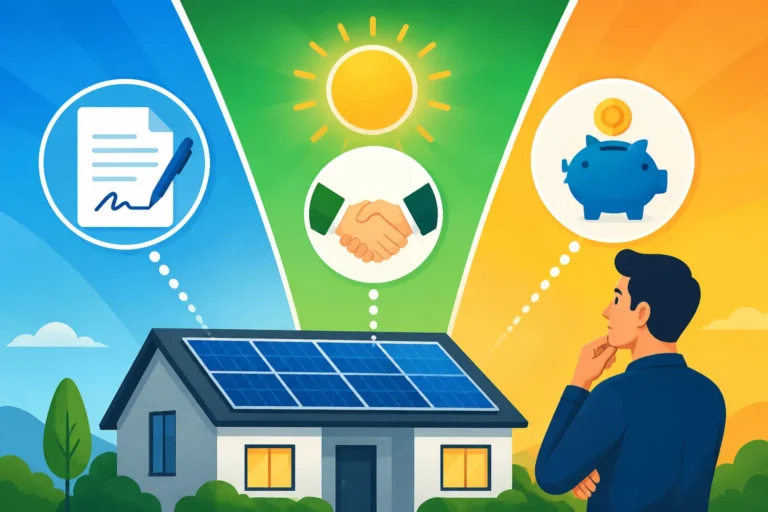
Here's a quick comparison of the three main ways to pay for solar:
| Feature | Cash Purchase | Solar Loan | Solar Lease/PPA |
|---|---|---|---|
| Upfront Cost | High (Full system price) | Low to Moderate (Down payment, if any) | Typically $0 |
| Ownership | Yes (You own the system) | Yes (You own the system) | No (Third-party company owns the system) |
| Federal Tax Credit | Yes (You claim it) | Yes (You claim it) | No (Provider claims it) |
| Other Incentives | Yes (You claim most ownership-based incentives) | Yes (You claim most ownership-based incentives) | Limited (Provider claims most, some may pass to you) |
| Total Long-Term Cost | Lowest | Moderate (Includes interest & dealer fees) | Highest (Fixed payments, no ownership benefits) |
| Monthly Payments | None (After initial purchase) | Yes (Fixed loan payments) | Yes (Fixed lease payment or PPA rate per kWh) |
| Home Value Impact | Highest positive impact | Positive impact, clear asset | Mixed, can complicate home sale |
| Responsibility | Full maintenance & monitoring | Full maintenance & monitoring (unless service contract) | Provider responsible for maintenance |
| Flexibility | High (No debt obligations) | Moderate (Debt obligation) | Low (Long-term contract) |
Disclaimer
The information provided in this guide is intended for general informational purposes only and does not constitute financial, tax, or legal advice. Solar incentives, costs, and regulations can vary significantly by location and change over time. It is highly recommended to consult with a qualified financial advisor, tax professional, and multiple solar installers to assess your specific situation and make informed decisions.