Solar Payback Period in Virginia
The upfront cost of installing solar panels can feel like a mountain, and it’s completely natural to wonder, "How long until this investment actually pays for itself?" For homeowners in Virginia, navigating the costs, incentives, and potential savings to figure out your true return on investment is a crucial step. This guide is designed to break down the solar payback period specifically for residents of the Old Dominion, helping you understand what to expect and how to calculate your own timeline.
Understanding the Solar Payback Period
When you’re thinking about going solar, one of the first questions on your mind is almost always about the money. We all want to make smart financial decisions for our homes, and understanding how long it takes for solar panels to "pay themselves off" is key.
What Exactly Is "Payback Period" in Solar?
Simply put, the solar payback period is the amount of time it takes for the savings you accumulate from your solar energy system to equal the initial cost you paid to install it. Think of it like this: you invest X amount of dollars today, and over time, by not paying your utility company as much for electricity, you save Y amount of dollars each month or year. The payback period is the point when those accumulated savings (Y) add up to your initial investment (X). Once you hit that milestone, every dollar you save on electricity bills from that point forward is pure profit in your pocket. It’s a tangible way to measure the financial success of your solar investment. For a broader overview of this concept, you might want to check out our detailed article on Solar Panel Payback Period Explained.
Factors Influencing Solar Payback
The path to solar payback isn't a straight line; many variables can speed it up or slow it down. The biggest factor, of course, is the initial cost of your system. A larger, more complex system or one with premium panels will naturally have a higher upfront cost. On the flip side, the price you pay for electricity from your utility company has a huge impact. If your electricity rates are high and consistently rising, your savings will be greater, shortening your payback period.
Then there's your system's performance. How much sunlight does your roof get? Is it shaded by trees? The more electricity your panels generate, the more you save. The size of your system also matters; a larger system generates more power, but also costs more upfront. Crucially, the incentives available can dramatically reduce your net cost, making a massive difference in how quickly you reach payback. This includes things like the federal tax credit, state programs, and local utility rebates.
Why Virginia is Unique for Solar ROI
Virginia has been steadily growing its solar presence, and for good reason! While the state might not always grab headlines like California or Massachusetts, it offers a surprisingly stable and increasingly favorable environment for solar homeowners. One of the primary advantages here is the relatively moderate cost of electricity compared to some high-cost states, but this is offset by consistent incentives and a strong commitment to clean energy. This means while the average monthly savings might not be as jaw-dropping as in, say, Hawaii, the overall value proposition over the system's lifespan is very solid, especially when combined with things like property tax exemptions and favorable net metering policies from specific utility companies like Dominion Energy and Appalachian Power. Understanding these local nuances is essential when evaluating if Are Solar Panels Worth It in Virginia? for your specific situation.
Calculating Your Solar Payback Period in Virginia
Getting a clear picture of your solar payback in Virginia involves looking at both statewide averages and your unique home circumstances. It's not a one-size-fits-all equation, but we can certainly guide you through the process.
Average Payback Period for Virginia Homes
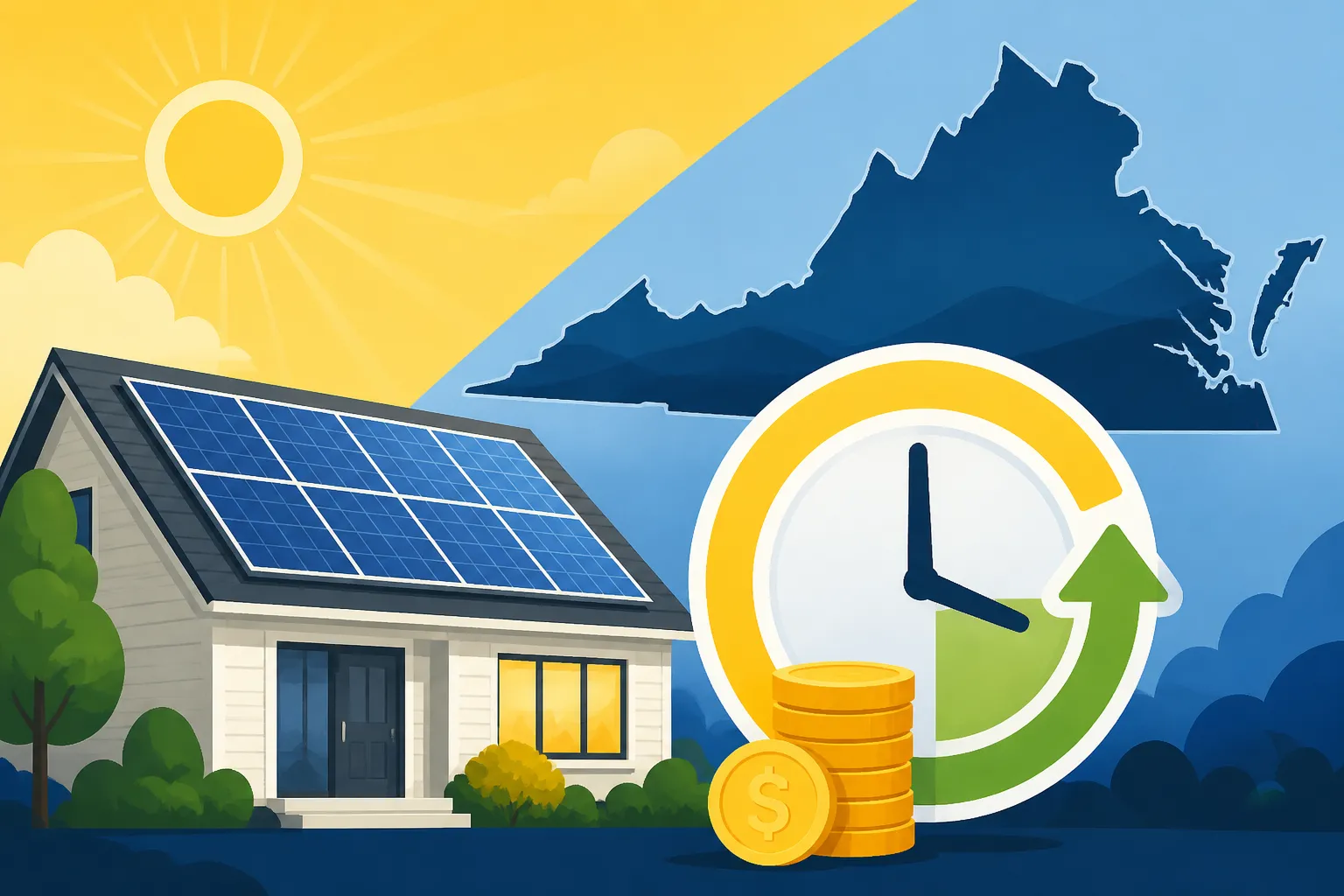
Generally, the solar payback period for homeowners in Virginia typically falls within a range of 9 to 13 years. This range accounts for a variety of factors, including the initial system cost, the amount of electricity your home consumes, and the specific incentives you qualify for. For an average 6-kW to 8-kW solar panel system, which is common for many Virginia households, the total cost before incentives might be around $18,000 to $24,000. After applying the federal solar tax credit (which is 30% for systems installed through 2032), that net cost drops significantly, leading to the estimated payback range.
It's important to remember that this is an average. A home with high electricity usage and excellent sun exposure in, say, Richmond or Virginia Beach, that maximizes every available incentive, might see a faster payback. Conversely, a smaller system on a partially shaded roof in a more rural area might take a little longer.
Key Virginia-Specific Factors Affecting Payback
Virginia has several policies and market conditions that directly influence how quickly your solar investment pays off:
- Net Metering: Virginia has a net metering policy, primarily governed by the State Corporation Commission (SCC) rules. This allows you to send excess electricity your panels produce back to the grid and receive credits on your utility bill. For customers of investor-owned utilities like Dominion Energy or Appalachian Power, the rules generally provide for bill credits at the full retail rate up to a certain system size, which is a huge advantage. This effectively means you get compensated fairly for the power you export. Understanding Net Metering Explained: How It Works by State is crucial for maximizing your savings.
- State Solar Incentives: While Virginia doesn't offer a direct state-level tax credit for solar panel installation, it does provide significant property tax exemptions. This means that while adding solar panels will likely increase your home's value, they won't increase your property taxes – a huge win for homeowners! Each county or city might have slightly different rules, so it's always good to check your local jurisdiction's specific policies. You can learn more about this in our guide to Solar Property Tax Exemptions by State.
- Utility Rates: Electricity rates from providers like Dominion Energy have seen some fluctuations but are generally competitive compared to national averages. However, predictions for future rate increases are a significant factor. If rates climb, your savings will increase, accelerating your payback.
- SREC Market: Virginia does have a Solar Renewable Energy Certificate (SREC) market through its Renewable Energy Portfolio Standard (RPS). While SRECs can add to your income stream, the market can fluctuate, and the value of SRECs in Virginia might not be as high or as stable as in states with more aggressive RPS goals, like Maryland or New Jersey. However, it's still a valuable financial component. Find out more about SRECs Explained: Selling Solar Renewable Energy Credits.
How to Estimate Your Personal Payback
To get a truly accurate estimate for your home, you'll need to gather some personalized data:
- Calculate Your Total System Cost: This isn't just the price of the panels. It includes installation, inverter costs (like those from Enphase or SolarEdge), permitting fees, and any necessary electrical upgrades. Don't forget to factor in the 30% federal solar tax credit (ITC) which significantly reduces your out-of-pocket expense. This credit is deducted from your federal income taxes, so it's not an immediate discount, but a substantial reduction in your overall investment.
- Determine Your Annual Electricity Usage: Look at your past 12-24 months of utility bills. Most bills show your kilowatt-hour (kWh) usage. This helps determine the right system size for your needs and how much you'll save by offsetting that usage.
- Estimate Annual Solar Production: A reputable solar installer will perform a site assessment, taking into account your roof's angle, direction, and any shading, to predict how much electricity your specific system will generate each year.
- Calculate Annual Savings: Multiply your estimated annual production by your current electricity rate (including any tiered rates or delivery charges). Don't forget to factor in net metering credits for excess production.
- Factor in Additional Incentives: Include any SREC income, utility rebates, or local property tax exemptions.
- The Formula:
(Total System Cost – All Incentives) / Annual Savings = Payback Period in Years
This might sound like a lot, but this is exactly where working with experienced solar companies comes in handy. Companies like Modernize can help connect you with local installers who will provide detailed quotes and breakdown these numbers for you.
Here's a simplified example:
| Item | Value (Example) |
|---|---|
| Gross System Cost | $21,000 |
| Federal ITC (30%) | -$6,300 |
| Property Tax Exemption | N/A (ongoing savings) |
| Estimated Net Cost | $14,700 |
| Current Blended Elec. Rate | $0.13/kWh |
| Annual Electricity Usage | 10,000 kWh |
| Estimated Annual Solar Production | 9,500 kWh |
| Annual Bill Savings | 9,500 kWh * $0.13/kWh = $1,235 |
| Estimated Payback Period | $14,700 / $1,235 = ~11.9 years |
Remember, this table is just an example. Your specific numbers will vary based on your home, electricity usage, and the solar system you choose. To find out How Much Can You Save With Solar Panels? specifically in your area, getting personalized quotes is key.
Incentives and Programs That Shorten Payback in Virginia
Virginia homeowners are fortunate to have several programs and incentives that can significantly reduce the upfront cost of solar, directly contributing to a faster payback period. It's not just about the sunshine; it's about smart financial planning too!
State-Specific Incentives and Rebates
While Virginia may not offer a direct state income tax credit for solar like some other states, it provides other valuable incentives that impact your overall return on investment.
- Solar Property Tax Exemption: This is a big one for Virginia residents. The state allows counties, cities, and towns to exempt solar energy equipment from local property taxes. What this means for you is that when you install solar panels, which will almost certainly increase your home's value, you won't be assessed higher property taxes because of that increased value. This is a continuous saving that adds up year after year, effectively putting money back in your pocket and shortening your real payback period. Always confirm with your local county or city assessor's office for the most up-to-date information on their specific exemption policies. This makes Virginia one of the Best States for Solar Incentives in 2026, especially when considering long-term savings.
- Solar Renewable Energy Certificates (SRECs): Virginia operates under a Renewable Energy Portfolio Standard (RPS) program, which means utilities are mandated to source a certain percentage of their electricity from renewable sources. To meet these targets, utilities often purchase SRECs from solar system owners. When your solar panels generate electricity, they also create SRECs. You can sell these SRECs on a market, providing an additional income stream. The value of SRECs can fluctuate based on supply and demand, but they do contribute to making your system more financially viable. Selling SRECs can add a few hundred dollars to your annual savings, shaving months off your payback timeline.
- Utility Solar Rebates: It's always worth checking with your specific utility provider, such as Dominion Energy or Appalachian Power, for any localized solar rebates or incentive programs they might offer. While not all utilities have them, some might provide one-time payments or performance-based incentives (PBIs) that can further reduce your net cost or provide ongoing revenue. For instance, Dominion Energy has historically offered certain programs for residential solar installations, though these can change. Our guide on Utility Solar Rebates: How to Find Yours can help you research available programs in your specific service area.
Federal Support and Its Impact
Even though we're focusing on Virginia, the federal solar tax credit (ITC) remains the single most impactful incentive for nearly all U.S. homeowners, including those in Virginia.
- The Federal Solar Investment Tax Credit (ITC): This credit allows you to deduct 30% of the cost of your solar energy system from your federal income taxes. This isn't a rebate that comes off the purchase price directly, but a dollar-for-dollar reduction in your tax liability. For example, if your solar system costs $20,000, you could claim a $6,000 tax credit. This substantially lowers your out-of-pocket expense and dramatically improves your payback period. Crucially, this 30% credit is available for systems installed through 2032, making now an excellent time to invest. It then steps down to 26% in 2033 and 22% in 2034. It’s a core component when assessing your solar ROI. If you're wondering Can You Still Get a Solar Tax Credit in 2026? the answer is a resounding yes!
The Role of Net Metering in Virginia
Net metering is often the unsung hero of solar economics, and Virginia's policies are generally favorable. When your solar panels produce more electricity than your home consumes at any given moment, that excess power is sent back to the grid. With net metering, your utility company essentially buys that power from you at a credit rate that offsets your future electricity consumption.
In Virginia, customers of investor-owned utilities like Dominion Energy benefit from net metering that credits them at the full retail rate for excess generation up to certain limits (currently 25 kW for residential systems). This means you effectively get paid the same rate for the electricity you export as you pay for the electricity you import. This avoids wasted solar production and ensures you maximize your savings, directly shortening your payback period. Without robust net metering, any excess power you generate might be compensated at a much lower "avoided-cost rate" or not at all, which would significantly extend your payback time. This mechanism is a powerful enabler of solar ROI in the state. For a deeper dive into how this all works, explore Net Metering Explained: How It Works by State.
Maximizing Your Solar ROI Beyond Payback
While the payback period is a critical metric, the financial benefits of solar extend far beyond that initial break-even point. Thinking about the long-term can truly show you the full value of your investment.
Increase in Home Value
One often-overlooked financial benefit of installing solar panels is the significant increase in your property's value. Multiple studies, including those from the National Renewable Energy Laboratory (NREL), have shown that homes with solar energy systems sell for a premium compared to comparable homes without solar. In Virginia, where homeowners appreciate energy efficiency and sustainable living, this holds true.
Potential buyers are increasingly looking for homes that offer lower utility bills and a reduced carbon footprint. A home with an owned solar system is essentially a home with a built-in, predictable, and often lower, electricity cost for decades to come. This makes your home more attractive on the market and can command a higher asking price. The actual increase can vary based on your location and system size, but estimates often range from 3-5% of your home's value, or even more. So, not only are you saving money on electricity, but you're also building equity and making your home more marketable. If you're curious about the specifics, read more about Do Solar Panels Increase Home Value?
Long-Term Savings and Energy Independence
The real magic of solar happens after your payback period. Once your system has paid for itself, every single kilowatt-hour of electricity it generates represents pure savings. Considering that most quality solar panels come with performance warranties of 25 years or more, you're looking at decades of drastically reduced or even eliminated electricity bills.
Imagine going through summer heatwaves or cold winter months in Virginia without dreading your next utility bill. Solar offers a hedge against rising electricity rates, giving you a level of energy independence that conventional power simply can't. Over the 25-30+ year lifespan of your system, these long-term savings can easily amount to tens of thousands of dollars, far exceeding your initial investment. It’s not just about getting your money back; it’s about creating a powerful income stream through avoided costs. Our article on Solar ROI & 25-Year Savings Breakdown goes into much greater detail on this aspect.
Choosing the Right System and Installer
To truly maximize your solar ROI, selecting the right equipment and, just as importantly, the right installation partner is paramount. Don't just jump at the cheapest quote!
- Quality Equipment: Investing in high-efficiency solar panels and reliable inverters (like microinverters from Enphase or string inverters with optimizers from SolarEdge) ensures your system performs optimally for decades. Better quality panels mean more electricity generated per square foot, which can be crucial on roofs with limited space. Quality also means better warranties, protecting your investment for the long haul.
- Reputable Installer: This cannot be stressed enough. A local, experienced solar installer will design a system optimized for your Virginia home's specific energy needs and sun exposure. They'll handle all the complex permitting and interconnection processes with your utility company, ensuring you comply with local regulations and qualify for all available incentives. A good installer will also offer comprehensive warranties on their workmanship and be there for any maintenance needs down the road. They should be transparent about all costs, incentives, and your estimated payback period. Platforms like Modernize can help you connect with vetted, local solar professionals who understand Virginia's unique solar landscape. When you’re ready, make sure you know How to Choose a Solar Installer who will be a reliable partner.
Making an informed decision about solar for your Virginia home means looking beyond the initial cost and understanding the full spectrum of financial benefits, both immediate and long-term.
Disclaimer
Please note that the information provided in this guide is intended for general informational purposes only and does not constitute financial, tax, or legal advice. Solar incentives, costs, and regulations can change frequently. We strongly recommend consulting with a qualified solar professional, tax advisor, and your local authorities to get the most accurate and up-to-date information pertaining to your specific situation in Virginia.