Is Solar Worth It in Michigan?
Facing those ever-increasing utility bills in Michigan can feel like a constant battle, especially when you're trying to budget and plan for the future. The thought of harnessing the sun's power might seem appealing, but you’re probably wondering, "Is solar really worth it here in the Great Lakes State?" This comprehensive guide will cut through the noise, providing a realistic look at the costs, savings, incentives, and practical considerations to help you decide if solar is the right investment for your Michigan home.
Understanding Michigan's Unique Energy Landscape and Solar Potential
Michigan might not be the first state that comes to mind when you think of abundant sunshine, and that's a common misconception that often makes homeowners hesitant. However, a deeper look at our energy situation and the surprisingly robust solar resources here paints a clearer picture. It's about balancing the perceived drawbacks with the very real advantages.
Michigan's Electricity Rates and Utility Structures
One of the most compelling reasons for Michigan residents to consider solar is the persistent upward trend in electricity rates. Utilities like DTE Energy, serving southeastern Michigan, and Consumers Energy, covering much of the lower peninsula, have seen their rates climb steadily over the past decade. This isn't just a slight bump; it's a significant increase that eats into household budgets year after year. For instance, Michigan's average residential electricity rate has often hovered above the national average, and predictions suggest this trend isn't slowing down. When you install solar, you're essentially locking in a significant portion of your electricity costs, shielding yourself from these unpredictable rate hikes for decades to come. Imagine the peace of mind knowing that while your neighbors' bills continue to creep up, yours remains stable or even drops to near zero, depending on your system's size and consumption.
Solar Resource and Climate Considerations
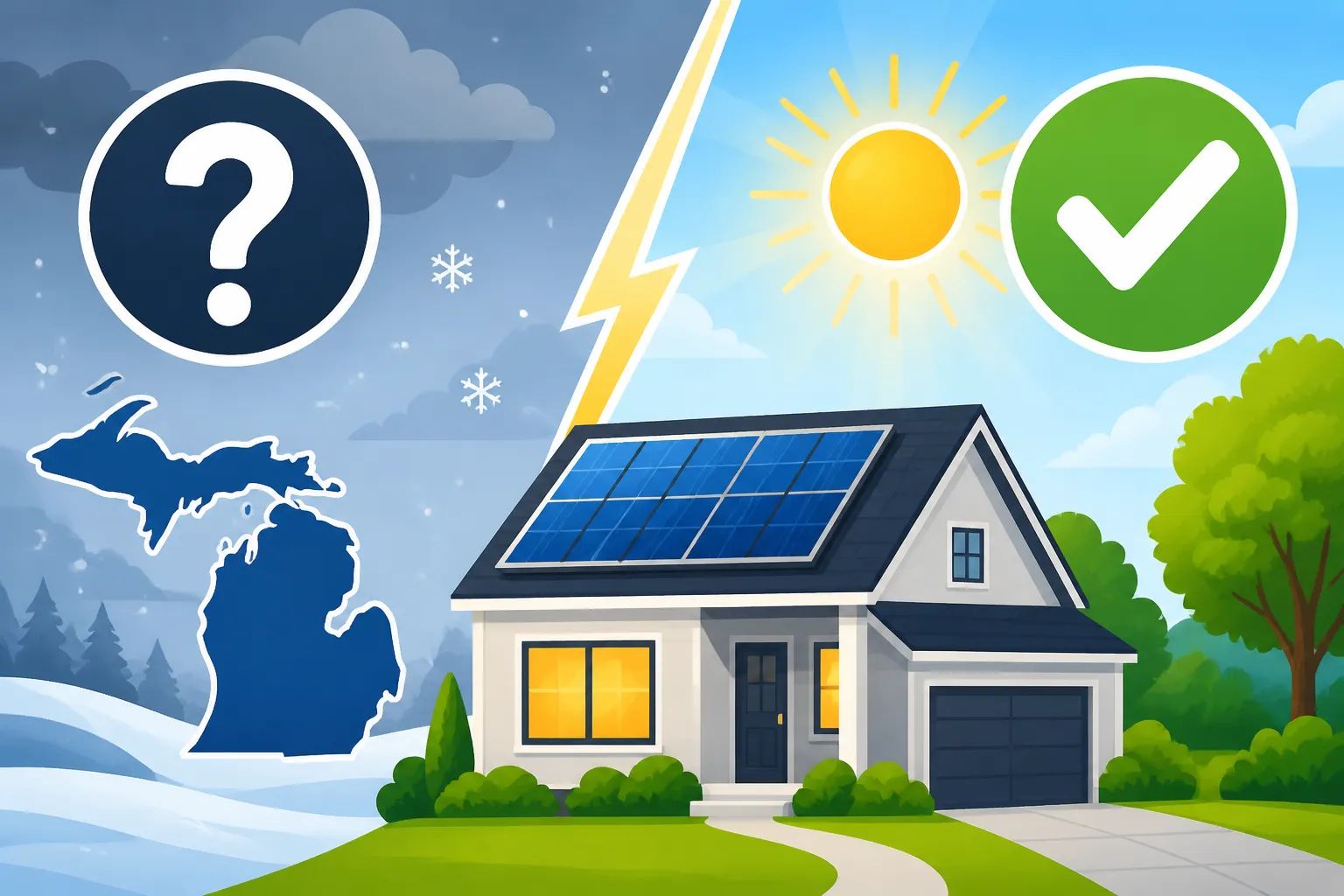
Now, let's address the elephant in the room: Michigan's weather. Yes, we have our fair share of cloudy days and long, snowy winters. But here’s the good news – modern solar panels are far more efficient than you might think, even in less-than-ideal conditions. They don't need direct, blazing sunshine to produce electricity; ambient light still works. Plus, colder temperatures can actually improve panel efficiency, as long as they're not covered in snow. Michigan receives an average of about 4 peak sun hours per day, which is comparable to places like Germany, a global leader in solar adoption.
What does this mean for you? It means that even during the shorter, cloudier months, your system will still be generating power. And during our beautiful, sunny Michigan summers, your panels will be working overtime, often producing more electricity than you need, which can be credited back to you through net metering programs. The key is proper system design by a knowledgeable installer who understands Michigan's specific climate and can optimize your panel placement and angle to maximize production throughout the year.
Key Solar Incentives and Programs in Michigan
While Michigan might not boast some of the massive state-specific solar incentives found on the coasts, there are still crucial programs and policies in place that significantly improve the financial viability of going solar here. Missing out on these can drastically alter your return on investment.
Net Metering Policies and Their Impact
Net metering is often the single most important incentive for residential solar owners, allowing you to send excess electricity generated by your panels back to the grid in exchange for credits on your utility bill. Michigan's net metering landscape has seen some changes over the years. Currently, both DTE Energy and Consumers Energy operate Distributed Generation (DG) programs that offer compensation for this excess energy.
However, it's not always a perfect 1-for-1 credit at the full retail rate like some other states used to offer. The compensation rates can vary and are often tied to an "avoided-cost rate" rather than the full retail price you pay for electricity. For example, Consumers Energy's distributed generation program compensates customers at their average monthly energy rate, which is good, but it’s still important to understand the specifics. DTE Energy also has similar programs, often subject to state regulations and caps. Understanding Net Metering Explained: How It Works by State is crucial for Michigan homeowners. These programs are vital because they ensure that every kilowatt-hour your system produces is put to good use, either powering your home directly or earning you credits to offset future consumption. Without net metering, you'd likely need a much larger (and more expensive) battery storage system to capture all your excess power.
State and Local Incentives for Michigan Homeowners
Beyond net metering, Michigan offers a few other ways to make solar more affordable. One significant advantage is the statewide property tax exemption for solar energy systems. This means that while adding solar panels does increase your home's value (and we'll talk more about that later!), it will not increase your property taxes. This is a huge benefit, as property taxes can be a major ongoing expense, and avoiding an increase on your home's improved value makes the investment even more attractive. For a deeper dive into this, you can check out Solar Property Tax Exemptions by State.
While there isn't a broad state income tax credit for solar in Michigan like in some other states, specific local programs or utility-specific rebates might pop up occasionally. It’s always worth checking with your local municipality or utility provider to see if any unique offerings are available in your area. This is where resources like Modernize can be incredibly helpful, as they can connect you with local installers who are experts in navigating these regional incentives and ensuring you don't miss out on any potential savings.
Federal Incentives Still Making a Difference
The biggest financial booster for going solar, regardless of where you live in the U.S., is the federal solar tax credit, officially known as the Investment Tax Credit (ITC). This credit allows you to deduct a significant percentage of your solar installation costs from your federal income taxes. The ITC remains strong at 30% for systems installed through 2032. This isn't just a small discount; for a typical solar system costing, say, $25,000, that's a $7,500 direct reduction in your federal tax liability. It's a game-changer for many homeowners.
It’s important to understand that this is a tax credit, not a rebate. It reduces the amount of federal income tax you owe. If you don't owe enough tax in one year to claim the full credit, you can often carry the remaining credit forward to future tax years. This ensures most homeowners can take full advantage of this substantial incentive. For detailed information on what’s currently available, explore Federal Solar Incentives That Still Exist in 2026. This federal incentive alone often tips the scales, making solar a financially smart move even in states with fewer local programs.
Calculating Your Solar ROI in Michigan
Understanding the investment involved and the potential returns is paramount when considering solar for your Michigan home. It's not just about the upfront cost; it's about the long-term savings and increased value.
Average Solar System Costs and Savings in Michigan
The cost of solar panels can vary quite a bit, depending on factors like your home's energy consumption, the size of the system you need, the type of equipment chosen, and even the specific installer. Generally, the average cost for a residential solar system in Michigan falls within the national average range, before incentives. You can expect to see prices anywhere from $2.50 to $3.50 per watt. For a typical 6-8 kilowatt (kW) system, which is often sufficient for an average Michigan home, this translates to an initial cost of roughly $15,000 to $28,000 before the federal tax credit. After applying the 30% federal tax credit, that cost drops significantly to between $10,500 and $19,600.
The savings, however, are where solar truly shines. By generating your own electricity, you drastically reduce or even eliminate your monthly utility bill. For homeowners in Michigan with DTE Energy or Consumers Energy, this can mean saving hundreds of dollars annually, potentially thousands over the system's lifespan. These savings grow even more substantial as electricity rates continue to climb, turning your solar panels into a long-term hedge against inflation. To get a general idea of typical expenses, you might want to look at How Much Do Solar Panels Cost? 2026 Guide.
Solar Payback Period and Long-Term Value
The payback period is the amount of time it takes for your energy savings and incentives to offset the initial cost of your solar system. In Michigan, with current electricity rates and available incentives, the average solar payback period typically ranges from 9 to 13 years. This can vary based on your specific system size, energy usage, and the exact incentives you qualify for. While that might seem like a while, consider that most solar panels come with performance warranties of 25 years or more. This means you'll enjoy many years of free or nearly free electricity after your system has paid for itself. For more details, see Solar Panel Payback Period Explained.
Beyond direct savings, solar panels also significantly increase your home's value. Studies consistently show that homes with owned solar energy systems sell for more and often faster than comparable homes without solar. This added value isn't subject to property tax increases in Michigan, making it a pure gain. It’s like adding an attractive, high-efficiency appliance that comes with guaranteed lower operating costs. For more on this, check out Do Solar Panels Increase Home Value?. If you're considering selling your home in the future, solar can be a major selling point.
Financing Options: Cash, Loans, Leases, and PPAs
There are several ways to pay for a solar system, each with its own financial implications.
- Cash Purchase: This offers the highest long-term savings and the quickest payback period, as you avoid interest charges. You also get to claim the full federal tax credit directly. If you have the capital, this is often the most financially advantageous route.
- Solar Loan: Many homeowners opt for solar loans, which allow them to finance the system over a period, often 10 to 20 years. These loans can be secured (against your home) or unsecured. With a loan, you own the system, qualify for the federal tax credit, and typically see immediate monthly savings that can be equal to or greater than your loan payment. For a comprehensive overview of financing options, including potential pitfalls like dealer fees, refer to Solar Loans: Complete Guide.
- Solar Lease or Power Purchase Agreement (PPA): With a lease, you pay a fixed monthly fee to a solar company to use the panels installed on your roof. With a PPA, you pay for the electricity the panels produce at a predetermined rate per kilowatt-hour. In both scenarios, the solar company owns and maintains the system. While these options often require $0 down and can offer immediate savings, they typically provide lower overall savings compared to ownership. You also don't get to claim the federal tax credit, as the company owns the system. For many Michigan homeowners, especially with the strong federal tax credit, owning the system (either outright or with a loan) generally provides the best long-term financial benefits. However, if your tax appetite isn't high enough to utilize the full tax credit, a lease or PPA can still provide immediate bill savings without the upfront cost. Exploring Is Solar Worth It Without the Tax Credit? can help understand the value of ownership.
Practical Considerations for Going Solar in Michigan
Deciding to go solar is a big step, and beyond the financial aspects, there are several practical considerations that Michigan homeowners should keep in mind to ensure a smooth and successful transition.
Finding the Right Solar Installer
Choosing the right solar installer is absolutely critical for your project's success. This isn't just about finding the cheapest quote; it's about finding a reputable company that understands Michigan's specific regulations, weather patterns, and utility requirements. You'll want to look for installers with a strong track record, positive customer reviews, and proper licensing and insurance. Ask for references and check their standing with the Better Business Bureau.
Don't settle for the first quote you receive. It's highly recommended to get at least three to five different quotes from local Michigan installers. This allows you to compare system designs, equipment choices, warranties, and pricing. Websites like Modernize can be a fantastic resource for this, helping you connect with pre-screened, reputable solar companies in your area. They streamline the process, ensuring you get competitive bids without having to do all the legwork yourself. When comparing, don't just focus on the total price; look at the cost per watt, the components they're offering (panels, inverters, batteries), and the comprehensive warranties covering both equipment and labor. For more guidance, read How to Choose a Solar Installer.
Roof Suitability and Home Energy Usage
Before you even get too deep into quotes, you need to consider your roof. Is it in good condition? Most solar panel systems are designed to last 25-30 years, so if your roof is nearing the end of its life, it might be more cost-effective to replace it before installing solar. This avoids the additional expense of removing and reinstalling panels later. Also, consider the direction and shading of your roof. South-facing roofs are generally ideal for maximizing solar production, but east and west-facing roofs can also be highly effective, especially if your energy consumption peaks in the mornings and evenings. Heavy shading from trees or nearby buildings can significantly reduce your system's output. A good installer will conduct a thorough site assessment to determine the optimal placement for your panels and recommend solutions for any shading issues, such as microinverters or power optimizers.
Understanding your current home energy usage is also paramount. Review your past electricity bills to determine your average monthly and annual consumption (measured in kilowatt-hours, or kWh). This information is essential for your installer to design a system that adequately meets your needs. Do you plan to add an electric vehicle or make other significant energy-consuming upgrades in the future? Share this with your installer so they can design a system that can accommodate future demand. Knowing your usage helps answer the question, How Many Solar Panels Do I Need for My Home?.
| Factor | Michigan Solar Outlook | Impact on ROI |
|---|---|---|
| Electricity Rates | Generally above national average, with steady increases from DTE Energy and Consumers Energy. | Positive: Higher rates mean greater savings potential and a quicker payback period as you offset expensive utility purchases. |
| Solar Resource | Moderate, comparable to Germany, with about 4 peak sun hours/day. Adequate for significant generation despite cloudy winters. | Positive: Sufficient sunshine for effective generation, especially with modern, efficient panels. |
| Net Metering | Utilities (DTE, Consumers Energy) offer Distributed Generation programs. Compensation often at "avoided-cost rate" rather than full retail, but still valuable. | Moderate to Positive: Allows you to export excess power and receive credits, essential for maximizing savings. The specific compensation rate will affect the total value. |
| State Incentives | Primary state incentive is a property tax exemption on the added value of solar. Limited state income tax credits or rebates. | Positive: Property tax exemption is a substantial, long-term benefit, preventing higher taxes on increased home value. Lack of other state credits means federal credit is even more vital. |
| Federal Incentives | 30% Investment Tax Credit (ITC) available through 2032. | Highly Positive: Dramatically reduces upfront costs, making solar significantly more affordable and accelerating the payback period. |
| Installation Costs | Generally in line with national averages, ranging from $2.50 to $3.50 per watt before incentives. | Neutral to Positive: Competitive pricing, especially when combined with the federal ITC, makes the initial investment more manageable. |
| Home Value | Solar systems generally increase home value, and this increase is exempt from property tax assessment in Michigan. | Positive: Enhances resale value without increasing your annual property tax burden, offering a dual financial benefit upon sale. |
| Typical Payback | 9-13 years. | Positive: A reasonable timeframe given the 25+ year lifespan of solar panels, leading to many years of "free" electricity after the system pays for itself. |
Considering all these aspects, solar is indeed a worthwhile investment for many Michigan homeowners. The combination of rising electricity costs, a solid federal tax credit, and the property tax exemption creates a strong financial case. While Michigan's net metering isn't always at full retail, it still provides significant value, making solar a smart way to gain energy independence and enhance your home's long-term value. Take the time to get multiple quotes, understand the financing, and ask all your questions – the future of your energy bill (and your wallet) will thank you for it.
Disclaimer
This article is for general informational purposes only and does not constitute professional advice. Laws, prices and regulations vary by location and change over time. Consult a qualified professional for guidance on your specific situation.