Is Solar Worth It in North Carolina?
Feeling the pinch of those rising electricity bills in North Carolina? You're not alone. Many homeowners across the Tar Heel State are starting to wonder if there's a better way to power their homes, and solar energy often comes up as a potential solution. It's a big decision, and it’s completely normal to feel a bit overwhelmed by all the information out there. This comprehensive guide will walk you through the real costs, savings, and incentives available in North Carolina, helping you decide if solar is truly worth it for your home.
Understanding North Carolina's Unique Energy Landscape
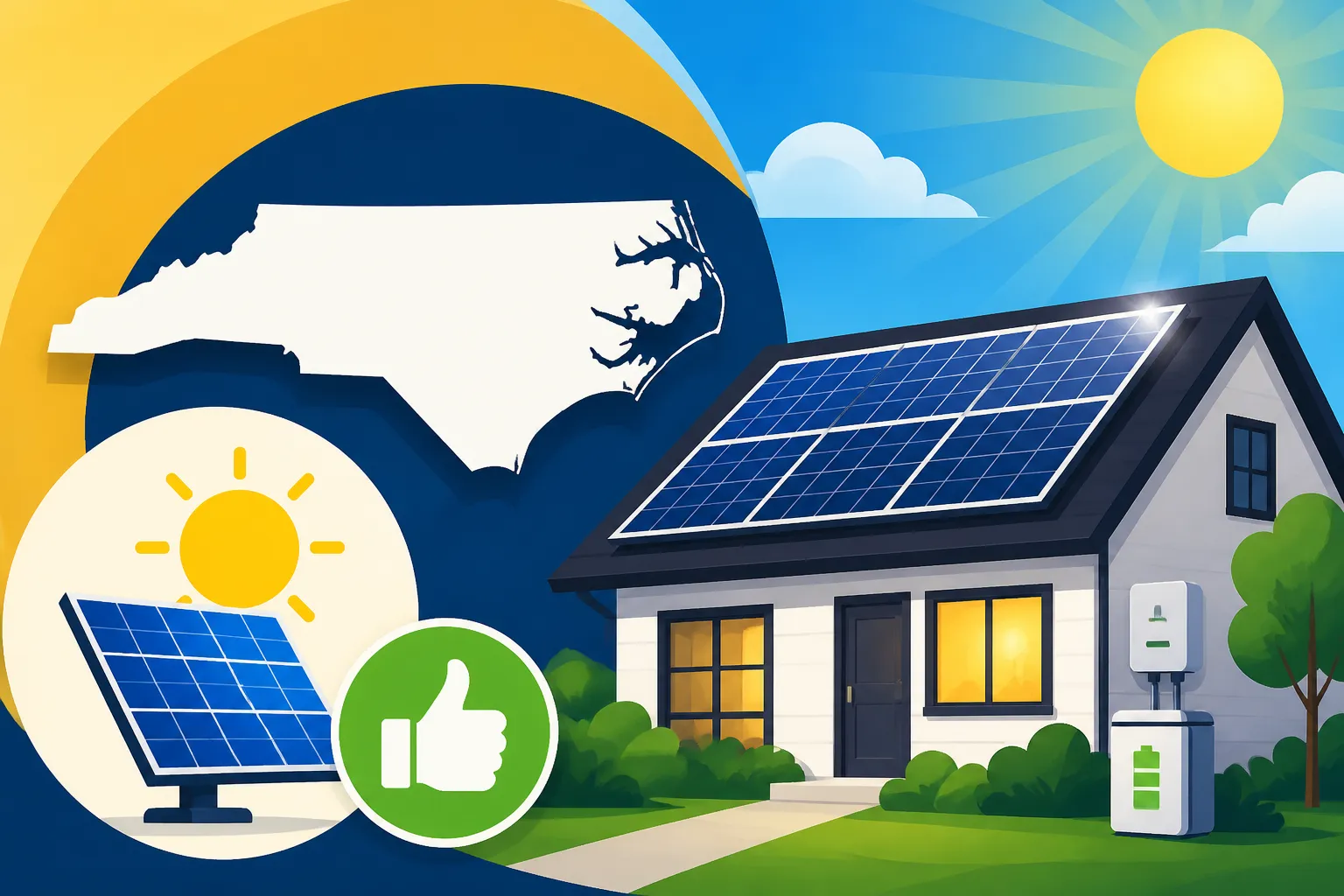
North Carolina offers a surprisingly favorable environment for solar energy, even though it might not always get the same headlines as states like California or Arizona. The unique combination of ample sunshine, evolving energy policies, and rising utility rates makes a strong case for investing in solar. But let's dig into the specifics.
Sunshine and Solar Potential in the Tar Heel State
When you think of North Carolina, you might picture lush green mountains or beautiful coastal beaches, but it also boasts excellent solar insolation—that's a fancy term for how much sunlight reaches the ground. Most areas of the state receive an average of 4.5 to 5 peak sun-hours per day. What does this mean in plain English? It means your solar panels will be working efficiently for a significant portion of the day, producing plenty of clean electricity.
For example, cities like Charlotte, Raleigh, and Wilmington all benefit from this generous sun exposure. Even western mountain communities, while perhaps seeing a bit more cloud cover, still have strong solar potential. This consistent sunlight is the fundamental building block for a successful solar energy system, directly influencing how much electricity your panels can generate and, consequently, how much you can save on your utility bills. It's not just about the absolute brightest days; it's about the consistent, year-round production that makes a difference.
Electricity Rates and Your Savings Potential
One of the biggest drivers for going solar anywhere is the cost of grid electricity, and North Carolina is no exception. While rates might fluctuate, they've been on a general upward trend, making solar an increasingly attractive option for locking in your energy costs. Major utilities like Duke Energy Carolinas and Duke Energy Progress serve most of the state, and their residential rates typically hover around the national average, sometimes a bit higher depending on your specific service area and time of use.
Imagine paying around 14 to 16 cents per kilowatt-hour (kWh) now, and then projecting what that might look like in 5, 10, or even 20 years. With solar, you're essentially prepaying for much of your electricity at today's rates, insulating yourself from future price hikes. This long-term stability is a huge financial perk. The more expensive electricity becomes, the faster your solar panels will pay for themselves and the more money you'll save over their 25+ year lifespan. It's all about taking control of a variable expense that usually feels completely out of your hands.
Key Solar Incentives and Programs in North Carolina
While North Carolina may not have a statewide solar tax credit like some other states, there are still significant financial incentives that make solar an appealing investment. These programs can drastically reduce your upfront costs and improve your overall return on investment.
Federal Solar Investment Tax Credit ITC
Let's start with the big one, the federal incentive that helps homeowners across the entire U.S.: the Solar Investment Tax Credit (ITC). This isn't a North Carolina-specific program, but it's crucial for anyone considering solar in the state. The ITC allows you to claim a percentage of your solar panel system's cost as a credit on your federal income taxes. Currently, this credit stands at a robust 30%. This means if your system costs $25,000, you could get $7,500 back as a tax credit.
It’s important to understand that this is a credit, not a deduction. It reduces your tax liability dollar-for-dollar. If you don't owe enough in taxes to use the full credit in one year, you can typically carry forward the remaining credit to future tax years. This incentive significantly lowers the net cost of going solar, making it more accessible and financially viable for many North Carolina families. The value of this credit alone often represents the largest financial benefit you'll receive when installing solar.
Property and Sales Tax Exemptions
Even without a direct state income tax credit, North Carolina offers other valuable tax benefits that help solar homeowners. One key benefit is the solar property tax exemption. This means that if you add a solar energy system to your home, the increase in your home's value due to the solar installation will not be added to your property's assessed value for tax purposes. This is huge because solar panels do increase your home's value, but without this exemption, you'd likely see an increase in your annual property tax bill.
Additionally, North Carolina has a state sales tax exemption for solar energy equipment. This means you don't have to pay sales tax on the purchase and installation of your solar panels and associated equipment. While it might seem like a small detail, sales tax can add a significant amount to the overall cost of a solar system, so avoiding this expense is another welcome financial relief. These exemptions, while not as flashy as a direct rebate, contribute substantially to making solar more affordable over the long term.
Net Metering Policies in North Carolina
Net metering is often considered the cornerstone of solar savings, allowing you to get credit for the excess electricity your panels produce and send back to the grid. In North Carolina, the major utilities like Duke Energy Carolinas and Duke Energy Progress generally offer net metering programs, though the specifics can vary. The core idea is that when your solar panels generate more electricity than your home consumes, that surplus energy is sent to the grid, and your utility company credits your account. When your panels aren't producing enough (like at night), you draw electricity from the grid and use those credits.
This system effectively allows your home to use the grid as a giant battery, ensuring you maximize the value of every electron your panels produce. However, it's crucial to understand the nuances. For instance, in North Carolina, customers are typically billed based on a monthly netting period, and any excess generation usually rolls over to the next month. At the end of an annual cycle, any remaining credits might be paid out at an "avoided-cost rate," which is often lower than the retail rate you pay for electricity. This means it's generally best to size your system to cover as much of your annual electricity usage as possible, rather than aiming for massive overproduction. Keeping an eye on how Net Metering Explained in North Carolina evolves is important for future homeowners.
Renewable Energy Credits (RECs) and SRECs
North Carolina has a history with Renewable Energy Credits (RECs), specifically Solar Renewable Energy Certificates (SRECs). These are market-based instruments that represent the environmental attributes of one megawatt-hour (MWh) of electricity generated from a solar facility. In the past, North Carolina had a Renewable Energy and Energy Efficiency Portfolio Standard (REPS) that mandated utilities source a certain percentage of their electricity from renewable sources, including solar. This created a demand for SRECs, which homeowners could sell for additional income.
While the REPS program has evolved, and the SREC market in North Carolina has seen its ups and downs, there are still opportunities for homeowners to benefit from the value of the renewable energy their systems produce. It's a bit of a complex market, and prices can fluctuate, so it's a good idea to work with an experienced solar provider or a broker who can help you understand the current value and process for selling your RECs. This additional revenue stream can further reduce your solar panel payback period and boost your overall financial returns, turning your clean energy generation into an extra source of income.
Calculating Your Solar ROI in the Tar Heel State
Determining if solar is "worth it" often comes down to the return on investment (ROI). For North Carolina homeowners, a combination of falling equipment costs, federal incentives, and robust energy production potential creates a compelling financial picture.
Typical Payback Periods and Long-Term Savings
The payback period for a solar energy system in North Carolina typically ranges from about 8 to 12 years. This is the time it takes for your cumulative energy savings and incentive benefits to equal the initial cost of your system. Once you hit that break-even point, all the electricity generated by your panels is essentially free, leading to pure savings for the remainder of your system's lifespan, which is usually 25 to 30 years or even longer.
Consider a homeowner in Asheville who installs a 7 kW system. With an average electricity bill of $150 per month, they could be looking at annual savings of $1,800. Factoring in the 30% federal tax credit and the absence of property tax increases, their initial investment can be recovered within a decade. After that, they're looking at potentially tens of thousands of dollars in savings over the system's lifetime. When discussing Solar ROI & 25-Year Savings Breakdown, it's clear that the long-term benefits far outweigh the initial investment for many.
How Different Financing Options Impact ROI
How you pay for your solar system in North Carolina significantly impacts your overall ROI and payback period.
- Cash Purchase: This option typically offers the best ROI and the shortest payback period because you avoid interest payments and loan fees. You pay the full upfront cost, but you also reap the full benefit of the federal tax credit and immediate energy savings. If you have the capital available, this is often the most financially advantageous route.
- Solar Loan: Many homeowners opt for solar loans, which allow them to go solar with little to no money down. While you will pay interest on the loan, your monthly loan payments are often offset (or even less than) your previous utility bills, providing immediate cash flow benefits. The federal tax credit can even be used to pay down a significant portion of your loan principal, further reducing your monthly payments or shortening the loan term. Be mindful of solar loan dealer fees, as these can add to the effective cost of your system.
- Solar Lease or Power Purchase Agreement (PPA): These options involve a third party owning the system on your roof, and you pay them a fixed monthly fee (lease) or a per-kilowatt-hour rate (PPA) for the electricity generated. While these options often require $0 down, they typically offer a lower overall ROI compared to ownership because you don't get to claim the federal tax credit or fully benefit from the increased home value. They are, however, a great way to access solar with no upfront cost and no maintenance worries. Understanding Solar Lease vs PPA vs Buy is crucial for making the right choice for your financial situation.
The right financing choice depends entirely on your financial situation, your immediate goals, and how long you plan to stay in your home. Platforms like Modernize can help you compare various financing options from different installers, providing clarity on how each one might affect your budget and long-term savings.
Increasing Home Value with Solar
Beyond the direct savings on your electricity bills, solar panels can significantly increase your home's value in North Carolina. Studies have consistently shown that homes with owned solar energy systems sell for a premium compared to comparable homes without solar. This premium can be substantial, often equaling or exceeding the cost of the system itself, particularly in areas with high electricity rates.
Imagine selling your house in Durham. A potential buyer would see not just a well-maintained home, but also one with significantly lower (or even non-existent) electricity bills. This is a huge selling point in today's market. The exact increase can vary based on your system size, local real estate trends, and the perceived value of solar in your specific neighborhood, but it’s generally a positive asset. Furthermore, because of North Carolina's property tax exemption for solar, you get this increase in value without an increase in your property tax assessment, making it a win-win. This is a compelling argument for Do Solar Panels Increase Home Value?
Factors That Influence Solar's Value for Your North Carolina Home
While North Carolina generally offers a favorable environment for solar, the "worth it" question ultimately comes down to your individual home and circumstances. Several key factors will dictate just how beneficial solar will be for you.
Your Home's Energy Consumption
One of the primary drivers of solar savings is your current electricity usage. Simply put, if you have high electricity bills, you have more to save by going solar. Homeowners with large families, those who use a lot of air conditioning during hot North Carolina summers, or those with electric vehicle charging stations will likely see greater financial benefits. A home with an average monthly electricity bill of $200 will naturally save more than a home with a $50 bill, as there's a larger amount of utility electricity to offset.
Before you even start looking at panels, understanding your household's annual electricity consumption is step one. Review your past 12-24 months of utility bills to get an accurate picture. This information is critical for designing a solar system that's appropriately sized for your needs, maximizing your savings without overproducing (unless you have a favorable net metering arrangement or a battery system). Knowing your consumption helps you determine How Many Solar Panels Do I Need for My Home for optimal results.
Roof Suitability and Shading
The physical characteristics of your home, particularly your roof, play a huge role in solar panel performance.
- Roof Space and Angle: Ideally, you want a south-facing roof with ample space that can accommodate enough panels to meet your energy needs. While south-facing is optimal, east and west-facing roofs can also work well, especially with modern panel technology. The pitch or angle of your roof also impacts efficiency, with angles between 30 and 40 degrees generally being best for North Carolina's latitude.
- Shading: Any significant shading from trees, neighboring buildings, or other roof structures can drastically reduce your panels' output. Even partial shading on one panel can impact the performance of an entire string of panels if you're using a traditional string inverter system. This is why many installers in North Carolina recommend microinverters or power optimizers, which allow each panel to operate independently, mitigating the effects of shade. A thorough site assessment by an installer found through platforms like Modernize will evaluate your roof's solar suitability, including its age, condition, and any potential shading issues.
- Roof Age and Condition: If your roof is nearing the end of its lifespan (e.g., less than 5-10 years left), it's often more cost-effective to replace it before installing solar panels. Removing and reinstalling panels for a new roof can be an added expense later on, so planning ahead is wise. Understanding Roof Considerations for Solar Panels is paramount.
Local Utility and Grid Infrastructure
While North Carolina has statewide net metering policies, the specifics can still vary slightly depending on your particular utility provider. Duke Energy, for example, has its own interconnection processes and tariffs. The stability and capacity of your local grid infrastructure can also play a role, though this is less common for residential installations.
It's also worth noting that utilities sometimes have specific requirements for interconnection, rapid shutdown systems, or even the type of inverter technology you can use. Working with a local solar installer who is familiar with the regulations and preferred equipment of utilities like Duke Energy Carolinas or Dominion Energy is crucial to a smooth installation process and ensuring you qualify for all available benefits. They can navigate the Solar Permitting & Interconnection (PTO) process efficiently.
Your Future Plans and Energy Goals
Finally, your personal future plans and energy goals should factor into your decision.
- How Long Do You Plan to Stay in Your Home? If you plan to move within a few years, a solar lease might offer quicker benefits with less commitment, though it can sometimes complicate selling your home. If you're staying put for a decade or more, ownership (cash or loan) almost always yields a better long-term ROI.
- Are You Considering an Electric Vehicle (EV)? If you plan to purchase an EV, your electricity consumption will likely increase significantly. Sizing your solar system to accommodate future EV charging can be a smart move, ensuring your system remains robust enough to offset those new energy demands.
- Do You Want Battery Backup? While not strictly necessary for grid-tied solar, adding a solar battery like a Tesla Powerwall or Enphase IQ Battery can provide backup power during outages and allow you to optimize your energy usage, especially if your utility has time-of-use rates. While batteries add to the upfront cost, they can significantly enhance your energy independence and comfort, especially during North Carolina's occasional severe weather events.
Ultimately, going solar in North Carolina is a sound financial decision for many homeowners, driven by a combination of good sun exposure, rising electricity costs, and valuable incentives. But like any major home improvement, it requires careful consideration of your unique circumstances to ensure it’s the right fit for you.
Disclaimer
Please note that incentive programs, electricity rates, and solar policies can change. While we strive to provide the most current and accurate information, it is always recommended to verify all details with local solar professionals, utility companies, and relevant government agencies. This article is intended for informational purposes only and does not constitute financial or professional advice.