$0 Down Solar: How It Really Works
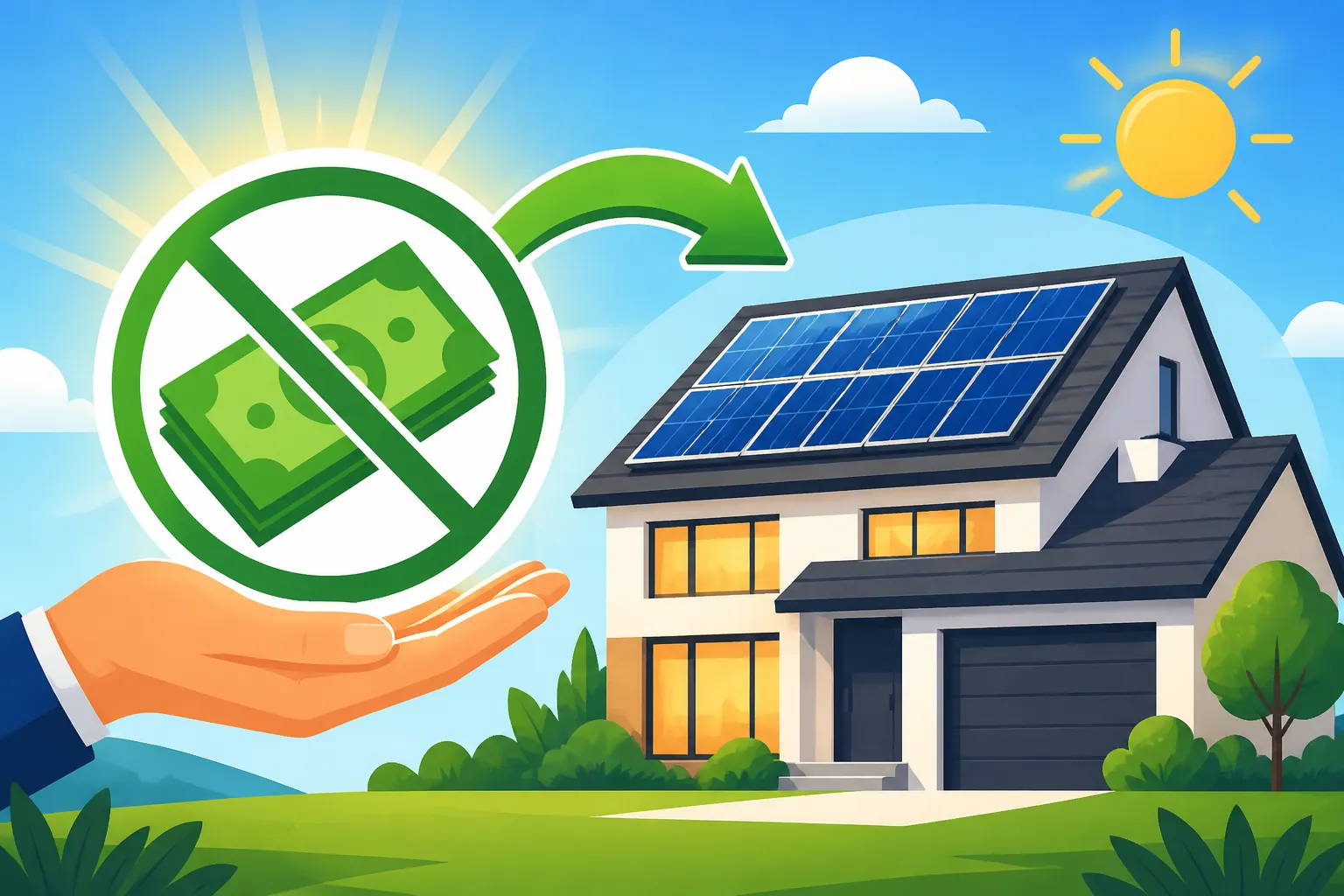
The idea of going solar can feel incredibly overwhelming, especially when you start digging into the costs. Many homeowners look at those upfront price tags and feel like it's simply out of reach, convinced they need tens of thousands of dollars in cash to make it happen. But what if I told you there’s a way to get solar panels on your roof without paying a single cent upfront? That's what "$0 down solar" promises, and it's a game-changer for many, making renewable energy accessible to more families than ever before. This guide will pull back the curtain on how it truly works, dissecting the different options, their real benefits, and the important considerations you need to weigh.
Understanding the Zero Down Solar Concept
It's easy to be skeptical when you hear "zero down" and "solar" in the same sentence. For years, installing solar panels meant a hefty initial investment that excluded many households. But the industry has evolved, and various financial products now make it possible to go solar without any upfront cash. This isn't magic, though; it's smart financing designed to spread the cost over time or offer solar energy as a service.
Dispelling Common Myths About $0 Down Solar
One of the biggest misconceptions is that $0 down means "free solar." Let's be clear: nothing is truly free, and solar power systems are valuable assets. When you opt for a $0 down program, you're either financing the purchase of the system with no upfront payment or you're entering into an agreement where a third party owns the system and sells you the power it generates. It’s a common frustration to see flashy marketing that implies free electricity, only to find out there’s a long-term commitment. This guide aims to clear up that confusion and provide a realistic picture of what you're getting into. It's about making solar affordable by removing the initial barrier, not eliminating the cost entirely.
Another myth is that $0 down solar is always a bad deal, fraught with hidden fees or terrible rates. While it’s absolutely true that you need to read the fine print (and we’ll dive deep into that later), many $0 down options are perfectly legitimate and can offer significant savings over the lifetime of your system, especially as electricity rates continue to climb. The key is understanding the different pathways available and selecting the one that best fits your financial situation and energy goals. For many, it's the only practical path to harnessing solar energy.
How it Differs from Traditional Solar Purchases
Traditionally, buying solar panels meant paying cash upfront or taking out a home equity loan, both of which required substantial initial capital. A $0 down approach fundamentally changes this by allowing you to start generating your own clean energy immediately, without depleting your savings. Instead of a large lump sum payment, you'll have ongoing monthly payments, similar to a utility bill, but often at a predictable or lower rate. This shift makes solar accessible to a much wider demographic, including those who don't have large sums of cash readily available but can afford a consistent monthly expense.
Think of it like buying a car versus leasing one. With a traditional purchase, you pay the full price upfront (or finance it with a down payment) and own the car from day one. With $0 down solar, it’s more akin to a car lease or a specialized loan where ownership or the service provision starts without you needing to put money down initially. The terms, responsibilities, and long-term financial outcomes are vastly different, and understanding these distinctions is critical.
The Different Types of $0 Down Solar Options
When you explore $0 down solar, you'll generally encounter three main pathways: solar loans, solar leases, and Power Purchase Agreements (PPAs). Each has its own structure, benefits, and considerations, and what's right for your neighbor in Phoenix might not be the ideal solution for your home in Boston. It's essential to look closely at these options to determine which one aligns with your financial comfort level and energy independence goals.
Solar Loans: Ownership Without Upfront Cost
A $0 down solar loan is, at its core, similar to any other loan you might take out for a home improvement project. You borrow the money to cover the entire cost of the solar panel system, and then you make regular monthly payments to repay that loan. The big difference here is that you're not required to put any money down at the start. You own the solar system from day one, which is a massive benefit.
Because you own the system, you're eligible for all available financial incentives. This traditionally included the federal solar tax credit, state solar incentives, and often local utility rebates. Even though the federal credit has been a huge driver, exploring Federal Solar Incentives That Still Exist in 2026 and State Solar Incentives: Complete 2026 Guide is crucial to maximize your savings. For instance, if you live in New York, you might be eligible for incentives through the NY-Sun program, in addition to any local utility offers. Owning the system means you directly benefit from its production, reducing or even eliminating your electricity bills and building equity in your home. Be aware of potential dealer fees, though; some loan products bundle these into the loan amount, increasing your total cost and sometimes making the APR seem artificially low. This is why understanding Solar Dealer Fees Explained (Hidden Loan Costs) is so important.
Solar Leases: Paying to Use the System
With a solar lease, you don't actually own the solar panel system. Instead, a solar company installs the panels on your roof, and you pay them a fixed monthly fee to use the equipment. It's much like leasing a car – you get the benefits of driving it, but you don't hold the title. The solar company remains the owner, responsible for maintenance, repairs, and performance monitoring. This can be a huge relief for homeowners who want to avoid the responsibilities of ownership.
The primary benefit of a solar lease is often predictable monthly payments that are typically lower than your previous utility bill. Since the solar company owns the system, they claim all the incentives, like the federal tax credit. This means you won't directly receive those financial perks, but the savings are generally passed on to you through the lower monthly lease payments. Lease agreements usually run for 20 to 25 years and often include an escalator clause, meaning your payments will increase by a small percentage (e.g., 2-3%) each year. This is a crucial detail to understand when comparing options, as that small annual increase can add up over two decades.
Power Purchase Agreements (PPAs): Paying for the Power Produced
A Power Purchase Agreement (PPA) is very similar to a solar lease in that a third party owns, installs, and maintains the solar system on your property. The key difference is how you pay. Instead of a fixed monthly lease payment, with a PPA, you agree to buy the electricity generated by the solar panels at a predetermined rate per kilowatt-hour (kWh). This rate is typically lower than what your utility company charges, providing immediate savings.
Just like with a lease, the solar company benefits from the incentives, not you directly, because they own the system. PPAs offer the advantage of paying only for the electricity your system actually produces, which can fluctuate based on weather and sunlight. This means if your system produces less one month, you pay less, whereas a lease payment is usually fixed. Many homeowners appreciate the direct correlation between production and cost. PPAs also often come with annual escalators, just like leases, so you’ll want to clarify those terms before signing. To truly understand the nuances between these ownership models, diving into Solar Lease vs PPA vs Buy: Which Is Best? is highly recommended.
Pros and Cons of $0 Down Solar
Deciding to go solar is a big step, and choosing a $0 down option brings its own set of advantages and disadvantages. It's important to look at both sides of the coin with open eyes, understanding that what seems like a simple, easy solution might have long-term implications that deserve careful consideration. My goal here is to give you a realistic overview so you can make the best choice for your unique situation.
The Clear Advantages of No Upfront Investment
The most obvious and compelling advantage of $0 down solar is the immediate accessibility it offers. For many families, coming up with $20,000 to $30,000 or more for a solar system is simply not feasible. $0 down options remove this initial financial barrier, allowing you to start enjoying the benefits of solar energy without touching your savings or taking out a second mortgage. This can be particularly appealing if you're looking to reduce your carbon footprint and save on electricity bills right away, but don't have the cash on hand.
Another significant benefit, especially with leases and PPAs, is the complete lack of responsibility for maintenance and repairs. If an inverter breaks or a panel isn't producing as it should, the solar provider handles it. This peace of mind is invaluable for homeowners who prefer a hands-off approach. It means you don't have to worry about the long-term performance or the unexpected costs that can come with owning complex equipment. It’s a significant factor for those who might be hesitant about the technical aspects of solar ownership.
Potential Drawbacks and Long-Term Considerations
While attractive, $0 down solar isn't without its downsides. For leases and PPAs, one of the biggest drawbacks is that you don't own the system. This means you don't get to claim the valuable federal investment tax credit (ITC) or any state or local incentives that are typically tied to system ownership. The solar company claims these benefits, and while they might pass some savings on to you through lower monthly rates, you're missing out on a direct, substantial financial gain. This is a critical point when evaluating if Is Leasing Solar a Bad Idea? for your specific financial goals.
Another consideration, particularly with leases and PPAs, is the potential complexity when selling your home. While many agreements allow for easy transfer to a new homeowner, some buyers can be hesitant to take on a long-term contract. It can sometimes complicate or delay the sale, especially if the new buyer doesn't want to commit to a solar agreement. You'll need to work closely with your real estate agent and the solar company to ensure a smooth transition. For more insights on this topic, refer to Selling a House With Solar Panels. Moreover, some lease and PPA agreements have annual escalator clauses, meaning your monthly payments will increase over time, which can chip away at your long-term savings.
Who is $0 Down Solar Best For?
Understanding the different $0 down options is one thing, but knowing if any of them are truly right for your household is another. These financing structures aren't a one-size-fits-all solution, and certain homeowners will find them far more advantageous than others. It really comes down to your personal financial situation, your long-term plans for your home, and your comfort level with ownership versus service agreements.
Homeowners with Limited Upfront Capital
The most obvious candidates for $0 down solar are homeowners who want to go solar but simply don't have the significant upfront cash to purchase a system outright. Maybe you've got other financial priorities, like saving for retirement or a child's education, or perhaps you've recently incurred other large expenses. Whatever the reason, if a large initial investment is a roadblock, $0 down solar opens the door to clean energy. This means you don't have to wait years to save up, allowing you to start reducing your electricity bills and carbon footprint right away.
This path is especially beneficial for those living in areas with high electricity rates. Imagine living in parts of California or Hawaii, where electricity costs can be notoriously high. Even with a monthly payment for a solar loan, lease, or PPA, you could still see significant net savings compared to what you were paying the utility company. It's about immediately locking in a more predictable energy cost, which is a huge relief when utility prices seem to be constantly on the rise.
Those Seeking Predictable Energy Costs and Peace of Mind
Many homeowners simply want to take control of their energy costs and avoid the unpredictable fluctuations of traditional utility bills. With a solar lease or PPA, you often get a fixed or predictable monthly payment, or a fixed rate per kWh, which provides a level of budgetary certainty that's hard to achieve otherwise. This stability is a huge draw for those who prioritize budgeting and want to protect themselves against future utility rate hikes. For a deeper dive, consider reading How Much Can You Save With Solar Panels?.
Furthermore, if the idea of maintaining a complex system gives you pause, a solar lease or PPA might be ideal. Since the solar company retains ownership, they are typically responsible for all monitoring, maintenance, and repairs. This means if a panel malfunctions, an inverter fails, or you have questions about performance, it's their problem, not yours. This "set it and forget it" approach offers incredible peace of mind, allowing you to enjoy the benefits of solar without the operational headaches that can sometimes come with ownership.
Homeowners Not Concerned with Tax Incentives or Resale Value Maximization
For some homeowners, claiming the federal tax credit or maximizing their home's resale value specifically through solar ownership isn't their top priority. They might be more focused on environmental impact, immediate savings, or simply the convenience of not having to deal with system maintenance. In these cases, a solar lease or PPA can be a very attractive option. If you're not in a high enough tax bracket to fully utilize the federal tax credit, for example, then forfeiting it to a solar provider who offers a lower monthly payment might make more financial sense for you personally.
It’s also important to consider your long-term plans. If you anticipate moving within the next 5-10 years, a solar lease or PPA might offer more flexibility than a solar loan or cash purchase, which can involve transferring loan obligations or fully recouping your investment in a shorter timeframe. While transferring a lease or PPA can sometimes be tricky, it can also be a simpler process than trying to sell a home with an owned system that still has a significant loan balance. It depends heavily on the specific terms and the housing market.
Understanding the Fine Print and Hidden Costs
The promise of "$0 down" is powerful, but savvy homeowners know that it's crucial to read beyond the headlines. While there might not be an upfront payment, there are still financial commitments, and sometimes, less obvious costs or clauses that can impact your long-term savings. Ignoring the details in the contract can lead to frustrating surprises down the line, so let's break down what you absolutely need to look for.
Scrutinizing Loan Terms, Interest Rates, and Dealer Fees
If you're considering a $0 down solar loan, the most important documents to pore over are the loan terms and conditions. Pay very close attention to the interest rate (APR) and the total loan amount. Sometimes, installers will advertise a very low or even 0% APR, but this often comes with a significant "dealer fee" or "origination fee" that is rolled into the total loan amount. While you still pay $0 upfront, this fee effectively inflates the principal of your loan, meaning you're borrowing and paying interest on more money than the actual equipment and installation costs.
For example, a $25,000 solar system might be financed with a 0.99% APR, but the loan amount could be $30,000 to cover a 20% dealer fee. You’d be paying back $5,000 more than the system’s true cost. Always ask for the cash price of the system versus the financed price, and understand exactly how dealer fees affect your total repayment. This is where resources like Is Financing Solar Worth It With Dealer Fees? can be incredibly helpful. Be sure to understand if there are any prepayment penalties if you decide to pay off the loan early.
Dissecting Lease Agreements and Escalator Clauses
Solar lease agreements require a different kind of scrutiny. The primary figures to watch are the monthly payment and, crucially, any escalator clauses. Many leases include an annual escalator, meaning your payment will increase by a small percentage (commonly 2-3%) each year for the duration of the 20-25 year contract. While 2% might not sound like much, over two decades, it can significantly increase your total payments. Compare this escalator rate to historical utility rate increases in your area. If your utility rates are rising faster, the escalator might still lead to savings, but if they're stagnant, it could erode your benefits.
Also, look for clauses related to system performance guarantees and maintenance responsibilities. A good lease will guarantee a certain level of production and clearly outline what happens if the system underperforms. It should also specify that the solar provider is responsible for all repairs, monitoring, and even panel cleaning. Understanding what constitutes an early termination fee is also vital, should your circumstances change and you need to end the contract prematurely.
PPA Rates, Escalators, and Performance Guarantees
Power Purchase Agreements have their own specific details to examine. The most critical component is the rate per kilowatt-hour (kWh) you'll be paying for the solar electricity. Make sure this rate is competitive and, ideally, lower than your current utility rate to ensure immediate savings. Like leases, many PPAs also include annual escalator clauses. These escalators increase your per-kWh rate over the contract term, typically 20-25 years. Again, compare this escalator rate to your local utility's historical rate increases to project your long-term savings.
Ensure the PPA includes robust performance guarantees. Since you’re paying for the electricity produced, you want assurance that the system will perform as expected. A solid PPA will specify a minimum annual production and detail compensation if the system falls short. Furthermore, clarify what happens at the end of the PPA term. Common options include renewing the agreement, having the system removed, or purchasing the system at its fair market value. The company Modernize often helps homeowners navigate these complex agreements by connecting them with reputable installers who can explain all these terms clearly.
Comparing $0 Down Options with Outright Purchase
When you're weighing your solar options, it's not just about choosing between different $0 down methods; it's also about comparing those to the traditional cash purchase model. While $0 down makes solar accessible, buying outright with cash often yields the highest long-term financial returns for those who can afford it. It's a classic trade-off between convenience and maximizing savings, and your personal financial picture will dictate which path is best.
Maximizing ROI with a Cash Purchase
If you have the financial means, paying for your solar system upfront with cash generally offers the best return on investment (ROI). When you buy with cash, you completely avoid interest payments, loan origination fees, and any annual escalators associated with leases or PPAs. This significantly reduces your overall cost of ownership. Plus, as the system owner, you are fully entitled to all available incentives, including the federal tax credit (which is 30% for systems installed through 2032). This credit alone can reduce your system cost by a substantial amount.
Imagine a system costing $25,000. A 30% federal tax credit immediately brings your net cost down to $17,500. Add in any state or local incentives, and your true out-of-pocket expense can be even lower. Without ongoing loan or lease payments, your electricity savings are immediate and significant. The payback period—how long it takes for your savings to offset your initial investment—is typically shortest with a cash purchase. For a comprehensive overview, check out Cash vs Financing Solar: Which Saves More?. It also gives you full control over your system, from choosing components to potential future upgrades.
Financial Implications and Long-Term Savings
Let's look at the financial impact over 20-25 years. With a cash purchase, once the system is installed, your major expense is done (barring minimal maintenance). All subsequent electricity savings directly benefit your wallet. If electricity rates continue to rise, your savings will grow larger over time. For example, if your utility charges $0.20/kWh and that increases to $0.30/kWh in 10 years, your solar production becomes even more valuable.
In contrast, $0 down loans, leases, and PPAs involve ongoing monthly payments. While these payments are often structured to be lower than or comparable to your previous utility bill, they still represent an outflow of cash. Over the full term of the agreement, the total amount paid for a financed or leased system will almost always exceed the cash price of the same system due to interest, fees, or escalating payments. However, the advantage is that you didn't have to part with a large sum of money upfront, preserving your liquidity for other investments or emergencies. It's a trade-off between immediate cash flow preservation and maximum long-term savings.
Impact on Home Value and Future Selling Options
The way you finance your solar system can also affect your home's value and how easily it sells in the future. Generally, an owned solar system that is paid off is considered a significant upgrade and can substantially increase your home's resale value, often more than the cost of the system itself. This is because buyers see it as a permanent reduction in their future utility expenses. A well-maintained, owned system can make your home stand out in the market. Check out Do Solar Panels Increase Home Value? for more details.
With a solar loan, as long as the loan transfers smoothly with the sale of the house, it can still add value, although potential buyers will need to qualify for and assume the loan. Leased or PPA systems, however, can sometimes complicate a home sale. While many agreements are designed to be transferable, some buyers are hesitant to take on a long-term contract they didn't initiate. This isn't to say your home won't sell, but it might narrow your pool of buyers or require some negotiation. Many installers partner with companies like Modernize to ensure their financing options are clear and straightforward for both current and future homeowners.
Steps to Getting $0 Down Solar
The process of going solar, even with a $0 down option, involves several key stages. It’s not just about picking a financing plan; it’s about understanding your energy needs, finding the right installer, navigating permits, and finally, getting your system up and running. Knowing these steps ahead of time can help you manage expectations and ensure a smoother journey to energy independence.
Assessing Your Energy Needs and Roof Suitability
Before you even think about financing, the first crucial step is to understand your household's electricity consumption. Gather your past 12 months of utility bills to get an accurate picture of your average monthly and annual electricity usage (measured in kWh). This data is essential for a solar installer to design a system that can effectively offset your consumption. Over- or undersizing your system can lead to less-than-optimal savings.
Next, consider your roof. Is it in good condition? A typical solar system lasts 25-30 years, so your roof should ideally have at least 10-15 years of life left. If not, you might need to consider a roof replacement before going solar. Also, consider the direction your roof faces (south-facing is generally best in the Northern Hemisphere) and any potential shading from trees or neighboring buildings. These factors significantly impact how much sunlight your panels will receive and, consequently, how much electricity they’ll produce. You can learn more about this process by reading Roof Considerations for Solar Panels.
Getting Multiple Quotes and Choosing an Installer
Once you have a handle on your energy usage and roof viability, it's time to reach out to reputable solar installers. This is arguably the most critical step in the entire process. Don't settle for the first quote you receive. Always get at least three to five quotes from different companies. This allows you to compare system designs, equipment (panels, inverters, batteries), warranties, and, of course, the different $0 down financing options they offer. When you request quotes, specify that you're interested in $0 down solutions (loans, leases, or PPAs).
A good installer will perform a thorough site assessment, explain the proposed system design, detail the estimated energy production, and clearly break down all the financial options, including the fine print we discussed earlier. Look for installers with strong local reputations, appropriate licenses and certifications (like NABCEP), and excellent customer reviews. Companies like Modernize can be incredibly helpful here, as they connect homeowners with pre-vetted local solar installers, simplifying the quote comparison process. Don't be afraid to ask tough questions about warranties, maintenance, and what happens if you sell your home.
Installation, Permitting, and Interconnection
After you've selected an installer and finalized your contract, the real work begins on their end. The installer will handle the necessary permits from your local municipality and prepare for the actual installation. The permitting process can sometimes feel like the longest part of the journey, as it involves coordinating with local building departments and ensuring all safety and structural codes are met. This can vary wildly by location; a Solar Permit Process in California might be different from a Solar Permit Process in Texas.
Once permits are secured, the physical installation of the panels, inverters, and electrical components usually takes just a few days to a week. After installation, your system will undergo inspections by both the local building department and your utility company. The final step is "interconnection," where your utility grants you "Permission to Operate" (PTO). This is the exciting moment when your system is officially connected to the grid and you can start generating your own electricity. The entire process, from signing the contract to flipping the switch, can take anywhere from 2 to 6 months, depending on local permitting timelines and installer schedules.
Navigating the Market and Choosing a Provider
The solar market is dynamic, with new technologies and financing options emerging regularly. Choosing the right provider, especially for a $0 down solution, requires a discerning eye. You're not just buying equipment; you're entering into a long-term relationship, so finding a trustworthy and transparent partner is paramount.
Researching Reputable Solar Companies
Starting your search with a focus on reputable companies can save you a lot of headaches down the line. Look for installers with a strong track record, positive customer reviews on independent platforms (like Google Reviews, Yelp, or the Better Business Bureau), and appropriate industry certifications (such as those from the North American Board of Certified Energy Practitioners, NABCEP). Longevity in the business is also a good sign, indicating financial stability and experience.
Be wary of high-pressure sales tactics or companies that make overly aggressive claims about savings without providing detailed proposals. A good solar provider will take the time to explain everything clearly, answer all your questions, and provide a transparent quote that breaks down costs and projected savings. Platforms like Modernize can help streamline this research by connecting you with certified and reviewed installers in your area, giving you a strong starting point for comparison. It’s also wise to check if they have a physical presence or local support staff in your region.
Asking the Right Questions About $0 Down Options
When discussing $0 down options, come prepared with a list of targeted questions. For a solar loan, ask about the total loan amount, the stated APR, and the effective APR once all dealer fees are factored in. Inquire about the loan term, fixed vs. variable interest rates (though most residential solar loans are fixed), and any prepayment penalties. Understanding the full cost of financing is key.
For leases and PPAs, clarify the monthly payment or per-kWh rate. Explicitly ask about any annual escalator clauses – what percentage, for how many years, and how that's projected to compare to utility rate increases. Inquire about the length of the contract (typically 20-25 years), what happens at the end of the term, and the process for transferring the agreement if you sell your home. Crucially, ask about maintenance, repairs, and performance guarantees: who is responsible for what, and what recourse do you have if the system underperforms? The more detailed your questions, the clearer your understanding will be.
What to Look for in Contracts and Warranties
Before signing anything, meticulously review the contract. Ensure that all verbal promises are clearly written into the document. Check that the system size, panel brands, inverter type, and all financial terms (loan amounts, interest rates, payment schedules, escalators) match what was discussed. Pay close attention to cancellation clauses and any penalties associated with them.
Equally important are the warranties. There are typically three types: equipment (product) warranty, performance warranty, and workmanship (installation) warranty. The product warranty covers defects in the solar panels themselves, often for 25 years. The performance warranty guarantees that the panels will produce a certain percentage of their rated power over time (e.g., 80% after 25 years). The workmanship warranty covers the installation itself, typically ranging from 10 to 25 years. With leases and PPAs, the solar provider generally handles all warranty claims, but with a loan, you'll need to understand your role in filing claims. A comprehensive explanation of your Solar Panel Warranties Explained will empower you to identify strong coverage. Ensure these are clearly outlined in your agreement, as they are your protection against future issues.
Disclaimer
The information provided in this guide is for general informational purposes only and does not constitute financial, tax, or legal advice. Solar incentives, costs, and regulations can vary significantly by location and change over time. It is highly recommended to consult with qualified professionals, such as a financial advisor, tax specialist, and multiple certified solar installers, to discuss your specific situation and make informed decisions.