Solar Panel Cost for a 1,000 Sq Ft House
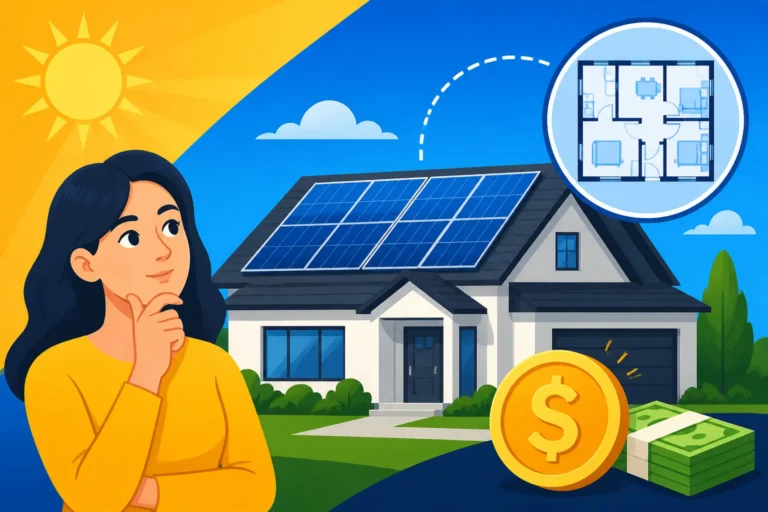
Many homeowners with smaller footprints, say a cozy 1,000 sq ft house, often wonder if going solar is truly viable or just another pipe dream for McMansions. The truth is, figuring out the actual solar panel cost for a 1,000 sq ft house can feel like navigating a maze, with conflicting information and broad averages that don't quite fit your specific situation. This guide will walk you through everything you need to know, from understanding your energy needs to breaking down the total investment, helping you see the real path to solar savings for your more modest home.
Understanding Your Energy Needs for a 1,000 Sq Ft Home
Before you even think about panels or prices, the first, most crucial step in estimating your solar panel cost is understanding how much electricity your home actually uses. It's not just about square footage; it's about your lifestyle, appliances, and habits. A 1,000 sq ft home could consume wildly different amounts of energy depending on who lives there and how they use power.
Average Electricity Consumption
For a 1,000 sq ft house, the average electricity consumption can vary quite a bit across the country. In states like California, where energy efficiency standards are high, a smaller home might use around 500-700 kWh per month. However, in states with harsher climates like Arizona or Minnesota, where heating and cooling demands are substantial, that same 1,000 sq ft home could easily consume 900-1,200 kWh per month or even more if it's older or less insulated.
Think about your daily routines: do you run the air conditioning constantly in the summer? Are you a remote worker with multiple monitors and a server running all day? Do you have an electric vehicle that charges at home? All these factors significantly impact your monthly kilowatt-hour (kWh) usage. The best way to get an accurate picture is to dig out your last 12 months of electricity bills. This historical data will show you your actual average consumption, including seasonal peaks and troughs, which is vital for properly sizing your solar system. Many people just glance at the total bill, but the real gold is in the kWh usage breakdown.
Calculating Your Ideal System Size
Once you have your average monthly or annual electricity consumption, you can start to calculate your ideal solar system size. Generally, solar panel systems are measured in kilowatts (kW). To offset 100% of your electricity bill, you need a system that generates at least as much energy as you consume annually.
Let's say your 1,000 sq ft house uses an average of 800 kWh per month, which totals 9,600 kWh per year. The amount of electricity a solar panel system produces depends on factors like the amount of sunlight your home receives (insolation), the angle and orientation of your roof, and the efficiency of the panels themselves. In a sunny state like Florida, you might need a smaller system to produce 9,600 kWh compared to a less sunny state like Washington.
A common rule of thumb is that 1 kW of solar panels can produce roughly 1,200 to 1,500 kWh per year in many parts of the U.S. So, if you need 9,600 kWh annually, you would divide that by, say, 1,300 kWh/kW, which gives you approximately a 7.4 kW system. This is a good starting point, but an experienced solar installer will perform a detailed site assessment, taking into account shading, roof pitch, and local weather patterns to determine the precise size you need. For more general insights into how much power you'll need, check out our guide on How Many Solar Panels Do I Need for My Home?.
Average Solar Panel Cost for a 1,000 Sq Ft House
Now for the burning question: what does this actually cost? The solar panel cost for a 1,000 sq ft house isn't a fixed price tag you can find on a shelf. It's an investment, and like any investment, it has multiple components that contribute to the final figure. While the federal solar tax credit has changed, and it might make you wonder if Is the Solar Tax Credit Gone in 2026?, there are still many ways to make solar affordable.
Breaking Down the Upfront Costs
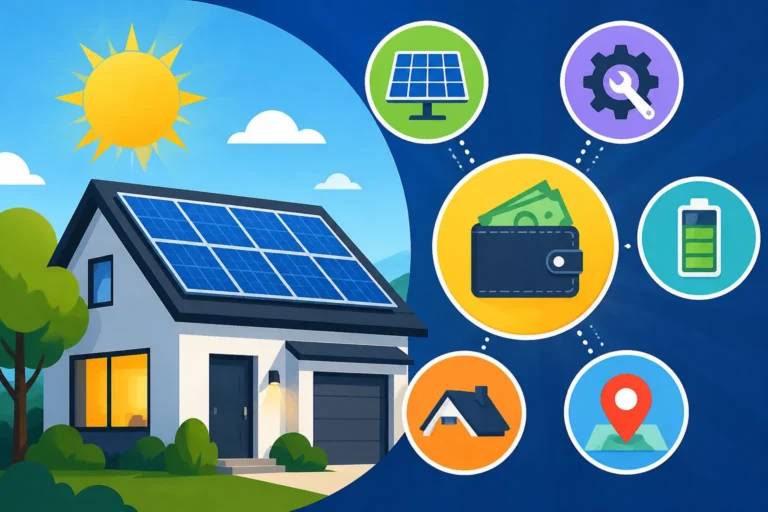
The total upfront cost of a solar panel system for a 1,000 sq ft home typically ranges from $15,000 to $25,000 before any incentives, depending heavily on the system size, equipment quality, and installation specifics. This might sound like a lot, but let's break down what that price includes:
- Solar Panels: These are the most recognizable components. The type of panel (monocrystalline vs. polycrystalline), brand, and efficiency all play a role in their cost.
- Inverters: These convert the direct current (DC) electricity from your panels into alternating current (AC) that your home uses. You might choose string inverters, microinverters (like those from Enphase), or power optimizers (like SolarEdge). Microinverters often add a bit more to the upfront cost but offer individual panel optimization and monitoring, which can be great for roofs with partial shading.
- Mounting Hardware: The racks and mounts that secure the panels to your roof.
- Wiring and Electrical Components: All the necessary electrical work to connect your system to your home's electrical panel and the utility grid.
- Labor Costs: This covers the installer's crew for everything from design and permitting to the actual physical installation.
- Permitting and Interconnection Fees: Local permits are required, and your utility company will charge a fee to connect your system to the grid. These can vary significantly by municipality and utility provider.
- Optional Add-ons: Things like a solar battery storage system (e.g., a Tesla Powerwall or Enphase IQ Battery) for backup power or increased self-consumption will significantly increase the total cost, often by an additional $10,000-$20,000 or more.
To get a clearer picture of the overall investment, it's helpful to consider the "cost per watt." For residential solar, this generally falls between $2.50 to $3.50 per watt, before incentives. So, for our estimated 7.4 kW (7,400-watt) system, the cost would be roughly $2.50 * 7,400 = $18,500 to $3.50 * 7,400 = $25,900. Our guide on Solar Panel Cost Per Watt Explained delves into this metric in more detail.
Regional Cost Variations
The exact solar panel cost for a 1,000 sq ft house can also fluctuate quite a bit based on where you live. States with robust solar markets, higher electricity rates, and strong state or local incentives often see more competitive pricing due to economies of scale and increased competition among installers.
For instance, the Solar Panel Cost in California might differ from the Solar Panel Cost in Texas or Solar Panel Cost in Florida. States like California, New York, and Massachusetts have historically had strong incentives and a high volume of installations, which can sometimes drive down installation costs due to market maturity. Conversely, states with less developed solar markets or fewer local incentives might see slightly higher per-watt costs. Factors like local labor costs, material shipping expenses, and regulatory hurdles also contribute to these regional differences. This is why getting multiple quotes from local installers is crucial, as they can provide the most accurate pricing for your specific area.
Here's a general idea of how costs might break down for a typical system for a 1,000 sq ft home:
| Component | Estimated Cost Range (7.4 kW System) |
|---|---|
| Solar Panels | $7,000 – $11,000 |
| Inverters | $1,800 – $3,500 |
| Mounting & Hardware | $1,500 – $2,500 |
| Labor & Installation | $4,000 – $6,000 |
| Permitting & Fees | $500 – $1,500 |
| Total Upfront Cost | $14,800 – $24,500 |
Note: This table represents estimates before any incentives are applied and does not include battery storage.
Local Incentives, Rebates, and Financing Options
This is where the real savings come into play and can significantly reduce your effective solar panel cost. While the federal solar tax credit (Investment Tax Credit or ITC) still exists, it's important to understand how it works and what else is available. Beyond the federal incentive, many states and even local utility companies offer their own programs.
- State Solar Incentives: Many states offer additional tax credits, rebates, or performance-based incentives (PBIs). For example, New York has the NY-Sun program, and Massachusetts has the SMART program, both of which provide substantial benefits. Exploring resources like the Database of State Incentives for Renewables & Efficiency (DSIRE) can give you a comprehensive overview of what's available in your area. You can learn more about these in our State Solar Incentives: Complete 2026 Guide.
- Utility Solar Rebates: Your local utility company might offer direct rebates for installing solar. These are often one-time payments that reduce your upfront cost. It’s always worth checking with your specific provider to see what programs they have. Check out Utility Solar Rebates: How to Find Yours for tips on locating these.
- Net Metering: This policy allows you to send excess solar electricity back to the grid for credit on your bill. While some states are transitioning to less favorable programs (like California's NEM 3.0), net metering can still drastically improve your solar economics. Our article on Net Metering Explained: How It Works by State can give you a clear picture of policies in your region.
- Solar Renewable Energy Credits (SRECs): In some states, you can earn SRECs for the clean electricity your system produces and sell them on a market, providing an additional revenue stream. States like New Jersey, Maryland, and Massachusetts have active SREC markets. Read more about SRECs Explained: Selling Solar Renewable Energy Credits.
When it comes to paying for your system, you have several financing options:
- Cash Purchase: Paying cash upfront generally offers the best long-term return on investment, as you avoid interest charges and dealer fees.
- Solar Loans: These are popular options, allowing you to finance the purchase of your system with little to no money down. Be aware of hidden fees, sometimes called "dealer fees," which can inflate the loan amount. Our comprehensive guide on Solar Loans: Complete Guide can help you navigate this.
- Solar Leases or Power Purchase Agreements (PPAs): With these options, a third party owns and maintains the system, and you pay a fixed monthly fee for the electricity generated (PPA) or for the use of the equipment (lease). While often advertised as "$0 down solar," these typically offer fewer long-term savings compared to ownership. If you're considering this, our guide on Solar Lease vs PPA vs Buy: Which Is Best? is a must-read.
To truly understand your potential savings and return on investment, it's a good idea to connect with local solar experts. Platforms like Modernize can help you get free, personalized quotes from vetted installers in your area, allowing you to compare options and see exactly how incentives apply to your specific situation. They can also help you understand the Solar Panel Cost by State for your specific location.
Key Factors Influencing Your Total Solar Investment
Beyond the basic system size and location, several other elements can significantly sway the final solar panel cost for a 1,000 sq ft house. Understanding these helps you evaluate quotes more effectively and make informed decisions.
Equipment Choices and Efficiency
The panels, inverters, and even the racking system you choose have a direct impact on the overall cost and the system's performance.
- Panel Quality and Efficiency: Premium panels from brands like Maxeon (formerly SunPower), REC, or Qcells often come with higher price tags but boast superior efficiency and longer warranties. More efficient panels can generate more power from a smaller footprint, which can be advantageous for a 1,000 sq ft home where roof space might be limited. Conversely, budget-friendly options from brands like Jinko Solar or Trina Solar can still be highly effective and durable, just with slightly lower efficiency ratings. The choice often comes down to balancing your budget with your performance expectations and available roof space.
- Inverter Type: As mentioned earlier, microinverters (like those from Enphase) or power optimizers (like SolarEdge) are generally more expensive per watt than traditional string inverters. However, they can be a worthwhile investment for roofs with complex layouts or shading issues, as they optimize the performance of each individual panel, preventing one shaded panel from dragging down the output of the entire system. For a smaller roof, maximizing every inch of production is crucial, so these options can sometimes justify the extra cost.
- Battery Storage: While not strictly part of the "solar panel cost," many homeowners consider adding a solar battery, especially if their utility offers less favorable net metering terms or if they desire backup power during outages. A battery can add $10,000 to $20,000+ to the total project cost, but it can also significantly enhance your energy independence and savings in certain scenarios. Our article on Solar Plus Battery Cost explores this in depth.
Making smart choices about your equipment can optimize your system's output and tailor it perfectly to the unique needs of your 1,000 sq ft house.
Installation Complexity and Labor
Even for a smaller home, the complexity of the installation process can influence the labor portion of your solar panel cost.
- Roof Type and Condition: Certain roof materials, like concrete tiles or slate, require specialized mounting techniques and can increase labor costs. A simple asphalt shingle roof is generally the easiest and most cost-effective to work with. If your roof is old or in poor condition, you might need to factor in the cost of a new roof before solar installation, as it's typically more economical to replace the roof beforehand rather than having to remove and reinstall panels later.
- Roof Pitch and Accessibility: A very steep roof or one that is difficult to access might require additional safety measures or equipment, leading to higher labor costs. Similarly, if your home has significant shading from trees or nearby buildings, it might necessitate a more complex design to avoid shaded areas or to integrate microinverters/optimizers, which adds to the overall installation time and cost.
- Electrical Upgrades: Sometimes, an older electrical panel might need an upgrade to safely handle the new solar system, adding to the total project cost. Your installer will assess this during the initial site visit.
- Ground-Mount vs. Roof-Mount: While most 1,000 sq ft homes will opt for roof-mounted systems due to space constraints, if you have ample yard space and a challenging roof, a ground-mounted system could be an option. However, ground mounts typically incur higher installation costs due to the need for trenching, concrete foundations, and more extensive racking. Learn more about the installation process and timeline in our Solar Installation Timeline: What to Expect guide.
A thorough site survey by a reputable installer will identify all these potential complexities and provide an accurate quote that accounts for them.
Local Incentives and Rebates
We touched on this earlier, but it's worth reiterating the profound impact of incentives on your net cost. The federal solar tax credit, known as the Investment Tax Credit (ITC), is the biggest game-changer. It allows homeowners to claim a percentage of their solar installation costs as a credit on their federal income taxes. In 2026, the ITC is set at a generous 30% for qualifying systems. This means if your system costs $20,000, you could get $6,000 back in tax credits. This significantly reduces the effective solar panel cost. You can read up on Federal Solar Incentives That Still Exist in 2026 to understand its current state.
Beyond the federal level, many states and local municipalities offer their own incentives, which can include:
- State Tax Credits or Rebates: These are often stackable with the federal ITC, further reducing your out-of-pocket expenses. For example, some states offer property tax exemptions for the added value solar brings, or sales tax exemptions on solar equipment. Our guide on Solar Property Tax Exemptions by State and Solar Sales Tax Exemptions by State offers state-specific details.
- Performance-Based Incentives (PBIs): These programs pay you based on the actual electricity your system produces over time. SRECs are a form of PBI.
- Low-Income Solar Programs: Some states or non-profits offer specialized programs to make solar accessible for lower-income households, which can be particularly relevant for smaller homes where cost is a significant barrier. Check out Low-Income Solar Programs & Assistance for more information.
Always work with an installer who is well-versed in all local, state, and federal incentives to ensure you maximize your savings. They can help you navigate the application processes and ensure you qualify for everything available.
Is Solar Worth It for a Smaller Home? Long-Term Savings and ROI
The short answer is a resounding yes! Even for a 1,000 sq ft house, going solar can be an incredibly smart financial decision. The investment isn't just about the upfront solar panel cost; it's about the long-term savings and the return on investment you'll see over the lifespan of your system.
Maximizing Your Savings
The primary way solar saves you money is by reducing or eliminating your monthly electricity bill. Imagine paying $0 or a minimal connection fee to your utility company each month, especially as electricity rates continue to climb year after year. For a 1,000 sq ft home that might have a typical electricity bill of $100-$150 per month, that's $1,200-$1,800 saved annually right off the bat. Over 25 years (the average lifespan of solar panels), those savings really add up.
Beyond direct bill reduction, solar can also:
- Increase Home Value: Studies have shown that homes with owned solar panel systems sell for more and often faster than comparable non-solar homes. While the exact increase varies by market, it's a significant financial benefit that directly offsets your initial investment. Our article on Do Solar Panels Increase Home Value? explores this in depth.
- Hedge Against Rising Electricity Prices: Once your solar system is installed and paid for (or financed at a fixed rate), your energy costs are largely predictable. You become less vulnerable to utility rate hikes, offering long-term financial stability.
- Environmental Impact: While not a direct financial saving, contributing to a cleaner environment and reducing your carbon footprint is a significant motivator for many homeowners, and a powerful return on investment for the planet.
To truly understand if solar is right for you, consider reading Are Solar Panels Worth It in 2026?. It covers the latest market dynamics and how they impact your decision.
Understanding Your Payback Period
The payback period is the amount of time it takes for your solar savings to equal your initial investment. For a 1,000 sq ft house, the average solar payback period can range from 6 to 12 years, though this can vary widely based on your specific solar panel cost, local electricity rates, and available incentives.
Let's use a hypothetical example:
- System Cost: $20,000 (before federal tax credit)
- Federal Tax Credit (30%): $6,000
- Net Cost After ITC: $14,000
- Annual Electricity Savings: $1,500 (based on an average $125/month bill)
- Annual SREC Income (if applicable): Let's say $300 (highly variable by state and market)
- Total Annual Savings/Income: $1,800
- Payback Period: $14,000 / $1,800 = ~7.8 years
After this 7.8-year mark, your system essentially pays for itself, and every subsequent year of free electricity generation is pure profit. Considering most solar panels come with 25-year performance warranties, you're looking at 17-plus years of free electricity generation. Our detailed guide on Solar Panel Payback Period Explained can give you even more insights into how to calculate this for your specific situation.
Even for smaller homes, the combination of reduced electricity bills, available incentives, and increased property value makes solar a compelling investment. By carefully assessing your energy needs, exploring all available incentives, and choosing a reputable installer, you can unlock significant savings and enjoy energy independence for decades to come.
Disclaimer
Please remember that the information provided in this article is for general guidance only and should not be taken as financial, tax, or legal advice. Solar panel costs, incentives, and regulations are subject to change and vary significantly by location and individual circumstances. It is essential to consult with qualified solar professionals, tax advisors, and local authorities to obtain accurate and personalized information for your specific situation.