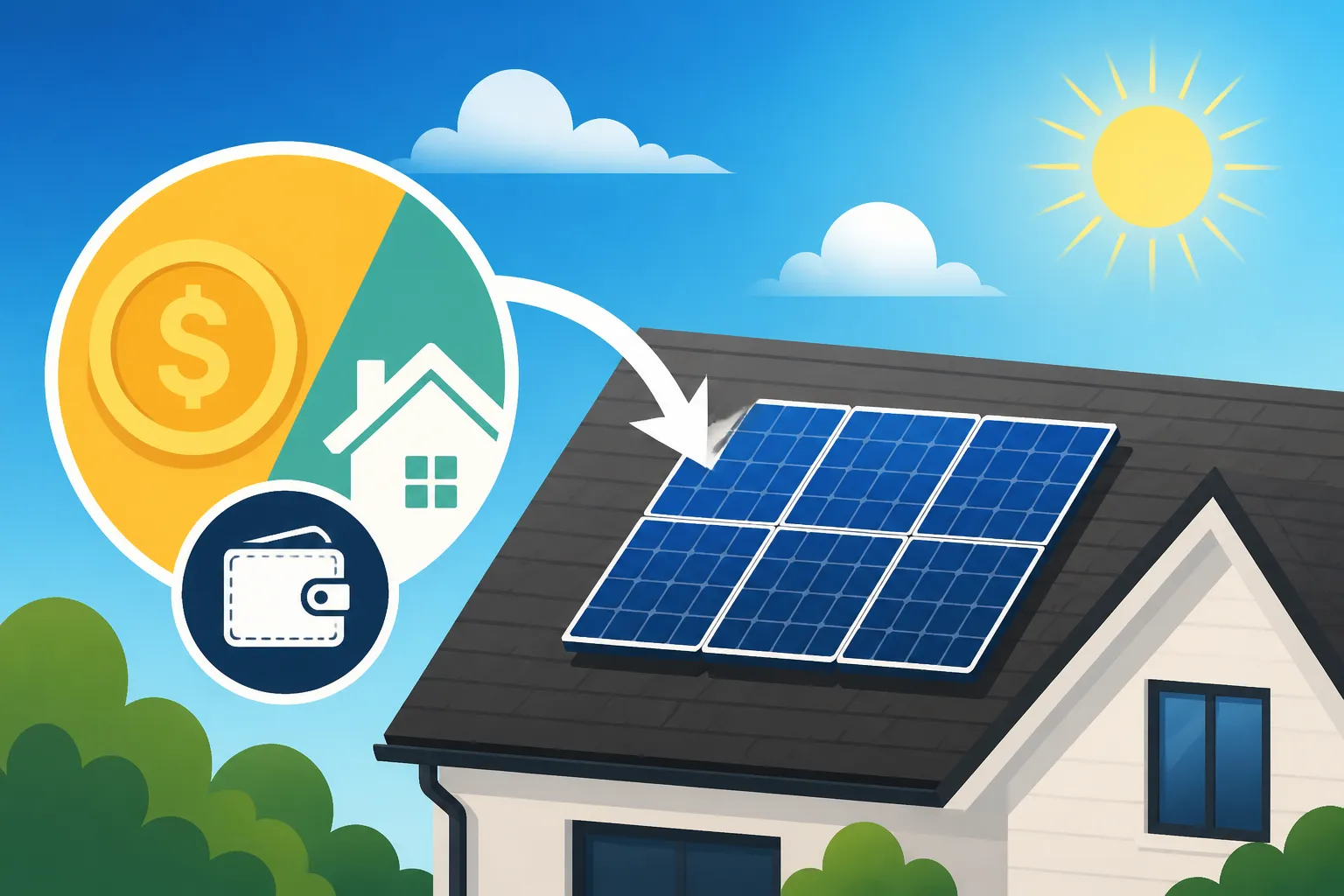
Cost to Add Solar to an Existing Roof
Homeowners often stare at their existing roofs and wonder if adding solar is a simple upgrade or a financial trap waiting to spring. Between structural concerns and the fear of hidden fees, it is easy to feel paralyzed by the complexity of the project. This guide breaks down every dollar involved in adding solar to an existing roof, ensuring you know exactly what to expect before the first panel arrives.
Understanding the Baseline: What Are You Actually Paying For?
When you decide to add solar to your current home, you aren't just buying hardware; you are investing in a complex engineering project. Most homeowners start by looking at the sticker price of the panels themselves, but that is often less than half of the total investment. The real cost lies in the "soft costs" and the labor required to integrate new technology with your home's existing structure.
Equipment and Hardware Breakdown
The physical components of your solar system include the panels, the racking system, and the inverters. While the Solar Panel Cost Per Watt Explained often focuses on the panels, the racking system is where your existing roof comes into play. Since you are not building a new roof designed for solar, the installer must use specialized mounting brackets that penetrate your current shingles or tiles without compromising the waterproofing.
Furthermore, you have to decide between string inverters or microinverters. In many retrofit scenarios on older homes, trees may have grown tall enough to shade parts of the roof. In these cases, microinverters are a must, though they add to the upfront equipment cost. You are essentially paying for the ability of each panel to operate independently, ensuring that one shaded panel doesn't tank the production of the entire array.
Soft Costs: Permitting and Labor
Soft costs are the invisible price tags attached to your project. This includes the engineering drawings required by your local building department, the permit fees themselves, and the labor for the installation crew. In many jurisdictions, such as in parts of Southern California or the Northeast, the Solar Permit & Interconnection (PTO) Explained process can be lengthy and require multiple revisions to satisfy local codes.
Labor is a significant variable. A simple, south-facing asphalt shingle roof is the easiest to work on. However, if your roof has multiple dormers, steep pitches, or is made of brittle materials like older clay tiles, the labor hours will skyrocket. Installers have to move slower and more carefully to avoid breaking your existing roof, which directly impacts your final invoice.
The Retrofit Premium
Adding solar to an existing roof is often slightly more expensive than doing it during a new construction phase. This is what many in the industry call the "retrofit premium." The crew has to work around your landscaping, avoid your gutters, and potentially upgrade an aging electrical panel to handle the new load. If your home’s main service panel is only rated for 100 amps, you might be looking at an additional $2,000 to $4,000 just for an electrical upgrade before a single panel can be mounted. Using a service like Modernize can help you find installers who specialize in these types of complex electrical retrofits to ensure your home can handle the power production safely.
Roof Condition and Prep: The Hidden Budget Killers
The most common frustration I hear from homeowners is the unexpected news that their roof needs work before solar can be installed. It feels like a double-hit to the wallet. However, the logic is sound: you do not want to put a 25-year solar system on a roof that only has 5 years of life left.
Structural Analysis and Reinforcement
Before any panels are mounted, a structural engineer usually needs to sign off on the project. They look at your rafters or trusses to ensure they can handle the "dead load" of the panels and the "live load" of wind or snow. In older homes—think those built before the 1970s—the roof framing may be undersized by modern standards.
If the engineer determines the roof is too weak, you might need "sistering," which involves adding new lumber alongside the existing rafters to strengthen them. This can add several thousand dollars to the project. While it’s a tough pill to swallow, it is a critical safety measure. I've seen DIY attempts where homeowners skipped this step, only to have their roof sag significantly under the weight of a heavy snowstorm combined with the solar array.
The Repair vs. Replace Dilemma
If your roof is older than 10 to 12 years, you face a difficult choice. Is it worth it to Do I Need a New Roof Before Solar?? Generally, the answer is yes. If you install solar now and your roof leaks in seven years, you will have to pay an installer to "detach and reset" the entire system. This process alone can cost $150 to $250 per panel. For a 20-panel system, that is a $5,000 mistake.
Many homeowners find that combining a roof replacement with a solar installation allows for better financing terms. Sometimes, the labor associated with the roof work can even be bundled into the solar contract. While it’s important to consult a tax professional, some have explored how this affects their total project value and potential incentives.
Flashing and Penetration Costs
Every point where a solar rack attaches to your roof is a potential leak point. High-quality flashing is non-negotiable. On an existing roof, the installer must carefully pry up existing shingles to slide the flashing underneath. If you have a metal or tile roof, the hardware is even more specialized.
For instance, on a tile roof, installers often use "tile hooks" or "replacement tiles" that have the mounting hardware built-in. These components are significantly more expensive than the simple L-feet used for asphalt shingles. You are paying for the peace of mind that your home remains watertight for the next three decades.
Comparative Cost Analysis: Roof Types and Pitch
Not all roofs are created equal when it comes to solar. The material and the angle of your roof dictate the type of mounting hardware required and the speed at which the crew can work.
| Roof Material | Estimated Installation Complexity | Hardware Cost | Labor Impact |
|---|---|---|---|
| Asphalt Shingles | Low | Standard | Minimal |
| Standing Seam Metal | Very Low | Specialized Clamps | Faster (no penetrations) |
| Clay or Concrete Tile | High | Specialized Hooks | Significant (fragile) |
| Flat Roof (TPO/EPDM) | Moderate | Ballasted Racks | Moderate (weight concerns) |
| Wood Shake | Very High | Custom Flashings | Extreme (fire/safety) |
Asphalt Shingles vs. Tile vs. Metal
Asphalt shingles are the "gold standard" for solar ease. The process is streamlined, and the parts are cheap. However, if you have a standing seam metal roof, you might actually save money on labor. These roofs allow for "non-penetrating" clamps that grip the seams of the metal, meaning the crew doesn't have to drill holes into your home.
On the other end of the spectrum, How to Install Solar Panels on a Tile Roof is a labor-intensive endeavor. Installers have to be incredibly careful not to crack tiles as they walk. Many companies will even charge a "tile surcharge" of $1,000 to $3,000 just to cover the extra time and the inevitable replacement of broken tiles.
Flat Roofs vs. Steep Pitches
The pitch of your roof also changes the math. If your roof is very steep (anything over a 7/12 pitch), the crew has to use more extensive fall protection and move slower, which increases labor costs. Conversely, flat roofs often require "ballasted" systems where the panels are held down by heavy blocks rather than being bolted into the roof. While this saves on penetrations, it adds a massive amount of weight, necessitating a rigorous structural review. Modernize provides a great starting point to compare quotes from contractors who have specific experience with flat-roof ballasted systems versus traditional sloped mounts.
Regional Cost Variations
Where you live matters just as much as what your roof is made of. In areas with high labor costs, like the San Francisco Bay Area or New York City, the Solar Installation Labor Cost will be significantly higher than in more rural areas. Furthermore, regional weather requirements, like the high-velocity hurricane zones in Florida, require extra mounting points and more robust hardware, adding 10% to 15% to the total equipment cost.
Financial Considerations and Long-Term Value
Adding solar is a major financial move, and understanding the How Much Can You Save With Solar Panels? equation is vital for your peace of mind. You are essentially pre-paying for 25 years of electricity at today's rates.
Payback Periods and ROI
The Solar Panel Payback Period Explained is the amount of time it takes for your monthly utility savings to equal the upfront cost of the system. On an existing roof, this typically ranges from 6 to 10 years, depending on your local electricity rates and how much sun your roof gets. If your roof is shaded or faces north, your ROI will be slower.
It is important to look at the Internal Rate of Return (IRR). In many states, solar offers a better return than a standard savings account or even some index funds, especially when you factor in the rising cost of utility power, which has historically increased by 3% to 5% annually.
Incentives and Financing
While the federal landscape for incentives is always shifting, many state and local programs remain robust. You should investigate State Solar Incentives: Complete 2026 Guide to see if your specific area offers rebates or performance-based incentives.
Financing is another area where homeowners get stuck. You can choose between a cash purchase, a solar loan, or a lease. If you want the maximum long-term savings, cash is king. However, if you prefer to be cash-flow positive from day one, a $0-down solar loan is often the preferred route. Just be wary of Solar Dealer Fees Explained (Hidden Loan Costs), which can add 20% or more to the principal of the loan just to buy down the interest rate.
Impact on Resale Value
A common concern is whether solar panels will make a home harder to sell. Research generally shows that Do Solar Panels Increase Home Value? is a resounding yes, provided you own the system. Appraisers are becoming more adept at valuing solar arrays, often using the income-capitalization approach. A home that generates its own power is a high-value asset in a market where energy costs are a primary concern for buyers. However, if you have a lease that needs to be transferred, it can sometimes complicate the closing process.
Navigating the Installation Process
Once you’ve accepted the costs, the actual process of getting panels on your existing roof involves several logistical hurdles. It is not as simple as "buying and bolting."
Finding a Reputable Installer
This is the most critical step. A bad installer can ruin a perfectly good roof. You want a company that has been in business for at least five years and has a dedicated service department. When you use a platform like Modernize, you can filter for contractors who have high ratings and proven experience with your specific roof type. Ask them specifically about their "roofing warranty." Most reputable solar companies will warrant their roof penetrations for 10 years, ensuring that if a leak occurs due to their work, they will fix it.
The Permitting Maze
Your installer will handle the paperwork, but you need to be prepared for the timeline. The Solar Installation Timeline: What to Expect can vary wildly. In a "solar-friendly" city, you might get a permit in three days. In a bureaucratic nightmare, it could take three months. During this time, your installer will likely perform a detailed "site survey" where they climb into your attic to take exact measurements of your rafters and check the condition of your shingles from inches away. This is often when the "hidden" costs like structural reinforcement finally come to light.
Solar Maintenance and Post-Installation Reality
After the crew leaves and your system is turned on, the costs don't completely stop, though they become much more manageable. You are now a mini-power plant operator.
Cleaning and Upkeep
Do solar panels need maintenance? Usually, the rain does most of the work. However, if you live in a dusty area or have lots of trees, bird droppings and pollen can significantly reduce your production. You might want to look into Solar Panel Maintenance & Cleaning services once or twice a year. Some homeowners choose to do this themselves with a soft brush and a garden hose, but be careful—using harsh chemicals or a pressure washer can damage the anti-reflective coating on the glass.
Warranty and Monitoring
Most modern systems come with a 25-year performance warranty and a 10- to 25-year equipment warranty. You should also have access to a monitoring app that shows you exactly how much power your roof is producing in real-time. If you notice a sudden drop in production, it could indicate a failed microinverter or a tripped breaker. Modernize can connect you with specialists who offer long-term monitoring and maintenance packages if you prefer a "set it and forget it" approach to your home energy.
Disclaimer
This guide is for informational purposes only and does not constitute financial, legal, or professional engineering advice. Solar installation costs, incentives, and regulations vary significantly by location and individual home circumstances. Always consult with a qualified solar professional and a tax advisor before making a major investment in home solar.