What Solar Incentives Are Left in California?
California homeowners often feel like they missed the "golden age" of solar after the massive policy shifts of the last few years. Between the move to Net Billing and the evolving landscape of federal credits, it is easy to feel overwhelmed or discouraged. This guide clarifies exactly which incentives remain available, helping you navigate the programs that still make solar a smart investment.
The New Reality of California Net Billing
If you have been researching solar for a while, you have likely heard the term "NEM 3.0" whispered with a bit of dread. We are fully immersed in this new era, officially known as the Net Billing Tariff (NBT). The frustration for many in places like San Diego or the Central Valley is that the old "one-to-one" credit system, where you got paid the full retail rate for your extra energy, is a thing of the past. However, understanding What Is NEM 3.0 (California Net Billing)? is the first step to realizing that solar isn't dead; it just requires a different strategy.
Under the current California Net Metering Rules in 2026, the value of the energy you send back to the grid is based on the "Avoided Cost Calculator." This is a complex way of saying that the utility companies like PG&E, SCE, and SDG&E pay you less for your power during the day when the sun is shining and everyone's panels are producing, but they pay you significantly more during "peak" hours in the evening. This shift has made it so that you aren't just a passive energy producer; you have to be a bit more tactical about when you use and move your electricity.
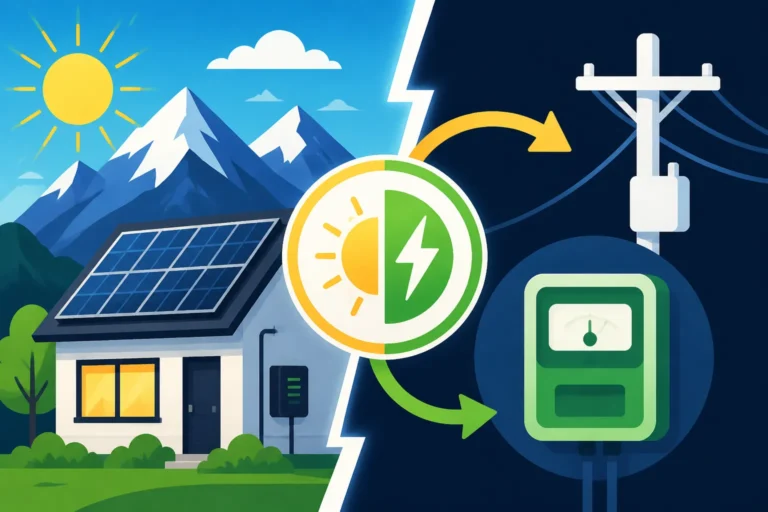
This is where the concept of Avoided-Cost Rate & Export Credits Explained becomes vital for your financial planning. In the old days, you could just "bank" your power with the utility. Now, because the export rates are lower, the most significant "incentive" is actually self-consumption. By keeping the energy you produce and using it to power your own AC, electric vehicle, or appliances, you are avoiding the high retail rates charged by the big utilities. The incentive hasn't disappeared; it has simply shifted from a "check in the mail" model to a "lower monthly bill" model.
Battery Storage Incentives and the SGIP Program
Since the export rates for solar energy have dropped, the real hero of the California solar landscape is the battery. Whether you are looking at a Tesla Powerwall or an Enphase IQ Battery, storage is what makes the math work today. Fortunately, the state still offers the Self-Generation Incentive Program (SGIP), which remains one of the most powerful tools for reducing the upfront cost of your system.
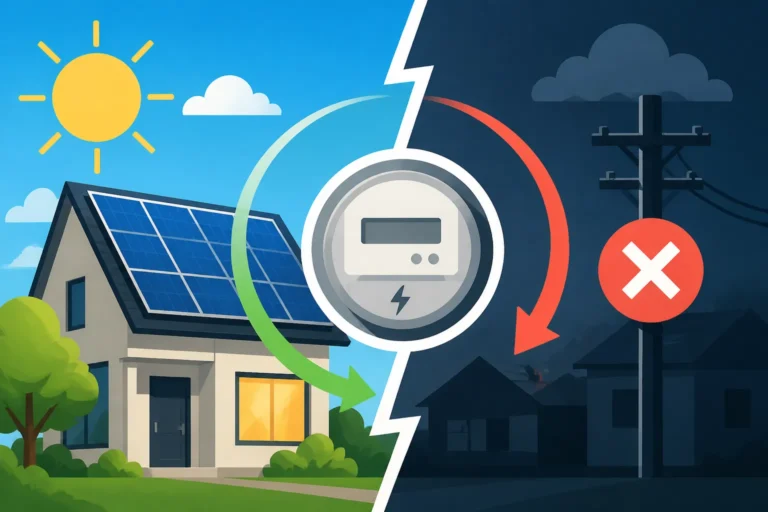
The SGIP program is divided into several "buckets," and knowing which one you fall into can save you thousands. For the average homeowner in a high-fire-threat district or someone who has experienced frequent Public Safety Power Shutoffs (PSPS), the Equity Resiliency Budget is a game-changer. This specific part of the SGIP can sometimes cover nearly the entire cost of a battery system if you meet the specific criteria. Even for those who don't qualify for the equity portion, the general market rebates still provide a helpful cushion.
You might be wondering, Are Solar Batteries Still Eligible for Incentives in 2026? The answer is a resounding yes. In fact, California has doubled down on storage because it helps stabilize the grid during those hot August nights when everyone is running their air conditioning. By installing a battery, you can "load shift"—storing your cheap solar power during the day and using it during the expensive 4:00 PM to 9:00 PM window. This is the primary way homeowners are maintaining a fast payback period in the current regulatory environment.
Low Income and Equity Programs
California has made a concerted effort to ensure that clean energy isn't just for the wealthy. If you live in a "disadvantaged community" as defined by the state or meet certain income requirements, there are specific programs designed to lower the barrier to entry. This is a critical part of the California Solar Incentives in 2026 landscape that often goes overlooked by mainstream media.
One of the most prominent programs is the Disadvantaged Communities – Single-family Solar Homes (DAC-SASH) program. This provides upfront incentives to qualifying homeowners to help them go solar with little to no out-of-pocket cost. Additionally, the Solar on Multifamily Affordable Housing (SOMAH) program helps those living in apartments or condos benefit from the sun's energy. If you are struggling with rising utility bills and feel like solar is out of reach, it is worth asking, Do I Qualify for Low-Income Solar Programs? to see if you can tap into these state-funded reserves.
These programs are not just about the environment; they are about economic relief. For a family in Fresno or Riverside, where summer cooling costs can be astronomical, these equity-focused incentives provide a permanent hedge against inflation. The state has allocated hundreds of millions of dollars to these funds, but they are often distributed on a first-come, first-served basis, so being proactive is key to securing your spot.
Property and Sales Tax Exemptions
One of the "hidden" incentives in California is actually a protection against future costs. In many states, adding a $30,000 solar array to your roof would immediately trigger a property tax reassessment, causing your annual taxes to spike. Thankfully, California has a long-standing property tax exclusion for solar energy systems.
Under Section 73 of the California Revenue and Taxation Code, the "active solar energy system" you install is not considered "new construction" for property tax purposes. This means that while your home's value might increase in the eyes of a potential buyer, your tax bill stays exactly where it was before the panels went up. To understand the mechanics of this, you can look into How Do Property Tax Exemptions for Solar Work to see how much you are actually saving over the 25-year life of your system.
Furthermore, California has historically offered various sales tax exemptions or reductions for certain renewable energy components. While the state's general sales tax is high, avoiding that extra 7% to 10% on a large equipment purchase can save you a significant amount of money upfront. When you look at the total Solar Property Tax Exemptions by State, California remains one of the most protective environments for homeowners who want to improve their property without being penalized by the taxman.
| Incentive Name | Type | 2026 Availability | Best For |
|---|---|---|---|
| SGIP (General) | Rebate | Available (Step-based) | Homeowners adding batteries |
| SGIP (Equity Resiliency) | Rebate | Available (High Priority) | Low-income/Fire-prone areas |
| DAC-SASH | Grant/Assistance | Available (Limited Funding) | Income-qualified households |
| Property Tax Exclusion | Tax Protection | Permanent (Exp. 2027) | All homeowners |
| Net Billing (NBT) | Export Credit | Active | Battery owners (Load Shifting) |
| Federal ITC Carryforward | Tax Credit | Varies (Check Status) | Those with 2024/2025 installs |
The Federal Landscape in 2026
While this guide focuses on California, we cannot ignore the federal side of the equation. Many homeowners are confused about the status of the Investment Tax Credit (ITC). There has been much debate about Is the Federal Solar Tax Credit Really Gone? in 2026. While the original 30% credit from the Inflation Reduction Act had a specific timeline, the transition to newer structures or the exhaustion of previous credits has changed the math for many.
If you are just starting your journey now, you must look at What Replaced the Solar Tax Credit in 2026? to see if you qualify for the newer, technology-neutral credits that were designed to take over. Even if the headline "30%" is no longer the standard, there are often carryforward provisions. If you installed your system in a previous year but didn't have enough tax liability to use the whole credit, you might still be seeing the benefits on your 2026 tax return.
The interplay between state rebates and federal credits is where the real savings are found. For example, the federal government often views state rebates as a reduction in the "basis" of your system. This means if your system costs $20,000 and you get a $2,000 SGIP rebate, the federal government may only let you claim a tax credit on the remaining $18,000. It is a bit of a balancing act, but even with these adjustments, the combined incentives usually shave 30% to 50% off the total "sticker price" of a modern solar-plus-storage system.
Local Utility and Municipal Incentives
Beyond the state and federal level, your specific city or local utility provider might have its own "secret" incentives. For instance, the Los Angeles Department of Water and Power (LADWP) and the Sacramento Municipal Utility District (SMUD) often run their own programs that are separate from the big investor-owned utilities like PG&E.
Some municipalities offer "expedited permitting" which, while not a direct check, saves you money by reducing the labor hours and administrative fees charged by your installer. Others might offer specific rebates for electric vehicle (EV) charging stations that are installed alongside your solar panels. Many local districts are also experimenting with "Virtual Power Plants" (VPPs). In a VPP, you actually get paid a small premium to allow the utility to "borrow" a little bit of power from your home battery during a grid emergency.
When you combine a VPP payment with your standard savings, the ROI on your system starts to look very attractive again. It is always worth a quick call to your local building department or a visit to your utility's "Renewable Energy" webpage to see if there are any hyper-local "perks" that your neighbors might not know about. In the world of solar, the most local information is often the most profitable.
California Solar Incentives Disclaimer
This guide is intended for informational purposes only and does not constitute financial, legal, or tax advice. Solar incentive programs, including SGIP, DAC-SASH, and Net Billing rules, are subject to change by the California Public Utilities Commission (CPUC) and state legislators. Availability of funds for specific rebates can fluctuate rapidly. Always consult with a qualified tax professional and a licensed solar contractor to verify your eligibility for any specific incentive or credit before making a purchase.