Does Connecticut Have Net Metering in 2026?
If you are a homeowner in the Nutmeg State, you have probably heard whispers that the "golden age" of solar is over because traditional net metering rules changed. It is a valid concern—investing in your roof is a big deal. This guide clarifies exactly what replaced net metering in Connecticut for 2026 and how you can still zero out your bill.
The Shift from Traditional Net Metering to RRES
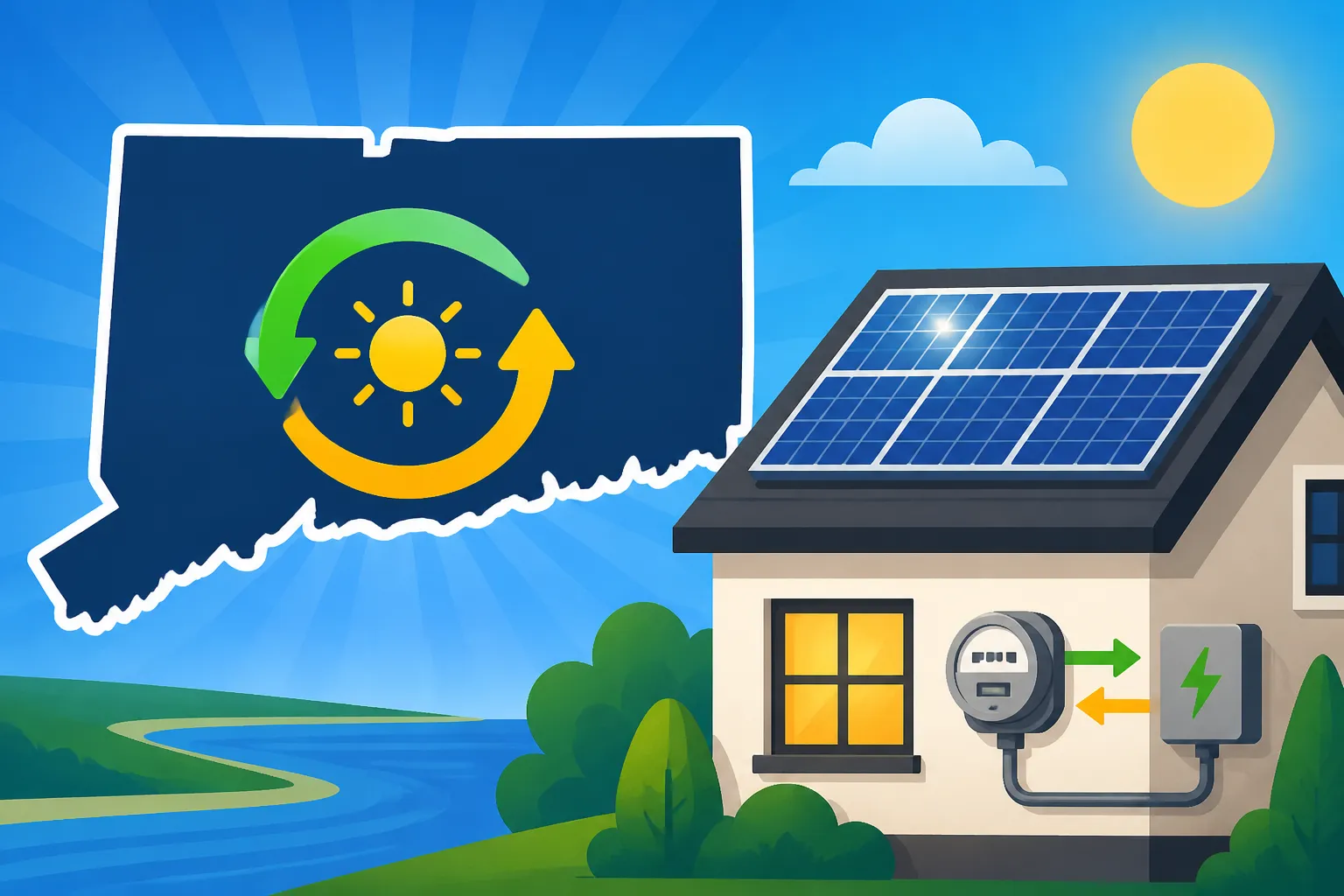
For years, Connecticut homeowners enjoyed what we call NEM 1.0, a simple one-for-one exchange where every kilowatt-hour your panels sent to the grid was credited at the full retail rate. However, on January 1, 2022, the state transitioned to the Residential Renewable Energy Solutions (RRES) program. If you are asking if Connecticut has net metering in 2026, the technical answer is no—but the practical answer is that we have something very similar called Net Billing.
The transition was managed by the Public Utilities Regulatory Authority (PURA) to balance the grid and encourage battery storage. I know it feels like the goalposts are always moving, but the RRES program is actually one of the most stable frameworks in the Northeast right now. It provides a 20-year term for your compensation rate, which offers a level of financial predictability that many other states lack. Understanding Net Metering vs Net Billing: What's the Difference? is the first step in realizing that while the name changed, the savings potential is still massive.
This change specifically affects customers of Eversource and United Illuminating (UI). If you were "grandfathered" into the old system, you likely have a few years left of those original benefits, but for anyone looking to install solar in 2026, you will be selecting between two specific RRES "tariffs" or pathways. Each has its own math, its own logic, and its own impact on your long-term return on investment.
Why the Change Happened
State regulators argued that traditional net metering didn't account for the "cost to serve" solar customers. Essentially, they wanted to ensure that people with solar were still contributing to the maintenance of the physical poles and wires. While it is frustrating to see your export rate change, this shift was designed to keep the grid stable as more people in towns like West Hartford and Greenwich started producing their own power.
The new structure also pushes homeowners to look at the bigger picture. In the old days, you just threw panels on the roof and forgot about them. Today, the RRES program incentivizes you to be a smarter energy consumer. By understanding the Avoided-Cost Rate & Export Credits Explained, you can see how the state now values the energy you produce versus the energy you consume at different times of the day.
Impact on Eversource and UI Customers
Whether you are in the rolling hills of Litchfield County or the shoreline of Milford, your utility company dictates how your credits are tracked. Eversource and UI both follow the RRES guidelines, but their base retail rates differ. Because the "credit" you receive in the Net Billing path is tied to the retail rate, your savings will fluctuate based on current electricity prices.
One of the biggest hurdles homeowners face during this transition is the administrative side. You can't just flip a switch once the panels are up. You have to wait for the utility to swap your meter and grant you official clearance. Understanding What Is Permission to Operate (PTO)? is crucial here, as you won't see any of these new RRES credits on your bill until that final document is signed by your utility provider.
Net Billing vs Buy All Which Should You Choose
Under the current RRES program, you must choose between two paths: the Net Billing Tariff and the Buy-All Tariff. This is where most people get stuck, but the choice usually becomes clear once you look at your family's daily routine. Both options are locked in for 20 years, so you aren't at the mercy of year-to-year policy shifts once you are enrolled.
The Net Billing path is by far the most popular for residential homes. It allows you to use the energy your panels produce in real-time. If your panels are cranking out power at noon while you’re running the dishwasher, you use that power for free. If you produce more than you need, the excess is sent to the grid, and you receive a monetary credit on your bill. It is a "use it or lose it" scenario for the physical electrons, but the monetary value of those electrons carries over to the next month.
The Buy-All path is different. In this scenario, you sell every single watt your panels produce directly to the utility at a fixed price, and then you buy back all the power you need for your home at the standard retail rate. This is often preferred by people who have a very small roof but a lot of sun, or for those who want a completely fixed, predictable check every month regardless of how much energy they use inside the house.
Deep Dive into the Net Billing Option
Net Billing is the closest relative to the old net metering. The credits you earn for exported energy are applied to your bill to offset your charges. In Connecticut, these credits are "netted" at the end of each billing cycle. If you have a surplus at the end of the month, that dollar amount rolls over to your next bill. It is important to note that you cannot "cash out" these credits for a check at the end of every month; they stay as a balance on your utility account.
However, once a year—usually in March—Eversource or UI will "zero out" your account. If you still have a massive credit balance, they will typically pay it out at the avoided cost rate, which is significantly lower than the retail rate. This is why it is so important not to "oversize" your system too much. You want to aim for 100% of your usage, not 150%. To get a better sense of the numbers, check out the Solar Panel Payback Period Explained to see how this specific credit structure affects your "break-even" point.
Deep Dive into the Buy-All Option
The Buy-All tariff is essentially a long-term contract to be a mini-power plant. The rate is set annually by PURA. For many, this is less attractive because you don't get the "satisfaction" of seeing your meter spin backward or using your own green energy directly. However, for a rental property where the landlord pays for the solar but the tenant pays the electric bill, the Buy-All path is a great way for the homeowner to see a direct return on investment.
Another benefit of Buy-All is that it is often easier to finance. Banks love fixed, guaranteed revenue streams. If you are looking at a large-scale installation on an outbuilding or a barn in a rural area like Granby, the Buy-All rate might actually provide a more stable ROI over 20 years. Before making a final call, you should review the Connecticut Solar Incentives in 2026 to see if there are any additional local grants that favor one path over the other.
| Feature | Net Billing Path | Buy-All Path |
|---|---|---|
| Energy Usage | Use your solar power first, export the rest | Sell all solar power to the utility |
| Credit Type | Monetary credit on utility bill | Fixed rate per kWh produced |
| Roll-over | Credits roll over month-to-month | No roll-over; paid for all production |
| Best For | High-usage homes, battery owners | Rental properties, low-usage homes |
| Term Length | 20-Year Guaranteed Tariff | 20-Year Guaranteed Tariff |
| Annual Payout | March payout at avoided cost | Monthly payment or credit |
How Batteries Change the ROI Game
If you are going solar in Connecticut today, doing it without a battery is like buying a car without a gas tank. Because we are now under a Net Billing structure, the goal is to "self-consume" as much of your solar power as possible. Every kilowatt-hour you pull from your own battery at night is a kilowatt-hour you don't have to buy from Eversource at 25 or 30 cents.
Connecticut has arguably the best battery incentive in the country right now: the Energy Storage Solutions program. This program provides an upfront rebate that can knock thousands of dollars off the cost of a Tesla Powerwall or an Enphase IQ Battery. In exchange, you agree to let the utility "tap into" your battery during a few critical peak demand days in the summer. You still keep your backup power for outages, but you help the grid stay stable.
The math for batteries has shifted from a "luxury" to a "necessity" for many. When you look at the Solar Battery Incentives in 2026, you will see that the combination of the state rebate and the federal tax credit can often cover 50% or more of the battery's cost. This drastically changes the economics of the RRES program, making Net Billing much more lucrative than it appears on paper.
The Energy Storage Solutions Rebate
This rebate is tiered based on the size of your battery and whether you are in a designated "underserved" community. For many homeowners in areas like Bridgeport or parts of Hartford, the rebate is even higher. Even for standard residential customers, the payout is significant. It is a performance-based incentive, meaning you get an upfront sum and then a smaller "performance" payment every year for five years based on how much energy your battery contributes to the grid during peak events.
Many people worry that the utility will drain their battery right before a storm. Fortunately, the program has safeguards. If a major storm is predicted, the utility "calls off" the peak event, ensuring your battery stays at 100% for emergency backup. If you are wondering Are Solar Batteries Still Eligible for Incentives in 2026?, the answer is a resounding yes, and the program is currently well-funded through the Green Bank.
Strategic Discharge for Maximum Credits
With a battery, you can practice "peak shaving." Instead of exporting your excess solar power to the grid at noon for a credit, you store it. Then, when the sun goes down and your house starts using more power for lights and AC, you run off the battery. This ensures you never have to pay those high retail delivery charges.
This strategy is what makes Net Billing work in your favor. By avoiding the grid altogether during expensive evening hours, you are effectively "crediting" yourself at the full retail rate, which is higher than the export rate the utility would give you. This is a nuance often missed in a standard How Much Do Solar Panels Cost? 2026 Guide, but it is the secret to a 7-to-9-year payback period in Connecticut.
Financial Incentives Beyond Net Billing
While the RRES program is the "meat and potatoes" of your solar return, Connecticut offers several "side dishes" that make the deal even sweeter. We often focus so much on the utility bill that we forget about the tax implications and the direct cost savings available at the state level. These incentives are more important than ever to offset the rising cost of labor and equipment.
Connecticut is very friendly when it comes to taxes and renewable energy. For starters, the state has a dedicated sales tax exemption for solar equipment. This means when you get a quote for a $30,000 system, you aren't adding another 6.35% on top of that for the state. That is an immediate saving of nearly $2,000 right out of the gate.
Then there is the property tax side of things. In many states, adding a $30,000 asset to your home would cause your property taxes to spike. In Connecticut, there is a state-mandated exemption that prevents your town from increasing your assessment based on your solar array. You get the added home value without the tax penalty. You can read more about how this works in the Solar Property Tax Exemptions by State guide.
State and Federal Tax Relief
The big one is still the federal investment tax credit. Even though we are in 2026, the federal government still provides a massive credit against your personal income tax. This is not a deduction—it is a dollar-for-dollar credit. If your system costs $30,000, you could potentially see a $9,000 credit on your next tax return. This single incentive is the largest factor in making solar affordable for the average family.
At the state level, while there isn't a "check in the mail" state tax credit like in New York or Massachusetts, the combination of the Solar Sales Tax Exemptions by State and the RRES program fills that gap. It is important to consult with a tax professional to ensure you have enough tax liability to take full advantage of these credits, as they are non-refundable but can often be carried forward.
Property and Sales Tax Exemptions
The sales tax exemption is automatic—you shouldn't even see it on your contract. If a solar installer tries to charge you sales tax in Connecticut, that is a massive red flag. The property tax exemption, however, sometimes requires a simple filing with your local assessor's office in towns like Fairfield or Glastonbury. Most reputable installers will handle this paperwork for you, but it is always worth a quick phone call to your town hall to confirm.
By exempting solar from these taxes, Connecticut makes it clear that they want to be a leader in renewable energy. When you combine these tax perks with the 20-year RRES tariff and the battery rebate, the financial case for solar remains incredibly strong, even without the old-school net metering we used to have. It is all about looking at the total cost of ownership over 25 years, rather than just the first month's bill.
Important Disclaimer
This guide is for informational purposes only and does not constitute financial, legal, or tax advice. Solar incentives, utility rates, and state programs in Connecticut are subject to change by the Public Utilities Regulatory Authority (PURA) and the state legislature. Always consult with a qualified tax professional and a licensed solar installer to verify your specific eligibility and potential savings.