Does Florida Have Net Metering in 2026?
The thought of going solar in Florida often comes with a big question mark, especially when it comes to net metering. Many homeowners are left scratching their heads, wondering if the Sunshine State still offers this crucial incentive or if they'll be left giving away their valuable excess solar energy for pennies. This guide is here to cut through the confusion and give you a clear, realistic picture of Florida's net metering landscape in 2026, so you can make informed decisions about your home solar journey.
The Current Landscape of Net Metering in Florida
A Look Back: Florida’s Journey to Net Metering Changes
Florida has always been a state with immense solar potential, blessed with an abundance of sunshine year-round. For years, net metering was a straightforward system that allowed solar homeowners to send their excess electricity back to the grid and receive full retail credit on their utility bills. It was a powerful incentive that made going solar an attractive financial proposition for many. However, the regulatory landscape has been anything but static.
Over the past few years, we’ve seen legislative efforts, notably House Bill 741, which aimed to significantly roll back net metering benefits, proposing a gradual reduction in the credit homeowners received for their exported solar energy. This bill, initially passed by the legislature in 2022, faced strong public opposition and was ultimately vetoed by Governor DeSantis, much to the relief of the solar community. This veto preserved the existing full retail net metering rules, at least for a while. Despite that victory, the underlying tension between utilities and solar advocates regarding compensation for distributed generation persists, leading to continued uncertainty and varying interpretations of how excess power is credited.
What “Net Metering” Means in the Sunshine State Today
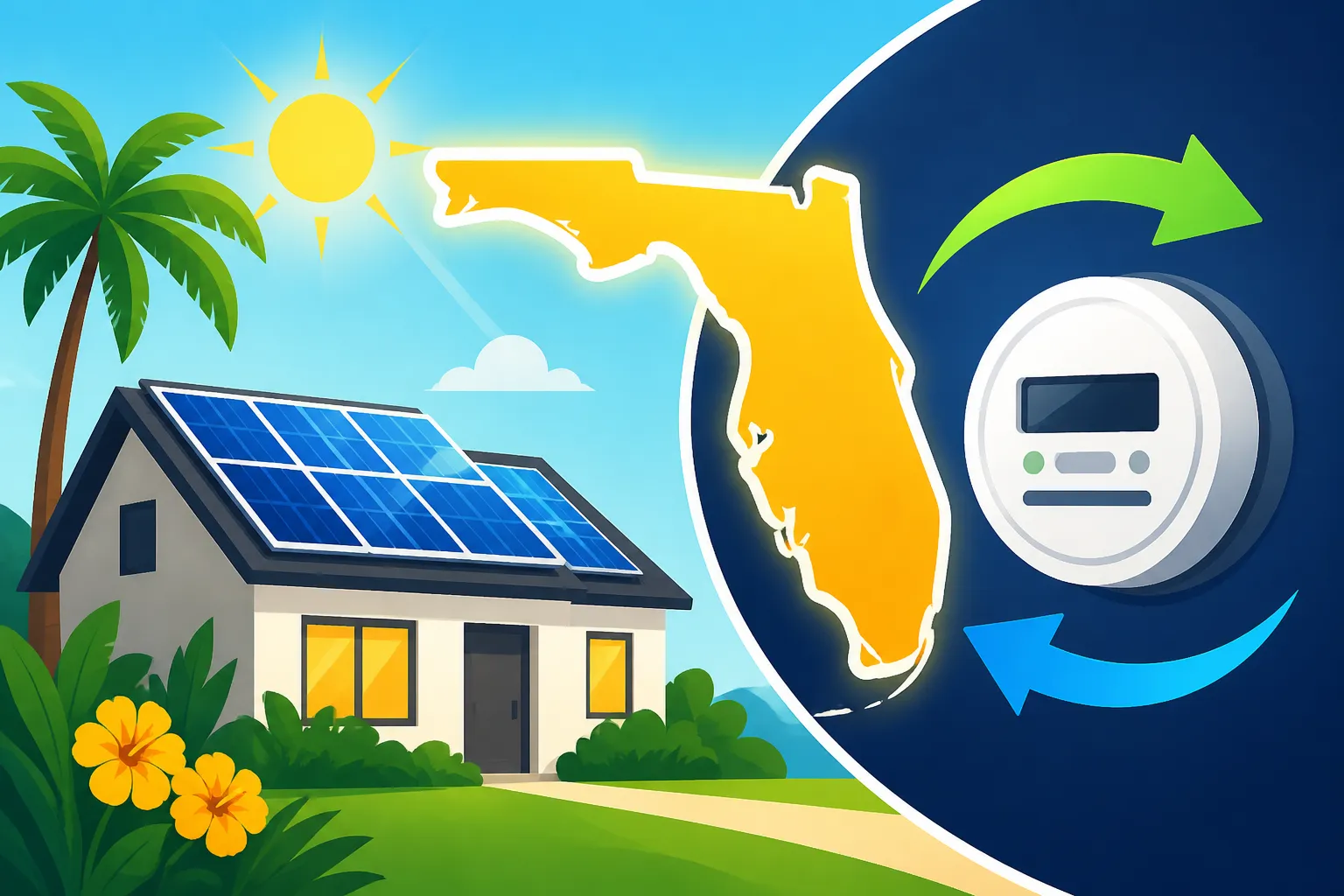
So, the burning question remains: does Florida still have net metering in 2026? The good news is, *yes*, Florida still technically has net metering, but its application and the benefits you receive can vary significantly depending on your specific utility provider. The 2022 veto meant that the statewide full retail net metering rules, which were codified by the Florida Public Service Commission (PSC), largely remained in place. These rules dictate that utilities must credit customers for excess electricity at the same retail rate they charge for electricity consumed from the grid, up to the amount of electricity the customer consumes from the grid over a given billing period.
However, it's not always a perfect one-to-one exchange, especially when your system produces more electricity than you consume over an entire billing cycle. Any net excess generation (energy exported that isn't offset by energy imported in the same period) is typically credited at the utility's "avoided-cost rate," which is often significantly lower than the retail rate. This avoided-cost rate reflects what it would have cost the utility to generate that power themselves, rather than the price you pay as a consumer. This distinction is crucial because it means while you still get credit for your excess solar, you're usually not getting the full financial benefit if you consistently overproduce. This is a common point of frustration for many homeowners, who expect a simpler, more equitable exchange. For a deeper dive into the mechanics of these systems, you might find our guide on Net Metering Explained: How It Works by State particularly helpful.
Understanding Florida’s Utility-Specific Solar Programs
Major Utility Policies: FPL, Duke Energy, Tampa Electric
While the general state guidelines are helpful, the real-world impact of net metering in Florida often boils down to the policies of individual utility companies. These large providers manage the vast majority of Florida’s residential electricity accounts and each has its own nuances in how they implement and interpret the state’s net metering framework.
Florida Power & Light (FPL): As the largest utility in Florida, FPL’s policies affect a massive number of solar homeowners. FPL generally adheres to the state's net metering rules, offering full retail credit for excess generation that offsets your consumption within the same billing period. However, any surplus energy beyond that monthly offset is credited at their avoided-cost rate, which can be quite low. FPL also has specific interconnection requirements and processes for solar installations that customers must navigate. For instance, obtaining Permission to Operate (PTO) from FPL is a crucial step after installation.
Duke Energy Florida: Serving customers across central Florida, Duke Energy also provides retail rate credits for excess generation up to the monthly consumption. Similar to FPL, any net excess generation at the end of the billing cycle is credited at Duke's avoided-cost rate. They also have specific forms and technical requirements for connecting a solar system to their grid, and it’s important for homeowners to work with an installer familiar with Duke’s specific protocols to ensure a smooth process.
Tampa Electric (TECO): TECO’s net metering program generally aligns with state regulations, providing retail bill credits for electricity exported to the grid, up to the amount consumed. Once again, any energy exported beyond the monthly consumption is credited at their avoided-cost rate. TECO emphasizes safety and proper interconnection standards, requiring detailed system plans and inspections before a solar system can be energized. Understanding these utility-specific programs is vital, and you can often find more details by checking our posts like Utility Solar Rebates: How to Find Yours which often cover utility-specific incentive programs beyond net metering.
How Export Credits and Avoided Cost Rates Work
The concept of “export credits” and “avoided cost rates” can be a bit of a financial tightrope walk for solar homeowners. When your solar panels generate more electricity than your home is using at any given moment, that excess power flows back onto the utility grid. Under Florida’s net metering rules, your utility tracks this exported energy.
For the energy exported that offsets energy consumed from the grid within the same billing cycle (e.g., your panels produced extra during the day, and you used grid power at night), you generally receive a credit at the full retail rate. This is where you get the most value. It directly reduces the amount you would have paid for electricity from the utility.
However, if your system produces a surplus over the entire month—meaning you exported more than you imported—that net excess generation is where the "avoided-cost rate" comes into play. This rate is essentially what it costs the utility to not generate that electricity itself. It's often significantly lower than the retail rate you pay. For example, if you're paying $0.15 per kWh for electricity from the grid, your utility might only credit you $0.03-$0.05 per kWh for your net excess generation. This means you're selling your surplus power back to the utility at a wholesale rate, while buying power from them at a retail rate. This dynamic is a common source of confusion and can impact your overall Solar Panel Payback Period Explained.
Here's a simplified table comparing how major Florida utilities generally handle net metering and export credits:
| Utility Provider | Net Metering for Monthly Offset (up to consumption) | Net Excess Generation (Monthly Surplus) | Notes |
|---|---|---|---|
| Florida Power & Light (FPL) | Full Retail Rate Credit | Avoided-Cost Rate | Largest utility, covers most of South and Central Florida. Specific interconnection guidelines. |
| Duke Energy Florida | Full Retail Rate Credit | Avoided-Cost Rate | Serves parts of Central Florida. Similar policies to FPL regarding surplus. |
| Tampa Electric (TECO) | Full Retail Rate Credit | Avoided-Cost Rate | Primarily serves the Tampa Bay area. Focus on safety and proper standards. |
| Other smaller co-ops/municipalities | Varies, check local policies | Varies, check local policies | May have slightly different rules or even more favorable terms in some cases. |
Navigating Solar Incentives Beyond Net Metering in Florida
State and Local Incentives That Still Matter
While net metering is a big piece of the puzzle, it’s certainly not the only incentive available to Florida homeowners considering solar. Even without a super-generous net metering policy for huge surpluses, other programs can significantly improve your return on investment. Florida stands out for its strong property tax incentives. The state offers a Solar Property Tax Exemptions by State, which means that adding a solar energy system to your home will *not* increase your property taxes. This is a massive benefit, as solar can significantly boost your home’s value, and without this exemption, you’d be paying higher taxes on that added value.
Beyond property tax exemptions, some counties or municipalities in Florida might offer their own localized incentives, such as grants or rebates. These are less common for residential solar compared to commercial, but they are worth investigating. For instance, some areas might have energy efficiency programs that can indirectly benefit solar installation by reducing your overall energy needs. Always check with your local government or energy office for any hyper-local programs. It's also worth looking into Solar Sales Tax Exemptions by State which Florida also provides, meaning you don't pay sales tax on your solar equipment purchase.
The Impact of Federal Incentives on Florida Solar Owners
Even if Florida’s net metering isn’t as robust as some other states, federal incentives still play a colossal role in making solar affordable and worthwhile for homeowners across the U.S., including those in Florida. The most significant of these is the federal solar tax credit, officially known as the Investment Tax Credit (ITC). In 2026, this credit is set at 30% of the total cost of your solar energy system, including installation.
This isn't a deduction; it's a dollar-for-dollar reduction in the federal income taxes you owe. So, if your solar system costs $20,000, you could get $6,000 back in tax credits. This federal incentive has been extended and is available for systems installed through 2032. It’s a huge financial boost that makes solar panels significantly more accessible. Even if you're thinking, "Is the Solar Tax Credit 2026: What Happened to the Federal Credit?", rest assured, it's alive and well for now. This incentive also applies to eligible Solar Battery Incentives in 2026, meaning if you add a battery storage system to your solar array, that cost can also be included in the 30% credit calculation. This federal support alone often makes the investment in solar highly attractive, regardless of state-specific net metering policies.
Maximizing Your Solar Savings in Florida Today
The Role of Solar Batteries in Florida’s Energy Market
Given Florida’s current net metering structure, where excess generation might only be credited at a lower avoided-cost rate, solar batteries have become an increasingly strategic investment for homeowners. A solar battery, like a Tesla Powerwall or an Enphase IQ Battery, allows you to store the excess electricity your panels produce during the day instead of sending it back to the grid for a reduced credit.
You can then use this stored energy at night, when your panels aren't producing, or during peak demand hours when electricity rates from the utility are often higher. This strategy, sometimes called "self-consumption" or "load shifting," directly reduces the amount of electricity you need to buy from the grid, saving you money by avoiding those higher retail rates. Furthermore, in a state like Florida, which is prone to hurricanes and power outages, a solar battery provides invaluable backup power, keeping essential appliances running when the grid goes down. This resilience factor alone is a significant selling point for many Floridians, making the Solar Plus Battery Cost a worthwhile consideration.
Smart Energy Management Strategies for Florida Homeowners
Beyond installing a battery, there are several smart energy management strategies you can employ to maximize your savings with solar in Florida. The goal is often to align your energy consumption with your solar production as much as possible, thereby minimizing what you draw from the grid at retail rates and what you export for lower avoided-cost rates.
One key strategy is shifting high-energy use activities to daylight hours. Running your dishwasher, washing machine, or even charging an electric vehicle during the peak sun hours can make a big difference. Many smart home devices and energy management systems can help automate this process, allowing you to program appliances to run when solar production is highest. Regularly monitoring your solar production and home consumption through an app or online portal, which most modern solar systems come with, is also crucial. Understanding your patterns helps you identify opportunities for adjustment. Additionally, investing in energy-efficient appliances and improving your home's insulation can reduce your overall energy demand, making your solar system even more effective. For those wondering how to best manage their new system, our guide on How to Monitor Solar Panel Performance offers practical advice.
Disclaimer
*Please note that solar policies, incentives, and utility rates are subject to change. While we strive to provide the most up-to-date information, it’s crucial to verify all details with your local utility provider, a qualified solar installer, and relevant government agencies before making any purchasing decisions. This content is for informational purposes only and does not constitute financial or legal advice.*