Indiana Solar Incentives in 2026
Let's be honest, figuring out what solar incentives are actually available in your state can feel like trying to solve a Rubik's Cube blindfolded. One minute you hear about a massive federal credit, the next you're trying to decode acronyms like SRECs and contemplating state-specific tax breaks that seem to disappear as quickly as they appear. If you're an Indiana homeowner looking to make the leap to solar, you're probably wondering what real, tangible savings are waiting for you in 2026. This comprehensive guide is here to cut through the noise, explaining exactly what solar incentives are still active in the Hoosier State, how they work, and how you can best leverage them to power your home and your wallet.
The Current Landscape of Solar Incentives in Indiana
Indiana's approach to solar incentives has definitely seen some shifts over the years, making it tricky for homeowners to keep up. It's not always as straightforward as some of the coastal states with aggressive renewable energy goals, but that doesn't mean there aren't significant opportunities for savings. You just need to know where to look and what questions to ask.
Navigating Indiana's Unique Energy Market
Indiana is a state with a diverse energy portfolio, and while it's historically been strong in traditional energy sources, there's a growing push for renewable energy. This means that while some statewide mandates or aggressive rebate programs might not be as prevalent as in, say, California or Massachusetts, there are still foundational incentives that make solar a smart investment. The key is understanding that the incentives often come from a mix of federal programs, state policies, and sometimes even individual utility initiatives. You can't just expect a single, giant check; it's more about accumulating smaller, but still substantial, benefits.
One of the biggest frustrations many homeowners face is the perception that "solar incentives are gone." This simply isn't true, especially for the bedrock federal incentive, which we'll dive into shortly. What has changed in Indiana, particularly in recent years, are some of the finer points of how you interact with your utility company once your solar panels are generating power. These details are crucial for understanding your long-term savings.
Key Changes and Continuities from Previous Years
For a while, Indiana had a robust net metering policy that allowed residential solar owners to receive full retail credit for any excess electricity they sent back to the grid. This was a fantastic incentive because it essentially meant your solar panels were truly "banked" electricity at the same rate you bought it. However, the landscape shifted. Indiana's Senate Enrolled Act (SEA) 309, passed in 2017, mandated the eventual phase-out of full retail net metering.
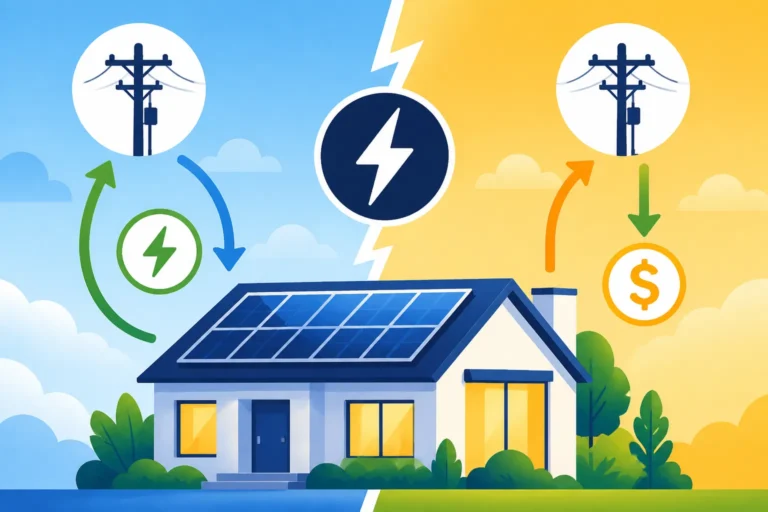
For most large investor-owned utilities like Duke Energy, CenterPoint Energy, and NIPSCO, the full retail net metering option for new solar customers concluded in the summer of 2022. This transition has led to new "excess distributed generation" (EDG) tariffs or similar programs. Under these new structures, utilities often compensate solar owners for their excess electricity at an "avoided-cost rate," which is typically lower than the full retail rate you pay for electricity. While this change was disappointing for many, it's vital to remember that solar still offers significant savings by reducing the amount of electricity you buy from the grid in the first place. You're still generating your own power, insulating yourself from rising utility rates, and contributing to a cleaner environment. Understanding the difference between net metering vs net billing is really important here, as it directly impacts your financial returns.
State-Specific Incentives and Programs for Indiana Homeowners
While the federal incentive is the biggest slice of the pie, Indiana does offer some valuable state-specific programs that can significantly sweeten your solar investment. These often come in the form of tax breaks or utility-specific initiatives, and they're definitely worth exploring.
Exploring Net Metering Policies and Their Impact
As mentioned, the full retail net metering policy has largely been phased out for new residential solar customers in Indiana. However, this doesn't mean your excess power goes to waste or that you get no credit at all. Instead, most major utilities have transitioned to an "excess distributed generation" or similar program. For instance, utilities like Duke Energy Indiana, CenterPoint Energy (formerly Vectren), and NIPSCO now offer compensation for excess generation at a rate closer to their "avoided cost" – essentially what it would cost the utility to generate or procure that power themselves.
While the avoided-cost rate is typically lower than the retail rate, it still contributes to your overall savings. Think of it this way: the primary financial benefit of solar now comes from offsetting your own electricity consumption. Every kilowatt-hour your panels produce is a kilowatt-hour you don't have to buy from the utility. Any surplus electricity you send back to the grid then earns you a credit at the avoided-cost rate, further reducing your bill. This change makes it even more important to size your solar system correctly to match your energy usage, and increasingly, to consider adding a solar battery to store your excess power for use later, especially during peak demand times when electricity prices are higher.
Understanding Property and Sales Tax Exemptions
Here's some genuinely good news for Indiana homeowners considering solar: the state offers both property and sales tax exemptions for solar energy systems. These are direct financial benefits that can save you a significant amount of money upfront and over the lifespan of your system.
- Solar Property Tax Exemption: Indiana law provides a property tax deduction for assessed valuation attributable to a solar energy heating or cooling system. This means that when you install solar panels, the increased value of your home due to that installation generally won't increase your property taxes. This is a huge benefit because, without it, adding a valuable asset like a solar array could potentially raise your annual property tax bill. It's designed to encourage homeowners to invest in clean energy without being penalized by higher taxes. You can learn more about this by researching Solar Property Tax Exemptions by State.
- Solar Sales Tax Exemption: Even better, Indiana provides an exemption from state sales tax for the purchase of solar energy equipment. When you buy a solar system, you're making a substantial purchase, and sales tax can add thousands of dollars to the total cost. By exempting solar equipment from sales tax, the state makes solar significantly more affordable from day one. This applies to the equipment itself, so make sure your installer accounts for this exemption in your final quote.
These two tax exemptions alone make a compelling case for solar in Indiana. They reduce both the upfront cost and the long-term carrying costs of your system, directly improving your Solar ROI & 25-Year Savings Breakdown.
Potential Local and Utility-Specific Programs
While statewide programs are somewhat limited beyond the tax exemptions and modified net metering, it's always a good idea to check with your specific local utility company. Sometimes, utilities offer their own Utility Solar Rebates: How to Find Yours or energy efficiency programs that can be combined with solar. These are often smaller, but every bit helps!
For example, utilities like NIPSCO or Duke Energy might occasionally offer incentives for energy efficiency upgrades, demand response programs, or even specific solar battery storage initiatives. These types of programs are less consistent and can change year to year, so direct inquiry is your best bet. A quick call to your utility's customer service or a check of their renewable energy section on their website can uncover hidden gems. Also, some municipalities or local non-profits might have localized grants or loan programs, though these are rarer for residential solar. Don't be shy about asking your chosen solar installer if they are aware of any hyper-local programs in your specific Indiana county or city.
Federal Support Still Available for Indiana Solar Owners
No discussion of solar incentives would be complete without talking about the federal Investment Tax Credit (ITC). This is, without a doubt, the most impactful incentive for homeowners across the United States, including those in Indiana, and it's thankfully still going strong.
The Enduring Investment Tax Credit (ITC)
The federal solar Investment Tax Credit (ITC), also known as the Residential Clean Energy Credit, allows you to deduct a significant percentage of the cost of your solar energy system from your federal taxes. For systems installed in 2022 through 2032, this credit is set at a generous 30% of the total cost of your solar installation. This isn't just a deduction from your taxable income; it's a direct dollar-for-dollar reduction of the income tax you owe.
Let's put that into perspective. If your solar system costs $25,000, a 30% ITC means you could get $7,500 back as a tax credit. This is a massive chunk of change that directly reduces the How Much Do Solar Panels Cost? 2026 Guide. It's crucial to understand that you must have a sufficient tax liability to claim the full credit in one year. However, if your tax liability is less than the credit amount, you can carry forward any unused portion of the credit to future tax years, as long as the credit remains in effect. This flexibility ensures that most homeowners can fully utilize the incentive.
This credit is a major reason why Are Solar Panels Worth It in 2026? remains a resounding "yes" for many. It's a stable, reliable incentive that drastically lowers the upfront financial hurdle. Remember, this applies to the cost of equipment, installation, and even certain related expenses like wiring, inverters, and mounting hardware. Even some storage components, like Solar Battery Incentives in 2026, can be included if installed with your solar system.
Other Federal Programs to Consider
Beyond the primary ITC, there are a few other federal avenues that, while not direct residential solar incentives, can sometimes play a role or offer broader support for clean energy.
- USDA Rural Energy for America Program (REAP) Grants: If you happen to live in a rural area of Indiana and own a small business or agricultural operation, the USDA's REAP program offers grants and loan guarantees for renewable energy systems, including solar. While primarily aimed at businesses, it's worth checking if you meet the specific criteria, as these grants can significantly offset costs.
- Low-Income Solar Programs & Assistance: For qualifying low-income households, there might be federal or state initiatives channeled through local agencies. These are less common for direct rooftop solar for individual homes but can exist for community solar projects or broader energy efficiency improvements that complement solar. It's always worth checking with local community action agencies or Indiana Housing and Community Development Authority (IHCDA) for any related programs.
The bottom line is that the federal ITC is the big one, and it's a game-changer for anyone looking to go solar in Indiana. Don't let the noise about other incentives expiring distract you from this powerful financial boost.
Maximizing Your Solar Savings in Indiana
Once you understand the available incentives, the next step is to strategically plan your solar project to get the most bang for your buck. This involves careful planning, choosing the right installer, and understanding how everything fits together.
The Importance of a Professional Solar Assessment
Before you jump into signing contracts, getting a professional solar assessment is paramount. A reputable local solar installer in Indiana won't just slap panels on your roof; they'll conduct a thorough evaluation of your home's energy consumption, roof orientation, shading, and structural integrity. This assessment helps determine:
- Optimal System Size: How many solar panels do you actually need for your home? Oversizing your system can be an unnecessary expense, especially with avoided-cost rates for excess generation. Undersizing means you won't offset as much of your electricity bill. A good installer will analyze your past electricity bills (ideally 12-24 months) to design a system that perfectly matches your usage patterns. This directly relates to How Many Solar Panels Do I Need for My Home?.
- Roof Suitability: Not all roofs are created equal. They'll check your roof's age, condition, and pitch. If your roof is nearing the end of its life, it might make sense to replace it before installing solar panels. This ensures you won't have to remove and reinstall the panels prematurely, incurring additional costs. You can learn more here: Do I Need a New Roof Before Solar?
- Shading Analysis: Even a small amount of consistent shade can significantly reduce your system's output. Installers use specialized tools to map out shading throughout the year to ensure your panels get maximum sun exposure. If shading is an issue, they might recommend microinverters or power optimizers, which help individual panels perform independently, minimizing the impact of shade on the entire system.
Choosing a local installer who understands Indiana's specific regulations and utility requirements is crucial. They can guide you through the permitting process, interconnection applications, and ensure you qualify for all applicable state and federal incentives. Don't hesitate to get multiple quotes and ask questions, as different installers might offer varying equipment and pricing. Learning How to Compare Solar Installer Quotes is an important step.
Combining Incentives for Greater Impact
The real magic happens when you understand how to layer these incentives effectively. You don't have to choose just one; you can combine most of them to maximize your savings.
- Federal ITC + State Tax Exemptions: This is the most straightforward and powerful combination. The 30% federal tax credit reduces your initial investment significantly, and then the Indiana property tax exemption ensures that this valuable home improvement doesn't increase your annual property taxes. Simultaneously, the sales tax exemption reduces your upfront purchase price.
- Strategic Sizing with Net Billing/EDG: While full retail net metering is largely gone, careful system sizing still maximizes the value of the excess generation credits. By aiming for a system that offsets most, if not all, of your on-site consumption, you minimize the amount of electricity you purchase at retail rates. Any excess generated will still earn you a credit, however, modest.
- Considering Battery Storage: With the shift away from full retail net metering, solar battery storage becomes an increasingly attractive option for Indiana homeowners. A battery allows you to store your excess solar production during the day and use it yourself in the evening or during peak demand periods when electricity rates are higher. This helps you maximize the self-consumption of your valuable solar energy and reduces reliance on grid purchases. Plus, batteries installed with your solar system are often eligible for the federal ITC, making them more affordable.
By understanding these mechanisms and working with a knowledgeable solar professional, you can craft a solar solution that not only powers your home with clean energy but also provides substantial financial returns over its lifetime.
Here's a quick rundown of the main incentives available for Indiana homeowners in 2026:
| Incentive Type | Description | Benefit for Indiana Homeowners | Status in 2026 |
|---|---|---|---|
| Federal Solar Tax Credit (ITC) | A 30% tax credit for the cost of installing a residential solar energy system (including batteries installed with solar). | Directly reduces your federal income tax liability by 30% of your total system cost. | Active (30% through 2032) |
| Indiana Solar Property Tax Exemption | Excludes the assessed value added by a solar energy system from your property's taxable value. | Prevents your property taxes from increasing due to the addition of solar panels, saving you money annually. | Active |
| Indiana Solar Sales Tax Exemption | Exempts the purchase of solar energy equipment from state sales tax. | Reduces the upfront cost of your solar system by eliminating the 7% state sales tax on equipment. | Active |
| Excess Distributed Generation (EDG) | Utilities compensate solar owners for excess electricity sent to the grid at an "avoided-cost rate," rather than the full retail rate. | Still provides credit for surplus power, though at a lower rate than previous full retail net metering. Encourages self-consumption and battery storage. Learn more about Net Metering Explained: How It Works by State. | Active (Replaced full retail net metering for new customers of large utilities) |
| Utility-Specific Programs | Occasional rebates or incentives offered by individual utility companies (e.g., Duke Energy, CenterPoint Energy, NIPSCO) for solar, energy efficiency, or demand response. | Can provide additional, though often smaller, financial benefits or help with specific equipment like batteries. Check with your local utility. | Varies by utility (Check directly, less common than statewide programs) |
Going solar in Indiana in 2026 is still a smart financial decision, especially when you factor in the enduring power of the federal tax credit and the state's generous tax exemptions. While the net metering landscape has evolved, the core benefits of reducing your monthly electricity bills and increasing your energy independence remain strong. Don't let past changes deter you; focus on the current incentives and work with a trusted professional to unlock the full potential of solar for your Hoosier home.
Disclaimer
Please note that this information is for general guidance only and should not be considered tax or financial advice. Incentive programs, policies, and tax laws can change. We highly recommend consulting with a qualified solar installer, tax professional, and your local utility provider to get the most accurate and up-to-date information specific to your situation in Indiana.