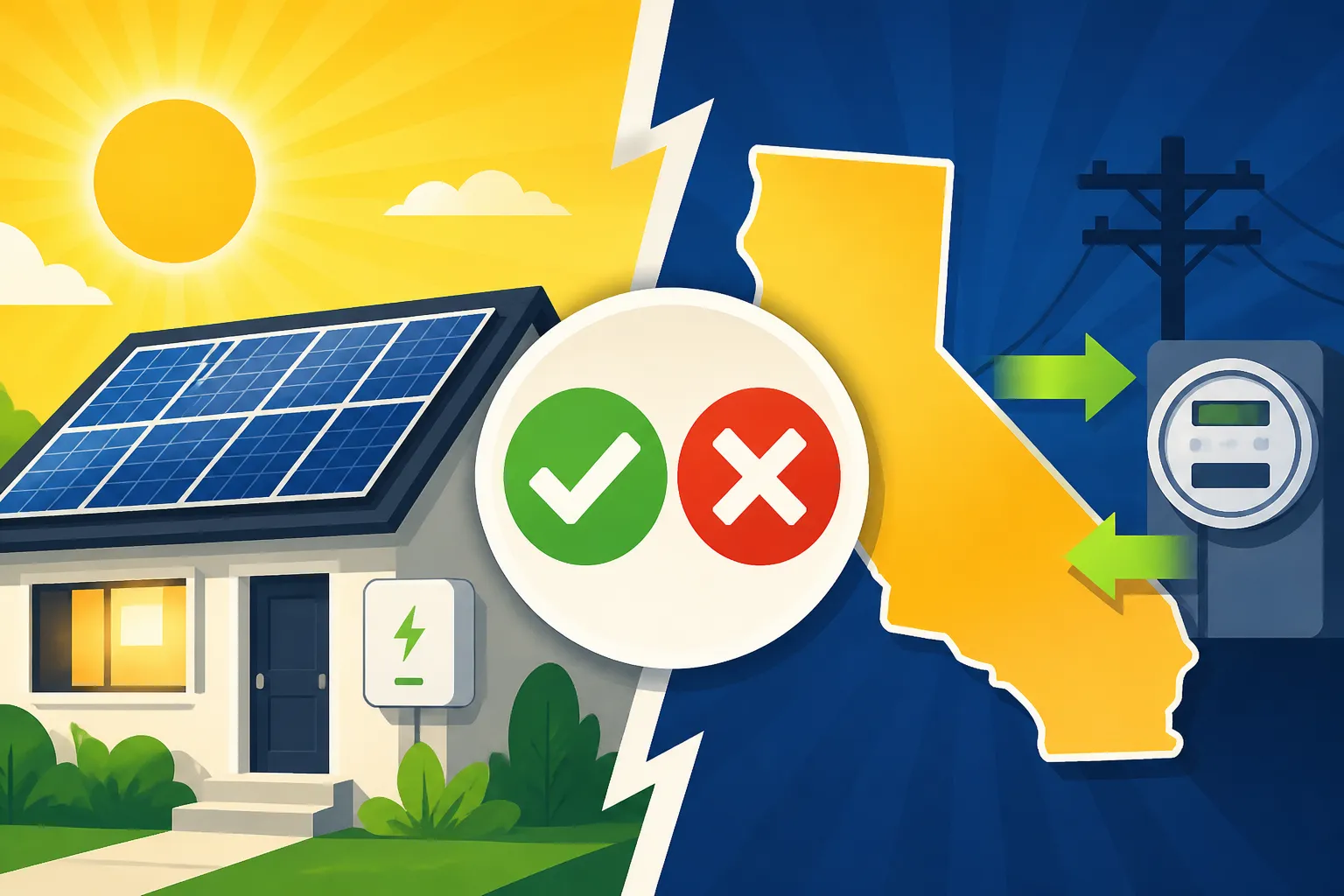
Does California Have Net Metering in 2026?
If you're wondering if California still has net metering in 2026, you're not alone. Many homeowners are trying to wrap their heads around the state's ever-evolving solar landscape. The short answer is yes, California still has a form of net metering, but it's drastically different from what it used to be. For any new solar systems connected to the grid after April 14, 2023, the rules have fundamentally changed under what's now officially called the Net Billing Tariff, commonly known as NEM 3.0. This guide will walk you through what this means for you, how it impacts solar savings, and what steps you can take to make solar work in this new environment.
The Evolution of Net Metering in California: From NEM 2.0 to NEM 3.0
For years, California led the nation with its generous net metering policies, often referred to as NEM 1.0 and then NEM 2.0. These programs allowed solar homeowners to send their excess solar energy back to the grid and receive credits at or near the full retail electricity rate. It was a fantastic deal that made going solar incredibly appealing and helped California become a powerhouse in renewable energy. But like all good things, changes were inevitable, and those changes have significantly reshaped the financial landscape for new solar installations.
What Was NEM 2.0?
Under NEM 2.0, if your solar panels produced more electricity than your home was using at any given moment, that surplus power would flow back into the utility grid. Your utility company – whether it was Pacific Gas & Electric (PG&E), Southern California Edison (SCE), or San Diego Gas & Electric (SDG&E) – would then credit your account for that exported energy at nearly the same rate you would pay to buy electricity from them. This "dollar-for-dollar" or "one-for-one" credit system meant that if you overproduced during the day, those credits could offset your usage at night or on cloudy days, leading to very low or even zero electricity bills for many homeowners. It was simple, it was effective, and it allowed homeowners to truly maximize their savings and achieve quick solar payback periods.
The beauty of NEM 2.0 was its simplicity and fairness. You were essentially getting paid the same rate for the power you gave the grid as you paid for the power you took from it. This made calculating your potential savings straightforward and gave a clear incentive to go solar. However, as more and more homes adopted solar, the utilities argued that the system wasn't sustainable and shifted costs onto non-solar customers, which became the driving force behind the changes.
The Arrival of NEM 3.0 (Net Billing Tariff)
Fast forward to December 2022, when the California Public Utilities Commission (CPUC) approved a new net metering tariff, which became effective on April 15, 2023. This new policy, the Net Billing Tariff, dramatically altered how solar homeowners are compensated for their excess energy. Instead of near retail rates, you now receive a much lower "avoided-cost" rate for the energy you export to the grid. The CPUC stated that this change was necessary to ensure grid stability and equitable cost distribution among all utility customers.
This shift means that the financial benefits of simply exporting solar power are significantly reduced. The avoided-cost rate is the rate at which the utility avoids having to produce or procure that energy from other sources. It's often pennies on the dollar compared to the retail rates you pay. For example, if you pay $0.30 per kWh for electricity during peak hours, you might only get $0.05 per kWh for exporting that same energy back to the grid. This difference is substantial and changes the entire calculus of solar savings for new installations. For a deeper dive into the specifics, you can check out our article on California NEM 2.0 vs NEM 3.0 Explained.
How NEM 3.0 Impacts Solar Savings and Your Wallet
The transition to NEM 3.0 has undeniably changed the financial landscape for new solar owners in California. While solar can still be a wise investment, the strategy for maximizing savings under the new tariff is quite different. The days of simply installing panels and letting the excess flow back to the grid for high credits are largely over.
Reduced Export Compensation
The most significant impact of NEM 3.0 is the dramatic reduction in how much you're compensated for the solar energy you send back to the grid. Under NEM 2.0, many homeowners could rely on their surplus generation during sunny parts of the day to offset their evening and nighttime usage. Now, that same surplus energy yields significantly less in credits. This means your system needs to be designed to optimize self-consumption as much as possible, rather than relying on grid exports for major savings.
Consider a typical scenario: A family in Sacramento with a NEM 2.0 system might have seen their exported energy in the afternoon fully offset their evening energy use. With NEM 3.0, that same exported energy provides only a fraction of the value, leaving them to pay for a larger portion of their evening consumption at full retail rates. This effectively extends the Solar Panel Payback Period Explained compared to previous policies.
The Rise of Solar Batteries
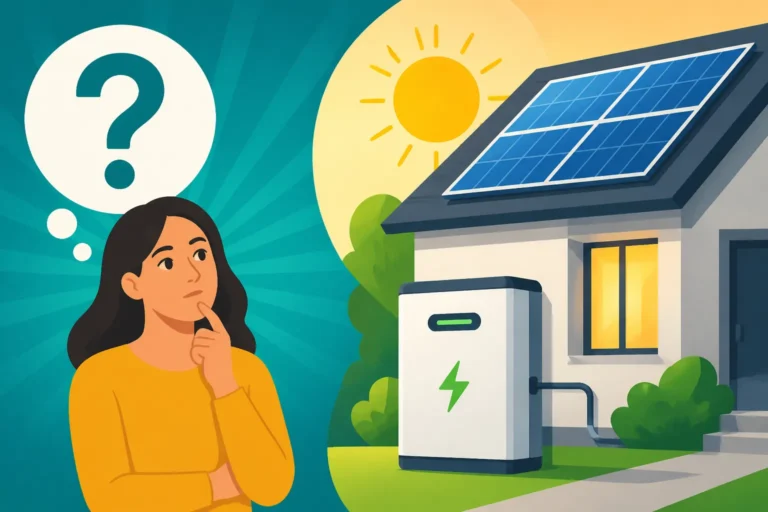
With the reduced export compensation, solar batteries have become not just an option, but almost a necessity for maximizing savings under NEM 3.0. A solar battery allows you to store your excess solar energy generated during the day and use it later, typically during peak evening hours when electricity rates are highest. This strategy, often called "arbitrage" or "time-shifting," means you're consuming your own valuable solar energy instead of selling it back to the grid for a low rate and then buying expensive grid power later.
Many homeowners are now pairing their solar panels with a battery like a Tesla Powerwall or an Enphase IQ Battery to optimize their energy usage. By storing and self-consuming, you're effectively using your solar power at its highest value, which is the retail rate you would otherwise pay for grid electricity. This also offers the added benefit of backup power during grid outages, a growing concern for many Californians. To understand more about the costs and benefits, explore our guide on Solar Plus Battery Cost and Solar Battery Incentives in 2026.
Understanding the True Value of Your Solar Power
Under NEM 3.0, the "value" of your solar power is no longer a simple retail rate. It's dynamic and depends heavily on when you generate it and when you use it.
| Feature | NEM 2.0 (Pre-April 15, 2023) | NEM 3.0 (Net Billing Tariff) |
|---|---|---|
| Export Compensation | Near full retail rate (often 90-100% of import rate) | Avoided-cost rate (significantly lower, ~20-30% of import rate) |
| Peak/Off-Peak Rates | Still present, but export credits often balanced out | Crucial to strategy; high-value import rates, low-value export rates |
| Battery Importance | Beneficial for backup or minor optimization | Nearly essential for maximizing savings and ROI |
| Payback Period | Shorter, generally 5-8 years | Longer without battery, potentially 9-15+ years; improved with battery |
| Grid Services Charge | Not a direct component | New non-bypassable charge ($0.08/kWh in some cases) |
| Applicability | Existing systems grandfathered for 20 years from PTO date | All new applications submitted after April 14, 2023 |
This table clearly illustrates the shift. The focus has moved from selling excess energy to the grid to using as much of your self-generated power as possible. This is where demand-side management, smart home energy systems, and, of course, battery storage become incredibly important. For further details on how export credits are now calculated, you might find our article on Avoided-Cost Rate & Export Credits Explained very illuminating.
Strategies for Solar Success Under NEM 3.0 in 2026
Even with the changes, going solar in California can still be a smart move, especially given rising electricity rates and the desire for energy independence. However, it requires a more strategic approach to system design and energy management.
Prioritizing Self-Consumption with Batteries
As highlighted earlier, investing in a solar battery is arguably the single most impactful strategy under NEM 3.0. By storing your daytime surplus and discharging it during costly peak evening hours, you directly reduce the amount of expensive electricity you need to pull from the grid. This maximizes the value of every kWh your panels produce.
Think about it: instead of getting $0.05 for exporting a kWh during the day, you use that stored kWh to avoid buying one from the utility for $0.30 at night. That's a significant difference in value. Many Californians are finding that the combination of solar panels and a battery is the key to achieving significant bill reductions and a reasonable return on investment.
Optimizing Your Energy Usage Patterns
Beyond batteries, understanding and adjusting your household's energy consumption patterns can also yield big savings. Shifting high-energy activities to the middle of the day when your solar panels are producing the most can make a difference.
For example, if you typically run your dishwasher or do laundry in the evening, try to run those appliances during the sunniest part of the day. Charging an electric vehicle (EV) during the day using your own solar power is another fantastic way to leverage your generation. Smart home devices and energy management systems can help automate these processes, ensuring your high-consumption appliances run when solar production is at its peak.
Maximizing Available Incentives
While the federal solar tax credit (Investment Tax Credit) remains a significant incentive, California still offers various programs to support solar adoption. It's crucial to research and take advantage of all available incentives at the state and local levels. These can include:
- Property Tax Exemptions: In California, adding solar panels typically won't increase your property taxes, thanks to specific exemptions. This is a huge benefit, as it means your home's value can increase without a corresponding rise in your annual property tax bill. You can find more details in our article on Solar Property Tax Exemptions by State.
- Local Utility Programs: Some municipal utilities or smaller providers might offer their own rebates or specific programs that can help offset the cost of solar or batteries. Always check with your local utility provider.
- Low-Income Solar Programs: California also has programs like the SASH (Single-family Affordable Solar Homes) program or GRID Alternatives that aim to make solar accessible to low-income households, providing financial assistance and job training. If you qualify, these programs can dramatically reduce the upfront cost.
Navigating these can be complex, so working with a reputable solar installer who is knowledgeable about current California solar incentives is highly recommended. They can help you identify and apply for programs that apply to your specific situation.
The Future of Solar in California Beyond 2026
The solar landscape in California is dynamic, and while NEM 3.0 has been a significant change, it's unlikely to be the last. The state remains committed to its renewable energy goals, which means continued innovation and adjustments to policies.
Continued Grid Modernization
California's push for renewable energy includes massive investments in grid modernization. This means better integration of distributed energy resources like rooftop solar and batteries, and the development of more resilient infrastructure. As technology advances, we may see new programs that reward homeowners for providing grid services, potentially creating new revenue streams or savings opportunities for those with solar and storage.
Community solar programs are also gaining traction, offering an alternative for those whose homes aren't suitable for rooftop solar or who prefer not to install their own system. For more on this, check out our piece on Community Solar: How It Works & Who Qualifies.
The Evolving Role of Batteries and Smart Homes
The trend towards solar-plus-storage is only going to accelerate. As battery technology becomes more affordable and efficient, and as smart home energy management systems become more sophisticated, homeowners will have even greater control over their energy usage and costs. This will empower them to adapt to future policy changes and fluctuating electricity rates more effectively.
Imagine a future where your home automatically charges your EV when solar production is high and discharges your battery to power your home during peak evening hours, all without you having to lift a finger. This level of automation will become standard, making solar an even more seamless and beneficial part of homeownership. The overall question of Is Solar Worth It in California in 2026? will increasingly depend on adopting these integrated solutions.
What if I have an older NEM 2.0 system?
If you were fortunate enough to get your solar system interconnected under NEM 2.0 (or even NEM 1.0) before the April 15, 2023 deadline, congratulations! Your system is grandfathered into those more favorable net metering terms for 20 years from your Permission to Operate (PTO) date. This means you will continue to receive near retail credit for your exported power for two decades. This grandfathering provision is a huge relief for existing solar owners and highlights the importance of getting solar sooner rather than later when beneficial policies are in place. However, it's still worth considering adding a battery to your existing NEM 2.0 system, especially if you experience frequent power outages or want to further optimize your peak hour usage.
Navigating Your Solar Journey in California
Going solar in California is still a significant decision, and one that many homeowners are making. Despite the shift to NEM 3.0, the economic and environmental benefits remain compelling, especially with the strategic inclusion of battery storage.
The key is to approach your solar project with a clear understanding of the current rules and to partner with a knowledgeable and reputable solar installer. They can design a system that not only meets your energy needs but also maximizes your financial savings under the new Net Billing Tariff. Don't let the changes deter you; instead, let them guide you toward a more resilient and efficient home energy solution. If you're ready to explore your options, getting multiple solar quotes is always a wise first step to ensure you're getting the best possible system and value.
Disclaimer
Please note that solar policies, incentives, and utility rates can change. The information provided in this article is for general guidance only and may not be applicable to every individual situation. It is always recommended to consult with qualified solar professionals and financial advisors to get the most accurate and up-to-date information for your specific circumstances.