What Is the Best Solar Setup for a Whole House?
Trying to figure out the "best" solar setup for your entire home can feel like navigating a maze blindfolded. You're probably looking to ditch those ever-rising utility bills, gain some energy independence, and maybe even lessen your environmental footprint, but the sheer volume of information and options can be overwhelming. This guide is here to cut through the noise, helping you understand exactly what goes into creating a robust, efficient, and truly whole-house solar system that meets your family's unique energy demands.
Understanding Your Home's Energy Needs for Solar
Before you even start thinking about panels or batteries, the absolute first step in designing the best whole-house solar setup is to get a crystal-clear picture of your home's energy consumption. Without this crucial baseline, you're just guessing, and that can lead to an undersized system that doesn't save you much or an oversized one that costs more than necessary. It’s like trying to fill a bucket without knowing its capacity or how much water you need.
Calculating Your Average Daily Energy Consumption
This might sound daunting, but it's actually quite straightforward once you know where to look. Grab your past 12 months' worth of electricity bills. Most utility companies, whether you're with a big player like Pacific Gas and Electric (PG&E) in California or a local co-op, provide a breakdown of your usage in kilowatt-hours (kWh). You'll want to find the total kWh used for each month. Why 12 months? Because your energy usage fluctuates seasonally. You might use more electricity for air conditioning in a scorching Arizona summer or for heating and lighting during a dreary New England winter. Averaging it out gives you a realistic daily usage number. For example, if your annual usage is 12,000 kWh, divide that by 365 days, which means you're looking at about 32.8 kWh per day. This number is your target: your solar system needs to be able to generate at least this much energy on average to offset your consumption fully.
Getting this detailed information will also help you figure out how many solar panels you need for your home. Remember, the goal isn't just to make some power; it's to make all the power you use, or as close to it as possible, to truly maximize your savings and environmental impact.
Assessing Peak Load and Future Energy Growth
Beyond just your average consumption, it's really smart to think about your "peak load" – those times when your home demands the most electricity simultaneously. Do you run the washing machine, oven, and hairdryer all at once? If you're considering a battery backup, understanding these moments is vital to ensure your system can handle the surge. For instance, a quick search on Amazon reveals handy energy monitors that can plug into individual appliances or even clip onto your main electrical panel to give you a real-time understanding of what's drawing power and when. These devices, often from brands like Sense or Emporia, can be incredibly insightful for tailoring your system.
What about the future? Many homeowners forget to factor in upcoming changes that will inevitably increase their energy use. Are you planning to buy an electric vehicle (EV) in the next few years? That's a huge energy draw! Thinking about adding a hot tub, renovating with more powerful appliances, or expanding your family (and thus, your laundry and entertainment needs)? All these things will boost your energy demand. A truly "best" whole-house solar setup anticipates these changes, allowing for potential expansion or sizing the initial system a bit larger than your current needs to accommodate growth. It's much cheaper and easier to plan for these additions upfront rather than having to upgrade your system significantly down the line.
Key Components of a Whole-House Solar System
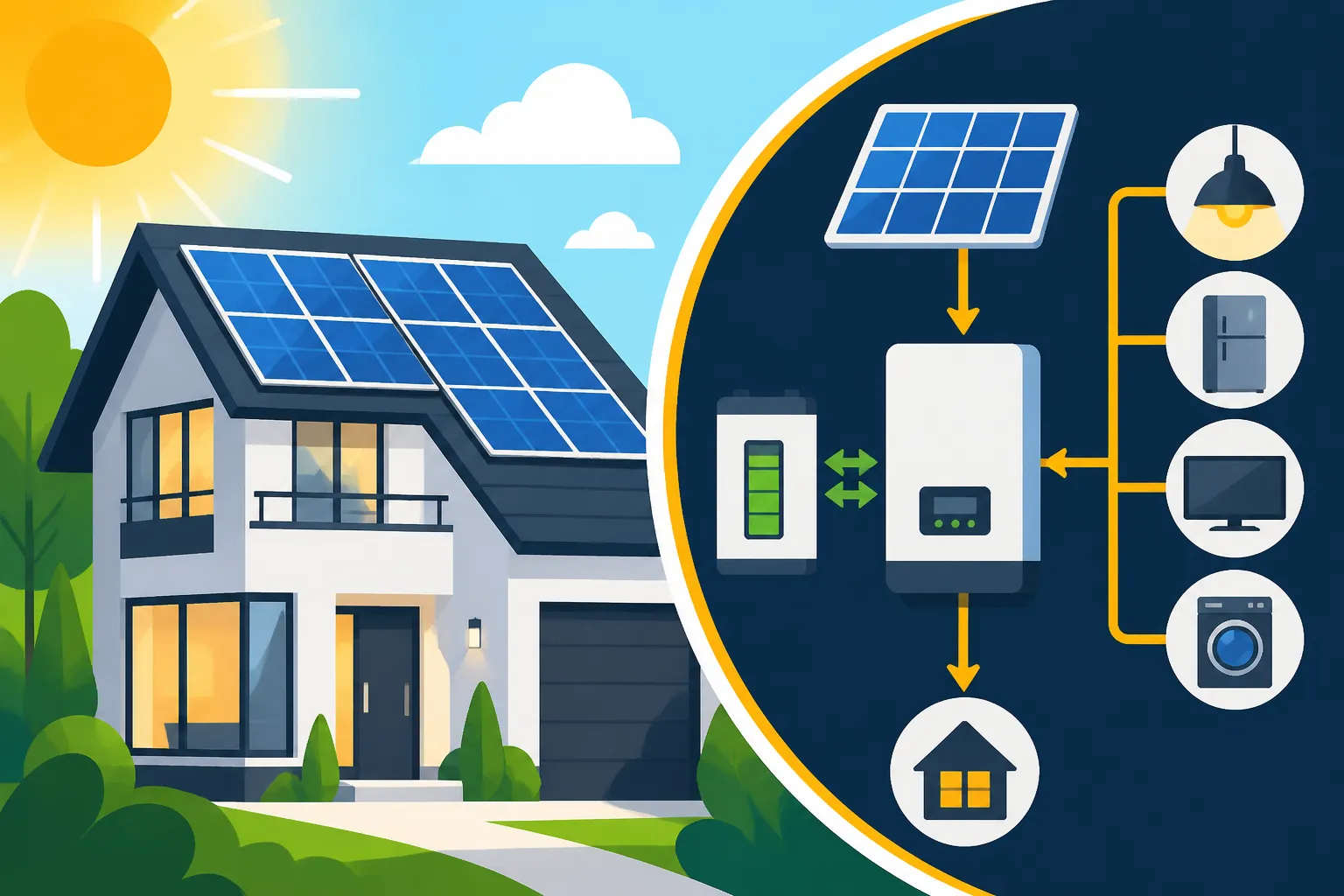
Once you understand your energy needs, it’s time to look at the hardware. A whole-house solar system isn't just a collection of solar panels; it's an intricate ecosystem of interconnected technologies designed to capture, convert, store, and deliver electricity efficiently. Each component plays a critical role, and understanding their functions will empower you to make informed decisions about your setup.
Solar Panels: Types, Efficiency, and Wattage
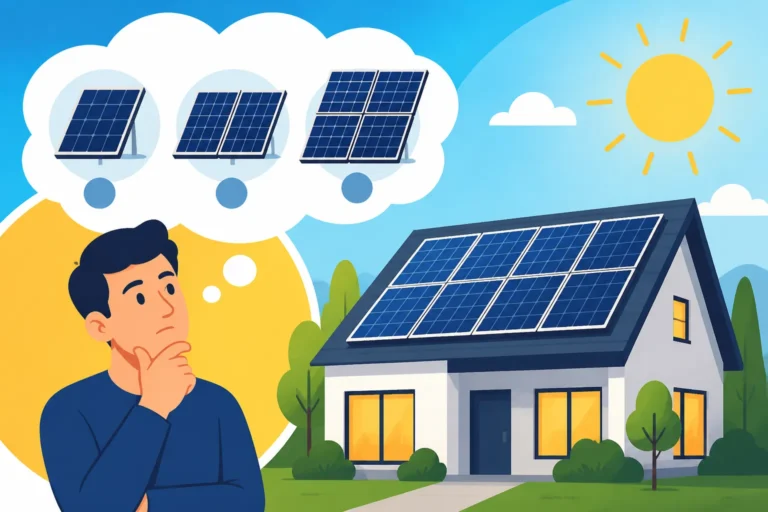
The most visible part of your system, solar panels, are essentially power generators. When sunlight hits them, they convert solar energy into direct current (DC) electricity. But not all panels are created equal. You'll primarily encounter two main types for residential use:
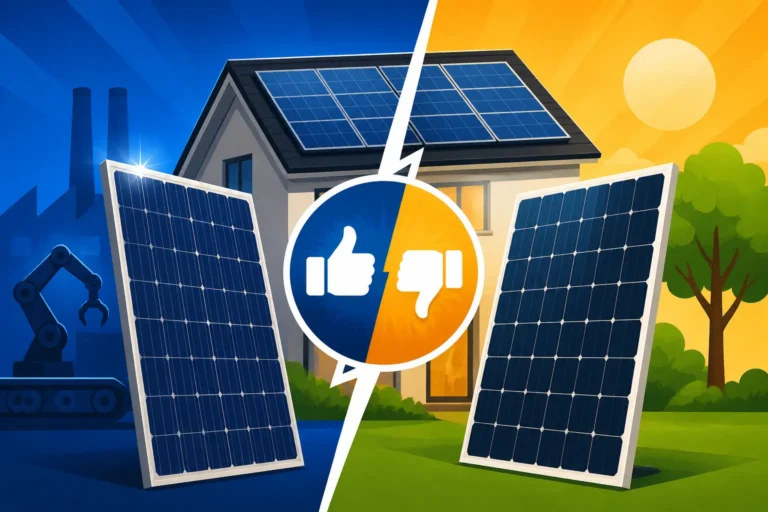
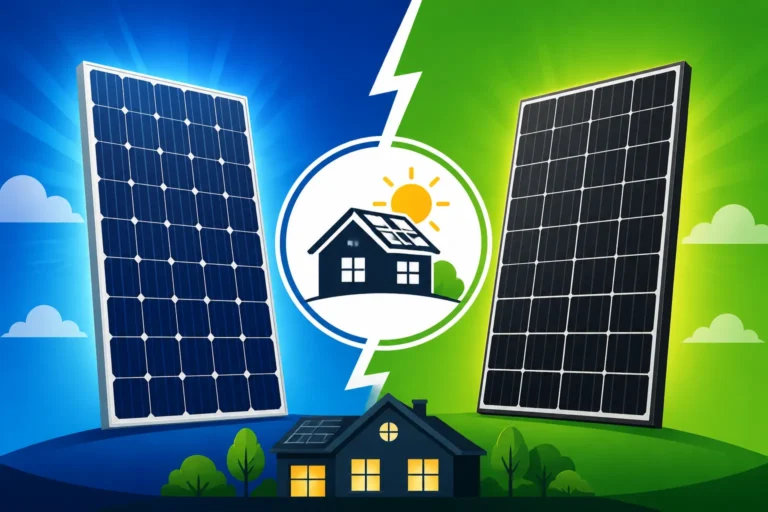
- Monocrystalline Panels: These are usually identifiable by their uniform, dark black appearance. They are made from a single crystal of silicon, which allows electrons to move more freely, leading to higher efficiency rates—often between 18% and 23%. This means they can produce more power from a smaller footprint, which is a huge advantage if you have limited roof space. Brands like Maxeon (formerly SunPower) and REC are known for their high-efficiency monocrystalline panels. They tend to be a bit pricier per panel, but their superior performance can justify the cost, especially in states with less sunshine or smaller roofs.
- Polycrystalline Panels: These panels have a speckled, blue appearance. They are made from multiple silicon crystal fragments, making them less efficient (typically 15-17%) but also more affordable to produce. While they require more roof space to generate the same amount of power as monocrystalline panels, they can be a cost-effective option for homes with ample, unobstructed roof area, particularly in sun-drenched states like Florida or Arizona.
Beyond type, you'll see panels rated by wattage (e.g., 400W, 450W). This indicates how much power a single panel can produce under ideal conditions. Higher wattage panels mean you need fewer of them to reach your desired system size. Choosing the right panels involves balancing efficiency, cost, aesthetics, and your available roof space.
Inverters: String, Microinverters, and Optimizers
The DC electricity produced by your panels isn't what your home uses; your appliances run on alternating current (AC). This is where inverters come in. They convert the DC electricity from your panels into usable AC electricity. There are three main types, and the choice significantly impacts your system's performance and monitoring capabilities:
- String Inverters: These are the traditional choice. Panels are wired together in "strings," and all strings connect to a single central inverter, typically located on a wall in your garage or utility room. They are generally the most affordable option. However, if one panel in a string is shaded or underperforms, it can reduce the output of the entire string, sometimes by a significant amount. Think of it like a string of old Christmas lights: if one bulb goes out, the whole string might go dim or dark.
- Microinverters: These are installed directly under each individual solar panel. Each panel gets its own inverter, meaning it converts DC to AC right at the panel level. This setup allows each panel to operate independently. If one panel is shaded or has an issue, the others continue to produce at their maximum potential. This is a huge advantage for roofs with complex shapes, partial shading, or different orientations. They also offer panel-level monitoring, so you can see exactly how each panel is performing. Enphase is a leading brand in microinverters, known for its robust and intelligent systems.
- Power Optimizers: These are a hybrid solution, often paired with a central string inverter. Optimizers are installed at each panel (like microinverters) to condition the DC power and maximize each panel's output, especially in shaded conditions. The optimized DC power is then sent to a central string inverter for conversion to AC. SolarEdge is a prominent provider of this technology, offering panel-level optimization with the cost-effectiveness of a string inverter setup.
The decision between string, microinverter, and optimizer systems depends heavily on your roof's characteristics, potential shading issues, budget, and desired level of monitoring. If you want to dive deeper into these options, check out our guide on Solar Inverters: String vs Microinverter vs Optimizer.
Solar Batteries: Backup Power and Grid Independence
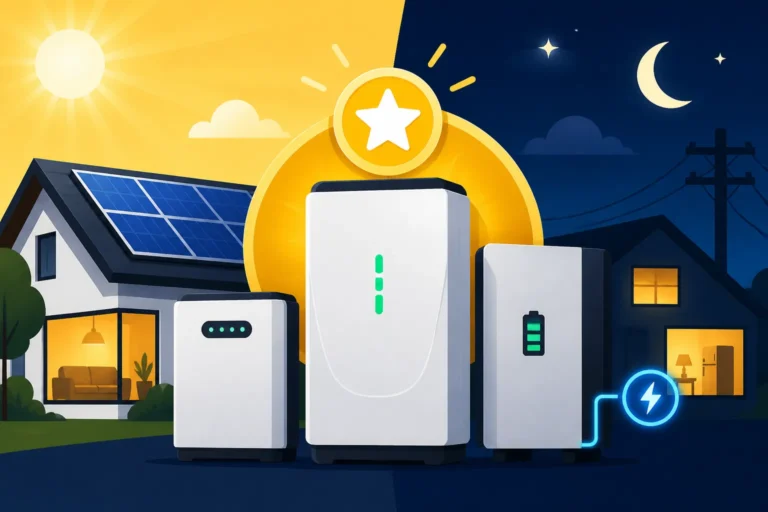
While not strictly necessary for every solar setup, integrating a solar battery is becoming increasingly popular, especially for a "whole-house" solution. A battery stores excess solar energy produced during the day so you can use it at night, during power outages, or whenever your panels aren't generating enough.
- Backup Power: This is perhaps the most compelling reason for many homeowners. If your grid goes down, a battery can keep your essential appliances (or even your entire home, depending on its size) running. Brands like Tesla Powerwall, Enphase IQ Battery, and FranklinWH aPower are popular choices, offering seamless integration and robust performance. This can be a huge relief during events like severe weather or grid failures.
- Maximizing Self-Consumption: In areas with less favorable net metering policies (where utilities pay you less for your excess solar power than they charge you for electricity from the grid), a battery allows you to store your own power rather than selling it back cheaply. You then use your stored power when grid electricity is expensive, significantly boosting your savings.
- Grid Independence: For those aiming to reduce their reliance on the utility company, a battery is a critical step. It allows you to utilize more of your own generated power, giving you a greater sense of energy sovereignty.
Deciding whether you need a battery with solar depends on your priorities, local utility policies, and budget. But for a truly resilient and independent whole-house setup, a battery is often the missing piece. You can learn more about specific options in our guide on the Best Solar Batteries of 2026.
Mounting Systems and Racking
These are the unsung heroes of your solar system. Mounting systems securely attach your panels to your roof or ground, ensuring they can withstand weather elements like high winds and heavy snow loads.
- Roof-Mount Systems: These are the most common for residential installations. They typically consist of rails attached to your roof rafters or decking, onto which the panels are clamped. Modern racking systems are designed to protect your roof, often using flashing to prevent leaks, and are built to last the lifetime of your solar panels. Considerations include roof type (shingles, tile, metal), pitch, and structural integrity.
- Ground-Mount Systems: If your roof isn't suitable (too much shade, insufficient space, or poor condition), ground mounts offer an alternative. Panels are installed on a freestanding structure in your yard. These systems often allow for optimal panel angling and orientation, which can boost energy production, but they require available yard space and can be slightly more expensive due to additional trenching and foundation work.
Choosing the right mounting system is critical for the long-term safety and performance of your solar array. A reputable installer will assess your specific property and recommend the most appropriate and durable solution.
Designing Your Optimal Whole-House Solar Setup
Now that you know the components, how do you put them all together for your home? This stage is where your energy usage data meets the available technology, culminating in a system that truly powers your entire household effectively.
Sizing Your System for Full Energy Offset
This is where your initial calculations about daily and annual energy consumption become paramount. Your solar installer will use this data, along with factors like your local sun exposure (insolation), roof orientation (south-facing is generally best in the Northern Hemisphere), and potential shading, to determine the ideal system size in kilowatts (kW).
Let's say your average daily usage is 30 kWh. A typical 400W solar panel produces around 1.5 to 2 kWh per day, depending on sun hours and efficiency. So, you'd need approximately 15-20 panels to cover that 30 kWh daily usage. This quickly adds up to a 6 kW to 8 kW system. However, it's not always a simple division. Your installer will use sophisticated software that accounts for all these variables, often using satellite imagery and historical weather data, to model your expected solar production accurately. They might even recommend slightly over-sizing your system if your utility offers favorable net metering, allowing you to generate credits that can offset any grid purchases. For a deeper understanding, check out our guide on Solar Panel Cost by System Size (kW).
Integrating Battery Storage for Resilience
As discussed, batteries are key for true whole-house energy independence. When designing your system, decide how much backup power you need. Do you just want to keep the fridge and a few lights on during an outage, or do you want to power your entire home as if the grid never went down?
- Essential Load Backup: For most homeowners, backing up critical loads like the refrigerator, lights, Wi-Fi, and a few outlets is sufficient. This requires a smaller battery system.
- Whole-Home Backup: If you want to keep everything running, including heavy appliances like AC units, you'll need a much larger battery capacity. This often means multiple battery units. For example, a single Tesla Powerwall 3 offers 13.5 kWh of usable capacity and 11.5 kW of continuous power output, which is significant, but a large home with high-demand appliances might need two or three units to achieve full backup.
Your installer can perform a "load analysis" to identify your critical appliances and calculate the battery capacity required to run them for a desired duration (e.g., 24-48 hours). This ensures your solar plus battery setup truly meets your resilience goals. Our article on Solar Plus Battery Cost dives into the financial aspects of adding battery storage.
Choosing the Right Components for Your Specific Needs
This isn't a one-size-fits-all situation. The "best" setup for your neighbor might be completely wrong for you.
- Roof Type and Shading: If you have a complex roof with multiple angles and shading from trees or chimneys, microinverters or power optimizers are almost certainly the superior choice, as they mitigate the impact of partial shading. If you have a perfectly unshaded, south-facing roof, a string inverter might be more cost-effective.
- Budget: High-efficiency panels and robust battery systems come with a higher upfront cost. It's about finding the sweet spot between your budget and your long-term energy goals. Sometimes, a slightly larger initial investment can lead to significantly greater savings over the system's 25-30 year lifespan.
- Aesthetics: Some homeowners prioritize how their solar panels look. "All-black" monocrystalline panels tend to blend more seamlessly with dark roofs. Certain mounting systems are also less visible than others.
- Warranty and Reliability: Always consider the warranties offered on panels (product and performance), inverters, and batteries. Long-term warranties from reputable manufacturers like Qcells, LG, or Enphase offer peace of mind. Our guide on Solar Panel Warranties Explained can help you decipher the fine print.
Don't be afraid to ask your potential installers why they recommend specific brands or configurations. A good installer will explain their choices clearly and logically based on your home's unique characteristics.
Considering Professional Installation vs. DIY Elements
While some extremely handy homeowners opt for a full DIY solar installation, especially for smaller systems or off-grid setups, a whole-house grid-tied system is a significant undertaking that typically requires professional expertise. Permitting, electrical work, structural considerations, and utility interconnection are complex and critical for safety and performance.
However, that doesn't mean you can't be an informed participant! Educating yourself on the process and components empowers you to ask the right questions and ensure you're getting a quality installation. For instance, while you wouldn't install the panels yourself, you might purchase specific components like an individual smart energy monitor from Amazon to track your usage data more closely. When it comes to the heavy lifting, connecting to the grid, and ensuring compliance with local codes, engaging a certified and experienced solar installer is almost always the best route for a whole-house setup. You can find helpful advice on How to Choose a Solar Installer to ensure you pick a reliable company.
Maximizing Your Whole-House Solar Investment
Installing solar is a big decision, and it’s one that should pay off for decades. Beyond the initial setup, there are strategies and considerations to ensure your whole-house solar system truly delivers maximum value and savings over its lifetime.
Navigating Net Metering and Utility Policies
Net metering is crucial for grid-tied solar systems. It's the billing mechanism that allows you to send excess solar electricity you generate back to the utility grid and receive credits for it, which can then be used to offset the electricity you pull from the grid when your panels aren't producing enough (e.g., at night or on cloudy days).
- Understanding Your State's Rules: Net metering policies vary wildly by state and even by utility. Some states, like Rhode Island and New Hampshire, offer full retail net metering, meaning you get credited at the same rate you pay for electricity. Other states have shifted to less favorable "net billing" or "avoided-cost" rates, where utilities pay you less for your exported power. For example, California's NEM 3.0 has significantly altered the financial landscape for new solar owners, making battery storage even more critical. Our comprehensive guide on Net Metering Explained: How It Works by State is an excellent resource for understanding the specifics in your area.
- Time-of-Use (TOU) Rates: Many utilities use TOU rates, where electricity prices are higher during peak demand hours (e.g., late afternoon/early evening) and lower during off-peak hours. If you have a battery, you can program it to discharge during these expensive peak hours, further maximizing your savings by avoiding high-cost grid electricity.
Staying informed about your utility's policies is key to optimizing your solar strategy. Sometimes, just adjusting your energy usage habits can make a difference.
Exploring State and Local Incentives
While the federal solar tax credit is a fantastic incentive, many states, municipalities, and even local utilities offer their own programs to encourage solar adoption. These can significantly reduce your upfront costs and improve your system's return on investment.
- State Tax Credits and Rebates: States like New York offer a state solar tax credit, while others might have direct cash rebates or performance-based incentives (PBIs) that pay you for the electricity your system generates.
- Solar Renewable Energy Credits (SRECs): In some markets, such as New Jersey and Massachusetts, you can generate and sell SRECs for the environmental attributes of your solar power. These can provide a substantial income stream for homeowners.
- Property and Sales Tax Exemptions: Many states offer property tax exemptions for the added value that solar panels bring to your home, preventing your property taxes from increasing. Similarly, some states offer sales tax exemptions on solar equipment.
It's absolutely worth exploring these options. A quick search for "state solar incentives [your state]" will often lead you to relevant programs. Your chosen solar installer should also be highly knowledgeable about all available local incentives and help you navigate the application processes. You can also consult our State Solar Incentives: Complete 2026 Guide for detailed information.
Ongoing Maintenance and Monitoring
Once your whole-house solar system is up and running, it's not a "set it and forget it" affair, though modern systems require minimal hands-on maintenance.
- Performance Monitoring: Most solar systems come with monitoring apps (often from inverter manufacturers like Enphase or SolarEdge) that allow you to track your system's production in real-time, often down to the individual panel. Regularly checking this data helps you quickly identify any dips in performance that might indicate a problem, such as a shaded panel or a faulty component.
- Cleaning: Solar panels generally self-clean with rainfall, but in dusty areas (like parts of Arizona or California's Central Valley) or if birds are frequent visitors, a periodic cleaning might be beneficial. This usually involves a gentle rinse with water; never use abrasive cleaners. You can often do this yourself with a soft brush and hose or hire a professional. Our guide on Solar Panel Maintenance & Cleaning has more tips.
- Inspections: It's a good idea to have your system professionally inspected every few years to ensure all electrical connections are secure, wiring is intact, and there's no subtle damage from weather or pests. This proactive approach can extend the life of your system and prevent costly repairs down the line.
With proper design, thoughtful component selection, and a bit of ongoing attention, your whole-house solar setup will be a reliable source of clean energy and savings for decades.
| Component | Purpose | Key Considerations |
|---|---|---|
| Solar Panels | Convert sunlight into DC electricity | Efficiency, wattage, aesthetics, roof space, warranty |
| Inverters | Convert DC electricity to AC for home use | Type (string, micro, optimizer), shading, monitoring |
| Solar Batteries | Store excess solar energy | Capacity, power output, backup needs, grid policies |
| Mounting System | Securely attach panels to roof or ground | Roof type, structural integrity, wind/snow loads |
| Monitoring System | Track system performance & energy production | App features, real-time data, fault detection |
| Electrical Wiring | Connects all components & to the electrical panel | Safety, code compliance, professional installation |
Disclaimer
This article is for general informational purposes only and does not constitute professional advice. Laws, prices and regulations vary by location and change over time. Consult a qualified professional for guidance on your specific situation.