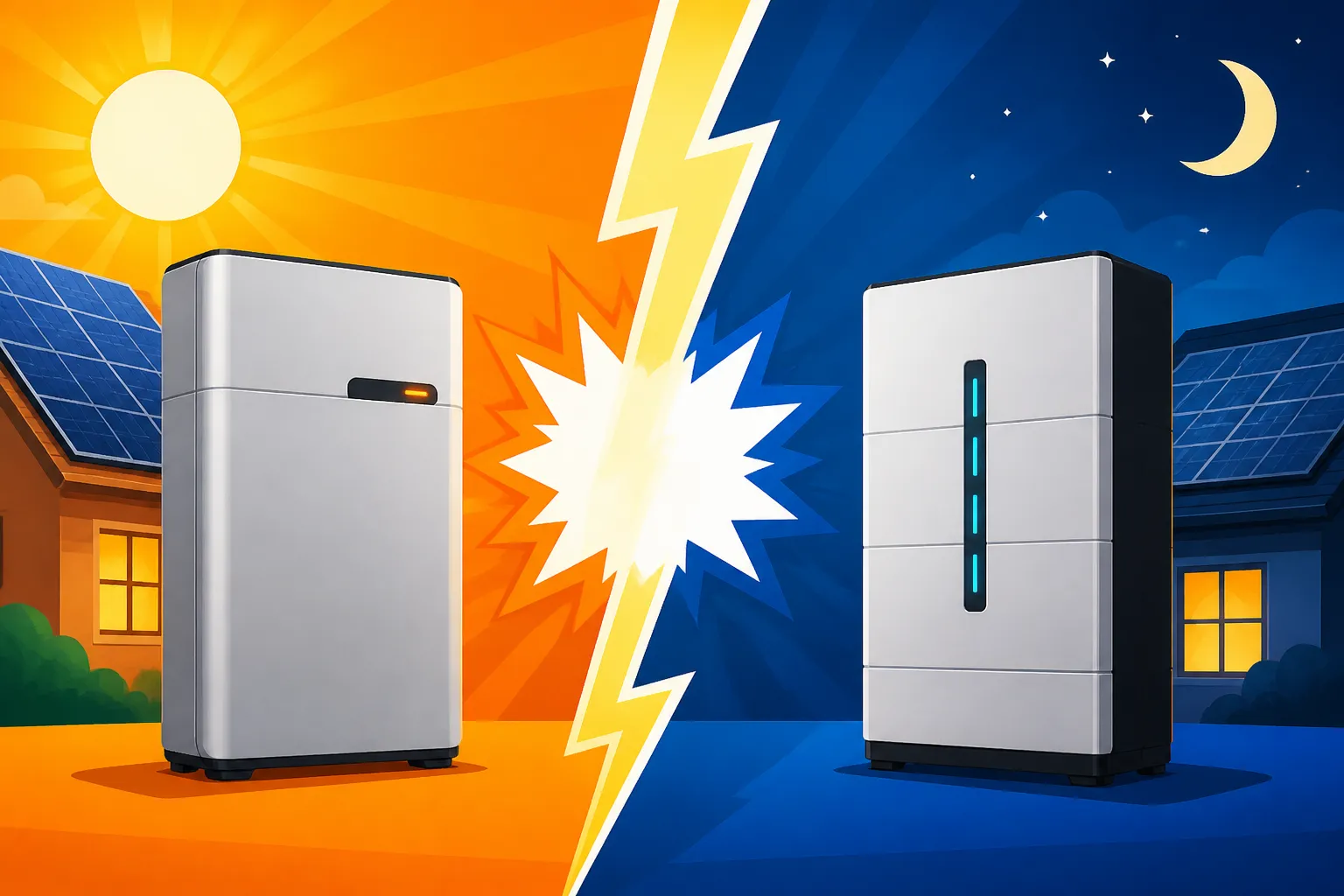
Enphase IQ Battery vs FranklinWH Solar Battery
Deciding to go solar is a huge step toward energy independence, but figuring out the best way to store that precious sunlight can feel like deciphering an ancient scroll. Many homeowners, just like you, grapple with questions about which solar battery system truly fits their lifestyle and energy demands, fearing they might pick the wrong one and be stuck with a less-than-ideal setup. This comprehensive guide is designed to cut through the confusion, offering a detailed, realistic comparison between two leading contenders: the Enphase IQ Battery and the FranklinWH Solar Battery, so you can make an informed choice for your home.
Understanding Your Solar Battery Needs
Before we even dive into the nitty-gritty of specific battery systems, it’s really important to take a step back and think about why you're considering a solar battery in the first place. This isn't just about adding a fancy piece of tech to your garage; it's about securing your home's energy future and maximizing the investment you've made in solar panels.
Why a Solar Battery Matters
Let's face it, relying solely on the grid can be unpredictable. Power outages, whether from a summer storm or grid overload, are a frustrating reality for many. That's where a solar battery steps in. It acts like your personal energy bank, storing the excess electricity your solar panels generate during the day instead of sending it all back to the grid. This stored energy then becomes available when your panels aren't producing, like at night or during cloudy weather. Beyond just backup power, a battery can help you optimize your energy usage, potentially saving you money by reducing reliance on expensive peak-hour electricity from your utility. It also gives you a sense of control and resilience that a grid-tied solar system alone can't quite match. For some, the peace of mind knowing they're prepared for anything is worth its weight in gold.
You might be asking, "Do I Need a Battery With Solar?" The answer really depends on your priorities. If you're in an area with frequent outages, high peak electricity rates, or a less-than-ideal net metering policy, a battery becomes almost essential. It transforms your solar setup from merely offsetting your bill to truly empowering your home.
Key Factors to Consider Before Choosing
Choosing a solar battery isn't a one-size-fits-all situation. It's a significant investment, and you want to make sure you get it right for your specific circumstances. First, consider your energy consumption patterns. Do you use most of your electricity in the evening after the sun goes down? How much backup power do you actually need during an outage – just essentials, or your whole house? This will heavily influence the required capacity and power output of your battery system.
Next, think about your existing or planned solar setup. If you're already integrated into an Enphase ecosystem with their microinverters, an Enphase battery might offer seamless integration. If you're starting fresh or have a string inverter system, you might have more flexibility. The physical space for installation also plays a role – some batteries are sleeker and designed for indoor mounting, while others are more robust for outdoor placement. Finally, and crucially, you'll need to weigh the cost, warranty, and potential return on investment. These aren't just gadgets; they're long-term assets that need to stand up to years of use. Understanding your "Solar Panel Payback Period Explained" can give you a clearer picture of the financial implications over time.
Enphase IQ Battery: A Deep Dive
Enphase has been a household name in the solar industry for years, particularly renowned for their microinverter technology. It's no surprise that their battery offerings, the Enphase IQ Battery line, are designed to integrate perfectly into that existing ecosystem. For many homeowners, the thought of having one unified system, managed by a single app, is incredibly appealing.
Technology and Integration with Enphase Ecosystem
The Enphase IQ Battery system is fundamentally built around its microinverter technology. Unlike some battery systems that use a central inverter for power conversion, each Enphase battery module contains its own set of microinverters. This design means that the battery converts DC power to AC power directly at the module level, mirroring how Enphase solar panels operate. This approach can enhance system resilience, as a problem with one module won't necessarily bring down the entire battery bank.
The real magic of the Enphase system is its deep integration. If you already have Enphase microinverters on your roof, adding an IQ Battery is a natural extension. Everything, from your solar production to your battery storage and home energy consumption, is managed and monitored through the Enphase Enlighten app. This unified platform provides a remarkably cohesive user experience, allowing homeowners in places like Phoenix, Arizona, to monitor their energy flow seamlessly, whether they're producing power, consuming it, or drawing from their battery. This kind of integration is often a major deciding factor for those already committed to the Enphase family.
Key Features and Specifications
Enphase offers various capacities within their IQ Battery line, typically starting from smaller units like the IQ Battery 3 (around 3.36 kWh) up to larger options like the IQ Battery 10 (around 10.08 kWh) and the newest IQ Battery 5P (5 kWh but with higher continuous power). These modular designs mean you can stack multiple units together to achieve the total capacity your home requires. For instance, if you're trying to figure out "What Size Solar Battery Do I Need?" to back up your whole house, you might combine several IQ Battery 10 units.
One of the standout features of the Enphase IQ Battery is its all-in-one AC-coupled architecture. This means it connects directly to your home's AC wiring, making it compatible with virtually any existing solar panel system, even those using other inverter brands, though its greatest benefits are realized within a full Enphase setup. They are also known for their impressive continuous power output relative to their capacity, which is crucial for running high-demand appliances during an outage. They come with an excellent warranty, typically covering 10-15 years or a certain number of cycles, providing long-term peace of mind.
Real-World Performance and User Experience
In practical terms, the Enphase IQ Battery performs reliably, especially for homeowners looking for solid backup during grid outages and daily self-consumption optimization. Users often praise the intuitive nature of the Enlighten app, which provides real-time data and allows for customizable energy modes (e.g., "self-consumption," "backup only," "savings"). For example, a family in Southern California experiencing an evening outage might find their IQ Battery seamlessly kicks in, keeping their lights, refrigerator, and Wi-Fi running without them even noticing the grid went down.
However, like any system, there are considerations. The modularity, while flexible, can mean a higher upfront "Solar Plus Battery Cost" if you need many smaller units to meet a large demand. Installation is generally straightforward for certified Enphase installers, but the physical footprint can add up if you're stacking multiple units. The system is designed to prioritize safety and longevity, often incorporating sophisticated thermal management and redundant microinverters to maximize uptime and performance over its lifespan.
FranklinWH Solar Battery: What Sets It Apart
The FranklinWH Solar Battery is a newer entrant to the residential solar battery market but has quickly made a name for itself with a focus on comprehensive home energy management and a unique, integrated approach. It's designed to be a complete energy hub, not just a battery.
Unique Architecture and Components
Franklin Home Power (FHP) system, spearheaded by the aGate and aPower components, represents a somewhat different philosophy than Enphase. Instead of being strictly AC-coupled at the module level, the FranklinWH system acts more like a centralized brain for your home's energy. The aGate is essentially an intelligent home energy management system that sits between your utility meter, solar inverter, and the aPower battery. It coordinates all energy flows – from the grid, your solar panels, and the battery – to ensure optimal performance and resilience.
The aPower battery itself is a robust, modular unit designed for both indoor and outdoor installation. What's particularly innovative is how the aGate learns your household's energy consumption patterns, allowing for smart decisions about when to store, use, or send power back to the grid. This centralized intelligence aims to simplify complex energy management, offering a holistic view and control over your entire home's energy ecosystem. It's a truly integrated approach, aiming to be the singular point of control for your home's power needs.
Features and Specifications
The FranklinWH aPower battery units offer a substantial capacity, typically around 13.6 kWh per unit, and can be stacked to reach higher capacities, such as 27.2 kWh or even more if needed. This larger individual unit size can sometimes simplify installation and reduce the number of physical boxes required compared to some modular systems. They also boast a high continuous power output (e.g., 5 kW per aPower unit), which is crucial for powering essential loads or even larger appliances during an outage.
Beyond the battery, the aGate controller is a key feature. It provides advanced load management, allowing you to prioritize certain appliances during an outage or to schedule energy usage to take advantage of time-of-use rates. For instance, in a state like Massachusetts, where specific "Massachusetts SMART Program Explained" incentives might encourage self-consumption, the aGate's intelligent management can be a significant advantage. The FranklinWH system also supports both AC-coupled (with existing solar) and DC-coupled (new solar installation) configurations, offering flexibility for different setups. Their warranty is competitive, often mirroring industry standards for cycles and years.
Performance in Practical Scenarios
In real-world applications, the FranklinWH system shines in its ability to manage diverse energy sources and loads intelligently. Homeowners in areas prone to longer outages, such as those in rural Florida during hurricane season, would appreciate the system's robust backup capabilities and the aGate's ability to seamlessly switch between grid, solar, and battery power. The system's intelligence can also lead to more effective peak shaving, where it discharges stored energy during expensive utility peak hours, drawing less from the grid and resulting in direct savings on your electricity bill.
Monitoring and control are handled through the FranklinWH app, which provides detailed insights into energy flow and allows for customization of operating modes. One potential consideration for some might be that while it’s compatible with many inverters, it truly shines when paired with certain approved inverters for seamless communication and optimization. For those looking for a single, comprehensive energy management solution that goes beyond just battery storage, the FranklinWH aGate and aPower combination offers a compelling package.
Head-to-Head Comparison: Enphase IQ Battery vs FranklinWH
Now that we've looked at each system individually, let's put them side-by-side to highlight their differences and help you decide which might be the better fit for your energy goals.
Capacity, Power Output, and Scalability
When it comes to capacity, FranklinWH generally offers a larger base unit (around 13.6 kWh for aPower) compared to Enphase's standard IQ Battery modules (e.g., 3.36 kWh or 10.08 kWh for the IQ Battery 10, or 5 kWh for the 5P). This means you might need fewer physical units of FranklinWH to achieve a high overall capacity. However, both systems are highly scalable, allowing you to add more modules as your needs evolve or your budget allows. If you decide to "Add a Battery to Existing Solar" later, both provide options.
In terms of power output, Enphase's IQ Battery 5P stands out with its high continuous power (e.g., 3.84 kW continuous / 7.68 kW peak for a single 5 kWh unit), allowing it to handle more demanding loads than its capacity might suggest. FranklinWH's aPower also offers robust continuous power (e.g., 5 kW for a 13.6 kWh unit). The key here is to match the power output to your potential surge loads (like starting a well pump or HVAC unit) during an outage, and both brands offer strong contenders.
Installation, Monitoring, and Aesthetics
Installation for both systems should always be performed by a certified professional. Enphase systems are known for their modularity, making it relatively straightforward to add individual battery units. The AC-coupled nature of Enphase can simplify integration with existing solar arrays. FranklinWH, with its centralized aGate, requires a more integrated installation from the outset, as the aGate acts as the central brain. However, once installed, its ability to manage both AC and DC sources (depending on setup) is a strong point.
Monitoring for both is done via intuitive mobile apps – Enphase Enlighten and FranklinWH app. Both provide real-time data on production, consumption, and battery status, offering peace of mind and control.
Aesthetics can be subjective. Enphase IQ Batteries have a sleek, modern, relatively compact design, especially the smaller units, making them easy to mount on a wall, often indoors or in a garage. FranklinWH's aPower units are larger due to their higher capacity but also feature a clean, minimalist design, often suited for outdoor installation due to their robust build. The aGate controller is a separate component, which needs its own dedicated space.
Warranty, Cost, and Value Proposition
Both Enphase and FranklinWH offer competitive warranties, typically around 10 to 12 years with a guarantee of retaining a certain percentage of original capacity (e.g., 70-80%) by the end of the warranty period, or a certain number of cycles. It's crucial to review the specifics of each warranty, as these details can significantly impact your long-term investment.
When it comes to cost, both systems represent a significant investment, falling into the premium category for home solar batteries. Generally, the "Solar Battery Cost: Full Breakdown" will include not just the hardware but also installation, permitting, and potential electrical upgrades. Because of their modularity, comparing prices directly can be tricky. A smaller Enphase system might seem more affordable upfront, but a larger FranklinWH system might offer more capacity per dollar once you scale up. The value proposition for Enphase lies in its seamless integration for existing Enphase solar users and its highly modular, resilient AC-coupled design. For FranklinWH, the value is in its comprehensive, intelligent home energy management system that optimizes all energy flows, offering a powerful, centralized solution for total home energy independence.
| Feature | Enphase IQ Battery | FranklinWH Solar Battery |
|---|---|---|
| Typical Capacity | 3.36 kWh, 5 kWh (5P), 10.08 kWh per module | 13.6 kWh per module |
| Scalability | Highly modular; stack multiple units | Modular; stack multiple aPower units |
| Architecture | AC-coupled, integrated microinverters | Centralized aGate controller, AC/DC coupled options |
| Integration | Seamless with Enphase solar (microinverters) | Comprehensive home energy management via aGate |
| Monitoring | Enphase Enlighten App | FranklinWH App |
| Installation | Flexible, often simpler for existing Enphase users | Requires aGate, more integrated initial setup |
| Outdoor Rated | Yes (most models) | Yes |
| Warranty | 10-15 years, capacity retention / cycles | 10-12 years, capacity retention / cycles |
| Best For | Existing Enphase users, modularity, high power density | Comprehensive energy management, larger capacities |
Which Battery Is Right For Your Home?
This isn't a simple "better or worse" scenario. Both the Enphase IQ Battery and FranklinWH Solar Battery are excellent, high-quality products. The right choice truly boils down to your specific priorities, current setup, and long-term energy goals.
Scenarios Where Enphase Excels
The Enphase IQ Battery is often the undeniable frontrunner for homeowners who are already invested in the Enphase ecosystem. If your roof is already adorned with Enphase microinverters and panels, adding an IQ Battery means a truly unified system where all components speak the same language. This leads to exceptional reliability, streamlined monitoring, and simplified customer support since you're dealing with one manufacturer for your entire solar and storage solution. The modularity also makes it flexible for incremental upgrades; you can start with a smaller system and add more capacity later without a major overhaul. It’s also an excellent choice for homes that might have specific power output needs, where the IQ Battery 5P’s impressive continuous power can keep crucial appliances running smoothly. If you value resilience in a decentralized architecture, meaning a problem with one battery module won't take down the whole system, then Enphase’s approach will resonate with you. Many homeowners across the U.S. who've experienced the reliability of Enphase solar find comfort in extending that same trusted technology to their energy storage.
Scenarios Where FranklinWH Shines
On the other hand, the FranklinWH Solar Battery system, particularly with its aGate controller, is a superb option for homeowners seeking a more comprehensive and intelligent home energy management solution. If you're starting fresh with solar, or if your existing solar system uses a string inverter (like those found in many "SolarEdge vs Enphase: Which Inverter Is Better?" comparisons), FranklinWH offers incredible flexibility. The aGate acts as a smart energy hub, orchestrating power flow from all sources – grid, solar, and battery – to maximize efficiency and savings. This level of intelligent control is particularly beneficial in areas with complex utility rate structures, like time-of-use pricing, allowing the system to automatically optimize when to charge, discharge, or draw from the grid.
For larger homes or those with significant backup power needs, the larger capacity per aPower unit (13.6 kWh) can simplify installation and potentially be more cost-effective at scale. If you envision your home as a smart energy fortress, where every watt is meticulously managed, FranklinWH’s integrated approach will likely appeal more. Homeowners in states like New York, where energy independence and smart grid interaction are becoming increasingly important, might find the FranklinWH system's advanced capabilities perfectly aligned with their goals.
Ultimately, both batteries are top-tier choices that empower you to take control of your home's energy. The best decision will be the one that most closely aligns with your current system, energy consumption habits, and your vision for a sustainable, resilient home.
Disclaimer
Please remember that the information provided in this guide is for general informational purposes only and should not be considered professional financial, electrical, or solar installation advice. Solar technology and incentive programs are constantly evolving. Always consult with certified solar professionals and financial advisors before making any decisions related to your home's energy system. Prices, product specifications, and availability can vary based on location and market conditions.