400W vs 450W Solar Panels
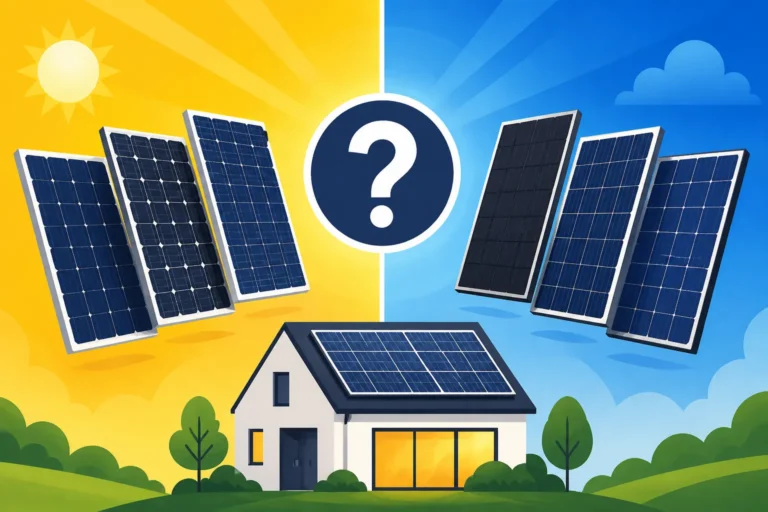
Choosing the right solar panels for your home can feel like navigating a maze, especially when you're faced with numbers like "400W" and "450W" that seem similar but carry different implications for your system's performance and cost. Homeowners often struggle to understand how these subtle differences in wattage translate to real-world savings and system efficiency. This guide will meticulously break down the characteristics, advantages, and trade-offs of 400W and 450W solar panels, empowering you to make an informed decision for your unique energy needs.
Understanding Solar Panel Wattage and Its Importance
When you first start looking into solar panels, you’ll quickly come across terms like "wattage," "efficiency," and "kilowatt-hours." It's easy to get overwhelmed, but understanding these basics is crucial to building a system that truly meets your home's energy demands. The wattage of a solar panel, often presented as peak power (Wp), is one of the most fundamental specifications, giving you a direct measure of its potential output under ideal conditions.
What Does "Wattage" Really Mean for Solar Panels?
At its core, wattage for a solar panel represents the maximum amount of electrical power it can produce under standard test conditions (STC). These conditions are pretty specific: a panel temperature of 25°C (77°F), a solar irradiance of 1,000 watts per square meter, and an air mass of 1.5. Think of it like the horsepower rating on a car – it tells you the theoretical maximum power output, but real-world performance will vary based on factors like weather, shading, and the angle of your roof. So, a 400-watt panel can produce up to 400 watts of power at any given moment under these perfect lab conditions, while a 450-watt panel can reach 450 watts. It’s a snapshot of potential, not a guarantee of constant output.
However, it's important to remember that these are peak ratings. Your panels won't always hit these numbers in everyday operation. Clouds, haze, scorching summer heat (which paradoxically reduces efficiency), and even the dust on your panels will all impact the actual power production. This is why when you're figuring out how many solar panels you need for my home, you’ll typically calculate based on your average daily energy consumption in kilowatt-hours (kWh) rather than just the panels’ peak wattage. The higher wattage panels generally contribute more kWh over the course of a day, even with these real-world variations.
Why Panel Wattage Matters for Homeowners
For homeowners, panel wattage directly influences two very critical aspects of their solar installation: the total system size and the amount of roof space required. If you have a specific energy goal, let's say you want to offset 100% of your electricity bill by installing a 8 kW solar system, the wattage of individual panels dictates how many physical panels you'll need. Opting for higher wattage panels means you'll need fewer of them to reach your desired system size. This is a huge advantage if you have limited roof space or if your roof has complex angles, vents, or dormers that break up available surface area.
Consider a situation where you have a small, but unshaded, south-facing roof in a place like Phoenix, Arizona. You want to maximize your energy production without covering your entire roof. If you go with 400W panels, you might need 20 panels to hit 8 kW. But if you choose 450W panels, you'd only need about 18 panels (8000W / 450W ≈ 17.78 panels), saving you two physical panels and potentially leaving more roof space clear. This also impacts the number of mounting points, the amount of wiring, and ultimately, the overall aesthetic of your system. Understanding this relationship helps you grasp the bigger picture of your solar investment and how different panel choices affect your home's appearance and the installation process.
The Role of Efficiency in Wattage
Wattage and efficiency are often conflated, but they're distinct yet related concepts. A panel's efficiency refers to its ability to convert sunlight into electricity, expressed as a percentage. It tells you how much of the sunlight hitting the panel is actually turned into usable power. A higher efficiency rating means the panel can produce more power from the same amount of sunlight over the same physical area. This is where the difference between 400W and 450W often comes into play. A 450W panel is almost always going to be more efficient than a 400W panel of the same physical size.
For example, two panels might have the exact same dimensions (let's say standard 66-cell or 72-cell formats), but one is rated at 400W and the other at 450W. The 450W panel is more efficient because it's converting a greater percentage of the incoming sunlight into electricity within that identical footprint. This is a critical factor, especially if your roof space is at a premium. If you have a relatively small roof, or if certain areas are shaded during parts of the day, higher efficiency panels like those boasting 450W output can help you generate more power in a smaller area. Technologies like PERC, TOPCon, and HJT have played a huge role in pushing these efficiency boundaries, allowing manufacturers to pack more punch into each panel.
A Deep Dive into 400W Solar Panels
The 400W solar panel has become a very popular choice for many homeowners and commercial installations. It represents a sweet spot for many, balancing cost, performance, and physical size. These panels often utilize mature and proven technologies, making them a reliable option for a wide range of solar projects.
Key Characteristics and Typical Applications
Most 400W solar panels you'll find today are typically monocrystalline panels, known for their dark, uniform appearance and good efficiency. They usually come in standard sizes, often around 66 or 72 cells, measuring roughly 6 to 7 feet in length and about 3.5 feet in width. This size is manageable for installers and fits well on most residential roofs, including those with some architectural complexities. The technology behind these panels is well-established, offering predictable performance and long-term durability. Brands like Qcells, Jinko Solar, and Canadian Solar have a wide array of reliable 400W-class panels.
These panels are commonly used in residential grid-tied systems where homeowners are looking to significantly reduce or eliminate their electricity bills. They're also a favorite for community solar projects and small to medium-sized commercial applications. For instance, a suburban home in a sunny state like Florida might comfortably achieve its energy goals with a system comprised entirely of 400W panels. The balance of cost and output makes them highly versatile.
Advantages of Choosing 400W Panels
One of the biggest advantages of 400W panels is often their cost-effectiveness. Because the manufacturing processes for panels in this wattage range are highly optimized and widely deployed, they can sometimes offer a better solar panel cost per watt than their higher-wattage counterparts, especially for larger installations. This means your initial investment might be lower, which is a significant factor for many budgets. You can often find great deals on these panels, and since they're so common, their availability is usually excellent.
Another benefit is flexibility in system design. If you have ample roof space, using 400W panels allows for a more distributed layout. If one panel gets shaded or underperforms, it has a proportionally smaller impact on your overall system output compared to a system with fewer, higher-wattage panels. Furthermore, they are compatible with a very wide range of inverters, from string inverters to microinverters. Many installers are highly familiar with working with these panel types, which can sometimes streamline the installation process and ensure easier maintenance down the line.
Potential Drawbacks and Considerations
While 400W panels are fantastic for many applications, they do have a couple of potential downsides, primarily related to physical footprint. If you have very limited roof space, or if your roof is heavily cut up by dormers, chimneys, or other obstructions, you might find that you can't install enough 400W panels to meet your desired energy offset. In such a scenario, even if you have a great south-facing exposure, the sheer number of panels needed might not fit, or it might make for a less aesthetically pleasing installation.
For example, if you live in a row home in Philadelphia with a small, narrow roof, every square inch counts. Choosing 400W panels might mean you can only fit a 4kW system where a 4.5kW or 5kW system would better suit your electricity consumption. This is where the trade-off between individual panel wattage and system size becomes most apparent. You might save a bit on the per-watt cost, but if you can't generate enough power to meet your needs, then it's not truly saving you money in the long run.
Exploring the World of 450W Solar Panels
Moving up the wattage scale, 450W solar panels represent a step towards higher power density and, usually, greater efficiency. These panels are often at the forefront of residential solar technology, incorporating newer advancements to squeeze more power out of the same or slightly larger footprint.
Defining Features and Ideal Scenarios
450W solar panels typically leverage cutting-edge technologies like half-cut cells, multi-busbar designs, or advanced cell architectures such as TOPCon or HJT. These innovations allow them to achieve higher efficiencies, often exceeding 21-22%, compared to the 19-20% range common for standard 400W panels. Physically, they might be slightly larger than their 400W counterparts, or they might achieve the higher wattage within the same standard dimensions due to their superior efficiency. Brands like Maxeon (SunPower), REC, and some premium lines from Qcells often offer panels in this higher wattage range.
These panels are ideally suited for homeowners who prioritize maximizing energy production from a constrained roof area. If you've got a limited amount of sun-exposed roof space, or if your electricity consumption is particularly high, 450W panels allow you to achieve a larger system size with fewer panels. They are also an excellent choice for homes in regions with less consistent sunlight, such as the Pacific Northwest, where every bit of captured energy makes a significant difference. In these scenarios, the higher power output per panel can lead to a more robust and productive system.
Benefits of Opting for 450W Panels
The primary benefit of 450W panels is their superior power density. This means you get more watts per square foot of roof space. If you're looking to install a 10 kW solar system on a smaller roof, using 450W panels will require approximately 22 panels (10000W / 450W ≈ 22.22 panels), whereas 400W panels would demand 25 panels. That reduction of three panels can make a huge difference in terms of roof space, aesthetics, and even the complexity of the mounting structure. Fewer panels can also sometimes simplify the wiring scheme, depending on the inverter setup.
Another key advantage is the potential for higher overall energy production, especially in areas where sunlight hours might be shorter or intermittent. The higher efficiency of these panels allows them to capture more energy even during suboptimal conditions, like cloudy days or during the lower sun angles of morning and late afternoon. This increased production can lead to greater long-term savings on your electricity bill and potentially a quicker solar panel payback period. Furthermore, using fewer physical panels can result in less overall roof penetrations, which can be a comfort for homeowners concerned about roof integrity, though modern installation techniques are generally very secure.
Trade-offs and Practical Implications
The main trade-off with 450W solar panels is usually the upfront cost. While the solar panel cost per watt explained can sometimes be competitive, these premium panels often come with a higher price tag per panel. This is due to the advanced manufacturing processes and higher-quality materials required to achieve their superior performance. For a budget-conscious homeowner with a generously sized, unshaded roof, the slightly higher cost might not always justify the marginal gain in efficiency. However, if space is truly a limiting factor, the investment often pays off by enabling a larger system than would otherwise be possible.
Another practical implication might be availability. While 400W panels are widely stocked, the latest 450W+ panels might have longer lead times or be offered by a more select group of installers who specialize in high-performance systems. It's always a good idea to discuss options with several solar installers and compare quotes to understand the full scope of what's available in your area. For instance, while you can find many accessories and even smaller DIY components on Amazon, major high-wattage panels typically come directly from distributors to certified installers.
Direct Comparison: 400W vs. 450W Panels
When it comes down to choosing between 400W and 450W solar panels, it's not just about which number is bigger. It's about how these differences translate to tangible benefits and costs for your specific home and energy goals. Let's pit them against each other on some key metrics that matter most to homeowners.
Space and Roof Real Estate Considerations
This is arguably the most significant differentiator. Imagine your roof as a finite canvas for your solar array. Every square foot is precious.
If you have a large, uninterrupted roof, like a sprawling ranch home in rural Texas, the difference between 400W and 450W panels might not be as critical. You can fit enough 400W panels to meet your energy needs without much trouble. However, if your home is a two-story in a densely packed subdivision in San Jose, California, with a smaller roof or one broken up by multiple gables and skylights, higher wattage panels become extremely appealing. The ability to generate more power from fewer panels means you can get a more substantial solar system that makes a real dent in your electricity bill.
Here’s a quick illustrative table to show how the number of panels changes for a target system size:
| System Size (kW) | Panels Needed (400W) | Panels Needed (450W) | Panels Saved | Roof Area Impact (Approximate) |
|---|---|---|---|---|
| 5 kW | 13 (12.5 rounded up) | 12 (11.1 rounded up) | 1 | Minor |
| 8 kW | 20 | 18 (17.7 rounded up) | 2 | Noticeable |
| 10 kW | 25 | 23 (22.2 rounded up) | 2 | Significant |
| 12 kW | 30 | 27 (26.6 rounded up) | 3 | Very Significant |
As you can see, the savings in panel count, and therefore roof space, become more pronounced as your desired system size increases. This is crucial for optimizing your installation, especially when considering roof considerations for solar panels like pitch, orientation, and potential shading.
Performance Differences in Real-World Conditions
While the nameplate wattage is measured under ideal lab conditions, real-world performance is what truly matters. Both 400W and 450W panels will be affected by temperature, shading, and tilt angle. However, due to their higher efficiency, 450W panels often exhibit a slight edge in capturing energy during less-than-perfect conditions. For example, on a partially cloudy day, a 450W panel might still generate a proportionally higher output compared to a 400W panel.
Think about two identical cars, one with 400 horsepower and one with 450 horsepower. Both will slow down going uphill, but the 450 HP car will likely maintain a higher speed. Similarly, in suboptimal solar conditions, the 450W panel's inherent efficiency allows it to perform a bit better. This doesn't mean 400W panels are bad performers; they are very reliable. It just means that if you're in an area with frequent cloud cover or if you have unavoidable partial shading on your roof, the higher-efficiency 450W panels might provide a marginally better energy harvest over the course of a year. You can look at the solar panel efficiency & degradation explained for more details on how these factors impact long-term performance.
Cost Implications and Value Proposition
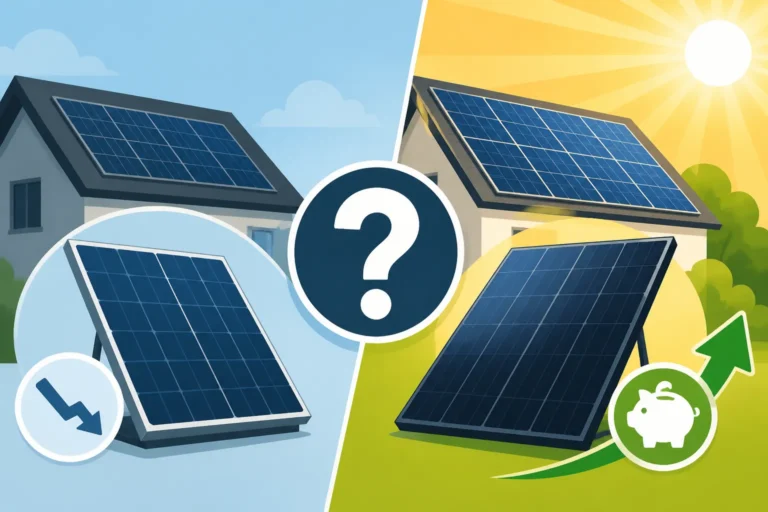
The initial price tag is a major decision point for many homeowners. Generally speaking, the solar panel cost per watt for a 450W panel might be slightly higher than a 400W panel. However, this isn't always a straightforward comparison because the total system cost is what ultimately matters.
If a 450W panel costs, say, 10% more per panel but allows you to install fewer panels, leading to less labor, fewer mounting components, and potentially a simpler electrical design, the overall installed price per watt could actually be very similar, or even lower, for the higher-wattage system. You might also save on permit fees or inspection costs if the smaller footprint simplifies the process. It's essential to look at the total "all-in" price from your installer, which covers everything from equipment to installation labor and permits. Don't just focus on the individual panel price; rather, consider the overall How Much Do Solar Panels Cost? 2026 Guide to ensure you're getting the best value. This also plays into your long-term ROI and 25-year savings breakdown.
When to Choose Which: Making the Right Decision for Your Home
Deciding between 400W and 450W panels isn't about one being inherently "better" than the other. It's about finding the optimal fit for your specific circumstances. Your roof, your energy consumption, your budget, and even your aesthetic preferences all play a role in this important decision.
Scenarios Where 400W Panels Shine
If you have a large, relatively unshaded roof, and your primary goal is to achieve significant energy savings at a competitive upfront cost, 400W panels are often an excellent choice. Their proven technology and widespread availability mean you'll likely find more options from different installers, potentially leading to more competitive bids. For example, a homeowner in a sunny state like Arizona with a sprawling single-story home might find that 400W panels offer the perfect balance. They can easily accommodate the necessary number of panels without overcrowding the roof, and the slightly lower cost per watt can make the initial investment more palatable.
They're also a great option if you're not trying to squeeze every last watt out of every square inch, but rather achieve a good, solid offset of your electricity usage. If your utility offers attractive net metering explained policies, generating "enough" electricity, rather than "maximum" electricity, might be your key driver. The reliability and established performance of 400W panels make them a safe and sound investment for many households.
Situations Where 450W Panels Make More Sense
Conversely, 450W panels truly come into their own when roof space is a significant constraint, or when you have particularly high energy demands that require maximizing generation from every available surface. If your home has a complex roofline with many angles, dormers, or skylights, or if it's a smaller urban dwelling, the higher power output per panel can be a game-changer. For example, a multi-story home in New York City with limited roof space would benefit immensely from the higher efficiency of 450W panels, allowing them to install a system that actually covers a substantial portion of their energy needs.
They are also a smart investment if you plan to incorporate a solar battery into your system down the line. Higher-output panels can more quickly charge a battery, providing better resilience during grid outages or maximizing savings under time-of-use utility rates. If you live in an area with less consistent sunlight or if you anticipate your energy needs growing in the future (perhaps with an EV or more electric appliances), the future-proofing aspect of higher-wattage panels can be very valuable.
Factors Beyond Wattage: Warranty, Aesthetics, and Brand
While wattage is a crucial specification, it's just one piece of the puzzle. When evaluating solar panels, you absolutely must consider the warranty offered. Look for both a product warranty (covering defects) and a performance warranty (guaranteeing a certain output over time). Many premium 450W panels from brands like Maxeon or REC Solar might come with longer, more robust warranties, reflecting their higher quality and expected lifespan. You can delve deeper into solar panel warranties explained to understand what to look for.
Aesthetics also play a role for many homeowners. Newer, higher-wattage panels often feature sleek, all-black designs with invisible busbars, which can blend more seamlessly with your roof. If curb appeal is important to you, this could sway your decision. Finally, don't forget the brand itself. Reputable brands like Qcells, Jinko Solar, or REC have a long track record of reliability and innovation. While you can find components and systems from various sellers, even on platforms like Amazon, for a major home installation, sticking with established solar panel brands is always a wise move. The "Best Solar Panels of 2026" article could offer more insights into top-tier manufacturers.
Integrating Panels into Your Overall Solar System Design
The choice between 400W and 450W panels doesn't happen in a vacuum. It directly influences, and is influenced by, other critical components of your solar energy system. A well-designed system ensures all parts work harmoniously to provide optimal performance and longevity.
Impact on Inverter Sizing and Compatibility
Your solar inverter is the brain of your system, converting the direct current (DC) electricity from your panels into alternating current (AC) that your home appliances use. The wattage of your panels directly impacts how your inverter needs to be sized. If you opt for 450W panels, fewer panels will be needed for a given system size, which could mean a different configuration for your inverter setup.
For instance, with string inverters, you'd need to ensure the voltage and current of your panel strings fall within the inverter's operating range. Fewer, higher-wattage panels might mean you can run fewer strings, simplifying wiring. If you're using microinverters (like those from Enphase) or power optimizers (like SolarEdge), each device is typically matched to handle a certain panel wattage range. Higher wattage panels might require specific microinverter models designed for that increased output. Your installer will be able to guide you through the specifics, but understanding this connection helps you appreciate why all components must be considered together. The choice between solar inverters: string vs microinverter vs optimizer is a complex one, and your panel choice will certainly influence it.
The Role of Solar Batteries with High-Wattage Panels
Solar batteries are becoming an increasingly popular addition to home solar systems, offering energy independence, backup power during outages, and potentially greater savings under certain utility rate structures. If you're considering whether you need a battery with solar, your panel wattage plays a role in how effectively your battery system can function.
Higher wattage panels can charge your solar battery more quickly and efficiently. If you have a larger battery capacity, say a Tesla Powerwall or an Enphase IQ Battery, generating more power per panel means you can replenish that storage faster, especially during peak sunlight hours. This is particularly beneficial if you're trying to achieve significant energy self-consumption or if you frequently experience power outages. A system with 450W panels will generally fill your battery faster than an equivalently sized system using 400W panels, giving you more flexibility and resilience. This ensures that even during periods of high demand, your home can draw directly from stored solar energy rather than relying solely on the grid.
Future-Proofing Your System
Investing in solar is a long-term commitment, often spanning 25 years or more. Therefore, it's wise to think about future-proofing your system as much as possible. Choosing higher wattage panels, while potentially a larger upfront investment, can contribute to a more future-proof installation. As electricity rates inevitably rise and your energy consumption potentially increases (e.g., adding an electric vehicle, converting to electric appliances), having a system that generates more power from a smaller footprint means you have more headroom.
You might not need every watt today, but in 5, 10, or 15 years, that extra capacity could prove invaluable. Upgrading a solar system later can be more complex and expensive than doing it right the first time. Moreover, if your area introduces less favorable net metering policies, maximizing your own generation and consumption (through efficient panels and battery storage) becomes even more important. Understanding these long-term dynamics is key to making a truly informed decision about your home solar investment.
Disclaimer
Please remember that the information provided in this article is for general guidance only. Solar technology, incentives, and regulations are constantly evolving. It is crucial to consult with certified solar professionals and review local codes and utility policies before making any investment decisions. Individual results may vary based on your specific location, energy consumption, system design, and other factors.