Do Trees or Shade Make Solar Not Worth It?
One of the biggest worries many homeowners have when considering solar panels is whether their beautiful trees or surrounding buildings will cast too much shade, effectively making the whole investment worthless. It's a completely valid concern; nobody wants to shell out money for a system that won't perform as expected. This guide will walk you through how shade impacts solar energy production, how to accurately assess your home's shading, and modern solutions that can help your solar system thrive even with some shade.
Understanding the Impact of Shade on Solar Panels
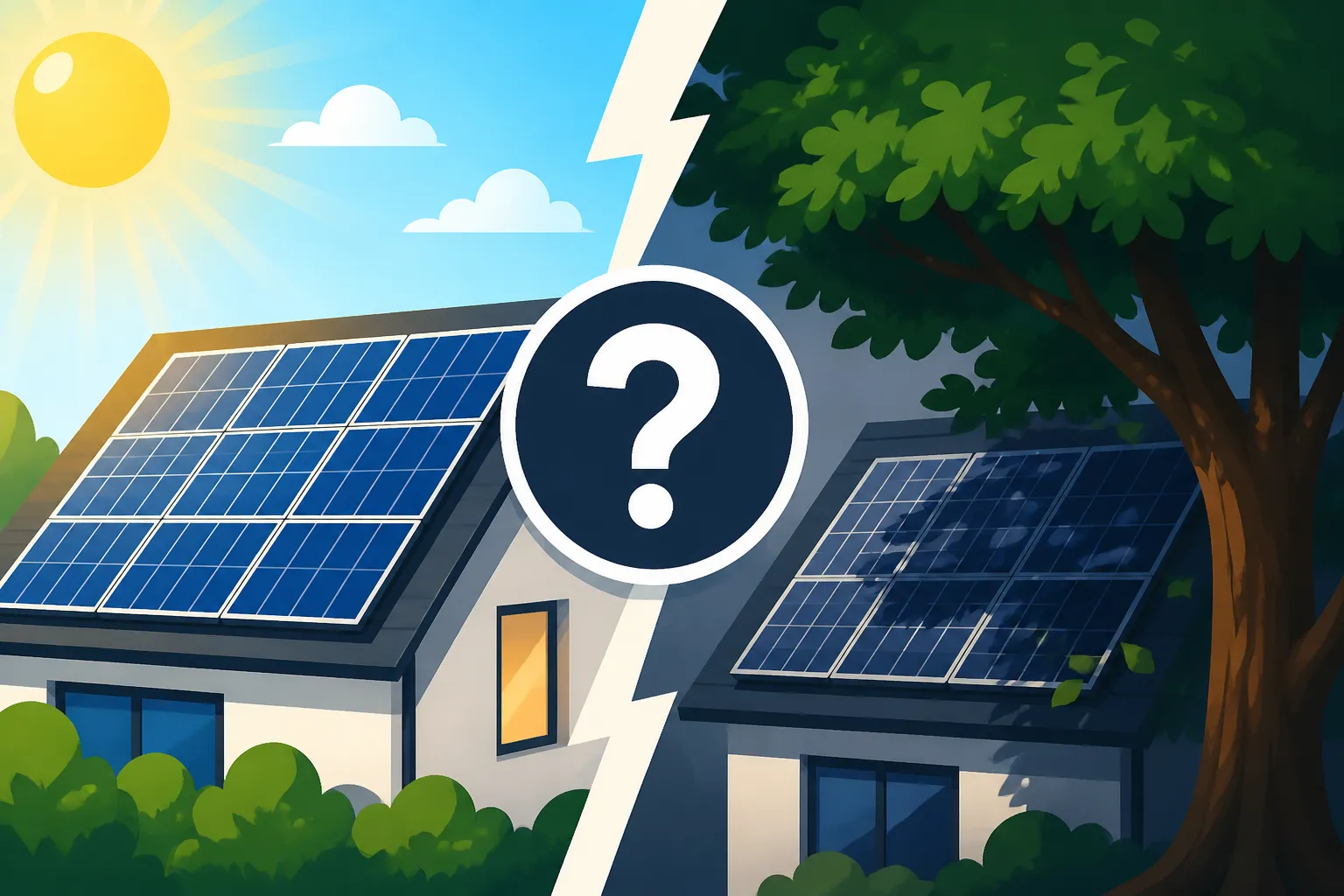
It’s a common misconception that if a single solar panel on your roof gets shaded, the entire system grinds to a halt. While shade definitely impacts performance, the extent of that impact can vary significantly based on your system's design and the technology you choose. The truth is, even a small amount of shade can have a disproportionate effect on older or less advanced solar setups.
How Even Partial Shade Affects Performance
Imagine a traditional string inverter system, where all your solar panels are wired together in a series, much like old-fashioned Christmas lights. If just one panel in that string is shaded by a tree branch or a chimney, its output drops dramatically. Because electricity flows like water, the weakest link in the chain can limit the flow for all the other panels connected in that same string. So, a small shadow on one panel might reduce the output of not just that panel, but potentially an entire section of your solar array. This is a huge frustration for homeowners, as it feels like you're losing money because of a single leaf! The percentage of energy loss often far exceeds the percentage of the panel that's actually shaded, making effective shade mitigation crucial for maximizing your system's efficiency and overall savings.
The real-world implication here is that even if your roof looks mostly sunny, a few hours of intermittent shade from a neighbor's mature oak or your own chimney during certain times of the day can chip away at your energy production. This "bottleneck" effect means you're not getting the full value out of your sunny panels because they're being held back by a shaded one. This is why a thorough site assessment is so important, to understand not just peak sun hours, but also the dynamic shading patterns throughout the day and year. For instance, in winter, when the sun is lower in the sky, shade patterns can be much more pronounced and last for longer durations, impacting your system's output during those crucial, shorter daylight hours.
Different Types of Shade and Their Sources
Shade isn't a monolithic concept; it comes in various forms and from different sources, each with its own characteristics and challenges for solar systems. Understanding these can help you better identify potential issues for your own home. The most common culprit, of course, is trees. Whether it's your own backyard giants or your neighbor's towering pines, tree shade can be seasonal, changing with leaf growth and sun angles, and can be quite unpredictable. A large deciduous tree might offer minimal shade in winter but become a significant issue in summer when leaves are full.
Beyond foliage, architectural features like chimneys, dormers, and even adjacent buildings cast their own shadows. A two-story house next to a single-story one might shade its neighbor's roof for a good portion of the day. Even utility poles or nearby fences can cause "soft" shade that, while not as dense as tree shade, can still contribute to reduced performance over time. It's not just about direct shade either; obstructions can also block diffuse sunlight, which is the light scattered by the atmosphere and still contributes to solar panel production, especially on cloudy days. All these factors need to be carefully considered when evaluating your property for solar.
Assessing Your Home's Shading Potential
Before you even think about installing solar, taking a good, hard look at your home's shading situation is step number one. It's not enough to just glance at your roof on a sunny afternoon. Shade moves, changes, and can be deceptive. A thorough assessment will save you a lot of headaches and maximize your investment in the long run.
Tools and Techniques for Shade Analysis
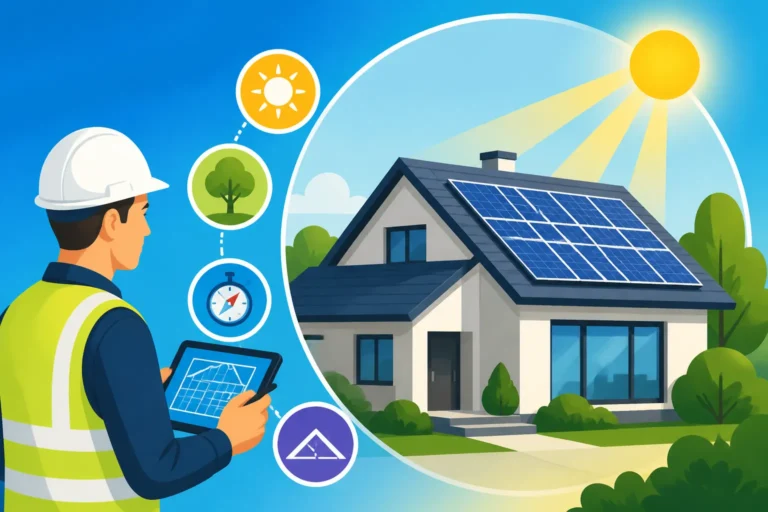
Luckily, assessing shade isn't a shot in the dark anymore. There are some fantastic tools and techniques available to help you understand your roof's solar potential. Many professional solar installers, like those you might find through platforms like Modernize, use sophisticated software that can simulate the sun's path throughout the year, taking into account your home's latitude, longitude, and any obstructions. They'll use aerial imagery, 3D modeling, and even physical tools like a SunEye or Solmetric SunEye, which captures a panoramic image of your sky view and identifies shade obstructions. These tools create a detailed "shade report" that shows exactly how much sun your roof receives hour by hour, month by month.
For the DIY enthusiast, you can start with simpler methods. Observing your roof at different times of day and across seasons can give you a qualitative sense of shade patterns. Take photos or videos, noting the time and date. Free online tools like Google Project Sunroof can also give you a basic estimate of your roof's solar potential and the impact of shade, though these are typically less precise than professional assessments. Remember, the goal is to pinpoint not just where the shade falls, but when and for how long, as this directly affects how much energy your system will produce. A comprehensive analysis also considers how factors like the roof pitch and the orientation of your home—whether it's facing south, east, or west—interact with these shade patterns.
When to Consult a Professional Solar Designer
While it's great to do your preliminary research, a professional solar designer is really your best friend when it comes to dealing with shade. They have the expertise and the advanced tools to conduct a precise shade analysis that goes far beyond what a homeowner can typically achieve. A good designer will evaluate every angle of your roof, identify specific obstructions, and predict their impact on energy production. This detailed analysis allows them to design a system that maximizes output, even if some parts of your roof are shaded. This is especially critical if you're exploring options like how many solar panels you need for my home, as shade will directly influence that calculation.
They can recommend specific panel placements to avoid shade where possible, or suggest technologies best suited for shaded areas. They also understand local zoning laws regarding tree trimming or removal, and can guide you through those processes if necessary. Don't underestimate the value of this expertise. Trying to cut corners here could lead to an underperforming system and significant financial disappointment down the line. A reliable installer will usually include this detailed shade analysis as part of their initial consultation, ensuring you have a clear picture of your property's solar viability.
Solar Technologies Designed for Shaded Environments
The good news is that solar technology hasn't stood still. Manufacturers and innovators have developed clever solutions specifically to tackle the challenge of shade. Modern solar systems are far more resilient to shading than their predecessors, making solar a viable option for many homes that might have been deemed unsuitable in the past.
The Role of Microinverters and Power Optimizers
One of the biggest game-changers for shaded roofs is the advent of module-level power electronics (MLPEs), which include microinverters and power optimizers. Unlike traditional string inverters that treat all panels as one unit, MLPEs allow each individual solar panel to operate independently. This means if one panel is shaded, the others in the system can continue producing at their maximum capacity, instead of being dragged down by the underperforming panel. This directly addresses the "Christmas light effect" we talked about earlier.
Microinverters, like those offered by Enphase, convert the DC power from each individual panel into AC power right there on the roof. This means optimized performance for every single panel. Power optimizers, such as those from SolarEdge, work slightly differently: they condition the DC power at the panel level and then send it to a central string inverter for conversion to AC. Both technologies achieve the same goal: maximizing energy harvest even when some panels are shaded. Deciding between options like Enphase vs SolarEdge: Which Inverter Is Better? often comes down to specific system design needs, budget, and installer preference. These systems are invaluable for homeowners whose roofs have unavoidable shade. They're also fantastic for monitoring individual panel performance, giving you a granular view of your system's health.
High-Efficiency Panels and Bifacial Technology
Beyond smart inverters, the panels themselves have gotten a lot more sophisticated. High-efficiency solar panels are designed to capture more sunlight per square foot, which can be particularly beneficial on roofs with limited unshaded space. Brands like Maxeon (formerly SunPower) and REC are known for their premium, high-efficiency panels that can produce more power in less-than-ideal conditions, including partial shade. While they might come with a higher upfront cost, their increased output can lead to better long-term savings, especially if you have to contend with some shade. You might want to explore topics like the best solar panels for shaded roofs to see specific recommendations.
Another innovative technology gaining traction is bifacial solar panels. These panels are designed to capture sunlight from both their front and back sides. While typically more effective in ground-mount installations where light can reflect off the ground onto the back of the panel, some roof-mounted applications can still benefit. If designed correctly, diffuse light reflecting off a light-colored roof surface can be captured by the rear side of a bifacial panel, boosting overall production. This added capture capability can slightly offset losses from intermittent shade on the front, squeezing out every last watt possible. For more insights, consider looking into Bifacial Solar Panels: Are They Worth It?
Mitigation Strategies and Alternatives
Even with advanced technology, sometimes the best approach involves directly addressing the shade source or looking at entirely different solar solutions. No matter how good your panels and inverters are, less shade always means more power.
Tree Trimming and Removal Considerations
For many homeowners, the most direct solution to tree shade is trimming or, in some cases, removal. Before you grab the chainsaw, though, it's essential to consider a few things. First, assess the degree of shade. Is it a small branch causing an hour of shade, or a massive tree shading your entire roof for half the day? If it's minimal, microinverters might handle it just fine. If it's extensive, trimming or removal might be necessary to make solar truly worthwhile. Be mindful of local ordinances regarding tree removal, especially for mature trees or those in conservation areas.
Also, consider the health of the tree itself and its value to your property. Removing a healthy, mature tree can dramatically change your yard's aesthetics and reduce natural cooling in the summer. Sometimes, a strategic trim of specific branches is enough to clear the critical roof areas without sacrificing the entire tree. Always consult with an arborist to ensure any trimming is done safely and correctly, and won't harm the tree's long-term health. The cost of tree work should also be factored into your overall solar investment analysis. For example, some homeowners may decide that the benefits of shade for home cooling outweigh the potential solar gains from removing the tree.
Ground-Mounted Systems and Community Solar Options
What if trimming isn't an option, or your roof simply isn't suitable for solar due to too much shade, old age, or a complicated shape? Don't despair! There are still excellent avenues to explore. A ground-mounted solar system could be the perfect solution if you have available land on your property that gets good sun exposure. These systems can often be positioned in an optimal orientation and tilt, away from any roof-level shading, to maximize sun capture throughout the day. While they require more space and can be more involved to install, they offer superior energy production and often easier maintenance compared to roof-mounted arrays. You can learn more about the differences in a guide on Ground-Mount vs Roof-Mount Solar.
Another fantastic alternative, especially for those with heavily shaded properties or who rent, is community solar. With community solar, you subscribe to a share of a large, off-site solar farm. The energy generated by that farm is credited to your utility bill, essentially giving you the benefits of solar without needing panels on your own home. This completely bypasses any issues with your home's shading, roof condition, or ownership status. Programs vary by state and utility, but many areas offer robust community solar options. This allows you to support renewable energy and save on your electricity bills, even if your own home isn't ideal for rooftop panels. For a deeper dive, check out Community Solar: How It Works & Who Qualifies.
Here’s a quick comparison of how different inverter types handle shade:
| Inverter Type | How It Handles Shade | Pros | Cons | Ideal For |
|---|---|---|---|---|
| String Inverter | A shaded panel reduces output for the entire string. | Lower upfront cost, fewer components on the roof. | Significant output loss from partial shade, difficult to monitor individual panel performance. | Homes with zero shade and consistently sunny roofs. |
| Power Optimizer | Each panel's output is optimized before sending DC to a central inverter. | Mitigates shade impact per panel, good monitoring, can be more affordable than microinverters. | Still requires a central inverter, some loss if inverter fails. | Roofs with some intermittent shade, complex rooflines, or when detailed panel-level monitoring is desired without the full cost of microinverters. |
| Microinverter | Each panel operates independently, converting DC to AC on the spot. | Eliminates "Christmas light effect," maximum shade mitigation, excellent monitoring, increased reliability. | Higher upfront cost, more components on the roof. | Roofs with significant or dynamic shade, complex rooflines, or where maximum energy harvest and panel-level reliability are paramount. |
Ultimately, whether trees or shade make solar "not worth it" truly depends on the specifics of your situation and the solutions you're willing to explore. With modern technology and a thoughtful approach, solar can still be a fantastic investment, even if your property isn't bathed in sunshine 24/7. Don't let a little shade deter you from exploring your options!
Disclaimer
Please note that this guide provides general information about solar energy and shading. Specific outcomes and recommendations can vary based on your location, local regulations, utility policies, and the unique characteristics of your property. Always consult with qualified solar professionals for personalized advice and detailed assessments for your home.