Do Solar Panels Need Cleaning?
It’s a question that crosses almost every solar homeowner’s mind, often while looking up at those shiny, new panels: "Do these things need to be cleaned like my car windshield, or can I just let nature do its thing?" It’s a completely fair thought, especially when you’ve invested so much in going solar, and the idea of diminished performance due to grime can be a real worry. This comprehensive guide is here to demystify solar panel cleaning, explaining when it matters, why it matters, and how to approach it safely and effectively.
The Great Debate: Do Solar Panels Really Need Cleaning?
Let’s get right to it – the answer isn't a simple yes or no. For many homeowners, especially those in regions with regular rainfall, solar panels are remarkably self-sufficient. However, there are certainly scenarios where a good cleaning can make a noticeable difference. It’s about understanding the nuances of your local environment and your system’s performance.
Rain's Role as a Natural Cleaner
Think of your solar panels as giant, tilted windows on your roof. When it rains, especially a decent downpour, the rainwater typically does a fantastic job of washing away most of the surface dust, pollen, and light debris. Modern solar panels are designed with smooth, non-porous surfaces that allow water to sheet off easily, taking loose particles with it. In places like Seattle, Washington, or Portland, Oregon, where rain is a regular occurrence, homeowners often find they rarely, if ever, need to manually clean their panels. The frequent rainfall acts as a continuous, free cleaning service, keeping the panels performing close to their peak.
This natural rinse effect is often sufficient for the average residential system, especially if you live in an area that isn't prone to extreme dust storms or heavy industrial pollution. Many solar manufacturers even design their panels with special coatings that further encourage water runoff and minimize dirt adhesion, essentially making them "self-cleaning" to a significant degree. It's a testament to how far solar technology has come, anticipating and mitigating common maintenance concerns for everyday users.
When Accumulation Actually Becomes a Problem
While rain is great, it's not a magic bullet for every type of grime or every environment. There are specific situations where dirt and debris can accumulate to a point where they genuinely start impacting your system's efficiency and, by extension, your electricity bill. Consider homes near agricultural fields, for instance, where crop dust or pesticide residue might settle on panels. Or, if you live in an urban area with heavy traffic or construction, fine particulate matter from vehicle exhaust or building sites can create a stubborn film.
Bird droppings are another common culprit. A single, strategically placed bird dropping can cast a shadow on multiple solar cells within a panel, disproportionately reducing its output due to the way solar panels are wired (the "Christmas light effect" where one shaded cell affects the whole string). In areas prone to wildfires, like parts of California or the drier regions of Colorado, ash and soot can blanket panels, forming a sticky, opaque layer that rain struggles to dislodge. This kind of heavy, persistent, or localized soiling goes beyond what a typical rain shower can handle and is precisely when you should start thinking about a manual cleaning.
Understanding the Impact of Dirt and Debris
It's one thing to see your panels looking a little dusty, but it's another to understand how that visual grime translates to actual performance loss. The good news is that minor dust rarely cripples your system, but significant buildup can certainly put a dent in your solar savings.
How Efficiency Takes a Hit
When dirt, dust, or other obstructions cover the surface of your solar panels, they prevent sunlight from reaching the photovoltaic cells beneath. Since these cells convert sunlight into electricity, any blockage directly reduces the amount of power your system can generate. Think of it like trying to get a suntan with a towel draped over you – less sun means less tan, or in this case, less electricity.
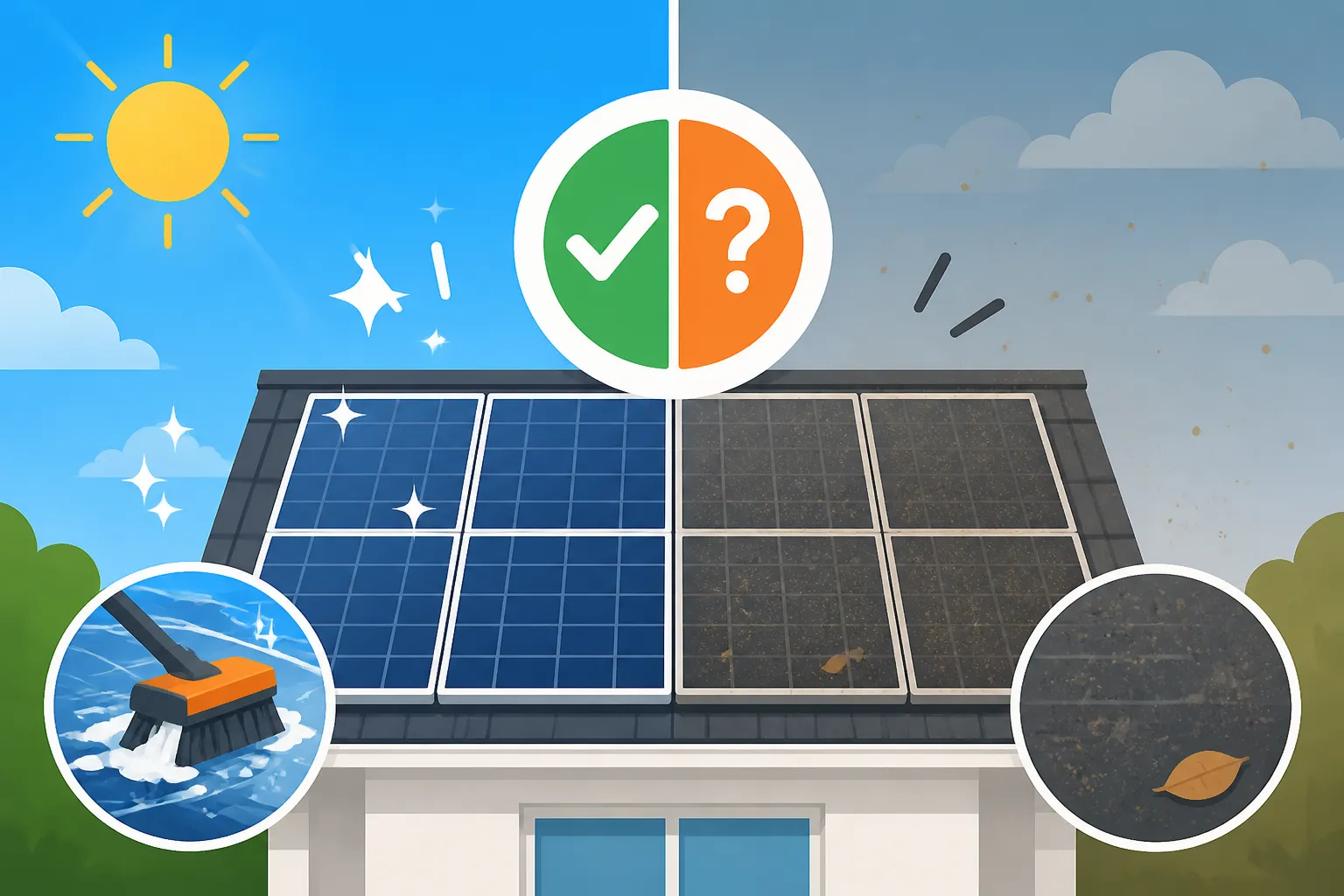
Studies and real-world data suggest that the impact of dirt on solar panel efficiency can vary widely. Light dust might only reduce efficiency by a negligible 1-3%. However, heavy accumulation of stubborn grime, like baked-on bird droppings, layers of soot, or thick pollen, can lead to efficiency losses of 10-20% or even more in extreme cases. For example, if you have a 10 kW system that typically generates 1,200 kWh in a month, a 15% efficiency loss means you're missing out on 180 kWh – that's real money, especially if you're paying higher utility rates. Over the course of a year, these losses can add up significantly. To truly understand if this is impacting you, monitoring your system's performance is key. Many modern solar setups come with monitoring apps that show you exactly how much power your panels are producing each day, allowing you to easily spot a dip that might indicate a cleaning is needed.
Common Culprits: Pollen, Dust, Bird Droppings, Ash
Various forms of airborne particles and organic matter are the usual suspects when it comes to dirty solar panels. Each presents its own challenge to natural cleaning methods.
- Pollen: If you live in a region with heavy pollen seasons, you know how quickly everything turns yellow. Pollen is notoriously sticky and can form a dense, yellowish film over panels that rain might not fully wash away. This is especially true in areas like the Carolinas or parts of Texas, where trees release massive amounts of pollen in spring. This layer can significantly reduce sunlight absorption, making spring a prime time for considering a panel rinse.
- Dust and Sand: Arid climates, or regions experiencing drought, often contend with persistent dust. Fine dust particles can settle on panels, and while light rain might clear some, it often just turns the dust into muddy streaks that dry and bake onto the surface. In desert environments, like Arizona or Nevada, wind-blown sand can also abrade the panel surface over time, though that's less about cleaning and more about long-term wear.
- Bird Droppings: These are perhaps the most visually unappealing and disproportionately impactful culprits. A single large bird dropping can cover a significant portion of a solar cell or even an entire microinverter-controlled segment, causing a localized hotspot and reducing overall panel output. Because they're often acidic and dry quickly, they can be tough to remove with just rain, sometimes requiring manual scrubbing. Living near large trees or power lines where birds perch frequently can make this a regular issue.
- Ash and Soot: In areas prone to wildfires, like California, or even near industrial zones or homes with wood-burning stoves, ash and soot can become a major concern. These particles are often fine, oily, and highly adhesive, forming a dark, opaque layer that is very difficult for rain to dislodge. After a significant smoke event, a thorough cleaning is almost always recommended to restore panel efficiency.
When and How Often to Consider Cleaning
So, how do you know when it’s time to roll up your sleeves (or call in a pro)? It's less about a strict schedule and more about observation and understanding your unique circumstances.
Factors Influencing Your Cleaning Schedule
There isn't a universal "clean your panels every X months" rule because so many variables are at play. Instead, think about these factors:
- Local Climate and Rainfall: As we discussed, frequent, heavy rainfall dramatically reduces the need for manual cleaning. If you live in a drought-prone region or one with long dry spells, you'll likely need to clean more often. For instance, in sunny Southern California, where rain can be scarce for months, a homeowner might consider cleaning their panels once or twice a year, especially before peak energy production seasons.
- Environmental Factors: Proximity to sources of dust (dirt roads, construction sites, agricultural fields), industrial pollution, or even high concentrations of tree pollen can increase the frequency of cleaning needed. If your home is surrounded by oak trees, for example, your spring cleaning needs might be more pronounced than someone with a treeless yard.
- Roof Pitch and Panel Angle: Panels installed at a steeper angle are generally better at shedding dirt and debris with rain than those installed at a flatter pitch. Gravity plays a bigger role in washing things away.
- System Monitoring Data: This is your best friend! Many solar monitoring systems provide real-time data on your panel’s performance. If you notice a consistent dip in production that can't be explained by cloudy weather or shorter daylight hours, dirt could be the culprit. Tools like those offered by How to Monitor Solar Panel Performance can help you interpret this data effectively.
- Personal Performance Expectations: If you're someone who wants to squeeze every last electron out of your system, you might opt for more frequent cleanings even if the efficiency loss is minimal. For others, the cost or effort of cleaning might only be justified by a significant drop in production.
Signs Your Panels Are Begging for a Wash
Your solar panels usually won't send you an email, but they do give off clear signals when they're in need of a good cleaning. Learning to recognize these signs can save you money and prevent unnecessary climbs onto the roof.
First and foremost, visual inspection is key. If you can clearly see a thick layer of dust, streaks of mud, noticeable bird droppings, or a yellowish pollen film covering a significant portion of your panels from the ground, it's a strong indicator. Sometimes, you might even see uneven patches of dirt, suggesting that some areas are shedding better than others. From a practical standpoint, this visual cue is often the most straightforward way for a homeowner to assess the situation without special equipment.
Beyond what you can see, a noticeable dip in energy production is the most definitive sign. If your solar monitoring app shows that your system is consistently producing less power than expected for the time of year, considering the weather conditions, dirt is a prime suspect. For example, if your system typically generates 30 kWh on a sunny day in June, but you're only seeing 25 kWh despite clear skies, it's time to investigate. This is where comparing current performance to historical data or even to your neighbor's system (if you know their production) can be incredibly insightful. Remember, minor fluctuations are normal, but a persistent and unexplained drop warrants attention.
DIY Solar Panel Cleaning: Is It Safe and Effective?
For many homeowners, the thought of cleaning their solar panels themselves seems like a logical way to save money. And for some, it absolutely is! However, it’s crucial to understand both the methodology and the inherent risks.
What You'll Need and How to Do It
If you’re comfortable with ladders and working on your roof, cleaning your solar panels can be a straightforward DIY project. The good news is, you don’t need harsh chemicals or specialized detergents. In fact, most manufacturers recommend against them, as they can leave residues or even damage anti-reflective coatings.
Here’s a basic rundown of what you’ll need and the steps:
-
Equipment:
- Garden Hose with a Nozzle: A standard garden hose is usually sufficient for rinsing away loose debris. For more stubborn grime, a soft-bristled brush with an extension pole is ideal.
- Bucket of Soapy Water: Use a mild, non-abrasive soap, like dish soap, mixed with water. Avoid anything harsh.
- Squeegee or Microfiber Cloth: For streak-free drying, if desired, though often not necessary.
- Safety Gear: Crucially, wear non-slip shoes, safety glasses, and consider a safety harness if you’re working on a steep roof.
- Ladder: Ensure it's stable and tall enough to safely reach your panels.
-
Steps:
- Safety First: Always prioritize your safety. Work during daylight hours when panels are cool (early morning or late afternoon). Never attempt to clean panels on a wet or icy roof. Ensure your ladder is secure.
- Rinse Thoroughly: Start by using your garden hose to thoroughly rinse the panels, aiming to dislodge as much loose dirt and dust as possible. This also helps cool down the panels, making them safer to touch.
- Apply Soapy Water (if needed): If stubborn grime remains, use the soft-bristled brush to gently apply the mild soapy water to the panel surfaces. Work in small sections to prevent the soap from drying.
- Gentle Scrubbing: Lightly scrub any caked-on bird droppings or sticky residue. Never use abrasive scrubbers, harsh brushes, or power washers, as these can scratch or damage the panel surface.
- Final Rinse: Rinse the panels thoroughly with clean water, ensuring no soap residue is left behind. Residue can attract more dirt over time.
- Air Dry or Squeegee: Most panels will air dry without issue. If you’re aiming for a pristine, streak-free finish, you can carefully use a squeegee designed for windows or a clean microfiber cloth, though this adds another layer of complexity and potential risk.
Risks and Precautions to Keep in Mind
While DIY cleaning can save you money, it's not without its hazards. Your safety should always be the absolute top priority.
The most significant risk is falling from the roof or ladder. Working at heights, especially on sloped and potentially slippery surfaces, is inherently dangerous. A misstep, a wobbly ladder, or an unexpected gust of wind can lead to serious injury. Consider the pitch of your roof; if it's very steep, or if you're uncomfortable with heights, professional help is highly recommended. Also, be aware of electrical hazards. While solar panels are designed to be safe, spraying water near electrical components or damaged wiring can be dangerous. Always ensure your system is properly installed and maintained.
Beyond personal injury, there's also the risk of damaging your solar panels. Using the wrong cleaning tools, like abrasive sponges or high-pressure washers, can scratch the glass surface or compromise the anti-reflective coating, potentially reducing efficiency and even voiding your warranty. Likewise, harsh chemical cleaners can etch the glass or leave residues that attract more dirt, becoming counterproductive. A little common sense goes a long way here; treat your panels with the same care you would a high-quality car windshield. If you have any doubts about your ability to perform the cleaning safely and effectively, it’s always best to err on the side of caution and call in the experts.
Professional Solar Panel Cleaning Services
Sometimes, the DIY route just isn't feasible or safe. That's when professional solar panel cleaning services become an invaluable option. They bring expertise, specialized equipment, and the necessary safety protocols to get the job done right.
When to Call in the Experts
There are several compelling reasons why homeowners opt for professional solar panel cleaning. Foremost among them is safety. If your roof is particularly steep, difficult to access, or if you simply aren't comfortable working at heights, a professional service is the safest choice. They have the proper safety gear, training, and insurance to minimize risks. For homeowners in states like California, where roofs can often be quite steep due to architectural styles, this is especially true.
Another key reason is stubborn or persistent grime. If you've tried a basic rinse and the bird droppings or oily ash stubbornly remain, professionals often have specialized, yet safe, cleaning solutions and techniques to tackle these more challenging buildups without damaging the panels. They can also reach panels in awkward locations that might be hard for a homeowner to access safely. For example, if you have multiple skylights or vents that break up your panel array, a professional can navigate those complexities with ease. Furthermore, some homeowners simply prefer the convenience and peace of mind that comes with knowing the job is being done by experienced hands, ensuring optimal performance without personal effort or risk. If you're looking for someone trustworthy, platforms like Modernize can help you connect with qualified local professionals who understand the nuances of solar maintenance.
What to Expect from a Professional Service
When you hire a professional solar panel cleaning service, you're not just paying for someone to spray water on your roof. You're investing in a comprehensive service that includes specialized equipment, careful attention to detail, and often, an inspection of your system.
Typically, a professional cleaning will involve the use of deionized water (water that has had its mineral ions removed). This is crucial because regular tap water, especially in hard water areas like parts of Texas or Arizona, can leave behind mineral deposits (water spots) as it dries, which can actually attract more dirt and reduce efficiency over time. Deionized water dries without leaving these streaks or spots, ensuring your panels are truly spotless and ready to absorb maximum sunlight.
The technicians will use soft-bristled brushes with extension poles, specifically designed for solar panels, to gently scrub away any accumulated grime. They'll also follow strict safety protocols, utilizing harnesses, secure ladders, and often working in teams to ensure a safe environment. Many services will also include a visual inspection of your panels and mounting system. They might notice potential issues like loose wiring, cracked frames, or signs of pest activity that you might otherwise miss. This proactive identification of minor issues can prevent them from becoming major, costly repairs down the line. Depending on your location and the size of your system, a professional cleaning might cost anywhere from $150 to $500, often a worthwhile investment given the potential efficiency gains and the avoidance of personal risk.
Maximizing Your Solar Panel Performance Beyond Cleaning
Cleaning is just one piece of the puzzle when it comes to keeping your solar system in tip-top shape. A holistic approach to maintenance and understanding your system's design can ensure you're getting the most out of your investment for years to come.
Regular Monitoring and Maintenance
Think of your solar panels like your car – regular check-ups, even minor ones, can prevent bigger problems. The same goes for your solar system. Consistent monitoring through your installer's online portal or app is incredibly important. Many systems offer detailed insights, sometimes even down to the individual panel level if you have microinverters or power optimizers. This allows you to quickly identify any underperforming panels or a general dip in production that might signal a need for cleaning or other maintenance. If you notice a particular panel consistently producing less than its neighbors, it could be shaded, dirty, or even require a warranty claim for Solar Panel Warranties Explained.
Beyond monitoring, consider periodic professional inspections. While cleaning can be done by you or a dedicated cleaning service, a comprehensive system check should ideally be performed by a qualified solar technician every few years. This goes beyond just clean panels. They’ll check electrical connections, inverter performance, mounting hardware, and ensure all components are functioning optimally. They can also verify if your Solar Panel Efficiency & Degradation Explained is tracking as expected over time. These preventative measures can catch minor issues before they escalate, extending the lifespan of your system and safeguarding your investment.
Smart System Design to Minimize Dirt Impact
While you can't control the weather or local bird populations, some aspects of your solar system design can inherently help minimize the impact of dirt and debris. When you're first considering solar, or even if you're looking to expand, these design considerations are worth discussing with your installer.
One of the most effective design choices is ensuring your panels are installed at an optimal tilt angle. Steeper angles, generally between 15 and 30 degrees, allow rain and gravity to work more effectively at shedding dust, pollen, and even light snow. Flatter installations, while sometimes necessary due to roof pitch, are more prone to dirt accumulation. Another factor is panel placement relative to potential sources of shade or debris. While maximizing sun exposure is paramount, avoiding placement directly under a frequently used bird perch, or too close to a chimney that emits soot, can reduce cleaning frequency. Modern installers also often use frameless or self-cleaning glass technologies on panels, which have smoother surfaces and fewer edges for dirt to collect, further enhancing their ability to shed grime naturally. When getting quotes, ask your installer, perhaps through a service like Modernize, about their recommendations for optimizing panel placement and material choices for your specific environment to minimize future maintenance.
Disclaimer
Please note that this guide provides general information about solar panel cleaning and maintenance. Always consult with a qualified solar professional or your system's installer for specific advice tailored to your system and local conditions. Safety should always be your top priority when working on or near your roof and electrical equipment.