Solar Panel Cost in Virginia
Feeling the pinch from those rising utility bills in Virginia? You're not alone. Many homeowners in the Old Dominion are tired of unpredictable electricity costs and are curious about switching to solar, but the big question always looms: "How much does it really cost?" It’s a completely valid concern, as solar can feel like a big investment with a lot of moving parts. This guide is here to demystify solar panel costs specifically for Virginia residents, breaking down everything from average prices to the incentives that can make it far more affordable than you might think.
What You Can Expect to Pay for Solar Panels in Virginia
When you start looking into solar, the first thing you'll notice is that there isn't one single price tag. The cost of solar panels in Virginia can vary quite a bit, but we can give you some solid averages to start with. It's often talked about in "dollars per watt" ($/W), which helps you compare quotes Apples-to-Apples, regardless of system size.
Average Cost Per Watt in the Old Dominion
On average, homeowners in Virginia can expect to see solar panel systems priced somewhere in the range of $2.70 to $3.30 per watt before any incentives. While prices can fluctuate due to supply chain issues, regional demand, and even global market trends, this range gives you a good baseline. So, if you're looking at a 7-kilowatt (kW) system, which is pretty common for an average Virginia home, you could be looking at a gross cost anywhere from $18,900 to $23,100 before any financial help comes into play. Keep in mind that these are just averages, and a truly accurate estimate requires a personalized assessment of your home and energy usage.
Typical System Sizes and Their Total Costs
Most Virginia homes typically need a solar energy system between 5 kW and 10 kW to offset a significant portion of their electricity bill. For instance, a smaller home with moderate energy consumption might do well with a 6 kW system, while a larger family home running air conditioning often needs something closer to 8 kW or 10 kW.
Let’s look at some hypothetical total costs for these common system sizes, keeping in mind these are before incentives:
- 6 kW System: Ideal for smaller homes or those with lower energy usage. Expect to see prices in the ballpark of $16,200 to $19,800.
- 8 kW System: A popular choice for average-sized homes, aiming to significantly reduce or eliminate monthly utility bills. This size typically falls between $21,600 and $26,400.
- 10 kW System: Suitable for larger homes, families with high energy consumption, or those with electric vehicles. Costs could range from $27,000 to $33,000.
These figures illustrate the initial investment, but as we'll discuss shortly, a host of incentives can drastically reduce these out-of-pocket expenses, making solar a much more attractive option. For a deeper dive into how system size impacts costs, you might find our guide on Solar Panel Cost by System Size (kW) quite helpful.
Regional Cost Variations Within Virginia
It's true that even within a state like Virginia, solar costs can vary. Larger metropolitan areas, like Northern Virginia (think Fairfax, Loudoun counties) or the Richmond and Hampton Roads regions, often have a more competitive solar market with numerous installers vying for business. This competition can sometimes lead to slightly lower pricing per watt due to economies of scale and efficient supply chains. However, these areas might also have higher labor costs or more stringent permitting processes, which could offset some savings.
Conversely, more rural parts of Virginia, while perhaps having fewer local installers, might also see different pricing dynamics. Travel costs for installers, less competition, or unique local regulations could influence your final quote. For example, a homeowner in a more rural county like Patrick County might find fewer immediate options than someone in Virginia Beach, potentially leading to different pricing structures. No matter where you are in Virginia, getting multiple quotes is crucial to ensure you're getting a fair price. Services like Modernize can help you connect with reputable local installers who understand the specific dynamics of your area.
Key Factors Driving Virginia Solar Panel Costs
Understanding the average cost is a great start, but what really makes up that price tag? Solar panel costs aren't just about the panels themselves. Several factors play a significant role in determining the final price of a solar energy system for your Virginia home. It’s like buying a car; there’s the base model, and then there are all the upgrades and features that add to the final price.
System Size and Your Energy Needs
This is arguably the most significant factor. The larger your home's energy consumption, the larger the solar panel system (in kilowatts) you'll need to generate enough electricity. Before any installer can give you an accurate quote, they'll perform an energy audit, usually by looking at your past utility bills. For instance, if your average monthly electricity bill from Dominion Energy is consistently over $200, you'll likely need a larger system than a neighbor whose bill is only $80.
A seasoned solar professional will calculate how many solar panels are needed to offset your specific usage, taking into account factors like seasonal variations and future energy demands (like adding an electric vehicle or a heat pump). A 7 kW system might be perfect for one family in Charlottesville, while another in Roanoke might require a 9 kW system due to different habits or home size. The number of panels directly correlates with system size, and thus, directly impacts the overall cost. Our detailed guide on How Many Solar Panels Do I Need for My Home? offers more insights into this calculation.
Equipment Choices and Technology
Not all solar equipment is created equal, and your choices here can significantly sway the total cost. You'll encounter options for panels, inverters, and potentially solar batteries.
- Solar Panels: There are different tiers of solar panels, offering varying efficiencies and warranties. Premium panels, such as those from Maxeon (formerly SunPower) or high-efficiency Qcells panels, generally cost more upfront but can produce more electricity in smaller spaces and often come with longer warranties. More budget-friendly options, while still reliable, might offer slightly lower efficiency.
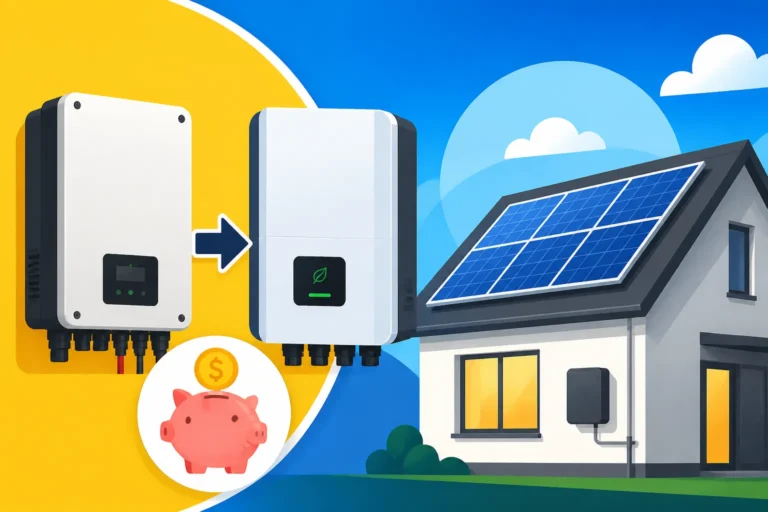
- Inverters: This crucial piece of equipment converts the DC electricity from your panels into usable AC electricity for your home. You'll typically choose between string inverters (a single inverter for all panels), power optimizers (optimized per panel, connected to a central inverter), or microinverters (one inverter per panel, like those from Enphase). Microinverters and optimizers tend to cost more but offer benefits like better performance in shaded conditions and individual panel monitoring. For a comprehensive comparison, check out our article on Solar Inverters: String vs Microinverter vs Optimizer.
- Solar Batteries: Adding a solar battery, like a Tesla Powerwall or an Enphase IQ Battery, can significantly increase your initial cost but provides energy independence, backup power during outages, and can maximize savings under certain net metering structures. While not mandatory for grid-tied solar, batteries are becoming increasingly popular in Virginia, especially for homeowners looking for resilience. You can learn more about this in our guide, Do I Need a Battery With Solar?.
Installation Complexity and Labor
The actual installation process itself contributes a substantial portion to the overall cost. This isn't just about the labor hours; it's also about the specific characteristics of your home and roof.
- Roof Condition and Type: If your roof needs repairs or replacement before solar panels can be installed, that will be an additional cost. The type of roofing material (asphalt shingles are easiest, slate or tile can be more complex) and the roof's pitch and age also factor in. A complicated roof layout with many dormers or obstructions will take more time and effort to install panels, driving up labor costs.
- Electrical Upgrades: Sometimes, your home's main electrical panel might need an upgrade to handle the new solar electricity system. This is an additional expense that a reputable installer will identify during the site survey.
- Permitting and Interconnection: Navigating local permits in Virginia counties and cities, plus the utility's interconnection process (like with Dominion Energy or Appalachian Power), involves fees and administrative work. While often handled by your installer, these costs are built into your quote. These processes ensure your system is safe and legally connected to the grid.
Navigating Virginia's Solar Incentives and Programs
One of the biggest questions Virginia homeowners have is, "How can I make solar more affordable?" Thankfully, there are several programs and incentives designed to reduce the upfront cost and increase the long-term savings of going solar in Virginia. It’s like getting a helping hand to make a smart financial decision for your home.
Federal Solar Investment Tax Credit (ITC)
Let's start with the big one: the federal solar Investment Tax Credit (ITC). This isn't just for Virginia; it's a nationwide incentive that significantly reduces the cost of installing solar panels. In 2026, the ITC allows you to claim a credit equal to 30% of your total solar system cost against your federal income taxes. This is a direct dollar-for-dollar reduction in what you owe the IRS, not just a deduction.
For example, if your 8 kW solar system costs $24,000, the 30% ITC would translate to a $7,200 tax credit. This effectively brings your net cost down to $16,800. It's an incredibly powerful incentive that has been instrumental in making solar accessible for millions of Americans. It’s crucial to understand that you must own the system (either outright or with a solar loan) to claim this credit, not lease it. For more details on this valuable incentive, refer to our guide on Federal Solar Incentives That Still Exist in 2026.
Virginia's Solar Property Tax Exemption
Good news for homeowners in Virginia! Installing solar panels will increase the value of your home, but thanks to the state's solar property tax exemption, you won't pay extra property taxes on that added value. This is a huge win, as without it, your property tax bill could jump up after installing a system that adds tens of thousands of dollars in value.
This exemption means that while your home's market value may go up by an average of 4% when you add solar, your property tax assessment won't reflect the value of the solar equipment itself. This incentive essentially protects your long-term savings by preventing an increase in your annual tax burden. Many states offer similar protections, and you can learn more about them in our guide to Solar Property Tax Exemptions by State.
Net Metering in the Old Dominion
Net metering is a billing mechanism that allows solar energy system owners to send any excess electricity they generate back to the utility grid. In return, they receive credits on their electricity bill, often at the full retail rate. Virginia has a strong net metering policy that makes going solar even more financially attractive.
Currently, Virginia allows net metering for systems up to 25 kW for residential customers, and utilities like Dominion Energy and Appalachian Power offer this program. When your solar panels produce more electricity than your home consumes, especially during sunny peak hours, that surplus energy flows back onto the grid, spinning your meter backward or generating credits. Then, when your panels aren't producing (like at night or on cloudy days), you draw electricity from the grid, using up those credits. This effectively allows you to "bank" your excess solar production and use it later, significantly reducing or even eliminating your monthly electricity bill. Understanding this policy is key to calculating your long-term savings, and our article Net Metering Explained: How It Works by State provides a detailed overview.
Getting the Best Value for Your Virginia Solar Investment
After understanding the costs and incentives, the next natural step is figuring out how to navigate the market and ensure you're getting a great deal. This isn't just about finding the cheapest option; it's about finding the best value, reliability, and long-term support for your specific needs in Virginia.
The Importance of Multiple Solar Quotes
This cannot be stressed enough: always get multiple quotes from different solar installers. Think about it like this: would you buy a car or renovate your kitchen after only talking to one company? Probably not. The solar industry is no different. Prices for the same size system with similar equipment can vary by thousands of dollars between installers due to different business models, overheads, and profit margins.
By getting at least three to five quotes, you can compare not only the bottom-line price but also the quality of the equipment offered, the warranty terms, and the reputation of the installation company. This process helps you avoid overpaying and ensures you're working with a trustworthy provider. Platforms like Modernize can be incredibly helpful here, as they connect you with pre-vetted local solar installers who are ready to provide competitive bids. This simplifies the process and gives you peace of mind that you're getting comprehensive options.
Understanding Your Solar Proposal
Once you start receiving quotes, it can feel a bit overwhelming trying to decipher all the jargon and numbers. A good solar proposal should clearly outline the system size, the specific equipment (panels, inverters, batteries if included), the estimated annual energy production, the gross cost, and the net cost after factoring in the federal tax credit and any other applicable incentives.
Don't just look at the total price. Pay close attention to the "cost per watt" ($/W) and ensure it aligns with the Virginia averages we discussed earlier. Also, scrutinize the warranty information – both for the equipment (product warranty) and the installation (workmanship warranty). A strong warranty package provides protection for decades. Ask questions about anything you don't understand, from the predicted savings to the installation timeline, and how they handle Solar Permitting & Interconnection (PTO) Explained. A transparent installer will be happy to walk you through every detail.
Financing Your Solar System in Virginia
For many Virginia homeowners, paying for solar panels with cash isn't feasible, and that's perfectly okay! There are several excellent financing options available that can make solar accessible.
- Solar Loans: This is one of the most common ways to finance solar. You take out a loan, usually from a bank or a specialized solar lender, and you own the system outright from day one. This means you qualify for the federal tax credit and all other incentives. Your monthly loan payment often replaces or significantly reduces your old utility bill, ideally resulting in a lower overall monthly expense. Many homeowners find that their solar loan payment is less than what they were paying their utility company. Our comprehensive guide on Solar Loans: Complete Guide breaks down everything you need to know.
- Power Purchase Agreements (PPAs) and Leases: With a PPA or a solar lease, you don't own the solar system. Instead, a third-party company owns, installs, and maintains it. With a PPA, you pay for the electricity the panels produce at a fixed rate, often lower than your utility's rate. With a lease, you pay a fixed monthly fee for the use of the panels. While these options often come with $0 down, you typically don't qualify for the federal tax credit, as the owning company claims it. However, they can still lead to significant monthly savings on your electricity bill without the upfront investment. To understand which option might be best for you, take a look at Solar Lease vs PPA vs Buy: Which Is Best?.
Table: Estimated Solar System Costs and Savings in Virginia (Before & After ITC)
Here's a simplified look at estimated solar system costs in Virginia for common system sizes, including the impact of the 30% federal Investment Tax Credit. Please remember these are general estimates, and your actual costs and savings will vary based on specific factors like equipment, installer, and your unique energy usage.
| System Size (kW) | Avg. Gross Cost Range in VA (Before Incentives) | 30% Federal ITC Amount (Est.) | Avg. Net Cost Range in VA (After 30% ITC) | Estimated Monthly Savings (VA Utility Avg.) |
|---|---|---|---|---|
| 6 kW | $16,200 – $19,800 | $4,860 – $5,940 | $11,340 – $13,860 | $70 – $120 |
| 8 kW | $21,600 – $26,400 | $6,480 – $7,920 | $15,120 – $18,480 | $90 – $160 |
| 10 kW | $27,000 – $33,000 | $8,100 – $9,900 | $18,900 – $23,100 | $110 – $200 |
| 12 kW | $32,400 – $39,600 | $9,720 – $11,880 | $22,680 – $27,720 | $130 – $240 |
Note: Estimated monthly savings are highly variable based on your current utility rates, usage patterns, and specific net metering arrangements. Average Virginia electricity rates are currently around 14-15 cents per kWh, but this can fluctuate.
Is Going Solar in Virginia Worth the Investment?
When you factor in the robust federal tax credit, Virginia's beneficial net metering policy, and the property tax exemption, going solar in the Old Dominion is often a very smart financial decision. The upfront cost, while significant, is quickly offset by these incentives and the long-term savings on your electricity bills. Plus, you’re locking in your electricity costs for decades, protecting yourself from future utility rate hikes that seem to be an inevitable part of life.
Beyond the financial benefits, solar panels also increase your home's value, offer energy independence, and contribute to a cleaner environment. It’s a powerful combination of personal savings and positive environmental impact. By doing your homework, getting multiple quotes, and understanding your options, you can confidently invest in a solar future for your Virginia home. If you're wondering about the overall return on your investment, our article, Are Solar Panels Worth It in 2026?, provides a great perspective.
Disclaimer
The information provided in this guide is intended for general informational purposes only and does not constitute financial, tax, or legal advice. Solar costs, incentives, and regulations are subject to change. We recommend consulting with qualified solar professionals, tax advisors, and local authorities to determine the most accurate and up-to-date information for your specific situation.