Solar Panel Cost in Hawaii
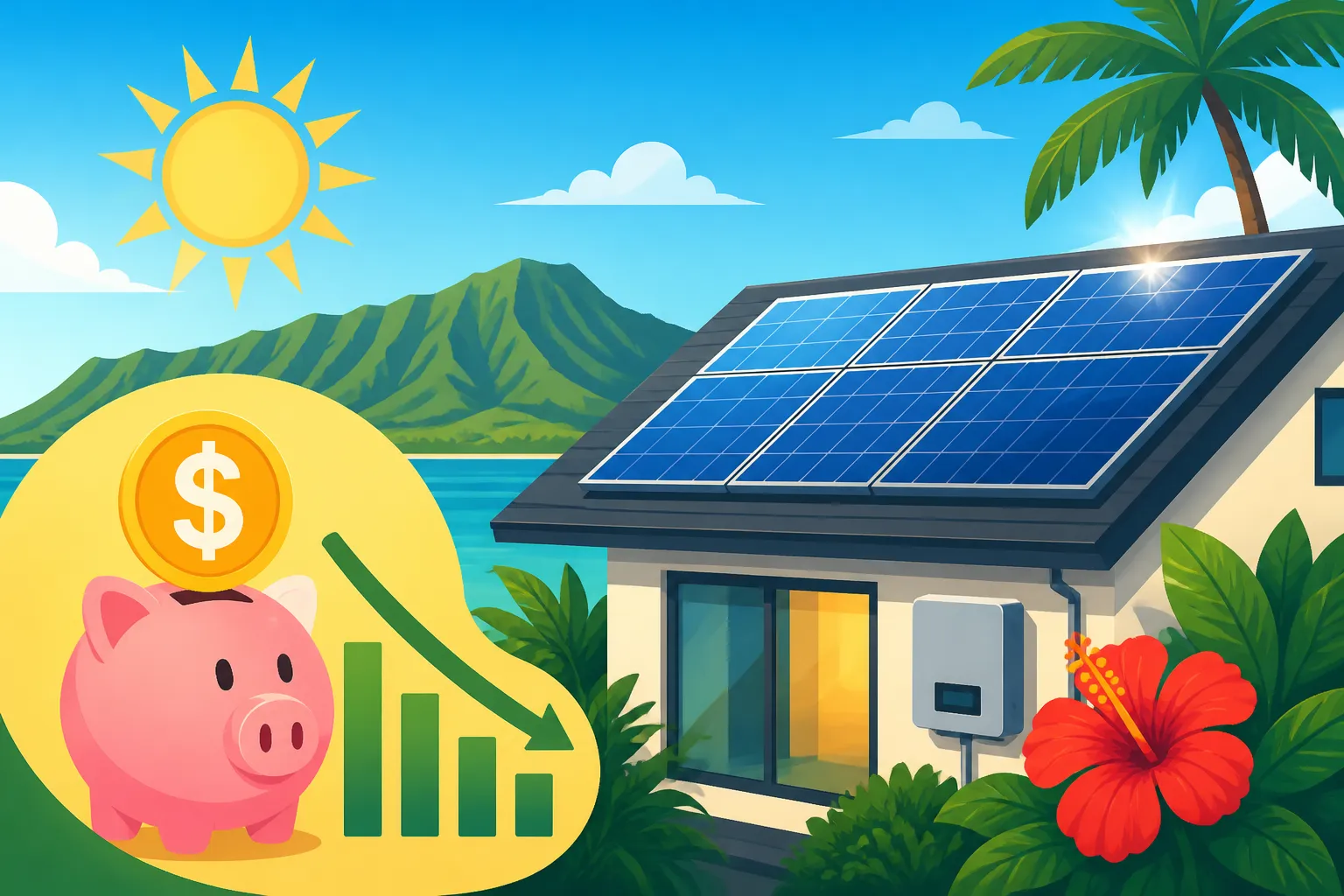
Living in Hawaii means experiencing paradise every day, but it also comes with a significant challenge: some of the highest electricity rates in the entire United States. It's enough to make anyone frustrated, feeling like your hard-earned money is just flying out the window to power your home. This guide is here to break down the real solar panel costs in Hawaii, explore the unique factors that influence these prices, and show you how to navigate the financial landscape to make solar a reality for your island home.
Understanding the Unique Factors Driving Solar Costs in Hawaii
When you start looking into solar panels, it's easy to get overwhelmed by generic national averages. But Hawaii isn't "average" in anything, especially not when it comes to energy. The cost of solar in the Aloha State is shaped by a very specific set of circumstances that make it different from, say, installing panels in Arizona or Texas. It’s not just the sunshine; it’s everything else around it.
High Demand and Local Market Dynamics
First off, there's the sheer demand. With those sky-high electricity bills from Hawaiian Electric (HECO) and other island utilities, homeowners across Oahu, Maui, Kauai, and the Big Island are eager for solar. This robust demand has fostered a competitive, albeit sometimes more expensive, market. While competition can drive prices down, the unique logistics of doing business on an island can also push them up. Shipping costs for equipment, limited local labor pools for specialized installations, and the general higher cost of living all contribute to the baseline price. You might find that the per-watt cost here is a bit higher than on the mainland, simply because everything costs more to get here and operate here. It’s a reality of island life, unfortunately, but the savings still make it worthwhile for many.
Shipping and Installation Logistics
Think about it: every solar panel, every inverter, every battery, and even the smallest bracket has to be shipped across thousands of miles of ocean to get to your roof. This isn't just a matter of ordering from a warehouse a state or two over. The logistics involved in getting materials to Hawaii are complex and costly. Then, once the equipment arrives, you're dealing with local labor rates that reflect the high cost of living. Installers need to be paid a fair wage that allows them to live on the islands, which naturally means higher installation costs than in areas with lower labor expenses. Furthermore, the varying roof types, from standard asphalt shingles to more complex tile roofs, and the need to withstand strong winds and salty air, require specialized installation techniques and materials, adding another layer to the cost equation.
Average Solar Panel Costs in Hawaii: What to Expect
So, what are we really talking about when we discuss solar panel costs in Hawaii? It's a question on every homeowner's mind, especially when they see their monthly electric bill. While prices fluctuate based on system size, equipment choices, and installer, we can give you a solid ballpark figure to help you plan.
Typical System Sizes and Corresponding Costs
Most residential solar systems in Hawaii fall somewhere between 5 kW and 10 kW, depending on your household's energy consumption. A smaller home with modest electricity use might get by with a 5 kW system, while a larger family with AC running often will likely need closer to 8 kW or 10 kW.
Let's look at some general cost estimates before incentives, keeping in mind these are averages:
| System Size (kW) | Average # of Panels (approx. 400W each) | Estimated Pre-Incentive Cost Range |
|---|---|---|
| 5 kW | 12-13 | $18,000 – $25,000 |
| 7 kW | 17-18 | $25,000 – $35,000 |
| 10 kW | 25-26 | $35,000 – $50,000 |
These figures represent the total installed cost, including panels, inverters, racking, labor, permits, and interconnection fees. Remember, this is a snapshot, and actual prices can vary. You can dive deeper into these numbers by checking out our guide on how much solar panels cost. When you're gathering quotes, a platform like Modernize can be incredibly helpful for comparing options from different local installers, ensuring you're getting competitive pricing for your specific needs. It's all about finding the right balance of quality and affordability for your home.
Factors Influencing Your Specific Price Per Watt
The "price per watt" is a common metric in the solar industry, representing the total cost of your system divided by its capacity in watts. In Hawaii, this often ranges from $3.50 to $5.00 per watt, but it’s not a fixed number. Several things can nudge it up or down. For instance, if you opt for premium, high-efficiency panels from brands like Maxeon (SunPower) or REC, your per-watt cost might be higher, but you could generate more power from a smaller roof space. Similarly, choosing advanced microinverters from Enphase over a traditional string inverter setup can increase upfront costs but offer benefits like individual panel monitoring and better performance in shaded conditions. The complexity of your roof, including its pitch, material, and any necessary electrical upgrades, will also factor in. Even getting a new roof before solar can impact your overall project cost, but it can be a smart move to maximize your solar investment's lifespan.
Key Incentives and Programs Lowering Your Solar Costs in Hawaii
Okay, now for the good news! While the upfront costs in Hawaii might seem daunting, the state has a fantastic suite of incentives designed to make solar more accessible and affordable. These aren't just minor perks; they can significantly reduce your total investment and drastically improve your long-term savings. Don't let the initial price tag scare you off before you consider these powerful financial tools.
The Hawaii State Tax Credit
This is perhaps the biggest game-changer for solar hopefuls in Hawaii. The state offers a generous Hawaii Solar Incentives & 35% State Credit – one of the best in the nation. It's a credit that can equal 35% of your eligible solar system costs, up to a maximum of $5,000 per system. This isn't a deduction; it's a dollar-for-dollar reduction in your state income tax liability. For example, if your system costs $30,000, 35% of that is $10,500. Since the cap is $5,000, you'd receive a $5,000 credit. This alone can shave a substantial chunk off your out-of-pocket expenses and make the project much more manageable. It’s crucial to understand how to claim this credit, so consulting with a tax professional and your solar installer is always a smart move.
Net Metering Alternatives: Grid Services Programs
Hawaii used to have a traditional net metering program, allowing solar homeowners to send excess energy back to the grid for full retail credit. However, those days are largely gone, especially for new installations. Instead, Hawaiian Electric (HECO) has transitioned to various "grid services" programs, which function differently. These programs typically offer lower compensation rates for the energy you export to the grid compared to what you pay for electricity you pull from it.
For example, the Customer Grid-Supply (CGS) program, while no longer available for new applicants, was an intermediate step. Current programs like the Smart Export program encourage the use of battery storage by offering higher compensation for exports during specific peak times when the grid needs it most. This shift means that solar-plus-battery systems are becoming increasingly vital for maximizing your savings in Hawaii. A battery allows you to store your excess solar generation during the day and use it yourself in the evening, rather than exporting it for a lower rate or pulling expensive power from the grid. Our guide on Net Metering Explained How It Works by State can provide more context on how these systems compare nationally.
Other Local and Federal Considerations
Beyond the state tax credit, there are other potential avenues for savings. While the federal solar tax credit (also known as the Investment Tax Credit, or ITC) is a major incentive on the mainland, it's important to clarify its status. For many homeowners, the focus is increasingly on state and local incentives. You might also find local utility rebates or programs, though these can vary widely by island and specific provider. It’s always a good idea to check with your local utility and potential installers about any niche programs they might be aware of. For instance, certain Solar Battery Incentives in 2026 might be available, which can reduce the cost of integrating storage into your system. When you're working with a reputable solar provider found through a service like Modernize, they should be well-versed in all applicable local and federal incentives that can help reduce your overall Solar Plus Battery Cost.
Financing Your Solar Investment in Hawaii
The upfront cost of a solar panel system, even with generous incentives, can still be a significant investment. For many homeowners in Hawaii, paying cash isn't a realistic option. Thankfully, there are several financing pathways available that can make going solar achievable, often allowing you to start saving money on your electricity bills from day one. It's about finding the financial solution that best fits your budget and long-term goals.
Solar Loans: Ownership with Monthly Payments
Solar loans are a popular choice for homeowners who want to own their system outright without paying the full cost upfront. These are essentially home improvement loans specifically tailored for solar installations. You borrow the money to cover the entire cost of the system, and then you make fixed monthly payments over a set period, typically 10 to 20 years. The key advantage here is that you retain full ownership of the system, meaning you're eligible for the Hawaii state tax credit and any other incentives. Plus, you benefit from all the energy savings for the life of the system.
When considering a solar loan, it's crucial to compare interest rates, loan terms, and any associated dealer fees. Some installers might offer attractive "no money down" loans, but these often come with hidden dealer fees that are rolled into your loan principal, effectively increasing your total borrowing amount. Always ask for a clear breakdown of all costs. A trusted solar installer will be transparent about these details, helping you understand your long-term commitment. You can explore more about your options in our comprehensive guide on Solar Loans Complete Guide.
Leases and Power Purchase Agreements (PPAs)
For those who prefer not to own their system or manage maintenance, solar leases and Power Purchase Agreements (PPAs) offer alternative solutions. With a solar lease, you essentially rent the solar panel system from a third-party company for a fixed monthly payment. The solar company owns, maintains, and monitors the system, and you get to use the electricity it produces. This often means lower upfront costs, sometimes even $0 down, but you won't be eligible for ownership-based incentives like the state tax credit, as the system isn't legally yours.
A PPA is similar, but instead of paying a fixed monthly lease payment, you agree to buy the electricity generated by the panels at a predetermined rate per kilowatt-hour (kWh) that is typically lower than your utility's rate. The solar company still owns and maintains the system. Both leases and PPAs can provide immediate savings on your utility bill, but it's important to understand that the solar company reaps the benefits of incentives and potentially higher long-term value. While they offer simplicity, many homeowners find that outright ownership through a cash purchase or a solar loan provides greater long-term financial benefits. It’s important to weigh these options carefully against your financial comfort and long-term residency plans.
Cash Purchase: Maximizing Your ROI
If you have the capital, paying for your solar system in cash often offers the best long-term return on investment (ROI). A cash purchase eliminates interest payments and dealer fees associated with loans, allowing you to maximize the impact of the Hawaii state tax credit and immediately start enjoying significantly reduced electricity bills. The payback period, or the time it takes for your energy savings to offset the initial investment, is typically shortest with a cash purchase.
While it's a larger upfront expense, the overall lifetime savings can be substantial, and the system immediately adds value to your home. Our article on Do Solar Panels Increase Home Value delves into this benefit further. Many homeowners in Hawaii find that their energy savings quickly surpass their monthly loan payments or provide significant residual income after the system has paid for itself. Using a service like Modernize to connect with multiple installers can help you secure competitive quotes, ensuring that even if you're paying cash, you're getting the best possible value for your investment.
Making Your Solar Investment in Hawaii Pay Off
Installing solar panels in Hawaii isn't just about reducing your carbon footprint; it's a strategic financial decision that can lead to substantial savings over the lifespan of your system. Given Hawaii's unique energy landscape and strong solar resources, understanding how to maximize your return is key. It's about more than just the initial cost; it's about the long game.
Optimizing Your System for Maximum Savings
To truly make your solar investment pay off, thoughtful system design is critical. Given the shift away from traditional net metering, pairing your solar panels with battery storage has become almost essential in Hawaii. A Do I Need a Battery With Solar solution allows you to capture your daytime solar production and use it during peak evening hours when electricity rates are highest, or during power outages. This maximizes your self-consumption and reduces your reliance on grid power during expensive periods.
Your installer should perform a detailed energy audit to size your system appropriately based on your specific usage patterns. Oversizing can lead to unnecessary costs, while undersizing means you won't fully offset your bills. Consider highly efficient panels, which can generate more power per square foot, especially valuable on smaller Hawaiian roofs. Brands like LG or Panasonic (now Maxeon) are known for their efficiency. Furthermore, understanding the nuances of how many solar panels you need for my home will ensure your system is perfectly tailored.
Long-Term Value and Environmental Benefits
Beyond the immediate financial returns, going solar in Hawaii offers significant long-term value. Solar panels are a durable home improvement that typically come with 25-year performance warranties, meaning they'll continue producing clean energy and saving you money for decades. As electricity rates from Hawaiian Electric continue their upward trend, your fixed-cost solar energy becomes an increasingly valuable asset, insulating you from future price hikes. This predictability in your energy costs is a huge relief for many homeowners.
From an environmental perspective, reducing your reliance on fossil fuels contributes to a cleaner, more sustainable Hawaii. The islands are particularly vulnerable to climate change impacts, making renewable energy solutions like solar even more meaningful. And let's not forget the added home value; homes with owned solar systems tend to sell faster and for a premium compared to homes without solar, especially in a high-cost energy market like Hawaii. Our article on Solar Panel Payback Period Explained illustrates how quickly these savings can accumulate over time.
Choosing the Right Partner for Your Solar Journey
The success of your solar project hinges heavily on choosing a reputable and experienced solar installer. In Hawaii, where unique regulations and environmental factors come into play, working with a local expert who understands the specific nuances of island installations is invaluable. Look for installers with strong local references, proper licensing, and comprehensive warranties for both equipment and workmanship. Don't be afraid to ask lots of questions about their experience, particularly with battery storage solutions and navigating local utility interconnection processes. Getting multiple quotes through a platform like Modernize is a smart first step, allowing you to compare proposals and find a company that aligns with your needs and budget. A good installer will also walk you through the entire Solar Installation Timeline What to Expect and ensure you understand every step.
Disclaimer
This article is intended for informational purposes only and does not constitute financial, tax, or legal advice. Solar costs, incentives, and regulations can change frequently. Readers should consult with qualified professionals for personalized advice regarding their specific circumstances.