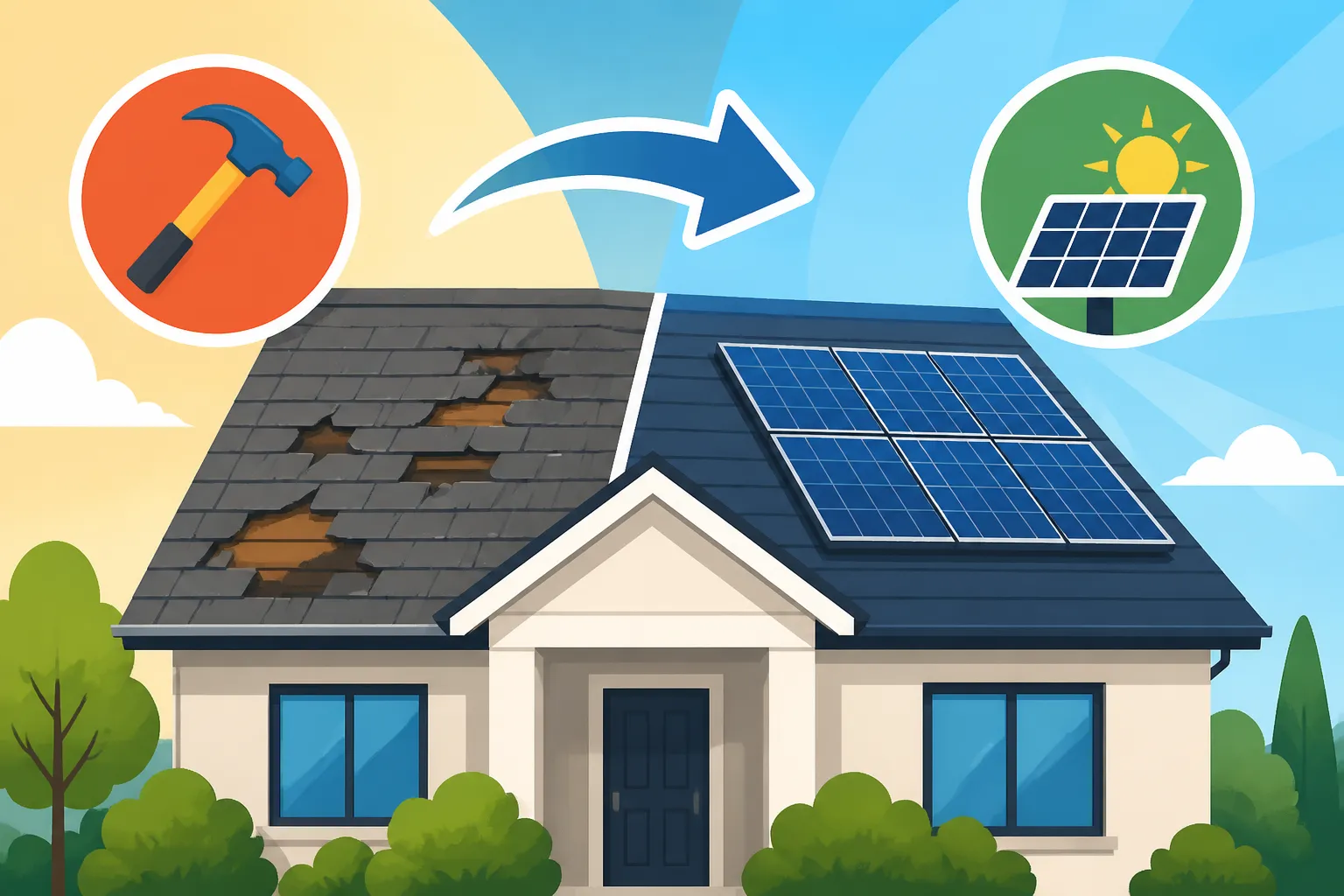
Roof Replacement Cost Before Solar
Imagine standing on your lawn, looking up at your roof, and realizing that your dream of energy independence is blocked by a few thousand cracked shingles. Most homeowners don't realize that a 15-year-old roof is often a "no-go" for solar panels until the installer is already in their driveway. This guide breaks down the realistic costs of roof replacement before solar, helping you avoid the nightmare of paying twice for labor.
Why You Should Never Put Solar Panels on an Old Roof
It is a common scenario: you are excited about cutting your utility bill, you have been researching How Much Do Solar Panels Cost? 2026 Guide, and you are ready to sign the contract. But then the site auditor looks at your shingles and shakes their head. If your roof has less than 10 to 15 years of life left, installing solar is a financial gamble you will likely lose. Solar panels are designed to sit on your roof for 25 to 30 years. If your roof fails in year seven, you are facing a massive logistical headache that most people don't budget for.
The Hidden Labor Costs of Removing Panels Later
The biggest financial trap in the solar industry is the "detach and reset" fee. If you install solar on a roof that needs replacement five years later, you cannot simply roof around the panels. A specialized solar crew must come out to disconnect the system, unbolt the racking, and physically remove every single panel from your roof. Only then can the roofers do their job. Once the new roof is on, the solar crew has to return to reinstall everything.
In today's market, this "detach and reset" process can easily cost between $2,000 and $4,000 depending on the size of your system. That is essentially a "stupid tax" for not replacing the roof beforehand. When you are looking at Roof Considerations for Solar Panels, the age of the structure is the single most important factor. Paying for a roof replacement upfront might feel like a punch to the gut, but it saves you from paying for the solar installation labor twice.
Identifying Red Flags in Your Current Roof
Before you even call a solar company, take a walk around your house. You don't need to be a licensed contractor to spot the obvious signs of trouble. Look for "balding" shingles where the granules have worn away, leaving the asphalt mat exposed to UV rays. Check your gutters for those same granules; if they look like coffee grounds in your downspout, your roof is reaching the end of its functional life.
Another red flag is curling or "fish-mouthing" shingles, where the corners turn upward. This indicates that the shingles are drying out and losing their ability to shed water. If you live in a high-heat area like Phoenix or a humid coastal town like Tampa, these issues accelerate. Using a service like Modernize can help you get a professional assessment of these red flags before you commit to a solar contract. If you see sagging in the roofline or water stains in your attic, your issues might go deeper than just shingles—you might be looking at a full decking replacement.
Breaking Down Roof Replacement Costs by Material
The cost of your new roof is dictated almost entirely by the "square." In roofing terminology, a square is a 10-foot by 10-foot area (100 square feet). An average American home might require 25 to 35 squares. When you are calculating your total investment, you have to weigh the upfront cost of the roof against the long-term Solar ROI & 25-Year Savings Breakdown you expect from your panels.
Asphalt Shingles: The Most Common Scenario
Asphalt shingles are the go-to for about 80% of residential roofs because they are affordable and easy to install. For a standard architectural shingle roof, you can expect to pay anywhere from $5.00 to $9.00 per square foot. For a 2,000-square-foot home, this translates to a total cost of roughly $10,000 to $18,000.
While these are the cheapest options, they also have the shortest lifespan, typically 20 to 25 years. If you are going solar, you should insist on "Class 4" impact-resistant shingles. They cost a bit more, but they are much more durable under the weight of solar racking and can withstand the foot traffic that occurs during a solar installation. Many homeowners use Modernize to find contractors who specialize in these high-durability shingles specifically for solar readiness.
Metal, Tile, and Slate: Premium Costs for Premium Solar
If you have the budget, matching a 30-year solar system with a 50-year roof is the gold standard. Metal roofing is becoming incredibly popular for solar because it often doesn't require drilling holes into your roof. Standing seam metal roofs allow solar installers to use clamps that attach directly to the "ribs" of the metal.
| Roof Material | Estimated Cost per Sq. Ft. | Lifespan (Years) | Solar Compatibility |
|---|---|---|---|
| Asphalt Shingle | $5.00 – $9.00 | 20 – 25 | Good (requires flashing) |
| Standing Seam Metal | $12.00 – $18.00 | 50+ | Excellent (clamp-on) |
| Clay/Concrete Tile | $15.00 – $25.00 | 50+ | Moderate (requires tile hooks) |
| Synthetic Slate | $12.00 – $20.00 | 40 – 50 | Good |
While the price tag for metal or tile can be double or triple that of asphalt, it ensures you will never have to worry about a "detach and reset" fee. You should check How to Install Solar Panels on a Metal Roof to see why this combination is often the best long-term play for your wallet.
Financial Strategies for Combining Projects
The biggest hurdle for most people is the sticker shock. You were prepared for a $20,000 solar system, but now you are looking at another $15,000 for a roof. It feels overwhelming. However, there are ways to bundle these costs to make them more manageable. The key is to look at your home’s equity and the specific Solar Loans: Complete Guide available in your state.
Financing Both Together: One Loan or Two?
Many solar lenders now offer "roofing adders." This means they will wrap the cost of your new roof into your solar loan. The advantage is that you only have one monthly payment and often a lower interest rate than a standard home improvement loan. The downside is that you are financing a roof over 20 or 25 years, which means you will pay significantly more in interest over time than if you paid cash.
If your credit is strong, you might find that a Home Equity Line of Credit (HELOC) is a better tool. It allows you to pay for the roof and the solar panels at a variable or fixed rate that is often lower than what a solar-specific lender offers. When you compare your options, make sure to ask Is a Solar Loan Worth It? specifically when a large roofing component is involved. If you are struggling to find a lender who handles both, Modernize is a great resource for finding contractors who have existing relationships with financing partners accustomed to "solar-ready" roofing projects.
Impact on the Solar Tax Credit and Incentives
Here is where things get a bit tricky and where you need to be careful with "bro-science" from sales reps. A common myth in the solar industry is that you can claim the 30% Federal Solar Tax Credit on the entire cost of your new roof if you install solar at the same time. This is generally incorrect. According to the IRS, only the portions of the project directly related to solar energy generation qualify.
Standard roofing materials like shingles or metal sheets do not usually qualify for the credit. However, if you are doing structural reinforcements to support the weight of the panels, those specific costs might be eligible. Always consult a tax professional. You don't want to get caught in a situation where you are asking Is the Federal Solar Tax Credit Really Gone? only to find out you over-claimed your roof costs. Knowing the difference between Solar Incentives vs Rebates: What's the Difference? can also help you find state-level programs that might offer a little more wiggle room for roofing costs.
Timeline and Workflow: Who Does What First?
Coordination is the "secret sauce" of a successful solar-roof project. If the roofer finishes and leaves before the solar guy shows up, you might find that the roofer didn't install the proper flashing or that the solar guy is worried about voiding the new roof warranty.
Coordinating Roofers and Solar Installers
The ideal workflow is to have the roofers and solar installers in communication before the first shingle is stripped. Your solar company should provide the roofer with a "racking layout." This tells the roofer exactly where the panels will sit, allowing them to pay extra attention to those areas. Some high-end roofers will even install the solar "feet" or mounts during the roofing process to ensure a 100% watertight seal.
If you don't coordinate, you risk the "finger-pointing" game. If your roof leaks two years later, the roofer will blame the solar panels, and the solar company will blame the roofing material. By using a platform like Modernize to find pros who are experienced in solar-integrated roofing, you can often find a single point of contact who takes responsibility for the entire "envelope" of your home. You should also ask What Is Permission to Operate (PTO)? to understand how the timeline of your new roof fits into the utility’s timeline for turning on your power.
The Solar-Ready Certification Myth
You might hear some companies talk about a "solar-ready" certification for roofs. While there are some building codes (especially in California) that require new homes to be solar-ready, for existing homes, this is often just marketing jargon. A truly solar-ready roof simply means it has updated decking (at least 7/16" OSB or plywood), a high-quality underlayment, and shingles that aren't at the end of their life.
Before you sign anything, check Do I Need a New Roof Before Solar? to get a checklist of what "ready" actually looks like. If your roofer says you need a total tear-off because of multiple layers of old shingles, listen to them. You cannot legally or safely install solar over a roof that has two layers of shingles. It is too heavy and won't allow the mounting hardware to secure properly into the rafters.
Long-Term Value and Home Resale
Finally, consider the "boring" part: your home value. While solar panels are a high-tech upgrade, a new roof is the ultimate peace of mind for a buyer. Combining these two projects can significantly boost your home’s "appraisal-readiness."
Does a New Roof and Solar Increase Home Value?
The short answer is yes. A new roof is one of the few home improvements that consistently sees a high return on investment. When you add a 30-year energy production plant on top of that new roof, you are essentially telling a future buyer that they won't have any major exterior expenses for decades.
If you are worried about the cost, look into Do Solar Panels Increase Home Value? to see the data. Most studies suggest that solar adds about 4% to a home's value, but that number is much more solid when the roof underneath is brand new. If you are planning on moving in the next five years, make sure to research What Happens to Leased Solar When I Sell My Home? because a combined roof/solar lien can be a hurdle during the closing process.
Maintenance and Monitoring After the Fact
Once the dust settles and your new roof is sporting shiny blue or black panels, your work isn't quite done. You need to keep an eye on how they interact. Debris like leaves or pine needles can sometimes get trapped between the panels and the roof, creating "dams" that hold moisture against your new shingles.
Check your monitoring app regularly and do a visual inspection once a season. If you need tips on keeping things running smoothly, Solar Panel Maintenance & Cleaning is a great resource. Generally, a new roof with solar requires very little work, but catching a small issue early can save your 25-year investment. Use Modernize to stay in touch with your contractors for annual check-ups if you live in an area with extreme weather.
Summary of Costs and Considerations
Replacing a roof before solar is a significant financial event, but it is also the smartest way to protect your home. By avoiding the labor overlap and choosing durable materials, you turn a potential headache into a long-term win.
| Category | Typical Cost Range | Impact on Solar Project |
|---|---|---|
| Asphalt Roof Replacement | $10,000 – $18,000 | Essential for roofs >15 years old |
| Metal Roof Upgrade | $20,000 – $35,000 | Best for longevity and easy mounting |
| Detach & Reset Fee | $2,000 – $4,000 | The cost of waiting too long to re-roof |
| Structural Reinforcement | $1,500 – $5,000 | Necessary for older rafters or heavy tile |
Remember to look at the big picture. When you are evaluating Solar Panel Cost vs Other Home Upgrades, the roof isn't just an "extra" cost—it is the foundation of your energy system. Treat it with the same respect you treat the panels themselves, and you will be set for the next 30 years.
Disclaimer
This guide is provided for informational purposes only and does not constitute professional financial, tax, or legal advice. Costs for roofing and solar vary significantly by region, material choice, and home complexity. Always obtain multiple quotes from licensed contractors and consult with a qualified tax professional regarding eligibility for the Federal Solar Tax Credit or state-specific incentives.