Can Solar Panels Pay for Themselves in 5 Years?
Solar panel payback periods rarely reach five years, depending on initial costs, local electricity rates, and available incentives.
Solar panel payback periods rarely reach five years, depending on initial costs, local electricity rates, and available incentives.
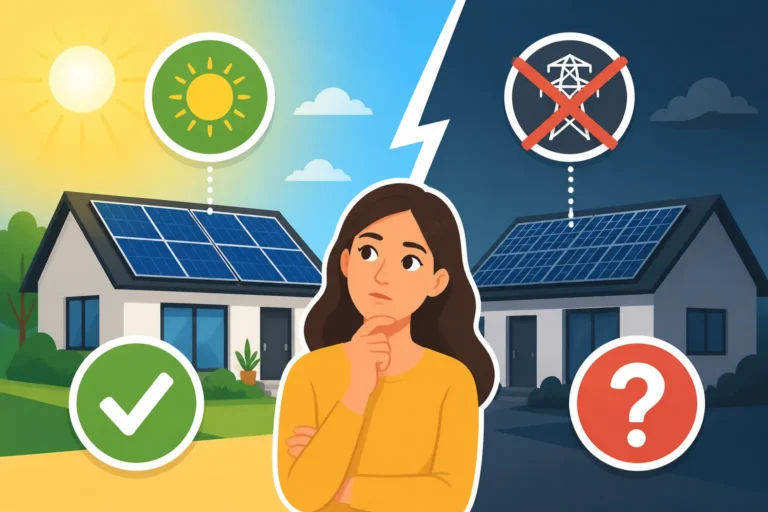
Solar panel financial returns and self-consumption strategies for houses facing low excess energy compensation without net metering.
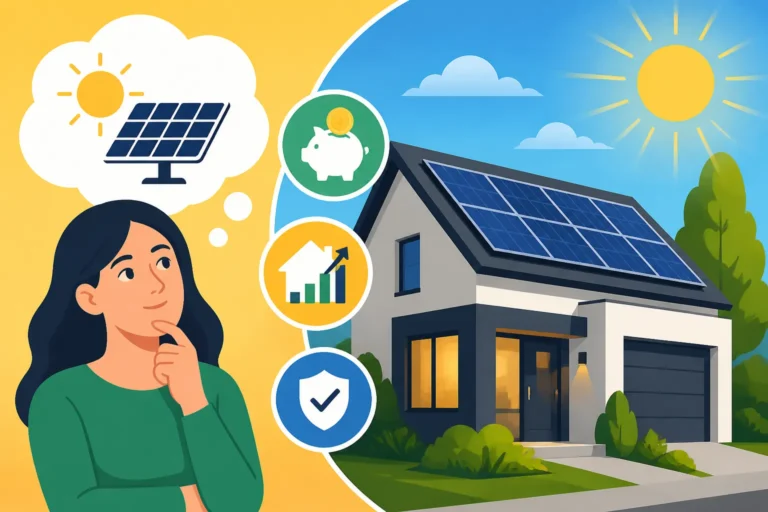
Evaluating roof condition, sunlight exposure, and energy usage determines if solar panels make financial and practical sense for your house.
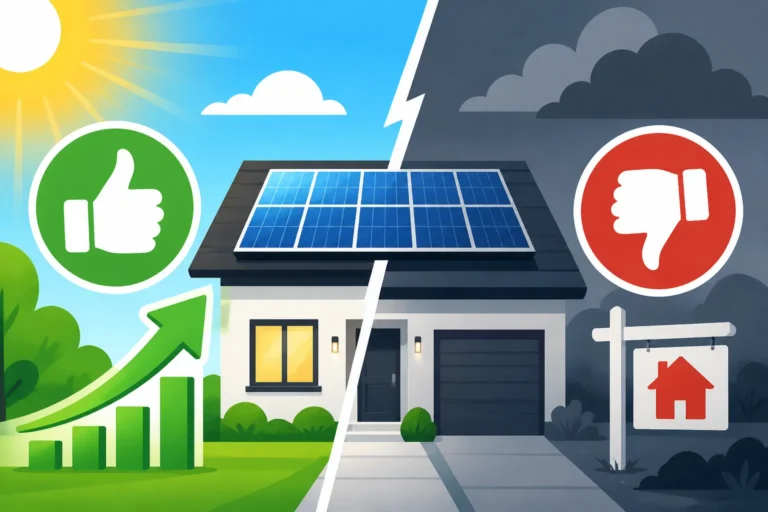
Solar panel installations increase home market value and provide lower electricity bills through long-term energy savings.
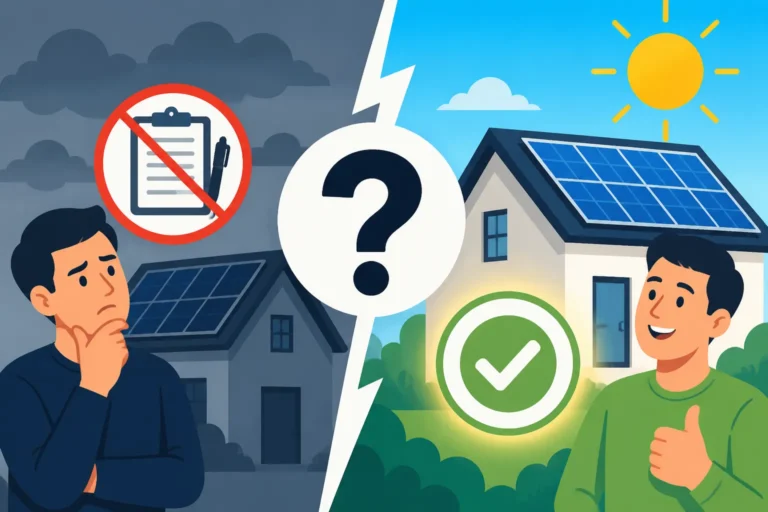
A solar lease requires zero upfront costs for roof panels while third-party companies maintain equipment for monthly fees over twenty to twenty-five years.
Zero down solar financing allows homeowners to avoid upfront costs through loans, leases, or power purchase agreements ranging up to twenty-five years.
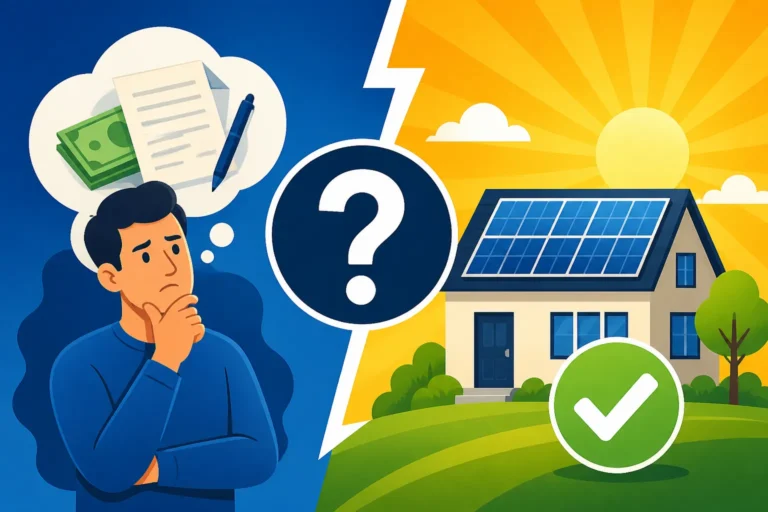
Secured and unsecured solar loan types, PACE financing, interest rates, and repayment terms are explained for homeowners.
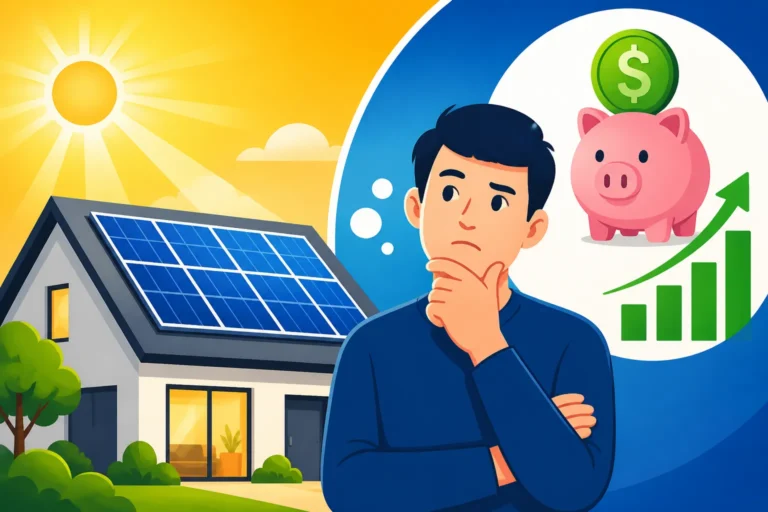
Solar panel savings in 2026 depend on electricity consumption, high utility rates in states like California, and upfront installation costs.
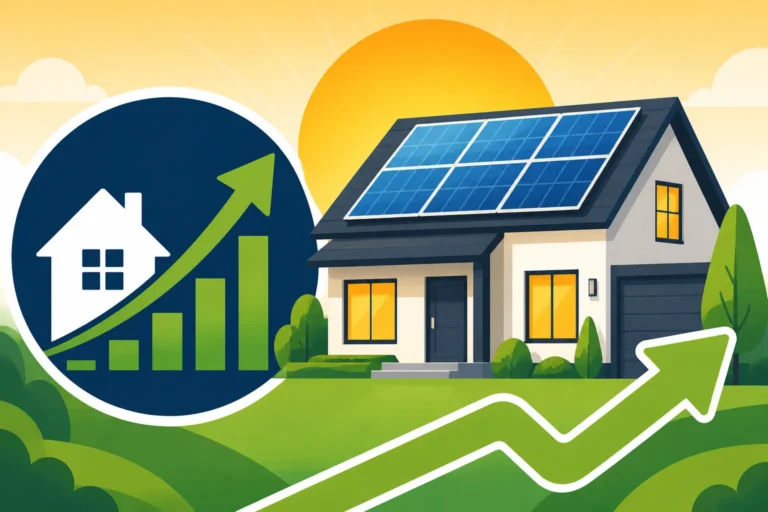
Solar panel installations typically boost a home property value by three to six percent based on real estate data and regional factors.
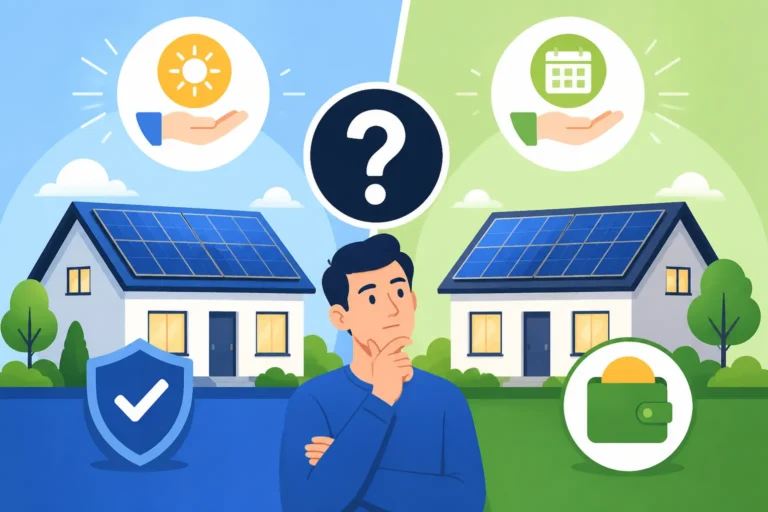
Buying or leasing solar panels involves comparing upfront costs, tax credits, home equity, and long-term financial benefits.