Is Solar Worth It in Georgia?
Thinking about going solar in Georgia can feel like a maze, especially with all the talk about rising energy costs and changing incentives. It’s natural to wonder if solar panels are truly a smart financial move for your home in the Peach State. This guide will cut through the noise, offering a realistic look at the specific benefits, costs, and factors that determine if solar is worth it for you in Georgia.
The Georgia Solar Landscape: Sunshine, Rates, and Regulations
You've probably heard that Georgia is a sunny state, and while that's certainly true, there's more to consider than just glorious sunshine when it comes to going solar. The unique blend of the state's climate, the local utility structures, and evolving regulations all play a huge role in determining how much you can save and if solar is truly "worth it." It's not just about getting panels on your roof; it's about how those panels integrate with Georgia's specific energy environment.
Abundant Sunshine and Solar Production
Georgia definitely gets its fair share of sunny days, making it an excellent candidate for solar energy production. From the mountains in the north to the coast in the south, most regions experience ample direct sunlight throughout the year. This high solar irradiance means that a well-placed solar array on your home can generate a significant amount of electricity, reducing your reliance on grid power. It’s comforting to know that once those panels are up, they’ll be hard at work converting those rays into usable energy for your home.
However, it's not just about the raw amount of sun. Factors like your roof's orientation and pitch, as well as any shading from trees or neighboring buildings, can significantly impact how much energy your system actually produces. Even in a sunny state like Georgia, a north-facing roof with heavy tree cover won't be as efficient as a south-facing roof with clear skies. This is why a professional site assessment is absolutely crucial to accurately estimate your potential energy output and ensure you get the most bang for your buck.
Navigating Georgia's Electricity Rates and Structure
One of the biggest drivers for going solar anywhere is the cost of electricity, and Georgia is no exception. While historically Georgia's electricity rates have been relatively stable compared to some other states with volatile markets, they are certainly not immune to increases. Many homeowners are finding their monthly utility bills creeping up, making the prospect of generating their own power increasingly attractive. This is where solar can really shine, offering a long-term hedge against those unpredictable rate hikes.
However, Georgia's utility landscape is dominated by companies like Georgia Power, which operates under a regulatory framework that can influence solar economics. Unlike some states with more aggressive net metering policies, Georgia's regulations for selling excess power back to the grid can vary. Understanding your utility's specific "net billing" or "avoided-cost rate" programs is key to accurately projecting your savings. This is why comparing your projected solar savings to your actual electricity bill is essential, not just a rough estimate. If you're wondering how much you can potentially save with solar panels, digging into these details is step one.
State and Local Solar Policies
When we talk about whether solar is "worth it," state and local policies are absolutely critical, especially now that the federal tax credit landscape has shifted. While there isn't a broad, statewide solar tax credit or robust net metering program in Georgia like you might find in some other states, that doesn't mean incentives are non-existent. It just means you have to look a little harder and understand the nuances.
For instance, Georgia does offer property tax exemptions for solar energy systems, meaning the value added to your home by solar won't increase your property taxes, which is a significant financial perk that many people overlook. Additionally, specific utility programs, though not always full net metering, might offer some form of credit for excess power you send back. Knowing these localized details, which can vary by electric cooperative or municipal utility, is essential. This often requires working with a knowledgeable local installer or platform like Modernize to uncover all available programs.
Financial Considerations for Georgia Homeowners
Let's face it, the bottom line is often what seals the deal for most homeowners considering solar. In Georgia, the financial picture for solar isn't always as clear-cut as in some states with robust incentives, but that doesn't mean it's not a strong investment. You need to carefully weigh the upfront costs against the long-term savings and any available financial boosts.
Understanding Solar Panel Costs in Georgia
The cost of solar panels in Georgia can vary quite a bit, just like anywhere else. Generally, we're talking about a significant upfront investment. The overall price tag depends on factors like your system size, the type of equipment you choose (like premium panels versus standard, or microinverters versus string inverters), and the complexity of your installation. For an average home in Georgia, a typical system might range from 6 kW to 10 kW, with total costs before any incentives potentially falling between $18,000 to $30,000. It's crucial to look at the cost per watt as a benchmark, which in Georgia usually hovers around $2.50 to $3.50.
Keep in mind that these are just averages. A home with a perfectly oriented, unshaded roof will likely have a more straightforward and potentially less expensive installation than one with complex roof lines or significant shading that requires optimizers. It's always a good idea to get multiple quotes from different installers to compare pricing and ensure you're getting a competitive deal. Many homeowners find that platforms like Modernize can help them connect with pre-vetted local installers, streamlining the quote process and ensuring they see a range of options.
Available Incentives and Rebates
While Georgia might not boast a massive state tax credit or aggressive net metering law, there are still ways to reduce your overall solar investment. The most significant one for most homeowners in 2026 continues to be the federal solar tax credit, which currently offers a 30% credit on the total cost of your solar system. This isn't a rebate, but rather a reduction in the income tax you owe, making a substantial dent in the upfront expense. You'll definitely want to understand the current details of the federal solar incentives that still exist in 2026.
Beyond the federal credit, you'll need to look closely at utility-specific programs. For example, Georgia Power has previously offered programs like the Advanced Solar Initiative (ASI) or Customer-Owned Renewable Energy (CORE) program, though these can change over time. These might include buyback rates for excess energy or other incentives that, while not full retail net metering, still add up. It’s like finding hidden treasure; you just have to know where to look, and a good installer will help you navigate these options.
Table: Potential Solar Incentives for Georgia Homeowners (2026)
| Incentive Type | Description | Estimated Value / Benefit | Key Details & Considerations |
|---|---|---|---|
| Federal Solar Tax Credit | A direct credit on your federal income taxes, equal to a percentage of your solar system's cost. This is the biggest incentive for most U.S. homeowners. | 30% of total system cost (includes panels, installation, batteries, etc.) | Non-refundable, so you need enough tax liability to claim it. Can be carried forward to future tax years if you can't use it all at once. Check for any updates to the Solar Tax Credit 2026. |
| Solar Property Tax Exemption | Prevents the added value of your solar energy system from increasing your home's assessed value for property tax purposes. This means you won't pay higher property taxes just for going solar. | Varies by property value and local tax rates, but can save hundreds or thousands over the system's lifetime. | This is particularly beneficial in areas where property values are high or expected to increase. |
| Utility-Specific Buyback Programs | Some utilities, like Georgia Power, may offer programs to compensate homeowners for excess solar electricity sent back to the grid. These are typically at an "avoided-cost rate," not full retail value. | Varies significantly by utility and program. Could be a flat rate per kWh or a credit on your bill. | Crucial to understand your specific utility’s rules. Not all utilities offer the same programs, and they can change over time. For example, some may offer specific utility solar rebates. |
| Local Green Lending Programs | Some local municipalities or credit unions might offer low-interest loans or other financing options specifically for energy efficiency or renewable energy upgrades. | Reduced interest rates, longer terms, or specific grants. | These are highly localized and may require specific eligibility criteria. Check with your local government or financial institutions. |
Long-Term Savings and Return on Investment (ROI)
The true "worth" of solar in Georgia often comes down to its long-term financial benefits. While the initial investment can be substantial, the savings on your electricity bill can be immense over the 25+ year lifespan of a solar system. Imagine locking in your electricity rates for decades to come, rather than being at the mercy of utility companies. This financial stability is a huge draw for many homeowners.
Calculating your precise solar panel payback period in Georgia involves factoring in your initial cost (minus incentives), your average monthly electricity bill, and how much of that bill your solar system will offset. Many Georgia homeowners find that their solar systems can pay for themselves within 8 to 12 years, especially when considering the federal tax credit and the property tax exemption. After that payback period, the electricity generated by your panels is essentially free, leading to tens of thousands of dollars in savings over the system's lifespan. This isn't just about reducing your carbon footprint; it's about significant financial freedom.
Factors Influencing Solar's Value for Your Georgia Home
Deciding if solar is worth it isn't a one-size-fits-all answer, especially in Georgia where local conditions play such a significant role. Several personal and property-specific factors will heavily influence your return on investment and overall satisfaction with going solar. It's about tailoring the decision to your unique circumstances, not just following a general trend.
Your Current Energy Consumption
One of the most crucial factors in determining solar's value for your Georgia home is your current electricity usage. If you have a massive electricity bill every month – maybe you have a large family, run your AC constantly through the hot Georgia summers, or have an electric vehicle – then solar is likely to offer a much higher return on investment. The more electricity you consume from the grid, the more you stand to save by generating your own. For a home that uses very little electricity, the financial payback might be slower because there's less bill to offset.
A good solar installer will always start by analyzing your past 12-24 months of electricity bills. This helps them design a system that’s appropriately sized to meet your specific needs, whether that's offsetting 100% of your usage or just a significant portion. Don't rush into a system that's too small or too large; proper sizing ensures maximum savings and efficiency, especially given Georgia's specific net billing arrangements.
Roof Condition and Suitability
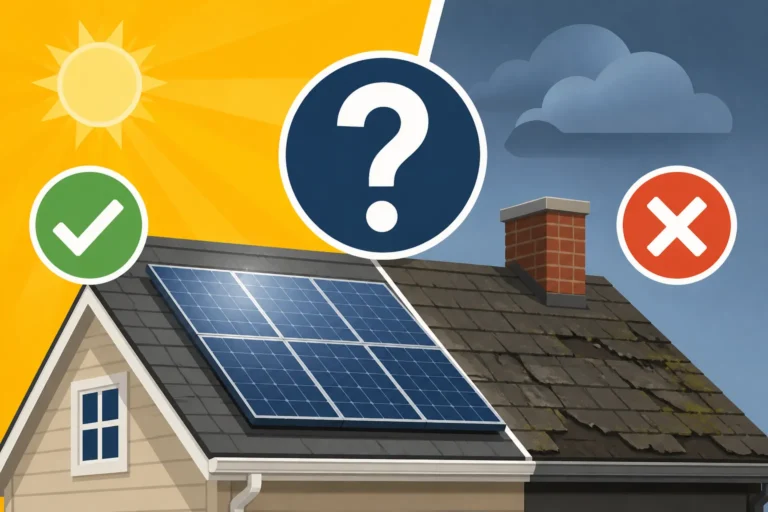
Your roof is the foundation of your solar investment, so its condition and suitability are paramount. Installing solar panels is a long-term commitment, typically for 25-30 years. If your roof is already nearing the end of its lifespan – say, 5-10 years left on an asphalt shingle roof – it almost always makes sense to replace it before installing solar. The cost of removing and reinstalling panels for a roof replacement later can be substantial, sometimes thousands of dollars.
Beyond age, consider your roof's material, pitch, and orientation. Asphalt shingles are generally straightforward, but tile or slate roofs might require specialized mounting techniques. A south-facing roof is usually ideal for maximum sun exposure in the Northern Hemisphere, but east and west-facing roofs can also be highly effective, especially if you have high energy consumption in the mornings and evenings. Any significant shading from trees or nearby structures will also impact performance, potentially requiring a different system design or even making solar less viable. A thorough site survey from a reputable installer will assess all these factors, helping you determine if your roof is a good candidate for solar.
Financing Options and System Ownership
How you pay for your solar system in Georgia significantly impacts its overall value and your long-term savings. You generally have a few main options: cash purchase, solar loan, solar lease, or a Power Purchase Agreement (PPA). Each comes with its own set of pros and cons, and the best choice depends on your financial situation and priorities.
- Cash Purchase: This offers the highest long-term savings and the quickest payback period because you avoid interest payments and loan fees. You also get to claim the full federal tax credit immediately. If you have the capital, this is often the most financially beneficial path.
- Solar Loan: This is a popular option, allowing you to own the system without a large upfront cost. You'll make monthly loan payments, but these are often offset by your reduced electricity bill. Be wary of hidden solar dealer fees that can inflate the loan amount. While you still get the federal tax credit, you'll pay interest over the life of the loan. A good resource for understanding this is a guide on Solar Loans: Complete Guide.
- Solar Lease or PPA: With these options, you don't own the system. Instead, a third-party company owns, installs, and maintains the panels on your roof. You either pay a fixed monthly fee (lease) or pay for the electricity the panels produce at a set rate (PPA). While these often offer $0 down, they typically provide less long-term savings than ownership and you generally don't qualify for the federal tax credit. For Georgia homeowners focused on maximizing long-term financial gain, owning the system (cash or loan) is usually the better choice. You can learn more about Solar Lease vs PPA vs Buy: Which Is Best?.
Maximizing Your Solar Investment in Georgia
So, if you've decided solar seems like it could be worth it for you in Georgia, how do you ensure you get the absolute best value? It's all about making informed decisions at every step, from choosing your equipment to picking the right installation partner. Don't leave money on the table by overlooking key details or rushing the process.
Choosing the Right Installer
This might be the single most important decision you make. A reliable, experienced solar installer will guide you through the entire process, from initial consultation and system design to permitting, installation, and interconnection with your utility. Look for installers with a strong local reputation, positive customer reviews, and proper licensing and insurance. Ask for references and don't hesitate to get multiple quotes. Platforms like Modernize can be incredibly helpful here, connecting you with several vetted local companies, making it easier to compare offers and ensure you're getting competitive pricing and transparent information.
When comparing quotes, don't just look at the bottom line. Pay attention to the proposed equipment (panel brands, inverter types), warranty details (product, performance, and workmanship), and estimated production. A good installer will clearly explain their recommendations and how they align with your energy goals and the specific conditions of your Georgia home. Don't be shy about asking questions about their experience with specific utility programs, like those offered by Georgia Power, and their track record with local permitting processes.
Considering Battery Storage
Given Georgia's utility structure, where full retail net metering isn't universally available, adding a solar battery to your system can significantly enhance its value. A battery allows you to store excess solar energy generated during the day, rather than sending it back to the grid for a lower "avoided-cost rate." You can then use this stored energy during the evening peak hours when electricity rates are typically higher, further reducing your utility bill. It's essentially self-consumption optimization.
Beyond financial benefits, a battery like a Tesla Powerwall or Enphase IQ Battery provides crucial backup power during grid outages, a significant perk given Georgia's susceptibility to severe weather events. While adding a battery increases the upfront cost of your system, it can improve your overall ROI, enhance energy independence, and provide peace of mind. Plus, solar battery incentives might be available through the federal tax credit. This is definitely worth exploring, especially if grid reliability is a concern for you.
Long-Term Monitoring and Maintenance
Once your solar system is up and running in Georgia, the work isn't over. To truly maximize your investment, you'll want to monitor its performance and ensure it's well-maintained. Most modern solar systems come with monitoring apps that allow you to track your energy production in real-time. This helps you quickly identify any issues, like a shaded panel or an inverter problem, that could be impacting your savings.
Solar panels are generally low-maintenance, but occasional cleaning can be beneficial, especially after pollen season or a dusty storm. In most cases, natural rain will keep them sufficiently clean, but a quick rinse with a hose can sometimes boost efficiency. Regular inspections, perhaps every few years, by a qualified technician can also help catch any potential problems before they become major issues. The goal is to ensure your system continues to produce optimally for its entire lifespan, delivering consistent savings for your Georgia home.
Final Verdict: Is Solar Worth It in Georgia?
So, after all this, what's the verdict for Georgia homeowners? Based on current market conditions and available incentives, yes, solar panels can absolutely be a worthwhile investment in Georgia. While the state might not have the most aggressive direct state incentives or full retail net metering in every area, the combination of abundant sunshine, gradually rising electricity rates, the significant federal tax credit, and the state property tax exemption makes for a compelling financial case.
The long-term savings on your electricity bills, the hedge against future rate increases, the potential increase in your home's value (without an increase in property taxes), and the environmental benefits all contribute to a positive return on investment. The key is to approach the decision with an informed perspective, understanding your specific energy needs, roof conditions, and financing options. Don't let the lack of aggressive state-level mandates deter you; smart homeowners in Georgia are finding significant savings and greater energy independence by embracing solar. Just make sure to get multiple detailed quotes and work with a reputable local installer to ensure your system is designed and installed to maximize its potential for your home.
Disclaimer
Please note that this content is intended for informational purposes only and does not constitute financial, tax, or legal advice. Solar incentives, electricity rates, and regulations can change frequently. It is highly recommended to consult with qualified solar professionals, tax advisors, and your local utility provider to get the most accurate and up-to-date information specific to your situation in Georgia.